
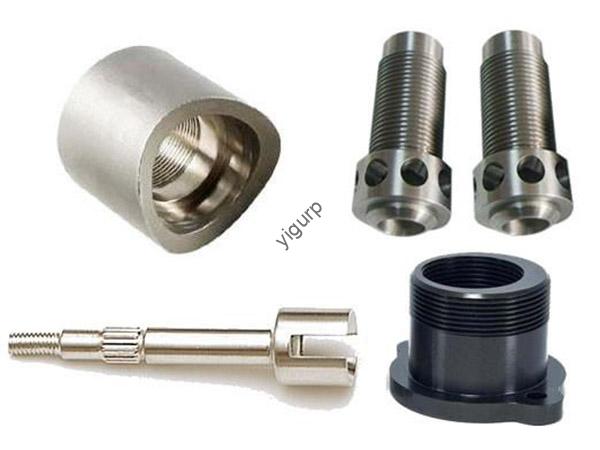
Se lavori a temperature estremamente elevate, come nei motori a reazione o nelle turbine a gas, hai bisogno di un materiale che rimanga resistente, resiste alla corrosione, and won’t deform.UNS N07001 Waspaloy is a nickel-based superalloy built for exactly this. Eccelle a temperature fino a 870°C (1600°F), rendendolo la scelta migliore per le industrie aerospaziali ed energetiche. Questa guida analizza le sue proprietà principali, usi nel mondo reale, metodi di produzione, and how it compares to other materials—so you can make the right choice for your high-heat project.
1. Material Properties of UNS N07001 Waspaloy
Waspaloy’s performance comes from its carefully balanced composition and exceptional high-temperature traits. Analizziamoli chiaramente.
1.1 Composizione chimica
Every element works together to boost strength, resistenza al calore, e protezione dalla corrosione. Below is its typical composition (in peso):
| Elemento | Gamma di contenuti (%) | Ruolo chiave |
|---|---|---|
| Nichel (In) | 57–59 | Base metal—provides high-temperature stability and ductility |
| Cromo (Cr) | 18–20 | Enhances oxidation resistance (critical for turbine and engine parts) |
| Cobalto (Co) | 12–14 | Improves creep resistance (stops deformation under long-term heat) |
| Molibdeno (Mo) | 3.0–3.5 | Boosts strength and corrosion resistance in high-heat environments |
| Alluminio (Al) | 1.2–1.6 | Enables age hardening (heat treatment to boost strength) |
| Titanio (Di) | 2.7–3.2 | Works with aluminum to enhance high-temperature strength and creep resistance |
| Ferro (Fe) | Max 2.0 | Adds structural strength without reducing heat resistance |
| Carbonio (C) | 0.04–0.08 | Strengthens grain boundaries (prevents cracking at high temps) |
| Manganese (Mn) | Max 0.1 | Aids in manufacturing (per esempio., saldatura) senza compromettere le prestazioni |
| Silicio (E) | Max 0.1 | Reduces oxidation at extreme temperatures |
| Zolfo (S) | Max 0.008 | Kept ultra-low to prevent brittleness in high-heat conditions |
1.2 Proprietà fisiche
These traits make Waspaloy ideal for high-temperature design:
- Densità: 8.2 g/cm³ (heavier than aluminum, lighter than some other superalloys like Hastelloy X)
- Punto di fusione: 1320–1360°C (2400–2480°F) – handles extreme heat in jet engines and turbines
- Conducibilità termica: 11.8 Con/(m·K) a 20°C (68°F); 21.0 Con/(m·K) at 800°C – efficient heat transfer
- Thermal Expansion Coefficient: 12.6 µm/(m·K) (20–100°C); 16.8 µm/(m·K) (20–800°C) – minimal warping in heat cycles
- Resistività elettrica: 135 Ω·mm²/m at 20°C – suitable for electrical components in high-heat areas
- Proprietà magnetiche: Non-magnetic – great for aerospace and electronic equipment where magnetism is a problem
1.3 Proprietà meccaniche
Waspaloy’s strength shines at high temperatures, thanks to age hardening. All values below are for theage-hardened (trattato termicamente) versione:
| Proprietà | Valore (Room Temperature) | Value at 800°C |
|---|---|---|
| Resistenza alla trazione | Min 1240 MPa (180 ksi) | 650 MPa (94 ksi) |
| Forza di snervamento | Min 895 MPa (130 ksi) | 550 MPa (80 ksi) |
| Allungamento | Min 15% (In 50 mm) | 20% (In 50 mm) |
| Durezza | Min 350 HB (Brinell) | N / A |
| Resistenza alla fatica | 550 MPa (10⁷ cicli) | 280 MPa (10⁷ cicli) |
| Resistenza al creep | Maintains strength up to 870°C (1600°F) – no deformation under long-term heat | – |
1.4 Altre proprietà
- Resistenza alla corrosione: Excellent in oxidizing environments (per esempio., aria, vapore) and mild acids – outperforms stainless steel at high temps.
- Resistenza all'ossidazione: Resists scaling in air up to 870°C (1600°F) for long periods – ideal for turbine blades.
- Stress Corrosion Cracking (SCC) Resistance: Resists SCC in chloride-rich solutions (a common issue for 316 acciaio inossidabile).
- Resistenza alla vaiolatura: Good resistance to pitting in salty or acidic brines (suitable for marine gas turbines).
- Hot/Cold Working Properties: Easy to hot forge (at 1150–1200°C) – cold working is limited and requires annealing to restore ductility.
2. Applications of UNS N07001 Waspaloy
Waspaloy’s high-temperature strength and corrosion resistance make it perfect for demanding industries. Ecco i suoi usi più comuni, con esempi del mondo reale:
2.1 Componenti aerospaziali & Jet Engine Parts
- Caso d'uso: Un americano. aerospace manufacturer uses Waspaloy for jet engine turbine blades. The blades handle 850°C temperatures and high rotational stress—they’ve lasted 8000 ore di volo, rispetto a 5000 hours for Inconel 718 lame.
- Other Uses: Combustion chambers, afterburner parts, and engine shafts.
2.2 Gas Turbine Components
- Caso d'uso: A power plant in Saudi Arabia uses Waspaloy for industrial gas turbine buckets. The buckets operate at 820°C—they’ve run for 5 years without wear, contro. 3 years for stainless steel buckets.
2.3 Missile Components
- Caso d'uso: A defense contractor uses Waspaloy for missile engine nozzles. The alloy resists the extreme heat of rocket fuel combustion (up to 1300°C for short bursts), ensuring reliable performance.
2.4 Turbocompressori automobilistici
- Caso d'uso: A luxury car brand uses Waspaloy for high-performance turbocharger rotors. The rotors handle 750°C exhaust heat—they last 3x longer than aluminum rotors and improve fuel efficiency by 10%.
3. Manufacturing Techniques for UNS N07001 Waspaloy
To maximize Waspaloy’s performance, manufacturers use specialized methods tailored to its high-temperature traits:
- Colata: Colata di investimento (using a wax mold) is ideal for complex shapes like turbine blades. The low sulfur content prevents defects during casting.
- Forgiatura: Hot forging (at 1150–1200°C) shapes the alloy into strong parts like turbine buckets. Forging improves grain structure, aumentando la resistenza al creep.
- Saldatura: Gas Tungsten Arc Welding (GTAW) is recommended. Use matching filler metals (per esempio., ERNiCrCoMo-1) to maintain strength and corrosion resistance. Pre-weld annealing (at 1065°C) reduces cracking risk.
- Lavorazione: Use carbide tools with sharp edges. Add coolant (per esempio., olio minerale) to prevent overheating—Waspaloy work-hardens quickly, so slow cutting speeds are needed.
- Trattamento termico (Critico per la forza):
- Ricottura della soluzione: Heat to 1065°C, cool rapidly (air or water) – softens the alloy for forming.
- Age Hardening: Heat to 760°C for 4 ore, then 650°C for 16 ore (double aging) – boosts strength and creep resistance.
- Trattamento superficiale: Pallinatura (blasting with small metal balls) enhances fatigue resistance. Passivazione (using nitric acid) improves pitting resistance—no painting is needed.
4. Caso di studio: Waspaloy in Jet Engine Turbine Blades
An aerospace company needed to upgrade turbine blades for a commercial jet engine. The old blades (made of Inconel 718) failed after 5000 flight hours due to creep deformation at 800°C.
They switched to Waspaloy blades. Here’s the result:
- Lifespan: The blades have lasted 8000 flight hours with no creep or cracking.
- Risparmio sui costi: Replacement costs dropped by 40% (fewer frequent blade changes).
- Prestazione: The blades’ higher strength allowed the engine to run at 50°C hotter, improving thrust by 8% and fuel efficiency by 5%.
This case proves why Waspaloy is the top choice for high-stress, high-temperature aerospace parts.
5. Comparative with Other Materials
How does UNS N07001 Waspaloy stack up against other common high-temperature materials? The table below compares key properties:
| Materiale | Max Service Temp (°C) | Resistenza alla trazione (MPa, RT) | Resistenza al creep (800°C) | Costo (Relativo) |
|---|---|---|---|---|
| Waspaloy | 870 | 1240 | Eccellente | Molto alto |
| Acciaio inossidabile 316 | 870 | 515 | Povero | Basso |
| Titanium Alloy Ti-6Al-4V | 400 | 860 | Giusto | Alto |
| Inconel 718 | 650 | 1310 | Molto bene | Alto |
| Hastelloy X | 1090 | 700 | Bene | Alto |
| Monel 400 | 480 | 550 | Povero | Medio |
| Acciaio al carbonio | 425 | 400 | Very Poor | Molto basso |
Punti chiave:
- Waspaloy outperforms Inconel 718 and Hastelloy X in creep resistance at 800°C—critical for long-life turbine parts.
- It’s more expensive than Inconel 718 but offers better high-temperature stability (up to 870°C vs. 650°C).
- Stainless steel and titanium can’t match Waspaloy’s strength or heat resistance for extreme applications.
La prospettiva della tecnologia Yigu
Alla tecnologia Yigu, we recommend UNS N07001 Waspaloy for clients in aerospace, energia, e difesa. Its exceptional creep resistance and high-temperature strength make it a reliable choice for jet engines and gas turbines. Our team provides custom forging, lavorazione, and heat treatment for Waspaloy components, ensuring they meet strict industry standards. For projects needing long-term durability in extreme heat, Waspaloy is an investment that pays off in reduced maintenance and improved performance.
Domande frequenti
1. Can UNS N07001 Waspaloy handle temperatures above 870°C?
It can handle short bursts of higher temperatures (fino a 1000°C) but is designed for long-term use at 870°C. Beyond that, creep deformation may occur—for temps above 900°C, Hastelloy X is a better choice.
2. Is Waspaloy suitable for marine gas turbines?
SÌ! Its goodresistenza alla vaiolatura and corrosion protection in salty air make it ideal for marine gas turbines—outperforming stainless steel and even some Inconel alloys in coastal environments.
3. What’s the typical lifespan of Waspaloy parts in jet engines?
In jet engine turbine blades or combustion chambers, Waspaloy parts last 8000–10,000 flight hours—20–40% longer than Inconel 718 parti. Proper maintenance (like regular inspections) can extend this lifespan even further.