
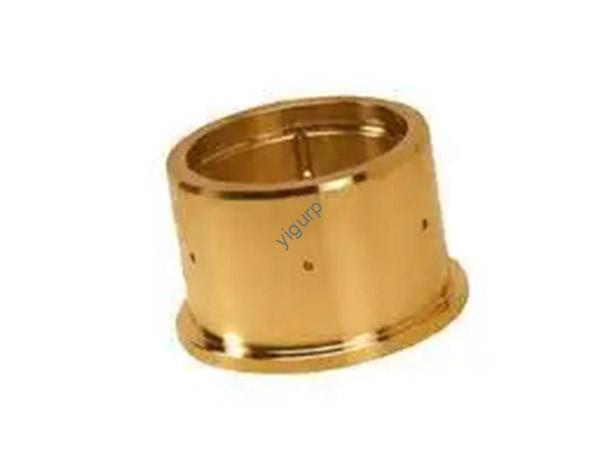
Se lavori in settori come la lavorazione chimica o il petrolio e il gas, you know how critical it is to choose materials that can handle harsh conditions.UNS N06022 Hastelloy C22 stands out as a top choice for its exceptional resistance to corrosion and high-temperature performance. This guide breaks down everything you need to know about this superalloy—from its core properties to real-world uses and how it compares to other materials.
1. Material Properties of UNS N06022 Hastelloy C22
Hastelloy C22’s strength lies in its carefully balanced composition and unique properties. Below is a detailed breakdown of its key characteristics.
1.1 Composizione chimica
The alloy’s chemistry is designed to boost corrosion resistance and mechanical stability. The table below shows its typical composition (by weight):
| Elemento | Gamma di contenuti (%) | Key Role |
|---|---|---|
| Nichel (In) | 50–60 | Metallo comune, provides overall ductility and resistance to stress cracking |
| Cromo (Cr) | 20–24 | Enhances oxidation and pitting resistance |
| Molibdeno (Mo) | 12–16 | Fights corrosion in acidic environments (per esempio., acido solforico) |
| Tungsten (W) | 2.5–3.5 | Improves resistance to localized corrosion (per esempio., crevice corrosion) |
| Ferro (Fe) | 2–6 | Increases strength without reducing ductility |
| Carbonio (C) | Max 0.015 | Minimizes carbide formation (prevents intergranular corrosion) |
| Manganese (Mn) | Max 0.5 | Aids in manufacturing (per esempio., saldatura) |
| Silicio (E) | Max 0.08 | Reduces oxidation at high temperatures |
| Fosforo (P) | Max 0.02 | Controlled to avoid brittleness |
| Zolfo (S) | Max 0.02 | Kept low to prevent corrosion in harsh chemicals |
1.2 Proprietà fisiche
These properties make Hastelloy C22 easy to design with for high-temperature applications:
- Densità: 8.9 g/cm³ (lighter than some competing alloys like Hastelloy C276)
- Punto di fusione: 1350–1390°C (2460–2530°F) – stable for high-heat processes
- Conducibilità termica: 12.1 Con/(m·K) at 20°C (68°F) – efficient heat transfer
- Thermal Expansion Coefficient: 13.1 μm/(m·K) (20–100°C) – low expansion to avoid warping
- Electrical Resistivity: 137 Ω·mm²/m at 20°C – suitable for electrical components in harsh environments
- Proprietà magnetiche: Non-magnetic – ideal for applications where magnetism is a problem (per esempio., attrezzature mediche)
1.3 Proprietà meccaniche
Hastelloy C22 balances strength and flexibility, even at extreme temperatures. All values below are for the annealed (trattato termicamente) condition:
| Proprietà | Valore (Room Temperature) |
|---|---|
| Resistenza alla trazione | Min 690 MPa (100 ksi) |
| Forza di snervamento | Min 310 MPa (45 ksi) |
| Allungamento | Min 40% (In 50 mm) |
| Durezza | Max 210 HB (Brinell) |
| Resistenza alla fatica | 240 MPa (10⁷ cycles) |
| Resistenza al creep | Maintains strength up to 650°C (1200°F) |
1.4 Altre proprietà
- Resistenza alla corrosione: Excellent in mixed acids (per esempio., nitric + hydrochloric) and chloride-rich solutions—outperforms many stainless steels.
- Oxidation Resistance: Resists scaling in air up to 1040°C (1900°F) for short periods.
- Stress Corrosion Cracking (SCC) Resistance: Unaffected by SCC in chloride environments (a common issue for stainless steel).
- Pitting Resistance: High resistance to pitting in seawater or acidic brines.
- Hot/Cold Working Properties: Easy to forge (hot working) and bend (cold working) senza perdere le forze.
2. Applications of UNS N06022 Hastelloy C22
Thanks to its versatile properties, Hastelloy C22 is used across multiple industries. Here are the most common applications, con esempi del mondo reale:
2.1 Chemical Processing Equipment
- Use Case: A chemical plant in Texas replaced stainless steel reactor vessels with Hastelloy C22. The alloy resisted corrosion from a mix of sulfuric and nitric acid, extending the vessel’s lifespan from 2 anni a 8 anni.
- Other Uses: Acid storage tanks, scambiatori di calore, and pipe systems.
2.2 Oil and Gas Industry
- Use Case: An offshore oil rig in the North Sea uses Hastelloy C22 for wellhead components. The alloy withstands salty seawater and high-pressure natural gas, riducendo i costi di manutenzione 30%.
- Other Uses: Strumenti per il fondo pozzo, corpi valvola, and pipeline connectors.
2.3 Pollution Control Systems
- Use Case: A waste incineration plant in Germany uses Hastelloy C22 for flue gas desulfurization (FGD) sistemi. The alloy resists the acidic byproducts of FGD, avoiding frequent part replacements.
2.4 Pulp and Paper Industry
- Use Case: A Canadian pulp mill uses Hastelloy C22 for digester vessels (used to break down wood chips). The alloy handles the harsh sulfite solutions, cutting downtime by 25%.
2.5 Pharmaceuticals & Trasformazione alimentare
- Perché funziona: Non-toxic and easy to clean—meets FDA standards. Used for mixing tanks and conveyor belts in pharmaceutical labs and food factories.
2.6 Aerospaziale & Marine Applications
- Aerospaziale: Used in engine combustion chambers (resists high heat and fuel corrosion).
- Marino: Used for propeller shafts and hull components in ships (resists seawater corrosion).
3. Manufacturing Techniques for UNS N06022 Hastelloy C22
To get the most out of Hastelloy C22, manufacturers use specific techniques tailored to its properties:
- Colata: Investment casting is preferred for complex shapes (per esempio., corpi valvola). The alloy’s low carbon content prevents defects during casting.
- Forgiatura: Hot forging (at 1040–1170°C) shapes the alloy into strong components like pump impellers. Cold forging is used for smaller parts (per esempio., bulloni) to boost hardness.
- Saldatura: Gas Tungsten Arc Welding (GTAW) is recommended. Use matching filler metals (per esempio., ERNiCrMo-10) to maintain corrosion resistance. Pre-weld cleaning (to remove oils) is critical to avoid defects.
- Lavorazione: Utilizzare acciaio ad alta velocità (HSS) or carbide tools. Liquidi refrigeranti (per esempio., mineral oil) help prevent overheating—Hastelloy C22 can work-harden if machined too quickly.
- Trattamento termico: Ricottura (at 1065–1120°C, followed by rapid cooling) softens the alloy for forming and restores corrosion resistance after welding.
- Trattamento superficiale: Passivazione (using nitric acid) creates a thin oxide layer that enhances pitting resistance. No painting is needed— the alloy’s surface resists rust on its own.
4. Caso di studio: Hastelloy C22 in a Chemical Reactor
A mid-sized chemical company in Ohio needed to upgrade its reactor for producing industrial dyes. The old reactor (made of 316 acciaio inossidabile) failed after 18 months due to corrosion from a mix of acetic and hydrochloric acid.
The company switched to a Hastelloy C22 reactor. Here’s the result:
- Lifespan: The reactor has been in use for 5 years with no signs of corrosion.
- Maintenance Cost: Reduced by 60% (no need for frequent part replacements).
- Prestazione: The alloy’s high thermal conductivity improved heat distribution, increasing dye production efficiency by 15%.
This case shows why Hastelloy C22 is a cost-effective choice for harsh chemical environments.
5. Comparative with Other Materials
How does UNS N06022 Hastelloy C22 stack up against other common materials? The table below compares key properties:
| Materiale | Resistenza alla corrosione (Acids) | Resistenza alla trazione (MPa) | Max Service Temp (°C) | Costo (Relative) |
|---|---|---|---|---|
| Hastelloy C22 | Eccellente (mixed acids) | 690 | 650 | Alto |
| Acciaio inossidabile 316 | Bene (acidi deboli) | 515 | 870 | Basso |
| Titanium Alloy Ti-6Al-4V | Very Good (chlorides) | 860 | 400 | Molto alto |
| Inconel 625 | Eccellente (high temps) | 930 | 980 | Alto |
| Monel 400 | Bene (seawater) | 550 | 480 | Medio |
| Hastelloy C276 | Eccellente (strong acids) | 705 | 650 | Higher than C22 |
| Acciaio al carbonio | Povero (acidi) | 400 | 425 | Molto basso |
Key Takeaways:
- Hastelloy C22 outperforms stainless steel and carbon steel in corrosion resistance.
- It is more affordable than titanium alloys and Hastelloy C276, making it a balanced choice.
- Inconel 625 works better at higher temperatures, but Hastelloy C22 is superior in acidic environments.
La prospettiva della tecnologia Yigu
Alla tecnologia Yigu, we recognize UNS N06022 Hastelloy C22 as a game-changer for industries needing reliable, long-lasting materials. Our clients in chemical processing and oil and gas often choose this alloy for its ability to cut maintenance costs and improve operational efficiency. We recommend Hastelloy C22 for applications involving mixed acids or chloride-rich environments—where cheaper materials like stainless steel fail quickly. Our engineering team also provides custom machining for Hastelloy C22 components, ensuring they meet strict industry standards.
Domande frequenti
1. Is UNS N06022 Hastelloy C22 suitable for seawater applications?
SÌ. Its highpitting resistance and resistance to seawater corrosion make it ideal for marine parts like propeller shafts and hull components—outperforming materials like Monel 400 in long-term use.
2. Can Hastelloy C22 be welded to other materials (per esempio., acciaio inossidabile)?
It can, but caution is needed. Use compatible filler metals (per esempio., ERNiCrMo-10) and pre-weld heat treatment to avoid cracking. We recommend consulting a welding expert to maintain corrosion resistance at the joint.
3. What is the typical lifespan of Hastelloy C22 components in chemical processing?
In harsh chemical environments (per esempio., mixed acids), Hastelloy C22 components last 5–10 years—3–5 times longer than stainless steel. Lifespan can be extended further with proper maintenance (per esempio., regular cleaning and annealing).