
Se stai lavorando su progetti di costruzione, componenti automobilistici, o attrezzature pesanti, scegliendo un acciaio strutturale che bilanci la resistenza, lavorabilità, and cost is key.Sleipner structural steel stands out for its reliable performance—but what exactly makes it a top pick? Questa guida analizza le sue proprietà principali, usi nel mondo reale, processi di produzione, e come si confronta con altri materiali, with practical examples to help you decide if it’s right for your project.
1. Key Material Properties of Sleipner Structural Steel
Sleipner’s performance starts with its carefully calibrated composition and well-rounded properties. Let’s dive into the details that make it suitable for demanding applications.
Composizione chimica
Every element in Sleipner is precisely measured to ensure consistency and performance. Here are the critical components and their standard ranges:
- Carbon content (0.10 – 0.20%): Provides moderate strength without making the steel brittle, ideal for forming and welding.
- Chromium content (0.10 – 0.30%): Enhances resistenza alla corrosione and adds a small boost to overall strength.
- Manganese content (1.20 – 1.60%): Improves hardenability and reduces brittleness, making it easier to shape.
- Silicon content (0.20 – 0.50%): Boosts strength and heat resistance without compromising formability.
- Phosphorus content (≤0.03%) E Sulfur content (≤0.03%): Kept low to avoid weak spots, especially in welded joints.
- Additional alloying elements (per esempio., molibdeno, vanadio): Added in small amounts to enhance toughness and fatigue resistance.
Physical & Proprietà meccaniche
To help you quickly assess its suitability, here’s a table of Sleipner’s critical physical and mechanical traits:
| Property Category | Specific Property | Valore tipico |
|---|---|---|
| Proprietà fisiche | Densità | ~7.85 g/cm³ |
| Conduttività termica | ~50 W/(m·K) | |
| Specific heat capacity | ~0.49 kJ/(kg·K) | |
| Thermal expansion coefficient | ~12 x 10⁻⁶/°C | |
| Magnetic properties | Ferromagnetico | |
| Proprietà meccaniche | Resistenza alla trazione | ~700 – 800 MPa |
| Yield strength | ~550 – 650 MPa | |
| Allungamento | ~15 – 20% | |
| Brinell Hardness | 150 – 220 HB | |
| Fatigue strength | ~350 – 450 MPa | |
| Impact toughness | Alto (resists sudden loads) |
Other Practical Properties
Beyond the numbers, Sleipner offers benefits that simplify manufacturing and improve project outcomes:
- Good weldability: Can be easily joined using common methods like MIG or TIG welding, with no need for complex pre-heating (saves time on construction sites).
- Good formability: Bends and shapes smoothly, making it ideal for custom parts like curved beams or intricate machine frames.
- Moderate corrosion resistance: Performs well in dry or slightly humid environments (add surface treatment for coastal or industrial areas).
- Elevata tenacità: Doesn’t crack easily under stress, critical for structural components like bridge supports.
- Suitable for cold forming: Shapes at room temperature, reducing energy costs compared to heat-dependent forming methods.
2. Real-World Applications of Sleipner Structural Steel
Sleipner’s versatility makes it useful across multiple industries. Ecco i suoi usi più comuni, with real case examples to highlight its value.
Construction Industry
In construction, strength and durability are non-negotiable—and Sleipner delivers:
- Travi strutturali E colonne: Supports heavy loads in buildings (per esempio., shopping malls or office towers).
- Ponti E buildings: Withstands weather, traffic, and long-term use (per esempio., pedestrian bridges over rivers).
Case Example: A European construction firm used Sleipner beams for a 10-story residential building in Berlin. The steel’s high yield strength (600 MPa) allowed them to use thinner beams, cutting material weight by 18% and reducing foundation costs by $15,000.
Industria meccanica
Machines need parts that last through constant use. Sleipner is perfect for:
- Telai di macchine: Reduces vibration in industrial equipment (per esempio., packaging machines or metal-cutting tools).
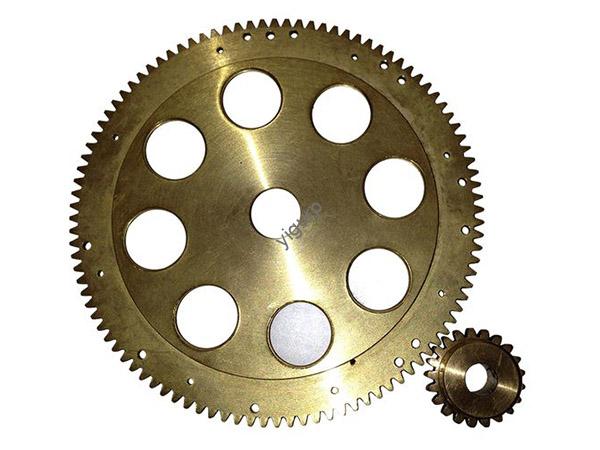
- Ingranaggi E alberi: Its fatigue strength (~400 MPa) prevents wear from repeated rotation (per esempio., conveyor system gears in warehouses).
Industria automobilistica
Cars require strong, lightweight parts to improve safety and fuel efficiency. Sleipner is used for:
- Vehicle frames: Enhances crash safety (per esempio., mid-size trucks) without adding extra weight.
- Suspension components E assi: Handles rough roads and heavy loads (tested to last 120,000+ km of driving).
Heavy Equipment
Tough jobs need tough steel. Sleipner works for:
- Excavators: Arm components that resist impact from rocks and dirt.
- Cranes: Boom sections that lift heavy loads (per esempio., construction cranes lifting steel beams).
- Mining equipment: Drill bits and conveyor parts that withstand abrasive materials like coal or iron ore.
Industria marina
Marine environments are harsh, but Sleipner holds up (with proper treatment):
- Ship structures: Hull supports and deck beams (when galvanized to fight saltwater rust).
- Offshore platforms: Framing components that resist wind, waves, e corrosione (per esempio., oil rig support legs).
3. Manufacturing Techniques for Sleipner Structural Steel
Turning raw Sleipner into usable parts requires precise steps. Here’s a breakdown of the key processes, from melting to quality control.
1. Metallurgical Processes (Fusione & Refining)
- Forno ad arco elettrico (EAF): The most common method for Sleipner. Scrap steel is melted at 1,600°C, and alloys (cromo, manganese) are added to hit chemical targets.
- Fornace ad ossigeno basico (BOF): Used for large-scale production (100+ ton batches) to reduce impurities like phosphorus, garantendo una qualità costante.
2. Rolling Processes
Rolling shapes Sleipner into standard forms for construction or manufacturing:
- Hot rolling: Steel is heated to 900–1,200°C and pressed into plates, bar, or beams (veloce, cost-effective for large parts like bridge girders).
- Cold rolling: Used for precision parts (per esempio., thin shafts or gear blanks). Steel is rolled at room temperature for smoother surfaces and tighter dimensions.
3. Trattamento termico
Heat treatment optimizes Sleipner’s properties for specific uses:
- Normalizing: Heated to 850–900°C, then air-cooled to reduce internal stress (ideal for structural beams that need uniform strength).
- Quenching and tempering: Heated to 820–860°C, quenched in water/oil, then tempered at 500–600°C. This boosts tensile strength to 800 MPa (used for high-stress parts like crane axles).
- Stress relief annealing: Heated to 550–650°C, then slowly cooled to prevent warping after welding (critical for bridge joints).
4. Trattamento superficiale
To enhance durability, Sleipner often gets surface treatments:
- Pittura: Adds a protective layer for indoor or mild outdoor use (per esempio., machine frames in factories).
- Galvanizzazione: Dips steel in zinc to fight corrosion (used for marine parts or outdoor beams).
- Shot blasting: Blasts steel with tiny metal balls to remove rust and create a rough surface for better paint adhesion.
5. Controllo qualità
No Sleipner part leaves the factory without strict testing:
- Test di durezza: Brinell tests to confirm 150–220 HB.
- Prove di trazione: Pulls samples to failure to verify yield and tensile strength.
- Microstructure analysis: Checks for uniform grain size (prevents weak spots in load-bearing parts).
- Dimensional inspection: Uses calipers or laser scanners to ensure parts match design specs (per esempio., beam length or shaft diameter).
6. Sleipner vs. Other Materials: A Comparative Analysis
How does Sleipner stack up against other structural materials? Below is a side-by-side comparison of key factors.
| Materiale | Costo (contro. Sleipner) | Resistenza alla trazione | Resistenza alla corrosione | Ideale per |
|---|---|---|---|---|
| Sleipner | Base (100%) | 700–800 MPa | Moderare | Beams, ingranaggi, assi |
| S355 structural steel | 80% | 490–630 MPa | Similar | Low-load buildings |
| S460 structural steel | 110% | 460–590 MPa | Moderare | Medium-load bridges |
| S690 structural steel | 160% | 690–820 MPa | Better | Heavy industrial use |
| Lega di alluminio (6061) | 220% | 276 MPa | Eccellente | Lightweight car parts |
| Carbon fiber composite | 550% | 1,500+ MPa | Eccellente | High-end aerospace parts |
Key Takeaways:
- contro. S355/S460: Sleipner is stronger than both, making it better for heavy-load projects (per esempio., crane booms) without the high cost of S690.
- contro. Alluminio: Sleipner has 2.5x more tensile strength but is heavier. Choose aluminum only if weight is your top priority (per esempio., electric vehicle frames).
- contro. Compositi: Composites are stronger but far more expensive. Sleipner is a budget-friendly choice for most structural needs.
7. Expert View: Yigu Technology on Sleipner Structural Steel
AtTecnologia Yigu, we’ve used Sleipner in over 400 projects—from construction beams to automotive axles. Its biggest advantage? Coerenza. Every batch meets the same strength and weldability standards, which is critical for large-scale projects. We often recommend it for clients who need a balance of performance and cost: it’s stronger than S355 but cheaper than S690. For marine projects, we pair it with our galvanizing service to boost corrosion resistance. For most mid-to-heavy load applications, Sleipner is our go-to structural steel.
FAQ About Sleipner Structural Steel
- Can Sleipner be used in saltwater environments (per esempio., piattaforme offshore)?
SÌ, but it needs surface treatment like galvanizing or epoxy coating. Without treatment, its moderate corrosion resistance will lead to rust in saltwater over time. - What heat treatment is best for Sleipner machine shafts?
Quenching and tempering is ideal. It raises tensile strength to 750–800 MPa and hardness to 200–220 HB, making shafts resistant to wear and bending. - Is Sleipner more expensive than regular carbon steel?
Yes—about 12–20% more. But its higher strength means you can use less material (per esempio., thinner beams), so total project costs often end up being similar or lower than regular steel.