
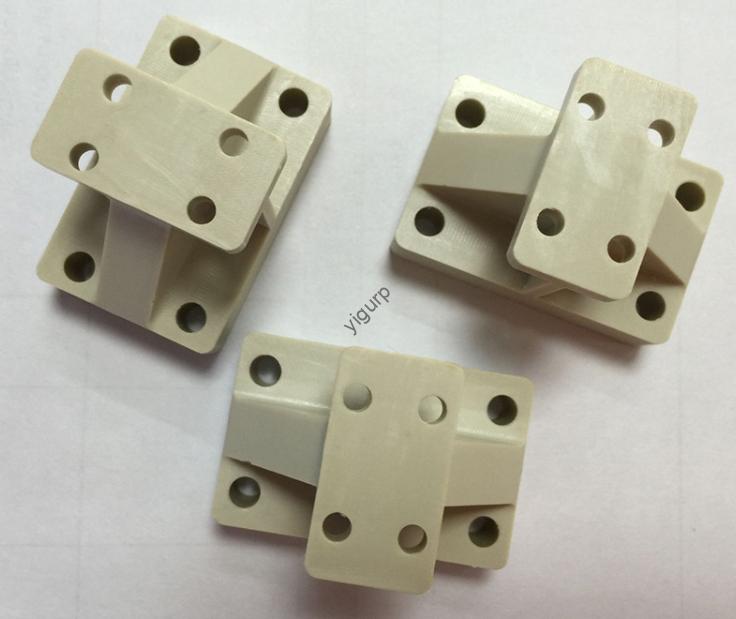
Quando si sviluppano nuovi prodotti, sia nel settore aerospaziale, automobilistico, or electronics—the CNC machining prototype shell plays a critical role. Non è solo una semplice copertura esterna; è un banco di prova per la fattibilità del progetto, prestazione, e scalabilità della produzione. Questa guida analizza tutto ciò che devi sapere sulle shell dei prototipi, dalle scelte dei materiali alle applicazioni nel mondo reale, helping you avoid common pitfalls and create high-quality prototypes.
1. What Is a CNC Machining Prototype Shell?
UN CNC machining prototype shell is a custom-designed outer component produced via Computer Numerical Control (CNC) technology to test a product’s form, adatto, and function before mass production. Unlike 3D-printed prototypes (which are often for quick visual checks), CNC-machined prototype shells use the same materials as final products (per esempio., lega di alluminio, acciaio inossidabile) and match the precision of mass-produced parts—typically ±0.005mm tolerance.
Key Purpose of Prototype Shells:
- Verify if the shell fits internal components (per esempio., circuit boards in electronic devices).
- Test durability under real-world conditions (per esempio., corrosion resistance for automotive parts).
- Validate manufacturing processes (per esempio., can the design be scaled without deformation?).
2. Top Materials for CNC Machining Prototype Shells
Choosing the right material directly impacts your prototype’s performance and cost. Aluminum alloy is the most popular choice, but other materials suit specific needs. Below is a comparison of common options:
| Materiale | Densità (g/cm³) | Resistenza alla trazione (MPa) | Resistenza alla corrosione | Costo (USD/kg) | Ideale per |
| Lega di alluminio 6061 | 2.70 | 310 | Eccellente | \(2.5–)4.0 | Electronic device shells, parti automobilistiche |
| Acciaio inossidabile 304 | 7.93 | 515 | Superiore | \(3.8–)6.5 | Attrezzature mediche, componenti marini |
| Titanium Alloy Ti-6Al-4V | 4.43 | 860 | Eccezionale | \(35–)50 | Aerospace prototype shells |
Esempio del mondo reale: A leading smartphone manufacturer used lega di alluminio 6061 for its CNC machining prototype shell. The material’s lightweight (2.7g/cm³) and good machinability allowed the team to test 3 different shell thicknesses (1.2mm, 1.5mm, 1.8mm) In 2 weeks—faster than using stainless steel and cheaper than titanium.
3. Step-by-Step Process for CNC Machining Prototype Shells
Creating a prototype shell requires careful planning to ensure accuracy and efficiency. Below is a 7-step workflow used by top manufacturers:
- Progetto & 3Modellazione D: Use CAD software (per esempio., SolidWorks, AutoCAD) to create a detailed 3D model of the shell. Define critical features like holes, scanalature, and wall thicknesses. Per esempio, a drone prototype shell needs precise mounting points for propellers—these are marked in the CAD model.
- Preparazione del materiale: Cut the raw material (per esempio., aluminum alloy sheet) into a “blank” slightly larger than the final shell (usually +5mm on all sides) to account for machining.
- Cutting Parameter Setup: Select CNC tools (per esempio., frese, trapani) and set parameters like spindle speed (10,000–15,000 RPM for aluminum) e velocità di avanzamento (500–1,000 mm/min) to avoid vibration.
- Fixture Installation: Secure the blank to the CNC machine with a rigid fixture (per esempio., vice clamps) to prevent deformation during cutting. A loose fixture can cause up to 0.1mm of error—enough to ruin a prototype.
- Lavorazione CNC: The machine follows the CAD model’s path to cut the shell. For complex shapes (per esempio., curved automotive sensor shells), 5-asse CNC machines are used to access hard-to-reach areas.
- Post-elaborazione: Clean the shell to remove metal shavings, then add surface treatments:
- Sabbiatura: For a matte finish (common in industrial prototypes).
- Anodizzazione: To improve corrosion resistance (used for aluminum shells in outdoor devices).
- Lucidatura: For a smooth, consumer-friendly look (per esempio., smartphone prototype shells).
- Ispezione & Test: Use tools like calipers and coordinate measuring machines (CMM) to check dimensions. Then test the shell—for example, an electronic device shell might undergo drop tests (1.5m height onto concrete) to check durability.
4. Advanced Technologies Boosting Prototype Shell Quality
To meet growing demands for faster, more precise prototypes, manufacturers are adopting these advanced CNC technologies:
- High-Speed Cutting (HSC): Uses spindle speeds over 20,000 RPM to reduce machining time by 30–50%. A medical device company cut the time to make a stainless steel prototype shell from 8 ore a 4.5 hours using HSC.
- Lavorazione adattiva: Adjusts cutting parameters in real time to account for material inconsistencies. This is critical for titanium prototype shells, where small material defects can cause tool breakage.
- Digital Twin Simulation: Creates a virtual copy of the machining process to predict issues (per esempio., vibrazione, surriscaldamento) before physical production. One aerospace firm used this to fix a shell deformation problem that had delayed its prototype by 2 settimane.
5. Yigu Technology’s Perspective on CNC Machining Prototype Shells
Alla tecnologia Yigu, we believe the CNC machining prototype shell is the bridge between design and mass production. Over the past 5 anni, we’ve supported 200+ clients—from startups to Fortune 500 companies—in developing prototype shells. Our team prioritizes material matching (using the same alloy as final products) and rapid iteration (delivering most aluminum prototype shells in 3–5 days). We’ve found that investing in high-precision prototype shells reduces mass production errors by 40% on average, saving clients time and cost. For small-batch or custom projects, our flexible manufacturing setup ensures even complex shell designs (per esempio., 3D curved automotive shells) meet strict tolerance requirements.
FAQ About CNC Machining Prototype Shells
Q1: How long does it take to make a CNC machining prototype shell?
UN: It depends on material and complexity. For simple aluminum shells (per esempio., a small electronic enclosure), it takes 3–5 days. For complex titanium aerospace shells, it may take 1–2 weeks.
Q2: Can CNC machining prototype shells be used for small-batch production?
UN: SÌ! A differenza della stampa 3D (which is slow for small batches), CNC-machined prototype shells can be scaled to 50–100 units without retooling. This is ideal for pre-launch product testing with real users.
Q3: How much does a CNC machining prototype shell cost?
UN: Costs vary by material and size. A small aluminum alloy shell (100x100x50 mm) typically costs \(50–)150. A large titanium aerospace shell (300x200x100mm) can cost \(500–)1,200.