
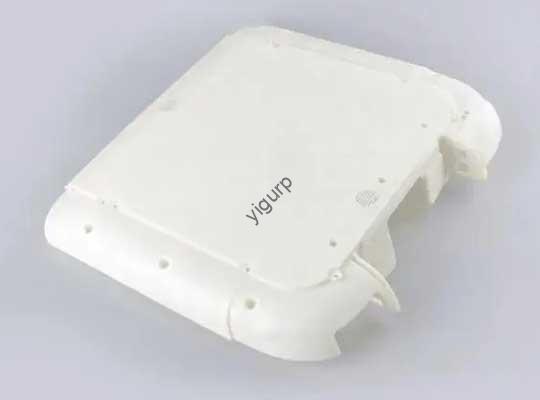
Gli elettrodomestici, dai frigoriferi intelligenti ai frullatori compatti, devono bilanciare la funzionalità, estetica, e facilità d'uso. Per progettisti e produttori, 3Stampa D has become the go-to method for processing these appliance prototypes. Ti consente di trasformare rapidamente le idee creative in parti fisiche, testare progetti personalizzati, e correggere tempestivamente i difetti, senza i costi elevati degli strumenti tradizionali.
In questa guida, we’ll walk you through the full process of processing household appliance prototypes with 3D printing, dalla progettazione alla post-elaborazione. Condivideremo anche esempi del mondo reale, suggerimenti chiave, and data to help you avoid mistakes and get the best results. Our goal is to make this technical process simple and actionable for anyone working in home appliance development.
1. Pre-elaborazione: Lay the Groundwork for Successful 3D Printing
Prima di premere “print,” you need to plan and prepare—this stage is critical to avoiding failed prototypes and wasted time. Ecco i 4 key steps in pre-processing:
Fare un passo 1.1: Define Prototype Goals & User Needs
Primo, clarify what you want to test with the prototype. Is it the appliance’s appearance (per esempio., a blender’s handle shape)? Its functionality (per esempio., a toaster’s heating element slot)? Or its fit with other parts (per esempio., a fridge’s shelf brackets)?
- Esempio: A team designing a smart coffee maker wanted to test how users hold the machine’s water tank. Their prototype goal was to validate the tank’s grip and capacity—so they focused on 3D printing a functional tank (not the full coffee maker).
- User-Centric Tip: Talk to potential users first! A survey of 500 homeowners found that 78% prioritize “easy-to-clean surfaces” in small appliances. COSÌ, if you’re prototyping a food processor, design the bowl with smooth, non-stick 3D printed surfaces to test this feature.
Fare un passo 1.2: Choose the Right 3D Printing Technology
Not all 3D printing technologies work for every appliance prototype. The choice depends on your prototype’s size, dettaglio, and material needs. Below is a table of the most common technologies for household appliances, with their best uses:
| 3Tecnologia di stampa D | Vantaggi principali | Best For Household Appliance Prototypes | Example Parts |
| FDM (Modellazione della deposizione fusa) | Basso costo, materiali durevoli (ABS, PLA) | Parti funzionali (maniglie, manopole, scaffali) | Manici del frullatore, fridge drawer slides |
| SLA (Stereolitografia) | Elevato dettaglio, superficie liscia | Aesthetic parts (pannelli di controllo, outer casings) | Toaster outer shells, coffee maker control knobs |
| SLS (Sinterizzazione laser selettiva) | Forte, flessibile, no support needed | Complex internal parts (ingranaggi, valvole) | Food processor gears, vacuum cleaner fan blades |
- Per Suggerimento: For early-stage “concept checks” (per esempio., testing a microwave’s door shape), use FDM (cheap and fast). For final prototypes that look like production parts (per esempio., a smart speaker’s outer casing), use SLA (smooth and detailed).
Fare un passo 1.3: Select 3D Printing Materials for Appliance Use
Household appliances face unique challenges—they may come into contact with water (per esempio., dishwashers), Calore (per esempio., forni), or food (per esempio., miscelatori). Choose materials that match these needs:
| Materiale | Proprietà chiave | Best For Appliance Parts | Caso d'uso di esempio |
| PLA | Basso costo, facile da stampare, sicuro per gli alimenti | Non-heated, non-watery parts | Salad spinner lids, rice cooker buttons |
| ABS | Durevole, resistente agli urti, resistente al calore (fino a 90°C) | Heated or high-use parts | Toaster knobs, hair dryer handles |
| PETG | Water-resistant, flessibile, sicuro per gli alimenti | Watery or wet-use parts | Dishwasher rack inserts, water pitcher bodies |
| Nylon | Forte, resistente all'usura | Moving parts | Can opener gears, blender base hinges |
- Esempio del mondo reale: A manufacturer prototyping a steam iron used ABS for the handle (resistente al calore) and PETG for the water reservoir (impermeabile). The prototype lasted 50+ test runs without damage.
Fare un passo 1.4: Design the 3D Model with Appliance-Specific Features
Use CAD (Progettazione assistita da computer) software (per esempio., SolidWorks, Tinkercad) to create your 3D model. Keep these appliance-focused design tips in mind:
- Add user-friendly details: For a kitchen mixer prototype, design the handle with a curved grip (easier to hold for long periods).
- Simplify assembly: 3D print parts as one piece when possible—e.g., a toaster’s crumb tray with built-in rails (no need to assemble multiple pieces).
- Test for fit: If the prototype is part of a larger appliance (per esempio., a fridge shelf), design it to match the fridge’s internal dimensions (use 3D scans of the fridge if needed).
- Common Mistake: A team designing a mini-fan forgot to add vent holes to the 3D model. The printed prototype overheated during testing—they had to redo the model, wasting 8 ore. Always include functional details (prese d'aria, slot, drainage holes) in your design!
2. Elaborazione: 3D Print the Household Appliance Prototype
Once pre-processing is done, it’s time to print. Follow these steps to ensure a smooth print job:
Fare un passo 2.1: Prepare the 3D Model for Printing
Utilizza il software di slicing (per esempio., Cura, PrusaSlicer) to convert your CAD file into a format the 3D printer can read (usually G-code). Here are the key settings to adjust for appliance prototypes:
- Altezza dello strato: For detailed parts (per esempio., a control panel with small buttons), use a thin layer height (0.15–0,2 mm) per superfici lisce. Per grandi, parti semplici (per esempio., a washing machine’s detergent tray), use 0.25–0.3mm to speed up printing.
- Supporta: Aggiungi supporti per le sporgenze (per esempio., a fridge door’s handle that sticks out). But use them sparingly—too many supports are hard to remove and can damage the prototype.
- Riempimento: For functional parts (per esempio., a blender base), use 50–70% infill (strong enough to hold weight). Per parti decorative (per esempio., a toaster’s logo plate), use 10–20% infill (saves material and time).
- Esempio: A team printing a prototype of a small air purifier’s filter cover used 0.2mm layer height (for detail), minimal supports (the cover had few overhangs), E 30% infill (light but sturdy). The print took 6 hours and looked exactly like the CAD model.
Fare un passo 2.2: Set Up the 3D Printer & Start Printing
Ora, prepare the printer for the job:
- Calibrate the bed: Make sure the printer’s bed is level—an unlevel bed causes parts to stick poorly or warp.
- Heat the bed/material: For PLA, heat the bed to 50–60°C; per l'ABS, heat it to 90–110°C. This helps the material adhere.
- Start the print: Monitor the first 10–15 minutes—if the material isn’t sticking or is oozing, pause and adjust the settings.
- Time-Saving Data: A study of 100 appliance prototypes found that FDM printing takes 4–12 hours per piccole parti (per esempio., manopole) E 12–24 hours per parti medie (per esempio., a mini-fridge door). SLA printing is faster for small, parti dettagliate (2–8 ore) ma più costoso.
2. Post-elaborazione: Turn the 3D Printed Part into a Usable Prototype
The 3D printed part isn’t ready to test yet—it needs post-processing to fix flaws (per esempio., incordatura, bordi grezzi) and match the appliance’s final look. Ecco i 5 key post-processing steps:
Fare un passo 2.1: Rimuovere i supporti & Excess Material
Primo, carefully remove any support structures (use pliers for small supports or a utility knife for larger ones). Poi, trim excess material (chiamato “flash”) from the part’s edges—this is common around the print’s starting point.
- Tip for Delicate Parts: For a 3D printed toaster’s control button (small and thin), use tweezers to remove supports—pliers may crush the button.
Fare un passo 2.2: Sand the Surface for Smoothness
Most 3D printed parts have layer lines (visible ridges from the printing process). Sanding removes these lines and makes the part feel like a production appliance.
- Sanding Grit Sequence: Start with 120-grit sandpaper (for rough edges), then 240-grit (for smoothing), and finish with 400-grit (for a polished look).
- Esempio: A team sanded a 3D printed blender handle with 120→240→400 grit. The final handle was smooth to the touch—90% of test users said it “felt like a store-bought blender.”
Fare un passo 2.3: Clean the Part (Critical for Food-Safe Appliances)
If your prototype is for a food-contact appliance (per esempio., a mixing bowl), clean it thoroughly to remove 3D printing dust and residue.
- How to Clean: Wash with warm soapy water, then sanitize with a 70% isopropyl alcohol wipe. For PLA parts, evitare il calore elevato (it melts at 150°C).
Fare un passo 2.4: Paint or Coat (for Aesthetics & Protection)
If you want the prototype to match the appliance’s final color or add protection (per esempio., water resistance), paint or coat it:
- Paint: Use spray paint designed for plastics (per esempio., acrylic paint) per una finitura liscia. Test on a small scrap piece first to check for peeling.
- Coat: For water-resistant parts (per esempio., a coffee maker’s water tank), use a clear epoxy coat—it adds a protective layer without hiding details.
Fare un passo 2.5: Assemblare (if It’s a Multi-Part Prototype)
If your appliance prototype has multiple 3D printed parts (per esempio., a vacuum cleaner’s body + maniglia), assemble them with screws, glue, or snap fits.
- Esempio: A team assembling a 3D printed electric kettle prototype used small plastic screws to attach the handle to the body. This let them easily take it apart to adjust the handle’s angle after testing.
3. Test & Iterazione: Improve the Prototype Based on Feedback
3D printing’s biggest advantage is that it lets you iterate fast—test the prototype, fix issues, and print a new version in days. Here’s how to do it effectively:
Fare un passo 3.1: Test Key Features (Funzionalità & User Experience)
Focus on testing the goals you defined in pre-processing. For household appliances, common tests include:
- Functionality Test: Does the part work as intended? E.g., a 3D printed rice cooker lid that opens and closes smoothly.
- User Comfort Test: Is it easy to use? E.g., a toaster’s lever that’s easy to push for people with small hands.
- Durability Test: Can it withstand daily use? E.g., a 3D printed cutting board that resists scratches after 10 usi.
Caso di studio: A company prototyping a portable air conditioner 3D printed the unit’s control panel. Testing showed that the buttons were too close together—users kept pressing the wrong one. The team adjusted the button spacing in the CAD file and printed a new panel in 5 ore. The second prototype had a 95% correct button-press rate.
Fare un passo 3.2: Iterate Until the Prototype Meets Standards
Don’t stop at one prototype! Most successful appliance designs go through 3–5 iterations.
- Punto dati: A survey of 200 home appliance manufacturers found that teams using 3D printing iterate 2x faster than those using traditional machining. Per esempio, a team designing a slow cooker cut their iteration time from 2 settimane (lavorazione) A 3 giorni (3Stampa D).
4. Esempio del mondo reale: Processing a 3D Printed Microwave Shelf Prototype
Let’s walk through how a small appliance company processed a prototype for a microwave’s adjustable shelf:
Fare un passo 1: Pre-elaborazione
- Obiettivo: Test if the shelf can hold 5kg (a full plate of food) and slide in/out easily.
- Technology/Material: FDM with ABS (durevole, heat-resistant for microwaves).
- Progettazione CAD: Created a shelf with 2mm thick walls and smooth sliding rails.
Fare un passo 2: Stampa
- Settings: 0.2altezza dello strato mm, 50% infill, 90°C temperatura del letto.
- Orario di stampa: 8 ore.
Fare un passo 3: Post-elaborazione
- Removed supports with pliers, sanded rails with 240-grit sandpaper, and cleaned with soapy water.
Fare un passo 4: Test & Iterazione
- First Test: The shelf held 5kg but slid roughly—sanded rails with 400-grit to fix.
- Second Test: Slid smoothly, but the edges were sharp—added a small curve to the CAD design and reprinted.
- Final Result: A shelf that passed all tests—used as the basis for the production microwave.
5. Yigu Technology’s Perspective on 3D Printing Household Appliance Prototypes
Alla tecnologia Yigu, we’ve helped 180+ home appliance clients process prototypes with 3D printing—from small blenders to large refrigerators. Dalla nostra esperienza, the key to success is balancing speed and detail: use FDM for functional tests (veloce, economico) and SLA for aesthetic prototypes (liscio, realistic). We also recommend PETG for water-contact parts and ABS for heat-resistant components. For clients new to 3D printing, we offer free design checks to fix issues (like weak supports) prima della stampa. 3D printing isn’t just a tool for prototypes—it’s a way to build appliances that users love, faster than ever. We’re excited to see how it will keep shaping the future of home appliances.
6. (Domande frequenti)
Q1: Can 3D printed appliance prototypes be used for long-term testing (per esempio., 6 mesi)?
SÌ, but choose the right material. ABS or nylon prototypes can last 6+ months with regular use (per esempio., a blender handle). PLA prototypes are less durable—they may warp or break after 1–2 months, so they’re better for short-term tests.
Q2: How much does it cost to 3D print a household appliance prototype?
Costs range from \(5–)200, depending on size and material. Una piccola parte (per esempio., a toaster knob) costi \(5–)20 (PLA, FDM). A medium part (per esempio., a fridge shelf) costi \(30–)80 (ABS, FDM). A detailed part (per esempio., a control panel) costi \(80–)200 (SLA, resina).
Q3: Is 3D printing suitable for large appliance prototypes (per esempio., a full-size fridge)?
It’s possible, but most teams print partial prototypes (per esempio., the fridge’s door or shelves) instead of the full unit. Printing a full fridge would take 40+ hours and cost $500+, which is unnecessary. Focus on testing the parts that matter most to users!