
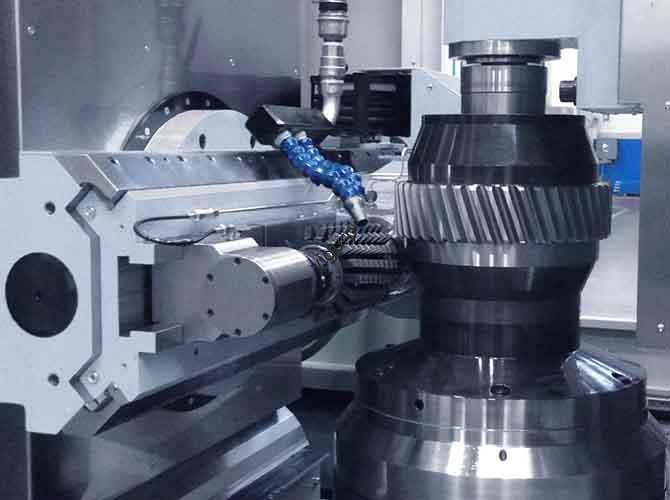
Nel campo della produzione di precisione, “una leggera differenza, mille miglia” è un criterio immutabile. Postlavorazione, come il “battaglia finale” del processo di fabbricazione, determina direttamente la precisione, prestazione, e la durata utile della parte. Che si tratti dei componenti principali del settore aerospaziale o delle apparecchiature elettroniche utilizzate nell'uso quotidiano, it is inseparable from the empowerment of post-processing technology. This article will comprehensively dismantle the core logic, practical processes and industry applications of post-processing from basic definitions to cutting-edge trends, helping you thoroughly grasp this key manufacturing link.
1. What is post-processing? Definizione, Scope and Core Values
1.1 Essential definition of post-processing
Post-processing definition refers to a series of subsequent processing processes performed to meet the final use requirements of the part after machining (such as cutting, stampaggio, 3Stampa D, ecc.) is completed. It is not a simple “finishing touch”, but a core link that corrects machining defects, improves surface performance, and ensures dimensional accuracy through physical, chemical or mechanical means.
From the perspective of the manufacturing process, post-processing belongs to thefinal stage of the manufacturing process, connecting the key transformation between semi-finished products and finished products. To give a real case: the engine piston produced by an auto parts manufacturer has a dimensional error of ±0.02mm after CNC machining, but the surface roughness Ra=1.6μm cannot meet the requirements of high temperature resistance and friction reduction. Through the post-processing process of anodizing (trattamento superficiale) + fine grinding (precision improvement), the surface roughness is finally reduced to Ra=0.2μm, and the dimensional accuracy is stable at ±0.005mm, which fully meets the installation standards.
1.2 Core categories of post-processing
Post-processing revolves around “performance optimization” E “defect correction”, and consists of three main categories:
- Surface treatment process: solve the problems of anti-corrosion, resistenza all'usura, ed estetica, such as electroplating, spruzzatura, and anodizing;
- Precision improvement technology: correct machining errors and ensure dimensional tolerances, such as fine grinding, lucidatura, laser correction;
- Final Finishing of Parts: Meet the needs of assembly, marking, ecc., such as laser marking, sbavatura, pulizia ad ultrasuoni.
These three types of processes do not exist in isolation, but form a combination scheme according to the purpose of the part. Per esempio, surgical instruments in medical devices need to go through a complete post-processing process of “deburring→ ultrasonic cleaning→ passivation treatment→laser marking”, which not only ensures safety but also meets medical industry standards.
2. Post-processing core technology and technology: practical methods and scenario selection
The choice of post-processing process needs to be combined with material characteristics, usage scenarios and cost budget. The following is a detailed analysis of the six core processes, including operation points and applicable scenarios:
2.1 Deburring technology: eliminate hidden dangers in processing
Durante la lavorazione (such as milling and drilling), the edges of parts are prone to burrs, which not only affect assembly accuracy, but also lead to stress concentration and scratching of the contact surface. Common deburring techniques fall into three categories:
| Types of technology | Principle of operation: | Applicable scenarios | vantaggio | Notes: |
| Deburring by hand | Manual grinding with the help of files, sandpaper and other tools | Piccoli lotti, complex structural parts | Low cost and high flexibility | low efficiency and unstable quality |
| Mechanical deburring | Batch processing by grinding wheels, brushes and other equipment | Large volumes, parti strutturali semplici | High efficiency and good consistency | May damage the surface of the part |
| Laser deburring | Uses laser high temperature to melt burrs | Alta precisione, tiny parts | Nessun contatto, alta precisione | The cost of equipment is higher |
Industry case: After using laser deburring technology for gear parts produced by a precision instrument factory, the burr removal rate reached 99%, the processing efficiency was 15 times higher than that of manual labor, and the tooth surface damage caused by traditional mechanical deburring was avoided, and the product qualification rate increased from 89% A 98.5%.
2.2 Surface polishing method: improve surface quality
The core goal of surface polishing is to reduce surface roughness and improve the frictional properties, tightness, or aesthetics of parts. According to different precision requirements, it is divided into three grades:
- Rough polishing: using grinding wheels, whetstone and other tools to remove processing traces, roughness Ra=0.8-1.6μm, suitable for pretreatment of semi-finished products;
- Medium polishing: use polishing paste + cloth wheel to reduce the roughness to Ra=0.2-0.8μm, suitable for general mechanical parts;
- Fine polishing: Through diamond polishing paste + wool wheel, Ra≤0.2μm is achieved, suitable for high-end products such as precision instruments and optical components.
Practical points: During polishing, it is necessary to control the pressure and rotation speed to avoid overheating and deformation of parts. Per esempio, when fine polishing of stainless steel parts, the rotation speed of the cloth wheel is recommended to be controlled at 1500-2000r/min, and the polishing paste is W5-W10 model, which can effectively avoid surface scratches.
2.3 Heat treatment technology: Enhance material properties
Trattamento termico (per esempio., tempra, tempera) is a process that changes the internal structure of a material by controlling temperature changes to improve hardness, forza, or toughness. Common processes and applications are as follows:
- Tempra: heating the parts above the critical temperature, raffreddamento rapido (oil cooling, water cooling) to improve hardness and wear resistance, suitable for gear and shaft parts;
- Temperamento: Heating at low temperature after quenching to eliminate internal stress, improve toughness, avoid brittle cracking of parts, often used in conjunction with quenching;
- Ricottura: slowly heated and then cooled to reduce hardness and improve machinability, suitable for the pretreatment of high-hardness materials.
Authoritative data: According to the ISO 683-15 standard, Dopo “tempra (850°C) + tempera (200°C)” trattamento, NO. 45 steel can reach HRC55-60 and tensile strength ≥ 1200MPa, which is more than 40% higher than that of the untreated state.
2.4 Electroplating and electroless plating: Enhance surface protection
Both electroplating (electrolytic deposition) and electroless plating (no electrolytic deposition) are used to form a metal coating on the surface of a part, with the core difference being whether or not electricity is required:
- Galvanotecnica: requires external power supply, uniform coating thickness (5-50µm), strong adhesion, suitable for galvanizing (anti-corrosion), cromatura (resistente all'usura), nichelatura (decorazione);
- Electroless plating: No need to apply electricity, using chemical reaction to deposit coating, suitable for complex structures, deep porous parts, such as electroless nickel-phosphorus alloys, corrosion resistance is better than electroplating.
Application scenarios: In auto parts, chassis bolts are galvanized, and the salt spray test can reach 720 ore; The pins of electronic components are electroless silver-plated to reduce contact resistance and improve conductivity.
2.5 Spraying and coating technology: multi-functional protection solutions
Spraying technology adheres the coating to the surface of the part through high pressure atomization, suitable for large areas, complex shape parts, common types include:
- Verniciatura a polvere: environmentally friendly and solvent-free, coating thickness 60-150μm, strong weather resistance, suitable for home appliance shells, building materials;
- Electrophoretic spraying: uniform coating, strong adhesion, excellent anti-corrosion performance, suitable for automobile body and chassis parts;
- Nano Coating: Uses nanomaterials (such as titanium dioxide, nitruro di titanio) with a thickness of only 1-10μm, which is both wear-resistant and self-cleaning, suitable for high-end mechanical parts.
Innovative case: An aerospace company uses nano-ceramic coating to treat engine blades, with a coating thickness of 5μm and a high temperature resistance of up to 1200°C, which increases the service life of traditional coatings by 3 times and reduces maintenance costs.
2.6 Laser Engraving and Marking: Precise Marking Solutions
Laser marking uses a laser to form permanent marks (testo, QR code, logo) on the surface of the part, which has the following advantages:
- Alta precisione (minimum character 0.1mm) for tiny parts;
- No contact processing, no damage to the performance of parts;
- The mark is permanent wear-resistant, resistant to high and low temperatures, e corrosione.
Industry application: Medical devices need to be marked with product number and expiration date, and laser marking can meet the traceability requirements of the medical industry. 3D printed parts are marked with laser to record the printing parameters for easy quality control.
2.7 Pulizia ad ultrasuoni: Efficient removal of oil impurities
Ultrasonic cleaning uses high-frequency sound waves (20-80kHz) to break the tiny bubbles and peel off oil and metal debris on the surface of the parts, suitable for:
- oil cleaning of precision parts (such as bearings and gears);
- Resin residue removal from 3D printed parts;
- Flux cleaning of electronic components.
Operating parameters: The cleaning temperature is recommended to be 50-60°C, the cleaning time is 3-10 minuti, and the cleaning efficiency is 5-10 times higher than that of traditional immersion with special cleaning agents (such as alkaline cleaning agents and organic solvents).
3. Material adaptability of post-processing: a guide to process selection for different materials
The physical and chemical properties of different materials vary greatly, and the post-processing process needs to be adjusted to avoid problems such as coating peeling and material deformation. Here are the post-processing options for five common materials:
3.1 Metal Post-processing (Lega di alluminio, Acciaio inossidabile)
- Lega di alluminio: bassa densità, easy oxidation, post-processing is mainly based on surface protection, recommended process: anodizzazione (improving hardness and corrosion resistance), sabbiatura (beautiful and anti-slip), marcatura laser;
- Precautions: Before anodizing, the surface oxide film should be completely removed, otherwise the adhesion of the coating will be poor;
- Acciaio inossidabile: strong corrosion resistance, but the surface is prone to scratches, recommended process: passivation treatment (to enhance corrosion protection), fine polishing (to improve surface finish), galvanica (decoration needs);
- Caso: The stainless steel pots produced by a kitchenware manufacturer can be salt spray tested for up to 1000 hours after passivation treatment + brushed polishing, and the surface is free of scratches, which meets food contact safety standards.
3.2 Post-treatment of plastic parts
The plastic material is soft, and post-processing needs to avoid deformation caused by high temperature and high pressure, recommended process:
- Trattamento superficiale: pittura (decorazione), UV curing coating (resistente all'usura);
- Accuracy correction: hand polishing, low-temperature plasma treatment;
- Identificazione: Laser marking (CO2 laser should be selected to avoid damaging the plastic).
Common problems: Plastic parts are prone to sagging and bubbles after painting, solution: thoroughly clean the surface oil stains before painting, control the thickness of the painting (10-20μm in a single time), and use low-temperature drying (60-80°C).
3.3 Composite material modification
Materiali compositi (such as carbon fiber, glass fiber reinforced plastic) have high strength and lightweight characteristics, but are more difficult to post-process, and the recommended process is recommended:
- Sbavatura: laser deburring (nessun contatto, avoiding fiber delamination);
- Trattamento superficiale: plasma spraying (to improve coating adhesion);
- Ispezione di qualità: ultrasonic testing (detection of internal defects).
Applicazioni industriali: Carbon fiber wing components in the aerospace field, after laser deburring + plasma spraying, the surface flatness error ≤ 0.1mm, meeting aerodynamic requirements.
3.4 High-temperature material treatment
High-temperature materials (per esempio., leghe di titanio, superalloys) are often used in extreme environments (aero engines, rocket propulsion), and post-processing requires both high temperature resistance and corrosion resistance:
- Trattamento termico: vacuum quenching (avoiding oxidation), solution strengthening (improving high temperature strength);
- Trattamento superficiale: thermal spraying (per esempio., plasma spraying ceramic coating), chemical vapor deposition (CVD);
- Data support: Titanium alloy can work for a long time in a 600°C environment after vacuum quenching (950°C) + thermal spraying, and its service life is more than 2 times higher than that of untreated.
3.5 Relationship between material hardness and post-processing
Material hardness directly affects the choice of post-processing process:
- Low hardness materials (HRC<30, such as aluminum alloys, plastica): mechanical polishing, electroplating and other processes can be used, and the processing difficulty is low;
- Medium-hardness materials (HRC 30-50, ad esempio 45 acciaio, ottone): need to be used with hard tools (such as diamond grinding wheels) for fine grinding and quenching;
- High hardness materials (HRC>50, such as bearing steel, carburo): Non-contact processes such as laser machining and ultrasonic machining are recommended to avoid tool wear.
4. Quality control and testing of post-processing: standard, methods and tools
The quality of post-processing directly determines the product qualification rate, and it is necessary to establish a dual system of “controllo del processo + finished product inspection”. The following are the core detection indicators and methods:
4.1 Core detection indicators
Post-processing quality testing mainly focuses on three indicators:
- Rugosità superficiale: measures the degree of surface flatness, common parameter Ra (arithmetic mean deviation), in μm;
- Precisione dimensionale: verify whether the part meets the design tolerance, including dimensional error, shape and position tolerance (parallelismo, perpendicolarità, ecc.);
- Coating performance: For surface treated parts, the coating thickness, adhesion, and corrosion resistance are measured.
4.2 Key detection methods
| Testing items | Detection method | Equipment tools | Industry standard |
| Rugosità superficiale | Contact measurement, non-contact measurement | Roughness meter, laser profiler | GB/T 1031-2009 |
| Precisione dimensionale | Manual measurement, automatic inspection | Micrometro, coordinate measuring machine | ISO 10360-2 |
| Coating thickness | Magnetometry, eddy current method | Coating thickness gauge | ISO 2178 |
| Resistenza alla corrosione | Salt spray test, damp heat test | Salt spray test chamber | ASTM B117 |
| Prove non distruttive | Ultrasonic inspection, X-ray inspection | Ultrasonic flaw detector, X-ray detector | ISO 9712 |
Practical case: A precision mold factory uses a coordinate measuring machine (automatic testing system) to inspect the post-processed mold cavity, with a measurement accuracy of ±0.001mm, which can automatically generate a test report, che è 3 times higher than the traditional manual measurement efficiency and reduces the error rate by 80%.
4.3 Quality inspection standards and systems
Commonly used quality inspection standards in the industry include:
- ISO 9001: General Quality Management System, standardizing the standardization of post-processing processes;
- ISO 13485: A special standard for the medical device industry, which has strict requirements for cleanliness and biocompatibility of post-processing;
- IATF 16949: The automotive industry standard emphasizes process control and traceability in post-processing.
Enterprise practice: After an auto parts manufacturer passed the IATF 16949 certificazione, it established a post-processing quality traceability system, and the post-processing parameters of each part (such as heat treatment temperature, spray thickness) can be queried through QR codes, and the product defect rate was reduced from 1.2% A 0.3%.
5. Application fields of post-processing: industry cases and customized solutions
Post-processing technology has penetrated into various fields of precision manufacturing, and the following are the application scenarios and customized solutions in six core industries:
5.1 Post-processing of aerospace parts
Aerospace parts require extremely high precision and reliability, and post-processing is based on “resistenza alle alte temperature, peso leggero, e resistenza alla fatica”:
- Typical parts: engine blades, fuselage structural parts, navigation instrument shells;
- Core processes: vacuum heat treatment, laser correction, nano coating, pulizia ad ultrasuoni;
- Caso: An aero engine blade is processed after “fine grinding→ vacuum quenching → plasma spraying”, and the blade accuracy error is ≤0.01mm, which can withstand a high temperature of 1500°C and meet the requirements of supersonic flight.
5.2 Auto parts modification
Auto parts post-processing takes into account both performance and cost, and is mainly divided into three categories:
- Safety components (e.g. brake discs, knuckles): tempra + passivation treatment to improve strength and corrosion resistance;
- Exterior parts (such as body panels, ruote): electrophoretic spraying + polishing to ensure aesthetics and weather resistance;
- Parti funzionali (e.g. gearbox gears): Fine grinding + deburring to reduce friction losses.
Data support: The car body with electrophoresis spraying can be tested for up to 1000 ore, and the service life is 50% higher than that of traditional spraying.
5.3 Surface treatment of medical devices
Medical device post-processing needs to meet the requirements of “sterilità, non-toxicity, and disinfection resistance”:
- Core processes: pulizia ad ultrasuoni (removal of impurities), passivation treatment (anti-corrosion), marcatura laser (tracciabilità);
- Special requirements: surface roughness Ra≤0.2μm to avoid bacterial growth; Coating must pass biocompatibility test (ISO 10993);
- Caso: Surgical scissors can withstand 134°C steam sterilization after post-processing, maintaining sharpness and corrosion resistance even after 50 reuses.
5.4 Precision instrument processing
Precision instrument (per esempio., microscopes, sensori) parts require extremely high dimensional accuracy and surface quality:
- Core processes: fine polishing (Ra≤0.1μm), laser correction, vacuum coating;
- Testing standards: dimensional tolerance ±0.001mm, shape and position tolerance ≤0.005mm;
- Applicazione: After post-processing, the surface flatness error of a sensor chip shell ≤ 0.002mm to ensure the accuracy of sensor signal transmission.
5.5 Post-processing of mold manufacturing
Mold post-processing directly affects the quality of product forming, and the core requirements are “high hardness, elevata resistenza all'usura, e alta precisione”:
- Core process: tempra (HRC 55-60), fine grinding, lucidatura, nitriding treatment;
- Caso: After the cavity of the injection mold is finely polished + nitrided, the surface roughness Ra=0.05μm, the plastic parts produced are free of scratches, and the service life of the mold is increased from 100,000 times to 500,000 times.
5.6 Electronic component packaging processing
The post-processing of electronic components is based on “protection, isolamento, and heat dissipation”:
- Core processes: epoxy resin packaging (isolamento), heat dissipation coating (conduttività termica), marcatura laser (marking);
- Requirements: Dimensional error after packaging ≤0.05mm, coating insulation resistance ≥ 10^12Ω;
- Applicazione: After packaging and processing, the LED chip can withstand the ambient temperature of –40°C~85°C, and the heat dissipation efficiency is increased by 30%.
6. Industry trends and innovations in post-processing: automazione, greening and intelligence
With the transformation of the manufacturing industry to “fascia alta, intelligent and green”, post-processing technology also shows three major development trends:
6.1 Automated post-processing technology
Automation is the core direction to solve the problem of low post-processing efficiency and unstable quality, which is mainly reflected in:
- Production line integration: Integrate deburring, lucidatura, testing and other processes into automated production lines to reduce manual intervention;
- Robot application: Industrial robots (such as six-axis robots) are equipped with special tools to complete high-precision post-processing operations. Per esempio, in the automated polishing production line of an auto parts factory, the robot identifies the position of parts through a visual positioning system, with a polishing accuracy of ±0.003mm, an increase of 8 times the daily production capacity compared with manual labor, and a quality consistency of 99.8%;
- Online inspection integration: Link testing equipment with processing equipment to achieve a closed loop of “processing-inspection-correction”. Per esempio, in the laser deburring production line, the visual inspection system provides real-time feedback on the burr residue, automatically adjusting the laser power and path to avoid secondary processing.
6.2 Green and environmentally friendly post-processing technology
Tightening environmental protection policies promote the transformation of post-processing to “low energy consumption and low pollution”, and core innovations include:
- Chromium-free passivation technology: replacing traditional chromium-containing passivation, using zirconium and titanium passivators, reducing heavy metal emissions by 90%, and corrosion resistance is the same (salt spray test ≥ 720 ore), which has been widely used in the automobile and home appliance industries;
- Water-based spraying technology: using water as a solvent instead of organic solvents, reducing VOC emissions by more than 80%, and increasing the utilization rate of coatings from 40% A 85% of traditional spraying with electrostatic spraying process;
- Energy-saving heat treatment: Induction heating and vacuum heat treatment are used to replace resistance furnace heating, which reduces energy consumption by 30-50%, reduces the generation of oxide scale, and reduces subsequent cleaning costs.
Industry case: After a home appliance company changed from traditional solvent-based spraying to water-based electrostatic spraying, it reduced annual VOC emissions by 120 tonnellate, reduced paint procurement costs by 20%, and obtained the “Green Factory” certificazione, significantly improving product market recognition.
6.3 Intelligent post-processing solutions
With Industry 4.0 tecnologia, post-processing is moving towards “data-driven, precisely controlled”:
- Digital twin technology: Construct a virtual model of the post-processing process, simulate the machining effect under different parameters, and optimize the process plan in advance. Per esempio, an aerospace company used digital twins to optimize the engine blade polishing process, shortening the R&D cycle by 40% and reducing trial and error costs by 60%.
- Internet delle cose (IoT) monitoring: Install sensors on processing equipment to collect temperature, pressione, rotation speed and other data in real time, and analyze equipment operation status and processing quality through the cloud platform. When the parameters deviate from the threshold, the system automatically alarms and adjusts to avoid batch defects.
- AI Visual Inspection: Uses artificial intelligence algorithms to identify surface defects (such as scratches and coating peeling), with a detection speed of more than 10 times faster than manual inspection and a false positive rate of less than 0.1%, suitable for high-volume production scenarios.
7. Yigu Technology’s view
Post-processing is the “value sublimation link” of precision manufacturing, and its technical level directly reflects the high-end capabilities of the manufacturing industry. At present, the industry is facing the dual challenges of “improving precision requirements” E “green and low-carbon constraints”, and enterprises need to jump out of the “single process optimization” thinking and turn to “full-process solutions”. Yigu Technology believes that the deep integration of automation and intelligence is the key to breaking the game – only by predicting process risks in advance through digital twins, ensuring processing consistency with robots and online testing, and reducing environmental impact with green processes can we establish core competitiveness in the high-end manufacturing track. At the same time, post-processing technology needs to be collaboratively innovated with material research and development and front-end processing to form a closed loop of “design-processing-post-processing” to truly meet the ultimate needs of aerospace, medical devices and other fields.
8. FAQ FAQs
Q1: What is the proportion of post-processing costs to the total cost of products?
UN: There are large differences depending on the industry and product type, generally accounting for 10-30%. High-end precision parts (such as aero engine blades) account for more than 40% of post-processing costs due to complex processes. Common mechanical parts (such as standard parts) account for about 10-15%. Rational selection of process combinations (e.g. automation equipment for mass production) can reduce costs.
Q2: How to avoid part deformation caused by post-processing?
UN: The core lies in “matching process and material properties”:( 1) Avoid high-temperature processes (such as high-temperature quenching) for low-hardness materials (such as plastics), and choose low-temperature plasma treatment and manual polishing; (2) Non-contact processing (laser, ultrasonic) for high-hardness materials (such as bearing steel) to reduce mechanical stress; (3) Timely tempering after heat treatment to eliminate internal stress; (4) Control the feed rate and rotation speed during processing to avoid local overheating.
Q3: How to trace the quality of the post-machined parts?
UN: Three solutions are recommended: (1) Laser marking QR code/barcode to record processing equipment, parametri, test results and other information; (2) Establish a digital traceability system to bind the part ID to the processing data to support the whole process query; (3) Adopt batch management to classify and archive the processing records and test reports of the same batch of parts to facilitate problem traceability.
Q4: What are the differences in post-processing standards in different industries?
UN: The core differences focus on “requisiti di precisione” E “special performance”:( 1) Aerospaziale: Emphasize high temperature resistance and fatigue resistance, following ISO 9001 e gli standard AS9100; (2) Dispositivi medici: Focus on biocompatibility and sterility, and comply with ISO 13485 and GMP standards; (3) Industria automobilistica: focus on corrosion resistance and consistency, following IATF 16949 standard; (4) Industria elettronica: focus on insulation and heat dissipation, and implement IPC-A-610 standards.
Q5: What are the future development priorities of post-processing technology?
UN: Three major directions: (1) Micro-nano post-processing: Meet the precision requirements of micro-parts (such as MEMS sensors) and develop nano-level polishing and laser micromachining technologies; (2) Green process iteration: promote environmental protection technologies such as chromium-free passivation and water-based spraying to achieve “zero emission” post-elaborazione; (3) Intelligent deep integration: optimize process parameters and simulate the machining process through AI to create an “unmanned” post-processing production line.