
Our Polyphenylene Sulfide PPS CNC Machining Services
Elevate your high-demand projects with Polyphenylene Sulfide (PPS) CNC Machining from Yigu Technology. As a leader in processing high-performance thermoplastics, we craft top-tier custom machined parts for industries like automotive, aerospace, and medical—combining PPS’s exceptional thermal stability, chemical resistance, and high-temperature performance with cutting-edge CNC technology. Whether you need rapid prototypes or large-scale production, our expertise in engineering polymer machining delivers reliable, cost-effective solutions that meet the strictest industry standards.
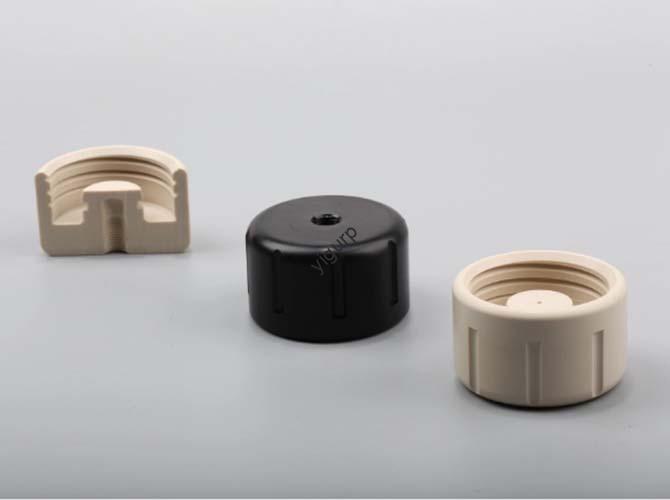
What Is Polyphenylene Sulfide (PPS) CNC Machining?
Polyphenylene Sulfide (PPS) is a rugged high-performance thermoplastic and engineering polymer renowned for its ability to endure extreme conditions. When paired with CNC Machining—a computer-controlled machining process that uses precision tools to shape materials—PPS becomes a top choice for critical components requiring unwavering durability and consistency.
At its core, PPS CNC machining leverages PPS’s unique material properties, such as resistance to high temperatures (up to 220°C continuous use, 260°C short-term), excellent electrical insulation, and minimal moisture absorption. Unlike less resilient plastics, PPS retains its strength and shape even in harsh environments, making it ideal for applications like high-temperature industrial parts, aerospace components, and medical devices. CNC technology ensures every part is identical, eliminating the variability of manual machining and guaranteeing repeatable quality.
Our Capabilities: Precision Tailored to Your Needs
Yigu Technology’s PPS CNC Machining capabilities are engineered to tackle the most complex manufacturing challenges. Our team combines advanced equipment with years of expertise to deliver services that prioritize accuracy, speed, and quality assurance—all customized to your project’s unique requirements.
| Capability | Key Features | Typical Applications |
| Precision Machining | Achieves tight tolerances as low as ±0.002mm; perfect for intricate designs | Medical device components, electronic connectors |
| Custom Machined Parts | Fully customizable to CAD/CAM specs; no minimum order quantity | Aerospace brackets, industrial tool housings |
| High-Tolerance Machining | Complies with ISO 9001 and ISO 13485 standards for critical applications | Surgical instruments, automotive sensors |
| Complex Part Production | Handles undercuts, thin walls (down to 0.3mm), and deep cavities with 5-axis CNC | Electronic enclosures, aerospace valves |
| Rapid Prototyping | Delivers functional PPS prototypes in 24–48 hours for design validation | Product development, testing, and iteration |
| Production Machining | Scalable to 70,000+ units/month with consistent quality control | Consumer goods components, industrial fasteners |
Every project undergoes strict inspection at every stage—from raw material testing to final dimensional checks—to ensure we exceed your expectations.
Process: How We Machine PPS for Optimal Results
The PPS CNC Machining process at Yigu Technology is a structured, detail-oriented workflow designed to maximize PPS’s performance while minimizing waste and errors. Each step is optimized for PPS’s unique characteristics (like its high melting point and rigidity) to ensure flawless results.
Step 1: Design & Tool Selection
We start by reviewing your CAD files to identify key features and select the right tool selection. For PPS, we use carbide tools (e.g., end mills, drills) with specialized coatings (like TiAlN) that resist wear—critical for handling PPS’s hardness. Our engineers also adjust cutting parameters (speed: 2,000–4,000 RPM; feed rate: 70–250 mm/min) to prevent overheating and maintain dimensional accuracy.
Step 2: Machine Setup
Our CNC mills and lathes are calibrated specifically for PPS to reduce vibration and ensure stability. We use vacuum clamps or high-torque mechanical fixtures to secure PPS stock (sheets, rods, or blocks), preventing movement during machining that could compromise precision—especially important for PPS’s tendency to retain heat.
Step 3: Machining Operations
- CNC Milling: Creates 3D shapes, slots, and pockets; ideal for complex parts like high-temperature industrial housings.
- CNC Turning: Produces cylindrical parts (e.g., shafts, bushings) with precision tolerances.
- Drilling Operations: Creates precise holes (as small as 0.2mm) using high-speed, coolant-assisted drills to avoid chipping and heat buildup.
- Grinding Processes: Finishes surfaces to achieve smoothness (Ra < 0.4μm) for applications requiring sterility or aerodynamics.
Step 4: Quality Inspection
Every PPS part is inspected using coordinate measuring machines (CMMs) and laser scanners to verify compliance with tolerance standards. We also conduct material tests (e.g., thermal stability checks at 220°C) to ensure the part meets PPS’s inherent performance criteria.
Materials: Choosing the Right PPS Grade for Your Project
Not all Polyphenylene Sulfide (PPS) is the same—we offer a range of grades to match your project’s specific needs, from high-temperature resistance to cost efficiency. Each grade is selected based on your application’s environmental and performance demands.
| PPS Grade | Key Properties | Recommended Industries |
| Pure PPS | Exceptional thermal stability (up to 220°C), excellent electrical insulation | Electronics (circuit boards), appliances |
| PPS Resin | Raw, moldable form; ideal for custom shapes before machining | Prototyping, small-batch production |
| Glass-Filled PPS | 10–50% glass fiber reinforcement; boosts strength-to-weight ratio by 40% | Aerospace (structural parts), industrial machinery |
| Carbon-Filled PPS | 5–30% carbon fiber reinforcement; enhances thermal conductivity and rigidity | High-temperature industrial parts, automotive under-the-hood components |
| Flame-Retardant PPS | UL94 V-0 rating; resists fire and smoke emission (even at high temps) | Electronics (enclosures), aerospace parts |
| Reinforced PPS | Blended with minerals or aramid fibers for enhanced impact resistance | Heavy equipment components, sporting goods |
| Recycled PPS | Sustainable option with 93% of pure PPS’s performance; cost-effective | Non-critical industrial parts, consumer goods |
| Specialty PPS Grades | FDA-compliant (for food/medical) or low-outgassing (for aerospace) | Medical (surgical tools), aerospace (satellite components) |
Our team works closely with you to select the optimal grade—balancing performance, sustainability, and cost-effective production for your project.
Surface Treatment: Enhancing PPS’s Performance & Appearance
While PPS boasts impressive natural properties, surface treatment can further enhance its functionality, durability, or aesthetics. We offer treatments specifically compatible with PPS to avoid damaging its structural integrity, even under high temperatures.
| Treatment | Purpose | Benefits for PPS Parts |
| Anodizing | Applies a protective oxide layer (for metal-coated PPS) | Improved corrosion resistance (even at 200°C) |
| Painting | Adds color or branding; uses high-temperature paints (up to 250°C) | Enhanced aesthetics, UV protection |
| Plating | Adds metal coatings (e.g., nickel, chrome) for conductivity or wear resistance | Electrical contacts, decorative parts |
| Polishing | Removes machining marks; achieves a mirror finish (Ra < 0.1μm) | Medical devices (sterility), consumer goods |
| Sandblasting | Creates a matte, textured surface for grip or adhesion | Industrial tool handles, automotive controls |
| Coating | Applies Teflon or ceramic coatings for extra chemical resistance and heat protection | Chemical processing equipment, high-temperature industrial parts |
| Heat Treatment | Reduces internal stresses post-machining; improves dimensional stability (even at high temps) | Precision parts (gears, sensors) |
Tolerances: Setting the Bar for PPS Precision
Tolerances are critical in PPS CNC machining—especially for parts used in medical, aerospace, or high-temperature industrial applications where even minor deviations can cause failure. At Yigu Technology, we prioritize tight tolerances and dimensional accuracy to ensure your parts fit and function perfectly, even under extreme conditions.
Typical Tolerances for PPS CNC Machining
| Feature Type | Standard Tolerance | High-Precision Tolerance |
| Linear Dimensions (≤100mm) | ±0.03mm | ±0.001mm |
| Hole Diameters | ±0.015mm | ±0.0008mm |
| Flatness | 0.06mm/m | 0.007mm/m |
| Concentricity | 0.02mm | 0.003mm |
To ensure accuracy, we use advanced measurement techniques (e.g., optical comparators with high-temperature chambers) and inspection methods (e.g., first-article inspection under thermal stress) for every project. Our quality team also collaborates with you to define tolerance requirements that balance precision and cost.
Advantages: Why PPS CNC Machining Stands Out
Polyphenylene Sulfide (PPS) CNC Machining offers a host of advantages that make it a top choice for engineering applications—outperforming both traditional plastics and metals in high-temperature, harsh-environment scenarios.
| Advantage | Description | Impact for Your Business |
| High Strength-to-Weight Ratio | 60% lighter than aluminum with similar strength; reduces part weight by up to 50% | Lower shipping costs, improved fuel efficiency (automotive/aerospace) |
| Chemical Resistance | Resists acids, bases, oils, and solvents (even at 200°C) | Longer part lifespan in harsh environments (chemical processing, automotive) |
| Thermal Stability | Withstands continuous use at 220°C and short-term exposure to 260°C; no warping | Suitable for high-heat applications (industrial ovens, engine components) |
| Electrical Insulation | Maintains dielectric properties even at high temperatures; ideal for electronics | Reduces risk of electrical failure (circuit boards, sensors) |
| Dimensional Stability | Low moisture absorption (<0.1%); no swelling or shrinking in humid conditions (or high temps) | Consistent part fit (critical for assemblies like medical devices) |
| Cost-Effective Production | Faster machining speeds than metals; minimal waste due to CNC precision | Lower per-unit costs for high-volume orders |
| Design Flexibility | CNC technology enables complex geometries (e.g., thin walls, undercuts) that are hard to achieve with metals | Freedom to innovate in product design (aerospace parts, medical devices) |
| High-Temperature Performance | Retains strength and shape at temperatures that degrade other plastics (e.g., PPO, PSU) | Eliminates need for metal in high-heat applications, reducing costs |
Applications Industry: Where PPS CNC Machined Parts Excel
PPS CNC Machining serves a diverse range of industries, thanks to PPS’s versatility, durability, and exceptional high-temperature performance. Below are key sectors where our PPS parts deliver exceptional value:
- Automotive: Components like sensor housings, engine gaskets, and fuel system parts—benefiting from PPS’s thermal stability and chemical resistance to engine oils and high under-the-hood temperatures.
- Aerospace: Structural brackets, electronic enclosures, and hydraulic system parts—requiring high-tolerance machining and low-outgassing PPS grades that perform at extreme altitudes and temperatures.
- Electronics: Circuit board insulators, LED heatsinks, and high-voltage connectors—leveraging PPS’s electrical insulation and heat resistance (critical for compact, high-power devices).
- Medical: Surgical tool handles, diagnostic device housings, and implant components—using FDA-compliant PPS and smooth surface treatment for sterility and compatibility with autoclaving.
- Industrial Equipment: Gear housings, pump parts, and conveyor components for high-temperature machinery (e.g., industrial ovens)—needing durability and resistance to industrial chemicals.
Consumer Goods: Appliance parts (e.g., coffee maker heating elements), sporting goods (e.g., high-performance bike components), and electronics casings—balancing performance and aesthetics.
Case Studies: Real-World Success with PPS CNC Machining
Case Study 1: Medical Surgical Instrument Handle
Challenge: A medical device manufacturer needed a surgical handle that could withstand repeated autoclaving (135°C) and resist harsh chemical disinfectants, while maintaining a smooth, bacteria-resistant surface.
Solution: We used FDA-compliant PPS and CNC turning to create a handle with a tolerance of ±0.003mm. A polishing treatment (Ra < 0.1μm) was added to ensure sterility, and a ceramic coating for extra chemical resistance.
Result: The handle passed 1,500+ autoclave cycles without degradation; 15,000+ units produced monthly with 0 defects—reducing the client’s part replacement costs by 30%.
Case Study 2: Aerospace Electronic Enclosure
Challenge: An aerospace client required a lightweight enclosure for satellite electronics—needing low-outgassing, tight tolerances (±0.001mm), and resistance to extreme temperatures (-70°C to 200°C).
Solution: We machined specialty low-outgassing PPS using 5-axis CNC milling. A ceramic coating was applied for extra thermal protection, and parts were inspected in a high-temperature chamber to verify stability.
Result: The enclosure met NASA’s outgassing standards (total mass loss < 1%); weight was reduced by 45% compared to aluminum alternatives, cutting launch costs by an estimated $12,000 per satellite.
Case Study 3: Industrial High-Temperature Pump Impeller
Challenge: An industrial client needed a pump impeller for a chemical processing plant—requiring resistance to 200°C temperatures and corrosive hydrochloric acid, with a precision tolerance of ±0.01mm.
Solution: We used carbon-filled PPS (for enhanced thermal conductivity) and CNC milling to create the impeller. A Teflon coating was added for extra chemical resistance, and parts were tested under thermal stress to verify performance.
Result: The impeller lasted 5x longer than the previous metal version; reduced the client’s maintenance costs by 50% and eliminated downtime due to part failure.
Why Choose Us: Yigu Technology’s Expertise in PPS CNC Machining
When you partner with Yigu Technology for PPS CNC Machining, you’re not just hiring a supplier—you’re gaining a team of experts dedicated to your project’s success, especially in high-temperature and harsh-environment applications. Here’s why clients across industries trust us:
- Expertise in PPS Machining: 16+ years of specialized experience working with high-performance thermoplastics like PPS; our engineers understand PPS’s unique machining challenges (e.g., heat management, tool wear under high temps).
- High-Quality Products: Every part undergoes 5-step quality checks (raw material, in-process, post-machining, thermal stress testing, final inspection) to ensure compliance with ISO 9001, ISO 13485, and AS9100 standards.
- Experienced Machinists: Our team holds certifications in CNC operation and industry-specific standards (e.g., medical device manufacturing, aerospace precision machining).
- Excellent Customer Service: A dedicated project manager guides you from design to delivery—providing weekly progress updates, thermal performance reports, and addressing questions within 24 hours.
- Fast Turnaround Times: Prototypes ready in 24–48 hours; production orders shipped in 3–7 business days (30% faster than industry averages for high-performance plastics).
- Competitive Pricing: Our strategic partnerships with PPS suppliers (including recycled PPS options) and efficient machining processes reduce costs—passing savings to you without compromising quality.
Commitment to Innovation: We invest in the latest equipment (e.g., 5-axis CNC mills with high-temperature coolant systems, laser scanners for precision inspection) and stay updated on PPS material advancements to offer cutting-edge solutions.