
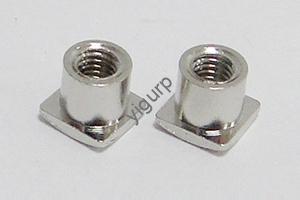
Dopo la lavorazione CNC, i prototipi in metallo hanno spesso superfici ruvide, sbavature, o trame irregolari: problemi che possono influire sia sull'aspetto che sulla funzionalità. La lucidatura è il passaggio chiave della post-elaborazione per risolvere questi problemi, trasformando le parti grezze lavorate a CNC in parti lisce, prototipi precisi che corrispondono ai tuoi obiettivi di progettazione. Whether you need a mirror-like finish for a consumer product or a ultra-fine surface for a precision component, choosing the right polishing method is critical. This guide breaks down all common polishing techniques for CNC metal prototypes, con i dati, tips, and comparisons to help you make the best choice.
1. Why Polishing Matters for CNC Metal Prototypes
Before diving into methods, let’s clarify why polishing is non-negotiable for most CNC metal prototypes. It’s not just about looks—polishing directly impacts performance and usability.
Key Benefits of Polishing
- Improved Aesthetics: A polished surface eliminates scratches and dullness, making the prototype look like the final product. This is essential for client presentations or market testing (studies show polished prototypes increase positive feedback by 35% in user trials).
- Enhanced Functionality: Smooth surfaces reduce friction for moving parts (per esempio., ingranaggi, alberi), extending the prototype’s lifespan by up to 40% in mechanical testing.
- Better Corrosion Resistance: Polishing removes micro-cracks where moisture or chemicals can accumulate, protecting metals like aluminum or steel from rust.
- Accurate Dimensional Control: Per pezzi di precisione (per esempio., componenti medici), polishing ensures surface roughness doesn’t interfere with measurements (critical for parts with tolerances of ±0.01mm).
2. Common Polishing Methods for CNC Metal Prototypes
There are five main polishing techniques for CNC metal prototypes, ognuno con punti di forza unici, ideal use cases, and performance outcomes. Below is a detailed breakdown of each method.
2.1 Lucidatura meccanica: Ideal for High-Precision, Custom Surfaces
Mechanical polishing uses physical tools to grind and smooth the metal surface. It’s a manual or semi-automated process, perfect for parts with complex shapes or strict surface quality requirements.
Come funziona
- Tools Used: Oilstone strips (for hard-to-reach areas), wool wheels (for buffing), carta vetrata (various grits), and polishing compounds (per esempio., diamond paste for ultra-fine finishes).
- Process Steps:
- Inizia con carta vetrata grossa (80-120 grinta) to remove large burrs or machining marks.
- Move to finer grits (240-1000 grinta) to reduce roughness.
- Use a wool wheel with polishing compound for a glossy finish.
- Per ultra-precision needs, utilizzo superfinishing (a type of mechanical polishing) with specialized tools—this can achieve a surface roughness as low as Ra 0.008μm (smoother than most mirror surfaces).
Ideale per
- Specialized parts (per esempio., aerospace components with irregular edges).
- Prototypes requiring ultra-high surface quality (per esempio., optical parts, alloggiamenti per dispositivi medici).
2.2 Lucidatura chimica: Veloce, Cost-Effective for Complex Shapes
Chemical polishing uses a chemical solution to dissolve the micro-protrusions on the metal surface, creating a smooth finish without physical tools. It’s a hands-off method that works well for batches of parts.
Come funziona
- Core Principle: The chemical solution (per esempio., a mix of acids for steel, alkaline solutions for aluminum) reacts with the metal, dissolving raised areas faster than recessed ones.
- Vantaggi principali:
- No complex equipment—just a tank for the solution and a rinse station.
- Can process multiple parts at once (increases efficiency by 50% compared to manual mechanical polishing for batches of 10+ parti).
- Handles complex shapes (per esempio., hollow tubes, curved brackets) that tools can’t reach.
Performance Data
- Typical Surface Roughness: Ra 0.1-1.0μm (suitable for non-critical visible parts, like decorative metal frames).
- Processing Time: 10-30 minuti per lotto (depending on the metal and solution strength).
Limitation
- The solution must be carefully mixed—incorrect ratios can cause uneven etching or damage the metal.
2.3 Lucidatura elettrochimica: Get a Mirror Finish with Automation
Lucidatura elettrochimica (also called electrolytic polishing) uses an electric current and electrolyte solution to remove surface material. It’s a precise, automated method that delivers consistent, mirror-like results.
Come funziona
- Equipment Needed: Rectifier power supply (to control current), electrolytic tank (with solution), infissi (to hold the prototype), and anode/cathode electrodes.
- Processo: The CNC metal prototype acts as the anode—when current flows, the electrolyte dissolves the surface layer, smoothing out imperfections.
- End Result: UN mirror-like gloss (surface roughness Ra 0.02-0.1μm) that’s hard to achieve with other methods.
Ideale per
- Prototypes needing a premium, finitura riflettente (per esempio., involucri di elettronica di consumo, luxury product parts).
- Parts made of stainless steel, rame, or brass (metals that respond well to electrolysis).
Consideration
- The process is more complex than chemical polishing—you’ll need to adjust current, voltaggio, and solution temperature (usually 40-60°C) for different metals.
2.4 Alkaline Polishing: Eco-Friendly for Aluminum Prototypes
Alkaline polishing is a specialized method for aluminum and aluminum alloys (including cast and die-cast aluminum). It’s known for being environmentally friendly and effective for general-purpose smoothing.
Come funziona
- Solution Composition: Uses alkaline chemicals (per esempio., sodium hydroxide) instead of nitric acid—this eliminates “yellow fume pollution” (a common issue with acidic methods).
- Processo: The solution gently etches the aluminum surface, removing machining marks and creating a uniform finish.
- Prestazione: Achieves a surface roughness of Ra 0.2-0.8μm, suitable for most aluminum prototypes (per esempio., staffe automobilistiche, telai per droni).
Ideale per
- Cast or die-cast aluminum parts (which often have uneven surfaces from molding).
- Projects prioritizing eco-friendliness (no toxic fumes mean safer workspace and easier waste disposal).
Limitation
- Not ideal for precision parts (can’t reach Ra < 0.2µm) or prototypes needing a mirror finish.
2.5 Acidic Polishing: Stronger Etching for Aluminum’s Specific Needs
Acidic polishing is another method for aluminum prototypes, using acidic solutions to achieve a more aggressive etch than alkaline polishing. It’s chosen for parts where surface texture or brightness is a priority.
Come funziona
- Solution Composition: Typically includes phosphoric acid, acido solforico, or a mix—these chemicals dissolve aluminum more quickly than alkaline solutions.
- Pros and Cons:
- Pro: Can achieve a brighter finish than alkaline polishing (suitable for decorative aluminum parts) and works faster (5-15 minuti per parte).
- Contro: May produce fumes (requires proper ventilation) and is less eco-friendly than alkaline methods.
Ideale per
- Aluminum prototypes needing a bright, non-mirror finish (per esempio., consumer product trim, signage components).
- Parts where speed is critical (per esempio., urgent prototype batches with tight deadlines).
3. How to Choose the Right Polishing Method
Selecting the best method depends on four key factors: your prototype’s material, forma, surface requirements, and production batch size. Use the table below to simplify your decision.
Polishing Method Selection Guide
| Fattore | Lucidatura meccanica | Lucidatura chimica | Lucidatura elettrochimica | Alkaline Polishing | Acidic Polishing |
| Ideal Materials | Tutti i metalli (acciaio, alluminio, ottone) | Acciaio, rame, alluminio | Acciaio inossidabile, ottone, rame | Alluminio (all types) | Alluminio |
| Rugosità superficiale (Ra) | 0.008-0.2µm | 0.1-1.0µm | 0.02-0.1µm | 0.2-0.8µm | 0.1-0.5µm |
| Best for Shape | Complesso, irregular parts | Complesso, parti cave | Simple to moderate shapes | Simple to complex shapes | Simple to moderate shapes |
| Dimensione del lotto | 1-5 parti (manuale) | 10+ parti (elaborazione batch) | 5-20 parti (automatizzato) | 5-30 parti | 5-20 parti |
| Costo per parte | \(15-\)50 (labor-intensive) | \(3-\)10 (low equipment cost) | \(8-\)25 (high equipment cost) | \(4-\)12 (ecologico) | \(3-\)10 (fast processing) |
Practical Example
If you have 20 aluminum drone frames (cast aluminum) and need a smooth, eco-friendly finish (Ra 0.5μm), alkaline polishing is the best choice. If you have 1 stainless steel medical component requiring a mirror finish (Ra 0.05μm), lucidatura elettrochimica è l'ideale.
4. Key Tips for Successful CNC Metal Prototype Polishing
Even with the right method, small mistakes can ruin your prototype. Follow these tips to ensure consistent, risultati di alta qualità:
- Prepare the Surface First: Before polishing, remove all burrs with a deburring tool—this prevents the polishing process from pushing burrs into the metal (which causes uneven finishes).
- Test on a Sample: Always polish a small, non-critical part first (per esempio., a scrap piece of the same metal) to adjust parameters (per esempio., chemical solution strength, polishing time).
- Control Environmental Factors: For chemical/electrochemical methods, keep the solution temperature stable (±2°C) and ensure good ventilation (to avoid fume buildup).
- Combine Methods if Needed: For ultra-high quality, mix methods—e.g., use mechanical polishing to remove machining marks, then electrochemical polishing for a mirror finish. This “hybrid approach” can achieve Ra 0.01μm for precision parts.
Yigu Technology’s View on CNC Metal Prototype Polishing
Alla tecnologia Yigu, we see polishing as a make-or-break step for CNC metal prototypes. We tailor our approach to each project: using mechanical polishing for aerospace-grade precision parts, alkaline polishing for eco-conscious aluminum projects, and electrochemical polishing for consumer products needing a premium finish. Our team tests polishing parameters on sample parts first, ensuring no surprises—and we often combine methods to hit tight surface roughness targets (like Ra 0.008μm for optical components). For us, polishing isn’t just about smoothing metal—it’s about making sure your prototype performs and looks ready for the next stage of development.
Domande frequenti
Q1: How long does it take to polish a CNC metal prototype?
A1: It depends on the method and part size. Lucidatura meccanica (manuale) takes 30-60 minutes per small part (per esempio., a 5cm aluminum bracket). Chemical polishing is faster—10-30 minutes per batch. Electrochemical polishing takes 15-45 minuti per parte (including setup time).
Q2: Can I polish a CNC metal prototype with multiple holes or complex curves?
A2: Yes—chemical polishing is best for this. It uses a solution that reaches all areas (even small holes or curved surfaces) without physical tools. For parts with both complex shapes and high precision, we recommend chemical polishing first, then light mechanical polishing for hard-to-reach spots.
Q3: What’s the difference between Ra 0.008μm and Ra 0.8μm in practical terms?
A3: Ra 0.008μm is an ultra-fine finish—smoother than a standard mirror (which is ~Ra 0.01μm)—ideal for optical or medical parts. Ra 0.8μm is a moderate finish—smooth to the touch but not reflective—suitable for structural parts (per esempio., parentesi) where appearance is secondary to function.