
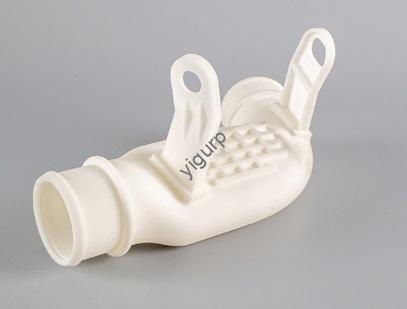
Nel settore dei droni in rapida crescita, verificare la fattibilità e la funzionalità del progetto prima della produzione in serie è fondamentale per ridurre i costi e soddisfare rigorosi standard prestazionali. Plastic UAV prototype model machining is a cornerstone of this process—it lets teams test drone structures, convalidare gli adattamenti dei componenti, and collect real-world performance data at a fraction of the cost of full-production parts. Whether you’re a procurement engineer sourcing the right plastics or a product engineer optimizing a drone’s aerodynamics, this guide covers everything you need to create high-quality plastic UAV prototypes.
1. Why Plastic Materials Are Ideal for UAV Prototype Machining
Drones demand materials that balance lightweight design, durabilità, and weather resistance—and plastics deliver on all three. They’re easy to shape into aerodynamic parts (like drone fuselages or propeller guards), resist outdoor elements (piovere, Raggi UV), and keep the drone’s overall weight low (critical for flight time).
Below is a detailed breakdown of common plastics for UAV prototypes, le loro proprietà chiave, and real drone use cases:
| Tipo materiale | Proprietà chiave | UAV Use Case Example | Temperature Resistance Range | Peso (g/cm³) |
| ABS | Facile da lavorare, buona resistenza agli urti, basso costo | Drone fuselages, internal component housings | -20da °C a 80 °C | 1.05-1.08 |
| computer (Policarbonato) | Elevata resistenza agli urti, resistenza al calore, buona stabilità dimensionale | Propeller guards, outdoor drone shells | -40da °C a 120 °C | 1.20-1.22 |
| PMMA (Acrilico) | High transparency (92%), good weather resistance | Drone camera covers, LED indicator lenses | -30°C to 70°C | 1.18-1.20 |
| PP (Polipropilene) | Leggero, resistenza chimica, low moisture absorption | Drone landing gear, battery compartment covers | -30°C to 100°C | 0.90-0.91 |
| Nylon | Alta resistenza, resistenza all'usura, buona resistenza al calore | Drone motor mounts, staffe strutturali | -40°C to 130°C | 1.13-1.15 |
| POM (Poliossimetilene) | Excellent mechanical properties, stabilità dimensionale | Precision drone gears, adjustable arm joints | -40°C to 100°C | 1.41-1.43 |
Caso di studio: A leading agricultural drone manufacturer used PC plastic prototypes to test fuselage shells. The prototypes were exposed to 100°C (simulating hot field conditions) per 500 hours and survived 30+ test di caduta (from 2m height)—no cracks or deformation occurred. This early test saved the company $140,000 in potential rework costs for mass-produced fuselages that would have failed in the field.
2. Step-by-Step Process for Plastic UAV Prototype Model Machining
Creating a reliable plastic UAV prototype model requires strict adherence to precision steps. Below is a proven workflow used by top drone manufacturers:
Fare un passo 1: Material Selection – Match Plastics to UAV Needs
Choosing the right material is make-or-break—focus on these factors:
- Flight Requirements: For lightweight parts (like landing gear), pick PP (0.90g/cm³). For high-impact parts (like propeller guards), PC is better.
- Working Environment: Outdoor drones need weather-resistant plastics (computer, PP). Indoor drones (like racing drones) can use cost-effective ABS.
- Component Function: Motor mounts need strength—go for nylon. Camera covers need transparency—PMMA is ideal.
Pro Tip: A small drone startup once used ABS instead of PC for an outdoor drone shell. The ABS cracked after 2 months of UV exposure—always match materials to the drone’s operating environment!
Fare un passo 2: Data Collection – Ensure Design Accuracy
This step lays the groundwork for a prototype that matches your exact drone design:
- 3D Drawing Import: Ask for customer-provided 3D CAD files (FARE UN PASSO, IGES formats). These files are the blueprint—import them into software (per esempio., AutoCAD) for data processing and CNC programming. A racing drone maker once provided incomplete CAD files (missing propeller guard dimensions), leading to a prototype that couldn’t fit propellers—double-check files upfront.
- Gypsum Sample Production: Make a gypsum sample to confirm the prototype’s shape, curvature, and size. This is a “test run” for CNC machining—critical for aerodynamic parts like fuselages. A delivery drone company uses gypsum samples to verify the curve of a PC fuselage prototype, ensuring a 0.1mm margin of error for optimal flight efficiency.
Fare un passo 3: CNC Machining – Achieve Precision Shaping
CNC machining turns plastic into a UAV prototype with the accuracy drones demand:
- Programmazione & Setting: Use software (per esempio., Mastercam) to create cutting paths. The CNC machine removes excess plastic, retaining the exact part shape—surface roughness as low as Ra 1.6μm, perfect for parts that need tight fits (like motor mounts). Per esempio, CNC machining ensures gear teeth in POM prototypes are perfectly aligned, avoiding flight jitters from misfit parts.
- Multi-Axis Machining Technology: Per parti complesse (per esempio., curved drone arms), use 5-axis CNC machines. This tech cuts parts in one go, improving precision by 25% and reducing production time by 40% compared to 3-axis machines. A survey drone brand cut prototype time for a curved arm from 5 giorni a 2 using this method.
Fare un passo 4: Post-Treatment – Boost Durability & Aerodynamics
Post-treatment ensures your prototype is ready for flight testing:
- Sbavatura: Use 400-grit sandpaper to smooth knife marks and burrs. Burrs on plastic parts (like drone arm edges) can increase air resistance—never skip this step.
- Trattamento superficiale: Apply treatments based on use case:
- Pittura: Spray anti-UV paint on outdoor prototypes (like PC fuselages) to prevent fading and brittleness.
- Silk Screen Printing: Add labels (per esempio., “battery port” or “GPS module”) to internal parts for easy assembly.
- Galvanotecnica: Plate metal (per esempio., nichel) on POM gears to boost wear resistance. A agricultural drone company added anti-UV paint to a PC prototype—its lifespan in outdoor tests doubled from 3 mesi a 6.
Fare un passo 5: Assemblea & Testing – Validate Flight Readiness
This step ensures your prototype works as intended in real flight scenarios:
- Test Assembly: Fit all parts (componenti in plastica, electronics like motors or GPS) together. Check for gaps or misalignments—for example, a drone’s fuselage must fit tightly to reduce air resistance. A delivery drone maker once found a 0.3mm gap during assembly, which would have cut flight time by 10%—adjustments fixed the issue.
- Test funzionali: Test the prototype under conditions that mimic real flight:
- Structural Stability: Subject to 5,000+ vibration cycles (simulating flight turbulence) senza crepe.
- Environmental Adaptability: Expose to -20°C (cold) to 100°C (hot) E 85% humidity—no deformation or water leakage.
- Flight Performance: Test flight time (per esempio., a PP-based prototype should match 95% of the design’s expected 30-minute flight time) and aerodynamics.
Fare un passo 6: Confezione & Shipping – Protect Your Prototype
UAV prototypes are valuable—protect them during transport:
- Safe Packaging: Use foam inserts and hard boxes to prevent scratches or cracks. A supplier once shipped prototypes in thin bags; 15% were damaged, delaying a survey drone project by 2 settimane.
- Delivery Time: Align with customer timelines. Most plastic UAV prototypes take 2-3 weeks to machine—communicate delays (per esempio., carenze materiali) early to avoid surprises.
3. Yigu Technology’s Perspective on Plastic UAV Prototype Model Machining
Alla tecnologia Yigu, we’ve supported 300+ drone clients in plastic UAV prototype model machining Sopra 8 anni. We believe success lies in material expertise and strict quality control tailored to drone needs. Per esempio, we developed a custom PC-PP blend for a delivery drone client—it’s 15% lighter than pure PC (boosting flight time) and more impact-resistant than pure PP. We also test every prototype for aerodynamic efficiency (a step many suppliers skip) to ensure it meets flight time goals. For engineers and procurement teams, partnering with a supplier who understands drones’ unique needs (like lightweight design) is essential to avoid costly mistakes.
Domande frequenti
- Q: How long does plastic UAV prototype model machining take?
UN: Tipicamente 2-3 settimane. Parti semplici (like battery covers) take 2 settimane, while complex parts (like curved fuselages) take 3 settimane (to account for aerodynamic testing).
- Q: Which plastic is best for outdoor UAV prototypes?
UN: PC or PP. PC offers high impact and heat resistance, while PP is lightweight and weather-resistant. We recommend PC for parts like fuselages and PP for landing gear.
- Q: Do you test the flight performance of UAV prototypes?
UN: SÌ. We partner with flight test facilities to measure flight time, aerodinamica, and stability—ensuring the prototype meets 95% of your design’s flight goals before delivery.