
Our Phenolic Resin CNC Machining Services
Unlock unmatched precision and reliability with Yigu Technology’s Phenolic Resin CNC Machining services. As a leader in crafting high-performance components from thermosetting polymers like phenol-formaldehyde resin, we combine advanced CNC turning and milling capabilities with strict quality control to deliver custom parts that excel in heat, chemical, and wear resistance. Whether you need prototyping for medical devices or high-volume production for aerospace, our ISO-certified processes ensure dimensional accuracy and consistent results—every time.
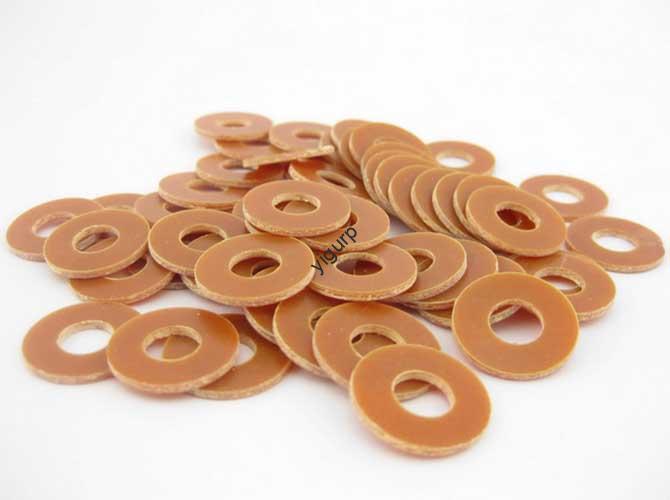
Understanding Phenolic Resin CNC Machining
At its core, Phenolic Resin CNC Machining is the process of using Computer Numerical Control (CNC) equipment to shape phenolic resin—a versatile thermosetting polymer—into precise components. Phenol-formaldehyde resin, the primary material here, falls under the category of engineering plastics, valued for its exceptional mechanical and thermal properties.
Unlike thermoplastics that soften with heat, phenolic resins cure permanently when heated, making them ideal for applications requiring stability at high temperatures. Key characteristics driving their use include:
- Heat Resistance: Withstands continuous temperatures up to 150°C (302°F) and short bursts of 200°C (392°F).
- Mechanical Properties: High tensile strength (15-25 MPa) and impact resistance, suitable for load-bearing parts.
- Chemical Structure: Cross-linked molecular bonds that resist solvents, acids, and alkalis.
- Electrical Insulation: Low electrical conductivity, critical for electronics and electrical components.
The table below summarizes the core properties of phenolic resin compared to other common engineering plastics:
| Material | Heat Resistance (Continuous) | Tensile Strength | Chemical Resistance | Electrical Insulation |
| Phenolic Resin | Up to 150°C | 15-25 MPa | Excellent | Excellent |
| Nylon 66 | Up to 100°C | 70-90 MPa | Moderate | Good |
| PEEK (Polyether Ether Ketone) | Up to 250°C | 90-100 MPa | Excellent | Excellent |
| Acetal (POM) | Up to 80°C | 60-70 MPa | Moderate | Good |
Our Capabilities: Delivering Precision at Every Stage
Yigu Technology’s Phenolic Resin CNC Machining capabilities are designed to meet the diverse needs of industries ranging from automotive to medical devices. We leverage state-of-the-art equipment and a team of experts to ensure quality, speed, and flexibility.
Core Capabilities Overview
| Capability | Description | Key Benefits |
| Precision Machining | CNC turning (±0.005mm tolerance) and milling (±0.01mm tolerance) for complex geometries. | Tight tolerances for critical components. |
| Custom Parts | Tailored solutions for unique designs, from small bushings to large industrial brackets. | Meets specific application needs. |
| High Volume Production | Automated workflows supporting 10,000+ units/month with consistent quality. | Reduces lead times and costs for bulk orders. |
| Prototyping | Rapid iteration (3-5 day turnaround) for testing form, fit, and function. | Accelerates product development cycles. |
| Quality Control | In-line inspections using CMM (Coordinate Measuring Machines) and visual checks. | Ensures 99.9% defect-free output. |
| Technical Expertise | Engineers with 5+ years of experience in phenolic resin material science. | Solves complex machining challenges. |
| Advanced Equipment | 5-axis CNC mills, Swiss-type lathes, and automated drilling stations. | Handles intricate part geometries. |
| ISO Certification | ISO 9001:2015 and ISO 13485 (for medical parts) compliance. | Meets global quality and safety standards. |
Process: The Step-by-Step Journey of Phenolic Resin CNC Machining
Our Phenolic Resin CNC Machining process is a structured, quality-driven workflow that transforms raw material into finished components. Each step is optimized to ensure precision and efficiency.
- Material Selection: Choose the right phenolic resin grade (e.g., paper-based, cloth-based, or mineral-filled) based on the part’s intended use. We consider factors like thermal resistance and mechanical properties to match the material to the application.
- Programming: Engineers use CAD/CAM software to create a digital blueprint of the part. This program guides the CNC equipment, specifying tool paths, cutting speeds, and feed rates for CNC turning, milling, or drilling.
- Setup: The CNC machine is calibrated, and the appropriate tooling (e.g., end mills, drills) is installed. The raw phenolic resin block is secured in a fixture to prevent movement during machining.
- Machining: The machine executes the program, using cutting techniques to shape the material. For complex parts, 5-axis mills adjust the part’s orientation to access hard-to-reach areas.
- Surface Treatment: After machining, parts undergo polishing, coating, or painting to enhance durability or aesthetics. For electrical components, anodizing or plating may be added to improve conductivity or corrosion resistance.
Inspection: Each part is measured using CMMs to verify dimensional accuracy against design specs. Parts that meet precision tolerances move to packaging; those that don’t are reworked or scrapped.
Materials: Choosing the Right Phenolic Resin for Your Project
Phenolic resin is not a one-size-fits-all material—different grades are formulated to excel in specific conditions. Understanding their properties helps ensure your part performs as expected.
Common Phenolic Resin Types and Their Uses
| Resin Type | Composition | Key Properties | Typical Applications |
| Paper-Based Phenolic | Phenol-formaldehyde + wood pulp | Low cost, good electrical insulation | Electrical switchgear, terminal blocks |
| Cloth-Based Phenolic | Phenol-formaldehyde + cotton/glass cloth | High strength, impact resistance | Gears, bushings, industrial brackets |
| Mineral-Filled Phenolic | Phenol-formaldehyde + mica/quartz | Excellent heat resistance (up to 200°C) | High-temperature gaskets, oven components |
| Glass-Reinforced Phenolic | Phenol-formaldehyde + glass fibers | Superior chemical resistance and rigidity | Aerospace components, chemical processing parts |
When selecting a material, our team considers:
- The part’s operating temperature range
- Exposure to chemicals or solvents
- Required mechanical load (tensile, compressive)
- Electrical conductivity needs
Cost and lead time constraints
Surface Treatment: Enhancing Performance and Aesthetics
Surface treatment is a critical final step in Phenolic Resin CNC Machining, as it improves the part’s durability, functionality, and appearance. The choice of treatment depends on the part’s application.
Popular Surface Treatments for Phenolic Resin Parts
| Treatment Type | Process Description | Benefits | Ideal For |
| Polishing | Abrasive pads or compounds smooth the surface to a matte or glossy finish. | Reduces friction, improves hygiene, and enhances aesthetics. | Medical devices, consumer goods |
| Coating | A thin layer of epoxy or polyurethane is applied to the surface. | Boosts chemical resistance and protects against wear. | Industrial equipment, chemical tanks |
| Painting | High-temperature paint is sprayed on for color coding or branding. | Adds visual appeal and resists fading at high temperatures. | Automotive components, electrical enclosures |
| Anodizing | An electrolytic process creates a protective oxide layer on metal inserts (if used with phenolic resin). | Improves corrosion resistance for hybrid parts. | Aerospace fasteners, automotive sensors |
| Plating | Chrome or nickel plating is added to metal components attached to phenolic parts. | Enhances conductivity and wear resistance. | Electrical connectors, switches |
| Surface Hardening | Heat treatment increases the surface hardness of the phenolic resin. | Improves wear resistance for high-contact parts. | Gears, bearings |
Tolerances: Achieving Uncompromising Precision
In Phenolic Resin CNC Machining, tolerances—the allowable deviation from the part’s designed dimensions—are make-or-break for performance. We specialize in meeting tight tolerances to ensure parts fit and function as intended.
Our Standard Tolerances for Phenolic Resin Parts
| Machining Process | Standard Tolerance | Tight Tolerance (Custom) | Measurement Method |
| CNC Milling | ±0.01mm | ±0.005mm | CMM and laser scanners |
| CNC Turning | ±0.005mm | ±0.002mm | Micrometers and calipers |
| Drilling | ±0.02mm | ±0.01mm | Pin gauges |
To maintain these tolerances, we adhere to strict quality standards:
- All machines are calibrated weekly to prevent drift.
- Operators undergo monthly training on precision engineering best practices.
- Every batch includes 5% random sampling for detailed inspection.
- We document all measurements to ensure traceability.
For example, a medical device component requiring a hole diameter of 5.00mm would have a tolerance limit of ±0.005mm—meaning the actual diameter can range from 4.995mm to 5.005mm. This level of precision ensures the part fits seamlessly with other components in the device.
Advantages: Why Choose Phenolic Resin CNC Machining?
Phenolic Resin CNC Machining offers a unique combination of benefits that make it the top choice for demanding applications. These advantages stem from the material’s properties and the precision of CNC technology.
- High Strength: Phenolic resin’s cross-linked structure provides excellent tensile and compressive strength, making parts durable even under heavy loads. For example, cloth-based phenolic gears can withstand up to 50 MPa of pressure without breaking.
- High Temperature Resistance: Unlike many plastics, phenolic resin retains its shape and strength at temperatures up to 150°C. This makes it ideal for automotive under-the-hood parts and industrial ovens.
- Chemical Resistance: It resists most solvents, acids, and alkalis—critical for parts used in chemical processing or medical environments where exposure to cleaning agents is common.
- Dimensional Stability: Low coefficient of thermal expansion (CTE) means parts don’t warp or shrink when exposed to temperature changes. Phenolic resin has a CTE of 10-15 ppm/°C, compared to nylon’s 80-100 ppm/°C.
- Wear Resistance: Phenolic parts have a low friction coefficient (0.15-0.3), reducing wear and extending their lifespan. This is why they’re often used for bushings and bearings.
- Corrosion Resistance: Unlike metal, phenolic resin doesn’t rust or corrode, eliminating the need for protective coatings in humid or wet environments.
- Electrical Insulation: Its low electrical conductivity (10^12-10^14 Ω·cm) makes it perfect for electrical components like terminal blocks and circuit board supports.
Cost-Effectiveness: Compared to high-performance plastics like PEEK, phenolic resin is more affordable, especially for high-volume production. CNC machining further reduces waste, lowering overall costs.
Applications Industry: Where Phenolic Resin CNC Parts Shine
Phenolic Resin CNC Machining components are used across a wide range of industries, thanks to their versatility and performance. Below are key sectors and their common applications.
| Industry | Common Applications | Key Reasons for Choosing Phenolic Resin |
| Aerospace | Circuit board supports, avionics housings, engine gaskets | High temperature resistance and lightweight |
| Automotive | Brake pads (reinforced), sensor housings, electrical connectors | Wear resistance and chemical resistance |
| Electronics | Terminal blocks, switchgear, transformer insulation | Electrical insulation and dimensional stability |
| Medical Devices | Surgical instrument handles, diagnostic equipment casings | Biocompatibility and easy surface finishing |
| Industrial Equipment | Gear blanks, pump components, conveyor belt rollers | High strength and thermal resistance |
| Consumer Goods | Hairdryer housings, toaster parts, tool handles | Heat resistance and affordability |
| Mechanical Components | Bushings, bearings, spacer blocks | Low friction and wear resistance |
Case Studies: Real-World Success with Phenolic Resin CNC Machining
At Yigu Technology, we’ve helped clients solve complex challenges with Phenolic Resin CNC Machining. Here are two examples of our work.
Case Study 1: Aerospace Avionics Housing
Client: A leading aerospace manufacturer.
Challenge: Need a lightweight, heat-resistant housing for avionics equipment that could withstand temperatures up to 180°C and meet strict ISO 9001 standards.
Solution: We used glass-reinforced phenolic resin and 5-axis CNC milling to create the housing. The part featured intricate internal channels for wiring and a polished surface to reduce friction.
Results:
- Met all thermal and dimensional requirements (tolerance ±0.008mm).
- Reduced part weight by 30% compared to metal alternatives.
- Delivered 500 units in 2 weeks, ahead of the client’s deadline.
Client Testimonial: “Yigu’s expertise in phenolic resin machining helped us improve our avionics design while cutting costs. The parts performed flawlessly in testing.”
Case Study 2: Medical Surgical Instrument Handle
Client: A medical device company.
Challenge: Develop a prototype for a surgical instrument handle that was biocompatible, easy to grip, and resistant to autoclave sterilization (134°C, high pressure).
Solution: We selected a mineral-filled phenolic resin and used CNC turning to create the handle. A textured surface treatment was added for grip, and the part was tested for biocompatibility (ISO 10993).
Results:
- Prototype approved after 1 iteration (3-day turnaround).
- Handle withstood 1,000+ autoclave cycles without degradation.
Scaled to high-volume production (10,000 units/month) with 99.9% quality rate.
Why Choose Us: Yigu Technology’s Edge in Phenolic Resin CNC Machining
When you partner with Yigu Technology for Phenolic Resin CNC Machining, you’re not just getting a supplier—you’re getting a team of experts dedicated to your success. Here’s why clients choose us:
- Expertise: Our engineers have 5+ years of experience in phenolic resin material science and CNC machining. We understand the unique challenges of working with thermosetting polymers and can solve even the most complex design issues.
- Quality: We adhere to ISO 9001:2015 and ISO 13485 standards, with in-line inspections and traceable quality records. Our 99.9% defect-free rate speaks to our commitment to excellence.
- Reliability: We meet 98% of our lead times, even for high-volume orders. Our automated workflows and inventory management ensure you get parts when you need them.
- Customer Service: A dedicated account manager is assigned to every project, providing regular updates and addressing questions promptly. We work with you from material selection to delivery.
- Innovation: We invest in the latest equipment (e.g., 5-axis CNC mills) and software to stay ahead of industry trends. This allows us to offer custom solutions that other suppliers can’t.
- Experience: With 10+ years in the industry, we’ve worked with 500+ clients across aerospace, medical, and automotive sectors. Our track record of success is proof of our capabilities.
- Value: We offer competitive pricing without compromising on quality. Our high-volume production workflows reduce costs, and we provide transparent quotes with no hidden fees.
Industry Leadership: We’re active in industry associations (e.g., SME, AMT) and stay updated on new materials and machining techniques. This ensures we bring the latest innovations to your project.