
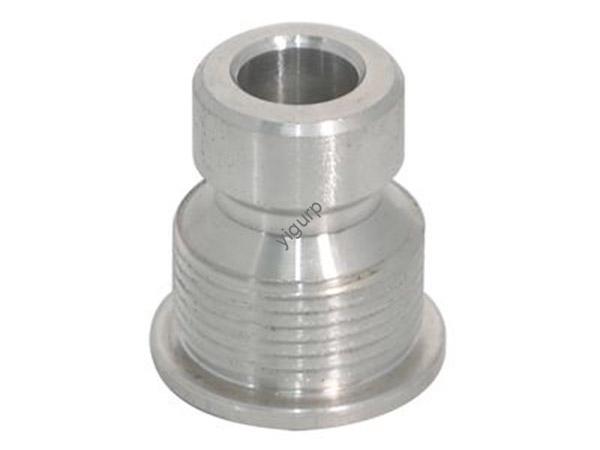
Se stai cercando un materiale che unisca la resistenza alla corrosione, forza, e versatilità, sia per i reattori chimici, impianti medici, or aircraft parts—micro alloy stainless steel delivers. Questa guida ne analizza i tratti principali, applicazioni del mondo reale, e come supera gli altri materiali, così puoi scegliere l'opzione giusta per il tuo progetto.
1. Core Material Properties of Micro Alloy Stainless Steel
What makesmicro alloy stainless steel unico? Its carefully balanced chemistry and well-rounded performance. Below’s a detailed look at its properties:
1.1 Composizione chimica
Unlike conventional stainless steels, it uses small (micro) additions of alloying elements to boost performance without extra cost. Tipicochemical composition includes:
- Cromo (Cr): 16–20% (forms a protective oxide layer for corrosion resistance)
- Nichel (In): 4–10% (enhances ductility and toughness, especially at low temperatures)
- Molibdeno (Mo): 1–3% (improves resistance to acidic and chloride environments)
- Azoto (N): 0.1–0.2% (increases tensile strength without reducing ductility)
- Carbonio (C): <0.08% (kept low to avoid carbide formation, which weakens corrosion resistance)
- Manganese (Mn): 1–2% (aids in steelmaking and improves formability)
- Silicio (E): 0.3–0,8% (helps deoxidize the steel during production)
- Fosforo (P): <0.045% (minimized to prevent brittleness)
- Zolfo (S): <0.03% (kept low for better weldability and corrosion resistance)
- Other alloying elements: Trace amounts of titanio (Di) O niobium (Nb) (stabilize carbon to boost high-temperature strength).
1.2 Proprietà fisiche
These traits affect how the steel behaves in different conditions:
| Physical Property | Valore tipico |
|---|---|
| Densità | 7.8–7.9 g/cm³ |
| Punto di fusione | 1450–1510°C |
| Conduttività termica | 15–20 W/(m·K) (20°C) |
| Thermal expansion coefficient | 11.0–13.0 × 10⁻⁶/°C (20–100°C) |
| Electrical resistivity | 0.70–0.80 Ω·mm²/m |
1.3 Proprietà meccaniche
It strikes a balance between strength and flexibility—critical for most industrial uses:
- Resistenza alla trazione: 500–700MPa (higher than many conventional stainless steels like 304, which averages 515 MPa)
- Yield strength: 250–400MPa (resists deformation under load)
- Durezza: 150–200 HB (Brinell) or 30–35 HRC (Rockwell C)
- Impact toughness: 40–80 J (Charpy V-notch at 20°C)—tough enough for low-temperature applications
- Duttilità: 25–35% elongation (easy to shape into complex parts)
- Fatigue resistance: 200–300 MPa (handles repeated stress, ideal for moving components)
- Fracture toughness: 60–100 MPa·m¹/² (prevents sudden cracking in high-stress scenarios).
1.4 Altre proprietà
- Eccellente resistenza alla corrosione: Stands up to water, acidi deboli, and industrial chemicals (better than carbon steels; close to high-alloy stainless steels in many cases).
- Buona resistenza all'ossidazione: Resists scaling up to 800°C, making it suitable for high-temperature parts like exhaust systems.
- High-temperature strength: Maintains strength at 500–600°C (thanks to titanium/niobium additions).
- Weldability: Easy to weld without cracking (low carbon and sulfur content).
- Formabilità: Can be rolled, forged, or stamped into shapes (works for both small parts like fasteners and large components like reactors).
2. Key Applications of Micro Alloy Stainless Steel
Its versatility makesmicro alloy stainless steel a top choice across industries. Below are its most common uses, paired with real case studies:
2.1 Aerospaziale
Aerospace needs materials that handle stress, corrosione, e variazioni di temperatura:
- Aircraft components: Fuel lines and engine casings (resist fuel corrosion and high heat)
- Elementi di fissaggio: Bolts and nuts (secure critical parts without adding weight).
Caso di studio: A global aerospace firm used micro alloy stainless steel for aircraft fuel lines. Testing showed the lines resisted jet fuel corrosion 20% better than conventional 304 acciaio inossidabile, and lasted twice as long in high-altitude conditions.
2.2 Automobilistico
Cars rely on it for parts that face heat and moisture:
- Exhaust systems: Mufflers and tailpipes (resist rust from road salt and exhaust heat)
- Componenti del motore: Water pumps and sensor housings (handle engine heat and coolant corrosion).
Caso di studio: A major carmaker switched to micro alloy stainless steel for exhaust mufflers. Customer feedback showed mufflers lasted 3 years longer (contro. standard steel) in snowy regions, cutting warranty claims by 25%.
2.3 Elaborazione chimica
Chemical plants need materials that stand up to harsh fluids:
- Chemical reactors: Vessels for mixing acids or solvents (resist chemical attack)
- Piping systems: Tubes that transport corrosive liquids (prevent leaks)
- Storage tanks: Containers for chemicals like sulfuric acid (mantenere l’integrità strutturale).
2.4 Trasformazione alimentare
Hygiene and corrosion resistance are non-negotiable here:
- Attrezzatura: Mixers, trasportatori, and cutting tools (easy to clean and resist food acids like tomato or citrus)
- Containers: Tanks for storing juices or sauces (prevent contamination and rust).
2.5 Attrezzature mediche
Biocompatibility and durability matter for medical use:
- Strumenti chirurgici: Scalpels and forceps (resist corrosion from sterilization and body fluids)
- Impianti: Small components like bone screws (biocompatible and strong enough for long-term use).
2.6 Marino & Costruzione
- Marino: Ship components (raccordi dello scafo, alberi dell'elica) E offshore structures (platform supports)—resist saltwater corrosion.
- Costruzione: Architectural components (corrimano, pannelli di facciata)—balance durability with aesthetic appeal.
3. Manufacturing Techniques for Micro Alloy Stainless Steel
To get the most out ofmicro alloy stainless steel, precise manufacturing steps are key:
3.1 Steelmaking Processes
- Forno ad arco elettrico (EAF): Melts scrap steel and alloying elements (cromo, nichel, ecc.) at high temperatures. Ideal for small-batch production and custom compositions.
- Fornace ad ossigeno basico (BOF): Blows oxygen into molten iron to remove impurities. Used for large-scale production (cost-effective for high volumes).
3.2 Trattamento termico
Heat treatment refines its properties for specific uses:
- Ricottura: Heat to 1050–1150°C, cool slowly. Softens the steel for easier forming and restores corrosion resistance after welding.
- Quenching and tempering: Heat to 900–1000°C, quench in water, then temper at 500–600°C. Boosts strength and hardness (used for high-stress parts like engine components).
- Solution treatment: Heat to 1000–1100°C, cool quickly. Dissolves unwanted carbides and improves corrosion resistance.
- Precipitation hardening: Heat to 450–550°C after solution treatment. Forms fine precipitates (from titanium/niobium) to increase high-temperature strength.
3.3 Forming Processes
It’s easy to shape into different forms:
- Hot rolling: Creates thick sheets or bars (used for reactors or structural parts)
- Cold rolling: Produces thin, smooth sheets (for food processing equipment or medical instruments)
- Forgiatura: Shapes into complex parts like valves or fasteners (adds strength)
- Estrusione: Pushes through a die to make tubes or profiles (used for piping)
- Stampaggio: Presses into flat parts like sensor housings (fast and cost-effective).
3.4 Trattamento superficiale
Enhances durability or appearance:
- Passivazione: Dips the steel in nitric acid to strengthen the oxide layer (aumenta la resistenza alla corrosione).
- Placcatura (per esempio., chromium plating): Aggiunge un duro, shiny layer (used for architectural parts or surgical instruments).
- Rivestimento (per esempio., nitruro di titanio): Migliora la resistenza all'usura (for cutting tools or marine components).
- Lucidatura: Crea un aspetto liscio, finitura riflettente (ideal for food equipment or architectural panels).
4. How Micro Alloy Stainless Steel Compares to Other Materials
Sceglieremicro alloy stainless steel means knowing how it stacks up to alternatives. Below’s a clear comparison:
| Categoria materiale | Key Comparison Points |
|---|---|
| Conventional stainless steels (per esempio., 304) | – Forza: Micro alloy steel is 15–30% stronger (tensile strength 500–700 MPa vs. 515 MPa for 304). – Resistenza alla corrosione: Similar in mild environments; micro alloy steel is better in acidic conditions (thanks to molybdenum). – Costo: Micro alloy steel is ~10% more expensive but lasts longer. |
| Carbon steels | – Resistenza alla corrosione: Micro alloy steel is far better (resists rust; carbon steel needs painting). – Forza: Similar in tensile strength, but micro alloy steel has better toughness. – Use case: Choose carbon steel for low-cost, non-corrosive uses; micro alloy for harsh environments. |
| High-alloy steels (per esempio., 316l) | – Resistenza alla corrosione: High-alloy steel is better (resists saltwater and strong acids). – Costo: Micro alloy steel is 30–40% cheaper. – Use case: High-alloy for extreme chemicals; micro alloy for moderate corrosion. |
| Leghe di alluminio | – Peso: Aluminum is lighter (densità 2.7 contro. 7.8 g/cm³). – Resistenza alla corrosione: Micro alloy steel is better in chemicals; aluminum is better in mild water. – Forza: Micro alloy steel is 2–3x stronger. |
| Materiali compositi | – Specific strength (strength-to-weight): Composites are better (per esempio., fibra di carbonio). – Costo: Micro alloy steel is 50–60% cheaper. – Produzione: Micro alloy steel is easier to form (no special molds needed). |
5. Yigu Technology’s Perspective on Micro Alloy Stainless Steel
Alla tecnologia Yigu, consigliamomicro alloy stainless steel for clients needing a balance of performance and cost. It’s our go-to for chemical processing piping and automotive exhaust parts—where its corrosion resistance and formability solve common pain points like leaks or short part life. We often pair it with passivation to boost durability, and its weldability makes on-site installation smooth. While it’s not the cheapest option, its long service life and low maintenance costs make it a cost-effective choice for most industrial and medical applications.
FAQ About Micro Alloy Stainless Steel
- Is micro alloy stainless steel suitable for saltwater environments?
It has moderate saltwater resistance—good for near-shore marine parts like handrails, but not for deep-sea components (where high-alloy steels like 316L are better). For saltwater use, add a coating like titanium nitride to boost protection. - Can it be welded to other materials like carbon steel?
SÌ, but you’ll need a compatible filler metal (per esempio., austenitic stainless steel filler) per evitare rotture. Post-weld annealing is also recommended to restore corrosion resistance at the weld joint. - What’s the typical lead time for micro alloy stainless steel parts?
Per parti standard (per esempio., piping, fogli), il tempo di consegna è di 2-3 settimane. Per parti personalizzate (per esempio., impianti medici, reactor vessels), it’s 4–6 weeks (includes forging, trattamento termico, and surface finishing).