
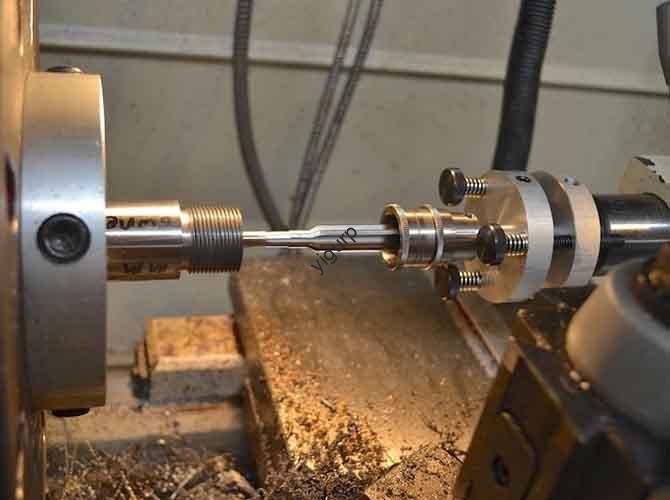
Cos'è la lavorazione meccanica, e perché è importante?
Se hai mai avuto in mano la chiave della macchina, utilizzato un dispositivo medico, o addirittura guardavo l'ala di un aereo, you’ve interacted with products born frommachining processing. Al suo centro, this is asubtractive manufacturing process where power-driven tools remove excess material (sotto forma di patatine) from a raw workpiece to create components with specific shapes, dimensioni, surface finishes, e tolleranze . Unlike additive manufacturing (che costruisce le parti strato dopo strato), machining’s strength lies in precision—making it irreplaceable for industries where even a 0.001mm error could cause failure.
Consider the aerospace industry: turbine blades need to withstand extreme temperatures and pressure while maintaining perfect balance. Or the medical field: orthopedic implants require surfaces smooth enough to integrate with human bone without irritation . Machining isn’t just “cutting metal”—it’s the backbone of reliable, high-performance products across sectors.
Breaking Down Machining Processes: Traditional vs. Avanzato
Not all machining is the same. The method you choose depends on your material, complessità della parte, ed esigenze di precisione. Let’s break down the two main categories with real-world context.
Traditional Machining: Time-Tested Techniques for Everyday Precision
Traditional methods rely on mechanical force to remove material, and they’re still the workhorses of most machine shops. Here’s how each works—and when to use them:
- Girando: Imagine a lathe spinning a metal rod while a stationary tool shaves off material. This is perfect for cylindrical parts like shafts or bolts. A typical automotive crankshaft, Per esempio, starts as a solid steel blank and undergoes turning to achieve its precise diameter (usually with tolerances of ±0.01mm) .
- Fresatura: A rotating multi-point tool cuts into a stationary (or moving) workpiece. Want flat surfaces, slot, or complex 3D shapes? Milling is your answer. Think of the aluminum housing for a laptop—its intricate grooves and edges are often milled to fit components perfectly.
- Perforazione: The most straightforward process: a rotating drill bit creates round holes. For medical devices like surgical screwdrivers, drilling must be precise to ensure screws fit without wobble—often using drill bits as small as 1mm .
- Rettifica: When you need a mirror-smooth finish or ultra-tight tolerances, grinding uses an abrasive wheel to remove fine material layers. Precision grinding can achieve surface finishes as low as Ra 0.6μm and tolerances of ±0.003mm—critical for engine valves that seal against high pressure .
- Noioso: If a drilled hole is too small or uneven, boring enlarges it with a single-point tool. Per esempio, engine cylinder bores are bored to ensure pistons slide smoothly, with positional tolerances of 0.002mm .
- Sawing: A toothed blade cuts material into shorter lengths. Think of cutting steel bars into blanks for bolts—simple but essential for prepping workpieces.
- Broaching: A specialized toothed tool is pushed or pulled through material to create complex profiles in one pass. Keyways (slots for gears) or gear teeth are often broached, saving time compared to milling .
Avanzato (Non tradizionale) Lavorazione: For Hard-to-Machine Materials & Intricate Shapes
When traditional tools can’t handle the job—like cutting titanium or creating tiny cavities—advanced methods use thermal, elettrico, or chemical energy. Here are the most common:
- Lavorazione ad elettroerosione (Elettroerosione): Controlled electrical sparks erode material, making it ideal for hard metals like tungsten or complex cavities (per esempio., mold inserts). Slow wire EDM, a precise variant, achieves tolerances of ±0.002mm and surface finishes of Ra 0.4μm .
- Laser Beam Machining (LBM): A high-intensity laser melts or vaporizes material with minimal heat impact. It’s perfect for delicate electronics, like cutting micro-slots in printed circuit boards (PCB) without damaging nearby components.
- Waterjet Machining: A high-pressure water stream (often mixed with abrasives) cuts through materials from metal to glass. Since it avoids heat, it’s used for aerospace parts like carbon fiber composites that warp under high temperatures.
- Ultrasonic Machining (USM): High-frequency vibrations (20–40kHz) and abrasive slurry machine hard, brittle materials like ceramics or glass. Medical lab equipment, such as glass microscope slides with precision grooves, often uses USM .
Quick Comparison: Traditional vs. Advanced Machining
| Fattore | Traditional Machining | Advanced Machining |
|---|---|---|
| Energy Source | Mechanical force | Thermal/electrical/chemical |
| Ideale per | Simple shapes, soft metals | Forme complesse, hard/brittle materials |
| Intervallo di tolleranza | ±0.01mm to ±0.003mm | ±0.002mm or tighter |
| Finitura superficiale | Ra 0.8μm to Ra 1.6μm | Ra 0.4μm or smoother |
| Costo (Per parte) | Inferiore (volume elevato) | Più alto (specializzato) |
Modern Machining: The Rise of CNC Technology
Gone are the days of manual machining—today, Controllo numerico computerizzato (CNC) dominates. CNC machines use pre-programmed G-code to automate tool movement, offering unmatched precision and consistency.
Why CNC Machining Is a Game-Changer
- Precisione: CNC machines hit tolerances as tight as ±0.0002″ (0.005mm) and surface finishes of Ra 0.05μm—far better than manual machining .
- Ripetibilità: Una volta programmato, una macchina CNC produce ogni volta parti identiche. For automotive parts like gears, this means 99.8% batch consistency .
- Efficienza: Le macchine CNC funzionano 24/7 con una supervisione minima, cutting production time for complex parts by 40% .
- Complessità: 5-axis CNC machines move the tool along five axes, creating intricate shapes like aerospace turbine blades in one setup—reducing errors from multiple clampings .
Real-World CNC Success Stories
Let’s look at how CNC solves tough industry challenges:
- Automotive Transmission Gears: A global supplier needed 1 million gears annually with 0.001mm tooth profile tolerance. Using custom CNC cutting tools and in-process laser measurement, they achieved 30% higher yield and zero field failures .
- Aerospace UAV Parts: A manufacturer needed 7075-T6 aluminum components with a 5:1 rapporto resistenza/peso. High-speed CNC machining (25,000 giri al minuto) and cryogenic deburring cut weight by 40% while meeting 100% NDT (prove non distruttive) certificazione .
- Impianti medici: Orthopedic devices require Ti-6Al-4V ELI (a biocompatible titanium alloy) with Ra 0.1μm articular surfaces. CNC micro-milling in a cleanroom achieved 99.9% biocompatibility and zero post-op infections .
Material-Specific Machining Strategies: What Works for Steel, Alluminio, e altro ancora
A strategy that works for aluminum will destroy tools on titanium. Here’s how to adapt based on material properties :
Carbonio & Alloy Steels (The Workhorses)
- Comportamento: Strong and tough. Low-carbon steels produce long, stringy chips; high-carbon steels (Piace 4140) are abrasive and generate heat.
- Key Strategies:
- Rigidità: Use a stable machine and short tool overhangs to avoid vibration.
- Coolant: Flood coolant dissipates heat and flushes chips.
- Utensileria: Coated carbide (per esempio., AlTiN coating) resiste all'usura.
- Speeds/Feeds: Moderate speeds (100–300 SFM) with consistent feed rates to avoid “rubbing” tools .
Leghe di alluminio (The High-Speed Specialist)
- Comportamento: Morbido, gummy, and high thermal conductivity—prone to built-up edge (BUE), where material sticks to the tool.
- Key Strategies:
- Velocità: Use very high speeds (1,000–5,000 SFM) to shear material before BUE forms.
- Chip Evacuation: High-pressure coolant or air blasts clear chips instantly.
- Utensileria: Uncoated carbide or diamond tools with sharp edges .
Leghe di titanio (The Challenge)
- Comportamento: Forte, bassa conduttività termica (traps heat), and work-hardens easily.
- Key Strategies:
- Low Speeds: Velocità lente (20–50 SFM) per ridurre il calore.
- Coolant: Alto volume, high-pressure coolant (1,000+ PSI).
- Utensileria: Carbide tools with titanium aluminum nitride (TiAlN) rivestimenti .
Compositi (per esempio., Fibra di carbonio)
- Comportamento: Abrasive and prone to delamination (layers separating).
- Key Strategies:
- Sharp Tools: Diamond-coated tools cut cleanly.
- Low Feeds: Avoid pulling layers apart.
- Waterjet Machining: Often preferred to avoid heat damage .
Machining Across Industries: Where Precision Matters Most
Machining touches nearly every industry, but some rely on it more than others. Here’s how it’s used—and why quality counts:
Automobilistico
From engine blocks to gears, automotive machining demands high volume and consistency. A case study in transmission components saw a supplier use CNC machining with custom cutting tools to meet 0.001mm tooth tolerance—resulting in 30% higher yield and no field failures . Key parts include:
- Componenti del motore (teste dei cilindri, alberi a gomiti)
- Gears and shafts (for transmissions)
- Rotori dei freni (machined for smooth stopping)
Aerospaziale
Aerospace parts must withstand extreme conditions, so machining precision is non-negotiable. For UAV structural parts made from 7075-T6 aluminum, high-speed CNC machining (25,000 giri al minuto) raggiunto 40% weight reduction while meeting 5:1 strength-to-weight ratio requirements . Key parts:
- Pale di turbina (milled or EDM’d for aerodynamic shapes)
- Airframe structural parts (CNC-machined for lightness)
- Componenti satellitari (balanced to ±0.005mm )
Medico
Medical machining requires biocompatibility and ultra-smooth surfaces. Orthopedic implants made from Ti-6Al-4V ELI use micro-milling to achieve Ra 0.1μm articular surfaces—ensuring no post-op infections . Key parts:
- Strumenti chirurgici (trapani, scalpels)
- Impianti (articolazioni dell'anca, dental screws)
- MRI-compatible components (machined from non-magnetic materials )
Elettronica
Tiny, delicate parts rely on precise machining. CNC micro-milling creates 0.1mm features in custom enclosures, while laser machining cuts PCBs without damaging circuits . Key parts:
- Involucri per PCB
- Micro-chips (precision-cut packaging)
- Battery contacts (machined for conductivity)
Energia
Wind turbines, oil rigs, and gas pipelines need durable parts. Turbine components for wind energy are often CNC-machined to withstand 20+ anni di utilizzo, with dimensional accuracy of ±0.005mm . Key parts:
- Wind turbine gears
- Oil well drill bits
- Gas pipeline flanges
Yigu Technology’s Perspective on Machining Processing
Machining processing is entering an era of “smart precision”—where AI and automation don’t just boost efficiency, but redefine what’s possible. Alla tecnologia Yigu, we see three key shifts: Primo, material-specific intelligence—AI systems that auto-adjust parameters for titanium vs. alluminio, eliminating trial-and-error. Secondo, digital twins—virtual replicas of machining setups that test processes before physical production, cutting prototyping time by 60%. Terzo, sustainability as a requirement, not an add-on—clients now demand 95%+ material utilization alongside precision. The future isn’t just about making parts faster; it’s about making them smarter, greener, and more reliable than ever.
Domande frequenti: Common Questions About Machining Processing
1. What’s the difference between CNC machining and traditional machining?
CNC machining uses computer programming to automate tool movement, offering higher precision (±0.0002″ vs. ±0.01″ for manual) e ripetibilità (99.8% batch consistency ). Traditional machining relies on human skill, which is cheaper for small batches but less consistent.
2. Which machining process is best for my material?
- Soft metals (alluminio): Milling or turning (high speeds).
- Hard metals (titanio): EDM or CNC milling with coated tools.
- Brittle materials (ceramica): Ultrasonic machining.
- Compositi (fibra di carbonio): Waterjet machining or diamond-tool milling.
3. How tight of a tolerance can machining achieve?
It depends on the process:
- Traditional grinding: ±0,003 mm .
- Elettroerosione: ±0,002 mm .
- High-end CNC: ±0.0002″ (0.005mm) .
4. Is CNC machining expensive for small batches?
While CNC setup costs are higher, modern machines reduce per-part costs even for small runs. Per esempio, a robotic end-effector with 200+ holes was produced in 3 days with CNC, beating manual lead times .
5. What’s the most sustainable machining method?
Waterjet machining uses no heat and recycles water, while hybrid (3Stampa D + CNC) cuts material waste by 30% . AI-optimized CNC also reduces energy use by adjusting cutting speeds.