
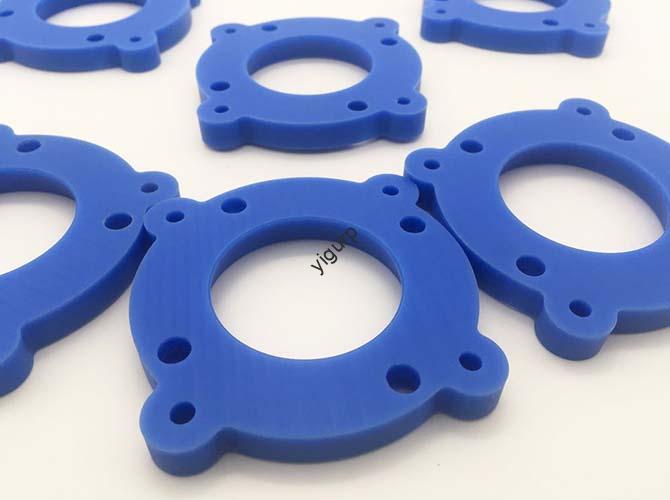
Nel frenetico mondo della produzione moderna, le aziende e i progettisti spesso affrontano sfide come lunghi cicli di produzione, costi elevati dello stampo, e flessibilità di progettazione limitata. 3Tecnologia di stampa D, Tuttavia, è emerso come un gioco – cambiavalute, affrontare questi punti critici con il suo insieme unico di caratteristiche. Let’s dive into the core features that make 3D printing a revolutionary force in various industries.
1. High Degree of Design Freedom: Unleashing Creative Potential
Traditional manufacturing methods, come lo stampaggio a iniezione o la lavorazione CNC, often struggle with complex geometries. They require expensive tooling and can’t easily produce parts with internal cavities, intricate lattices, or organic shapes. 3Stampa D, d'altra parte, costruisce oggetti strato per strato, breaking free from these constraints.
What does this mean for users?
- Complex Geometries Made Easy: Designers can create parts that were once considered impossible. Per esempio, aerospace engineers use 3D printing to produce lightweight turbine blades with internal cooling channels, which improve fuel efficiency while maintaining structural strength.
- Prototipazione rapida: Instead of waiting weeks for a prototype using traditional methods, 3D printing allows for iterations in a matter of days. A product designer working on a new smartphone case can print multiple versions in a week, test them, and refine the design quickly, significantly shortening the product development cycle.
The table below compares design flexibility between 3D printing and traditional manufacturing:
| Aspect | 3D Stampa | Traditional Manufacturing |
| Complex Geometry Support | Excels at internal cavities, lattices, and organic shapes | Limited; struggles with complex internal structures |
| Prototyping Time | Days to weeks | Weeks to months |
| Tooling Dependence | None for most processes | Heavy reliance on molds or dies |
2. Fast Manufacturing: Meeting Urgent and Custom Needs
Time is money in manufacturing, and 3D printing delivers speed that traditional methods can’t match, especially for low – volume production and personalized items.
How does it accelerate production?
- Rapid Manufacturing: For small – batch orders, Piace 50 custom prosthetic sockets for a medical clinic, 3D printing can complete the job in a few days. Traditional manufacturing would require creating a mold first, which alone could take weeks, followed by the production process.
- Low – Volume Production Flexibility: Unlike mass production lines that need to run thousands of units to be cost – efficace, 3D printing shines when producing 1 A 1000 unità. A jewelry designer, for instance, can create unique, personalized necklaces for individual customers without incurring high setup costs.
Here’s a timeline showing the difference in production time for a 50 – unit order of a small plastic part:
| Stage | 3D Stampa | Traditional Manufacturing |
| Setup Time | 1 – 2 giorni (file preparation, machine calibration) | 2 – 4 weeks (mold design and production) |
| Production Time | 3 – 5 giorni | 1 – 2 weeks |
| Total Time | 4 – 7 giorni | 3 – 6 weeks |
3. Costo – Efficacia: Cutting Expenses at Every Step
One of the biggest concerns for businesses is cost. 3D printing addresses this by eliminating mold costs and enabling intelligent, lavoro – saving production.
What cost savings can users expect?
- No Mold Required: Molds for traditional manufacturing can cost anywhere from \(10,000 A \)100,000 or more, depending on the complexity. For a startup developing a new toy, 3D printing allows them to skip mold production entirely, saving tens of thousands of dollars in initial investment.
- Intelligent Production: 3D printing systems can operate 24/7 with minimal human supervision. A factory using 3D printers to produce small electronic components can reduce labor costs by up to 30% compared to a traditional assembly line, as fewer workers are needed to monitor and operate the machines.
4. Diverse Materials: Tailoring to Every Application
From plastics to metals and ceramics, 3D printing supports a wide range of materials, making it suitable for industries as diverse as healthcare, automobilistico, e aerospaziale.
What materials are available, and how are they used?
- Plastica: Common plastics like PLA and ABS are used for consumer products, prototipi, e imballaggio. Per esempio, a company can 3D print custom packaging inserts to protect fragile electronics during shipping.
- Metalli: Titanium, alluminio, and stainless steel are popular in aerospace and medical applications. Surgeons use 3D – printed titanium hip implants that are custom – fitted to each patient, reducing the risk of rejection and improving recovery times.
- Ceramics: Ceramic materials are used for high – temperature applications, such as engine parts and dental crowns. A dental lab can 3D print ceramic crowns that match the color and shape of a patient’s natural teeth, providing a more natural – looking result than traditional crowns.
Some 3D printing techniques even allow for mixed – material printing. Per esempio, a designer can create a phone case that combines a rigid plastic outer layer with a soft, rubber – like inner layer for shock absorption, all in a single print job.
5. Environmentally Friendly: Reducing Waste and Carbon Footprint
In an era of growing environmental awareness, 3D printing offers significant sustainability benefits compared to traditional manufacturing.
How does 3D printing help the environment?
- Reduced Waste: Traditional manufacturing often generates a lot of waste material. Per esempio, CNC machining a metal part from a solid block can result in up to 80% of the material being discarded as scrap. 3Stampa D, Tuttavia, only uses the material needed to build the part, reducing waste by up to 90% in some cases.
- Energy Conservation and Emission Reduction: 3D printing machines consume less energy than traditional manufacturing equipment. A study by the University of California found that 3D printing a small plastic part uses up to 50% less energy than injection molding the same part. This lower energy consumption translates to fewer carbon dioxide emissions, helping businesses reduce their environmental impact.
La prospettiva della tecnologia Yigu
Alla tecnologia Yigu, we believe 3D printing’s characteristics redefine manufacturing. Its design freedom fuels innovation, fast production meets market demands, costo – effectiveness aids startups, diverse materials suit industries, and eco – friendliness aligns with sustainability. We integrate these into solutions, helping clients boost efficiency, tagliare i costi, and stay competitive. The future of 3D printing is bright, and we’re excited to lead this transformation.
Domande frequenti
1. Can 3D printing be used for mass production?
While 3D printing is excellent for low – volume and custom production, it’s currently not as fast or cost – effective as traditional methods like injection molding for mass production of millions of identical parts. Tuttavia, as technology advances, this may change in the future.
2. Is 3D printing material strong enough for industrial use?
SÌ, many 3D printing materials, such as high – strength plastics, titanium, and stainless steel, are strong enough for industrial applications. Per esempio, 3D – printed metal parts are used in aircraft engines and automotive components, where strength and durability are critical.
3. How difficult is it to learn to use a 3D printer?
Basic 3D printers are relatively easy to learn to use, especially with user – friendly software and tutorials available. While mastering advanced techniques and materials may take more time, most people can start printing simple objects within a few hours of setting up the printer.