
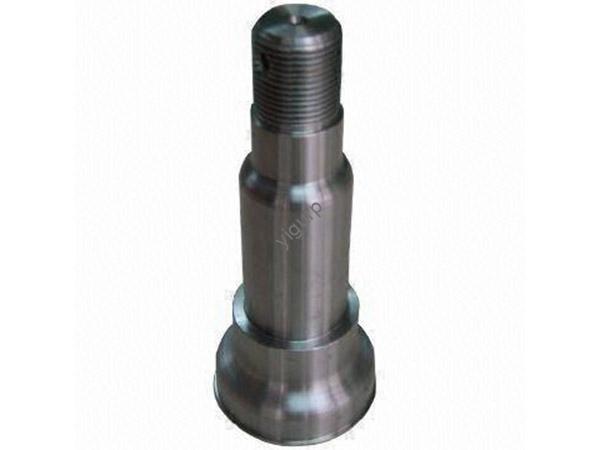
Se lavori nel settore automobilistico giapponese, industriale, o settori agricoli, che necessitano di molle in grado di gestire carichi elevati, stress frequente, e calore moderato: JIS SUP9 è una scelta affidabile. Questo standard industriale giapponese (LUI) l'acciaio per molle in lega di cromo bilancia la resistenza, resistenza alla fatica, e convenienza, rendendolo la scelta migliore per applicazioni a molla per carichi medio-pesanti. Questa guida analizza le sue proprietà principali, usi nel mondo reale, processo di produzione, e come si confronta con altri materiali, helping you solve spring-related challenges in Japanese and global markets.
1. Material Properties of JIS SUP9 Spring Steel
JIS SUP9’s defining feature is its chromium content (0.50–0.80%), which boosts hardenability and fatigue resistance—critical for long-lasting springs. Let’s explore its properties in detail.
1.1 Chemical Composition
JIS SUP9 follows strict Japanese Industrial Standards (JIS G4801), ensuring consistency for high-stress spring applications. Below is its typical chemical makeup:
| Element | Symbol | Content Range (%) | Key Role |
|---|---|---|---|
| Carbon (C) | C | 0.45 – 0.55 | Enhances strength, durezza, e resistenza all'usura |
| Chromium (Cr) | Cr | 0.50 – 0.80 | Improves hardenability and fatigue resistance; boosts mild corrosion protection |
| Manganese (Mn) | Mn | 0.60 – 0.90 | Aids heat treatment; reduces brittleness under stress |
| Silicon (Si) | Si | 0.15 – 0.35 | Enhances elastic modulus for spring flexibility; aids deoxidation |
| Phosphorus (P) | P | ≤ 0.030 | Controlled to prevent cracking in high-stress parts |
| Sulfur (S) | S | ≤ 0.035 | Minimized to avoid fatigue cracks in repeated-load applications |
| Nichel (In) | In | ≤ 0.30 | Trace element; no major impact on performance |
| Vanadium (V) | V | ≤ 0.10 | Trace element; minor grain refinement |
1.2 Physical Properties
These properties describe how JIS SUP9 behaves under physical conditions like temperature and magnetism:
- Density: 7.85 g/cm³ (consistent with most carbon-chromium steels)
- Melting Point: 1,420 – 1,460 °C (2,588 – 2,660 °F)
- Thermal Conductivity: 46.0 W/(m·K) A 20 °C (room temperature)—suitable for standard heat treatment processes
- Coefficient of Thermal Expansion: 11.5 × 10⁻⁶/°C (da 20 – 100 °C)—minimizes shape distortion during heating/cooling
- Magnetic Properties: Ferromagnetic (attracts magnets), useful for sorting, inspection, and manufacturing clamping.
1.3 Mechanical Properties
JIS SUP9’s mechanical performance excels afterspring temper heat treatment. Below are typical values forannealed Espring-tempered conditions:
| Property | Measurement Method | Annealed Value | Spring-Tempered Value |
|---|---|---|---|
| Hardness (Rockwell) | HRB (annealed) / HRC (tempered) | 65 – 80 HRB | 38 – 45 HRC |
| Hardness (Vickers) | HV | 130 – 160 HV | 380 – 450 HV |
| Tensile Strength | MPa | 600 – 750 MPa | 1,150 – 1,450 MPa |
| Yield Strength | MPa | 350 – 450 MPa | 950 – 1,250 MPa |
| Elongation | % (In 50 mm) | 20 – 25% | 6 – 10% |
| Impact Toughness | J (A 20 °C) | ≥ 40 J | ≥ 16 J |
| Fatigue Limit | MPa (rotating beam) | 370 – 420 MPa | 680 – 780 MPa |
1.4 Other Properties
JIS SUP9’s key traits make it ideal for Japanese applications:
- Elastic Modulus: ~200 GPa—ensures it returns to its original shape after repeated loads (per esempio., car suspension springs).
- Spring Temper: Easy to achieve via tempering (350–450 °C)—balances hardness for strength and flexibility to avoid breaking.
- Hardenability: Good—chromium enables uniform hardening in sections up to 25 mm di spessore (perfect for leaf springs or medium-sized valve springs).
- Wear Resistance: Moderate to good—carbon-chromium carbides resist abrasion in dusty agricultural or industrial environments.
- Resistenza alla corrosione: Mild—better than plain carbon steels (per esempio., JIS S65C) but needs coatings (like zinc plating) for wet/outdoor use.
2. Applications of JIS SUP9 Spring Steel
JIS SUP9’s versatility makes it a staple in Japanese manufacturing and global supply chains. Here are its top uses:
- Springs: Medium-to-heavy-load springs like coil springs (car suspensions, macchinari industriali), flat springs (electrical contacts, tool clips), E torsion springs (heavy-duty door hinges).
- Automotive Suspension Components: Leaf springs and coil springs in Japanese cars (per esempio., Toyota, Honda) and light trucks—handling road shocks and vehicle weight.
- Valve Springs: Used in medium-sized automotive engines (per esempio., gasoline or diesel engines for passenger cars) and small industrial generators—reliable for moderate RPMs.
- Industrial Machinery: Springs in conveyor systems, press machines, and textile equipment—common in Japanese factories for tension control.
- Agricultural Machinery: Springs in tractor attachments (plow adjusters, rice harvester parts)—withstanding dirt and moderate impacts on Japanese farms.
- Hand Tools: Heavy-duty tools like bolt cutters, industrial pliers, and jacks—providing the strength to grip or lift tough materials.
- Gears: Small-to-medium gears in industrial gearboxes—JIS SUP9’s wear resistance handles repeated meshing contact.
- Railway Components: Small springs in train door mechanisms or bogie parts—resisting vibration for Japanese rail networks.
3. Manufacturing Techniques for JIS SUP9
Producing JIS SUP9 aligns with Japanese manufacturing precision. Here’s the typical process:
- Steelmaking:
- JIS SUP9 is made using an Electric Arc Furnace (EAF) (common in Japan for scrap recycling, supporting sustainability goals) O Basic Oxygen Furnace (BOF). The process focuses on precise control of chromium (0.50–0.80%) to meet JIS G4801.
- Rolling:
- After steelmaking, the metal is Hot Rolled (1,100 – 1,200 °C) into bars, sheets, or coils—standard formats for Japanese spring manufacturers. For precision parts (per esempio., valve springs), suo Cold Rolled (room temperature) to improve surface finish and dimensional accuracy.
- Precision Forming:
- Springs are shaped using Japanese-standard techniques:
- Spring Coiling: Wrapping cold-rolled wire around a mandrel to create coil springs (matching JIS dimensional specs).
- Stamping: Pressing flat steel into flat springs (per esempio., electrical switch contacts) using high-precision dies.
- Bending/Forging: Heating and shaping steel into leaf springs or gear blanks—refining grain structure for strength.
- Springs are shaped using Japanese-standard techniques:
- Trattamento termico:
- Critical for unlocking JIS SUP9’s spring performance:
- Ricottura: Heat to 800 – 850 °C, cool slowly to soften steel for forming.
- Tempra: After forming, heat to 820 – 860 °C, rapid cool in oil to harden (chromium ensures uniform hardening).
- Tempering: Reheat to 350 – 450 °C to achieve spring temper—reduces brittleness while retaining strength.
- Critical for unlocking JIS SUP9’s spring performance:
- Lavorazione:
- Per parti complesse (per esempio., ingranaggi, custom springs), post-forming machining (Grinding, Milling) trims excess material and ensures tight tolerances (±0.01 mm for small springs).
- Trattamento superficiale:
- Optional steps for Japanese applications:
- Placcatura: Zinc plating (per JIS H8610) for corrosion resistance—used for outdoor tools or automotive springs.
- Coating: Verniciatura a polvere (per JIS K5600) for aesthetics and extra rust protection—popular for visible components.
- Blackening: Low-cost oxide layer (per JIS K5623) for indoor machinery springs.
- Optional steps for Japanese applications:
- Controllo qualità:
- Rigorous testing ensures compliance with JIS standards:
- Chemical analysis: Verify alloy content via spectrometry (JIS G1253).
- Tensile testing: Check strength (JIS Z2241).
- Spring load testing: Ensure shape retention after 100,000+ cycles (JIS B2704).
- Dimensional inspection: Use CMMs to confirm JIS specs.
- Rigorous testing ensures compliance with JIS standards:
4. Case Studies: JIS SUP9 in Action
Real Japanese examples highlight JIS SUP9’s performance:
Case Study 1: Japanese Car Suspension Spring Durability
A Nagoya-based car manufacturer faced coil spring failures (after 80,000 km) using JIS S65C. The springs deformed under heavy loads (per esempio., mountain roads). Switching to JIS SUP9 springs (tempered to 42 HRC and zinc-plated) extended life to 190,000 km. This reduced warranty claims by 70% and improved customer satisfaction in Japanese and export markets.
Case Study 2: Agricultural Machinery Spring Performance
A Kyoto-based tractor maker struggled with plow spring failures (every 700 ore) using a low-alloy steel. The springs wore out in dusty farm conditions. Replacing them with JIS SUP9 springs (tempered to 44 HRC) increased life to 2,100 ore. This cut farmer downtime by 66% and boosted tractor sales in Japan and Southeast Asia.
5. JIS SUP9 vs. Other Spring Materials
How does JIS SUP9 compare to other common spring steels (Japanese, European, and global)? The table below breaks it down:
| Materiale | Similarities to JIS SUP9 | Differenze chiave | Ideale per |
|---|---|---|---|
| JIS S65C | Japanese spring steel | No chromium; lower fatigue/heat resistance; più economico | Standard low-to-medium-load springs |
| AISI 5160 | Chromium-alloyed steel | AISI 5160 = U.S. standard; higher Cr; better fatigue resistance; more expensive | Heavy-duty springs (off-road suspensions) |
| EN 50CrV4 | European alloy spring steel | Contains vanadium; better high-temp stability; pricier | High-RPM engines (corsa, aerospaziale) |
| AISI 6150 | Chromium-vanadium steel | Higher Cr/V; better heat resistance; U.S. standard | Extreme high-temp springs (turbine valves) |
| Acciaio inossidabile (JIS SUS304) | Spring properties | Corrosion-resistant; lower strength; more expensive | Wet/outdoor springs (marino, garden tools) |
| Acciaio legato (JIS SUP10) | High-strength spring steel | Contains silicon/manganese; better elasticity; more expensive | Large leaf springs (heavy trucks) |
| Composite (Carbon Fiber) | Lightweight | Very light; alta resistenza; costoso | Weight-sensitive apps (aerospaziale, corsa) |
Yigu Technology’s Perspective on JIS SUP9
Alla tecnologia Yigu, JIS SUP9 is our top pick for clients serving Japanese markets. Its chromium content delivers better fatigue resistance than JIS S65C, making it ideal for automotive and agricultural springs. We optimize heat treatment to 38–45 HRC and offer zinc plating per JIS H8610. For global clients, JIS SUP9 works as a cost-effective alternative to AISI 5160, ensuring consistency across Japan, North America, and Europe. It’s a reliable, versatile solution for most medium-to-high-stress spring needs.
FAQ About JIS SUP9 Spring Steel
- Is JIS SUP9 interchangeable with AISI 5160?
Mostly yes—both are chromium-alloyed spring steels. JIS SUP9 has lower chromium (0.50–0.80% vs. 0.70–0.90% for AISI 5160) but is interchangeable for most medium-load applications (car suspensions, industrial springs). AISI 5160 is better for extreme fatigue. - Can JIS SUP9 be used for valve springs in diesel engines?
Yes—for medium-sized diesel engines (per esempio., passenger car or small truck engines) with moderate RPMs (fino a 5,500 RPM). For large truck diesel engines, use higher-alloy steels for extra heat resistance. - What surface treatment works best for JIS SUP9 in wet Japanese climates?
Zinc plating (per JIS H8610) is ideal—it resists rust from rain and humidity. For extra protection (per esempio., marine or agricultural use), add a clear powder coating over the zinc to prevent corrosion.