
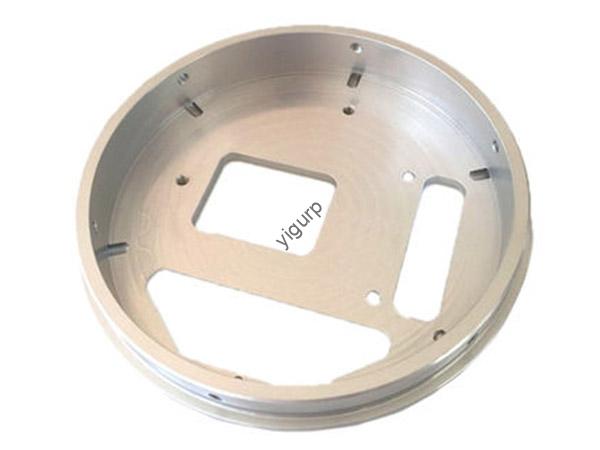
If you’re in need of ahot work tool steel that can withstand high temperatures, resistere alla fatica termica, e garantire una lunga durata, JIS SKD61 tool steel è lo standard del settore. Affidatevi alla pressofusione, stampaggio a caldo, e stampi per iniezione plastica, questa lega risolve i punti critici più comuni come la rottura dello stampo dovuta a cicli termici o l'usura prematura in applicazioni ad alta temperatura. In questa guida, analizzeremo le sue proprietà chiave, usi nel mondo reale, fasi di produzione, and how it compares to other materials—so you can confidently choose it for your hot working projects.
1. Material Properties of JIS SKD61 Tool Steel
JIS SKD61’s exceptional performance in hot environments comes from its carefully engineered composition and balanced properties. Let’s explore these in detail:
1.1 Chemical Composition
The elements in JIS SKD61 work together to enhance high-temperature strength, thermal fatigue resistance, e durata. Below is its standard composition (per JIS G4404):
| Element | Content Range (%) | Key Role |
|---|---|---|
| Carbon (C) | 0.32 – 0.42 | Provides moderate hardness while maintaining toughness for hot working. |
| Manganese (Mn) | 0.80 – 1.20 | Improves hardenability and reduces brittleness at high temperatures. |
| Silicon (Si) | 0.80 – 1.20 | Enhances oxidation resistance and strength in hot environments. |
| Chromium (Cr) | 4.50 – 5.50 | A primary element forhot hardness and thermal fatigue resistance; forms protective oxide layers. |
| Nichel (In) | ≤ 0.50 | A trace element that slightly boosts toughness (kept low to avoid reducing hot strength). |
| Molibdeno (Mo) | 1.00 – 1.50 | Increases high-temperature strength and prevents grain growth during heat cycles. |
| Vanadium (V) | 0.80 – 1.20 | Refines grain structure and enhances wear resistance; improves thermal fatigue life. |
| Sulfur (S) | ≤ 0.030 | Minimized to avoid weakening the steel and reducing fatigue strength. |
| Phosphorus (P) | ≤ 0.030 | Kept low to prevent brittleness, especially under repeated heating/cooling. |
1.2 Physical Properties
These properties determine how JIS SKD61 behaves in hot working environments—such as heat transfer and dimensional stability. All values are measured at room temperature unless noted:
- Density: 7.85 g/cm³ (consistent with most tool steels, making it easy to calculate die weights).
- Melting Point: 1450 – 1510 °C (high enough to withstand forging and heat treatment without deformation).
- Thermal Conductivity: 30 W/(m·K) (good heat transfer, helping distribute heat evenly in hot forging dies).
- Coefficient of Thermal Expansion: 12.0 × 10⁻⁶/°C (da 20 A 600 °C; low expansion reduces thermal stress in dies).
- Specific Heat Capacity: 470 J/(kg·K) (efficient at absorbing and releasing heat, reducing thermal fatigue).
1.3 Mechanical Properties
JIS SKD61’s mechanical properties are optimized for hot working—prioritizing high-temperature strength and thermal fatigue resistance. Below are typical values after standard heat treatment (quenching + tempering at 550 °C):
| Property | Typical Value | Test Standard | Why It Matters |
|---|---|---|---|
| Hardness (HRC) | 42 – 48 | JIS Z2245 | Balanced hardness—resists wear in hot dies while maintaining toughness to avoid cracking. |
| Tensile Strength | ≥ 1200 MPa | JIS Z2241 | Handles high pressure inhot extrusion dies and die casting molds. |
| Yield Strength | ≥ 1000 MPa | JIS Z2241 | Resists permanent deformation, keeping dies dimensionally stable. |
| Elongation | ≥ 10% | JIS Z2241 | Good ductility, reducing the risk of cracking during thermal cycles. |
| Impact Toughness (Charpy V-notch) | ≥ 35 J (A 20 °C) | JIS Z2242 | Excellent toughness—critical for dies that face sudden temperature changes. |
| Fatigue Strength | ~550 MPa (10⁷ cycles) | JIS Z2273 | Resists failure from repeated heat cycles (key for high-volume die casting). |
1.4 Other Properties
- Resistenza alla corrosione: Good. Chromium forms a protective oxide layer that resists rust and mild chemical exposure (per esempio., die casting lubricants).
- Wear Resistance: Very Good. Vanadium and chromium carbides resist abrasive wear from hot metals in forging or extrusion.
- Lavorabilità: Fair. It’s harder to machine than low-alloy steels, Ma ricottura (heating to 800–850 °C and cooling slowly) softens it to HRC 22–26, making machining easier.
- Hardenability: Excellent. It hardens evenly across thick sections (fino a 80 mm), so large dies have consistent performance.
- Hot Hardness: Outstanding. Retains 80% of its room-temperature hardness at 600 °C—ideal for hot stamping dies and plastic injection molds with heated cavities.
- Thermal Fatigue Resistance: Exceptional. Resists cracking from repeated heating/cooling cycles (the top reason for hot die failure).
2. Applications of JIS SKD61 Tool Steel
JIS SKD61’s ability to withstand high temperatures and thermal fatigue makes it indispensable in hot working industries. Here are its most common uses, con esempi reali:
2.1 Hot Working Tools
- Examples: Hot forging dies (for steel or aluminum parts), hot extrusion dies (for aluminum profiles), E hot stamping dies (for automotive body panels).
- Why it works: Hot hardness retains strength at 600+ °C, while thermal fatigue resistance prevents cracking. A Chinese forging shop used JIS SKD61 for steel gear dies—die life increased from 30,000 A 100,000 parts.
2.2 Die Casting Molds
- Examples: Molds for die casting non-ferrous metals like aluminum (per esempio., automotive wheels) or zinc (per esempio., electronic housings).
- Why it works: Thermal fatigue resistance handles repeated metal pouring (400–600 °C) and cooling. A Japanese die caster used JIS SKD61 for aluminum wheel molds—maintenance costs dropped by 40%.
2.3 Plastic Injection Molds
- Examples: Molds for high-temperature plastics (per esempio., nylon, SBIRCIARE) or molds with heated cavities (per esempio., for thick-walled parts).
- Why it works: Hot hardness resists heat from molten plastic, while wear resistance prevents degradation from plastic flow. A U.S. plastic manufacturer used JIS SKD61 for nylon part molds—cycle time reduced by 15% (faster heating/cooling).
2.4 Automotive and Aerospace Components
- Examples: Tooling for making automotive engine parts (per esempio., cylinder heads) or aerospace turbine components (small-scale).
- Why it works: Meets strict industry standards for high-temperature performance. A German automotive supplier used JIS SKD61 for hot-stamped body panels—part strength improved (thanks to consistent die temperatures).
3. Manufacturing Techniques for JIS SKD61 Tool Steel
Turning JIS SKD61 into high-performance hot tools requires precise processing. Here’s a step-by-step breakdown:
- Melting: Raw materials (iron, cromo, molibdeno, ecc.) are melted in an electric arc furnace (EAF) at 1550–1650 °C for uniform mixing of high-value elements.
- Casting: Molten steel is poured into ingot molds or continuous casters to form slabs or billets. Slow cooling (50–100 °C/hour) prevents carbide segregation.
- Forging: Slabs are heated to 1050–1150 °C and pressed/hammered into die blanks (per esempio., 500x500x200 mm for large forging dies). Forging improves grain structure and thermal fatigue resistance.
- Trattamento termico: The standard cycle for JIS SKD61 (optimized for hot working):
- Ricottura: Heat to 800–850 °C, hold 2–4 hours, cool slowly. Softens steel for machining.
- Tempra: Heat to 1020–1060 °C, hold 1–2 hours, quench in oil. Hardens steel to HRC 50–55.
- Tempering: Reheat to 500–600 °C, hold 2–3 hours, cool. Reduces brittleness and sets final hardness (HRC 42–48).
- Lavorazione: Die blanks are milled, drilled, or turned into die cavities (done before quenching, when steel is soft). Carbide tools are recommended for best results.
- Grinding: After heat treatment, dies are ground to precise dimensions (per esempio., ±0.005 mm tolerance) to remove surface defects and improve finish.
- Trattamento superficiale: Optional steps to boost performance:
- Nitriding: Creates a hard surface layer (HRC 60–65) to enhance wear resistance for die casting molds.
- Coating: Applies TiAlN (titanium aluminum nitride) to reduce friction between the die and hot metal.
4. Case Study: JIS SKD61 in Aluminum Die Casting Molds
A European automotive parts manufacturer faced a problem: their alloy steel die casting molds for aluminum sensor housings were cracking after 50,000 cycles due to thermal fatigue. They switched to JIS SKD61, and here’s what happened:
- Processo: Molds were forged, annealed (HRC 24), machined to shape, quenched (1040 °C), tempered (550 °C), nitrided, and ground to tolerance.
- Results:
- Mold life increased to 180,000 cycles (260% improvement) thanks to JIS SKD61’s thermal fatigue resistance.
- Cracking dropped by 90% (no more failure from heat cycles).
- Part quality improved: fewer surface defects (consistent die temperatures from JIS SKD61’s heat conductivity).
- Why it worked: Chromium and molybdenum in JIS SKD61 retained the mold’s strength at 550 °C (aluminum melting temperature), while vanadium prevented grain growth—solving the thermal fatigue issue.
5. JIS SKD61 vs. Other Materials
How does JIS SKD61 compare to common alternatives for hot working? Let’s evaluate key properties:
| Materiale | Hardness (HRC) | Hot Hardness (600 °C) | Thermal Fatigue Resistance | Lavorabilità | Costo (contro. JIS SKD61) | Ideale per |
|---|---|---|---|---|---|---|
| Acciaio per utensili JIS SKD61 | 42 – 48 | Outstanding | Exceptional | Fair | 100% | Hot forging dies, die casting molds |
| Hot Work Tool Steel (IN 1.2344) | 45 – 50 | Outstanding | Excellent | Fair | 110% | High-pressure hot forging (thicker dies) |
| High-Speed Steel (HSS) | 60 – 65 | Very Good | Povero | Povero | 250% | Cutting tools (not hot dies) |
| Acciaio inossidabile (310S) | 20 – 25 | Good | Good | Fair | 180% | Low-stress hot parts (not dies) |
| Acciaio legato (4140) | 30 – 35 | Povero | Povero | Good | 70% | Structural parts (not hot working) |
| Cast Iron (FC250) | 18 – 22 | Very Poor | Very Poor | Povero | 50% | Low-cost, low-temperature molds |
Key takeaway: JIS SKD61 is the best all-around choice for hot working tools. It offers better thermal fatigue resistance than HSS or alloy steel, and it’s more cost-effective than EN 1.2344 while delivering comparable performance for most die casting and forging applications.
Yigu Technology’s View on JIS SKD61 Tool Steel
Alla tecnologia Yigu, JIS SKD61 is our top recommendation for clients with hot working needs—from die casting to hot stamping. Its unmatched thermal fatigue resistance solves the #1 problem our clients face: premature die failure from heat cycles. We often pair it with nitriding to boost wear resistance, helping clients extend die life by 150–250%. For automotive and aerospace manufacturers, JIS SKD61 isn’t just a material—it’s a way to cut downtime, reduce maintenance costs, and deliver consistent, parti di alta qualità.
FAQ About JIS SKD61 Tool Steel
1. Can JIS SKD61 be used for cold working applications (per esempio., cold stamping dies)?
While JIS SKD61 can handle mild cold working, it’s not ideal. Its hardness (HRC 42–48) is lower than dedicatedcold work tool steel (per esempio., JIS SKD11, HRC 58–62), so it will wear faster in cold stamping. For cold working, choose JIS SKD11 instead.
2. What’s the maximum temperature JIS SKD61 can withstand without losing strength?
JIS SKD61 retains excellent strength at temperatures up to 600 °C. For short periods (per esempio., 1–2 hours), it can handle up to 650 °C, but prolonged exposure above 600 °C will reduce its hardness and fatigue resistance over time.
3. Is JIS SKD61 more expensive than pre-hardened mold steel (per esempio., P20)?
SÌ, JIS SKD61 costs about 50–70% more than pre-hardened mold steel (P20). But it’s worth the investment for hot working applications—P20 lacks the hot hardness and thermal fatigue resistance of JIS SKD61 and will fail quickly in high-temperature environments.