
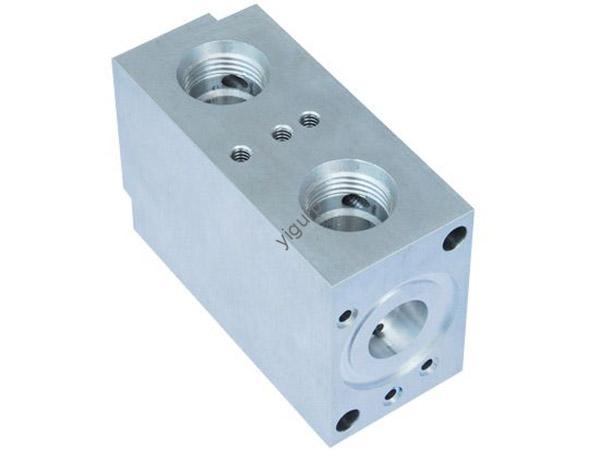
If you’re searching for a mold steel that delivers exceptionallucidabilità a specchio, stabilità dimensionale costante, and easy machining—JIS NAK80 mold steel è il gold standard. Ampiamente utilizzato in applicazioni di fascia alta come stampi ottici e stampi per prodotti di consumo, questa lega pre-indurita risolve i punti critici più comuni come la scarsa finitura superficiale o la deformazione dello stampo. In questa guida, analizzeremo le sue proprietà chiave, usi nel mondo reale, fasi di produzione, and how it compares to other materials—so you can create molds that meet the strictest quality standards.
1. Material Properties of JIS NAK80 Mold Steel
JIS NAK80’s reputation as a premium mold steel comes from its carefully balanced composition and standout properties. Let’s explore these in detail:
1.1 Composizione chimica
The elements in JIS NAK80 work together to enhance polishability, tenacità, e stabilità dimensionale. Below is its standard composition (per JIS G4404):
| Elemento | Gamma di contenuti (%) | Ruolo chiave |
|---|---|---|
| Carbonio (C) | 0.12 – 0.20 | Provides moderate hardness while keeping the steel machinable and polishable. |
| Manganese (Mn) | 0.20 – 0.50 | Improves hardenability and reduces brittleness during heat treatment. |
| Silicio (E) | 0.15 – 0.35 | Enhances strength and resistance to oxidation in mild environments. |
| Cromo (Cr) | 1.20 – 1.60 | Boosts wear resistance andresistenza alla corrosione; supports fine grain structure for polishability. |
| Nichel (In) | 3.00 – 3.50 | A key element for toughness and ductility; prevents cracking in high-precision molds. |
| Molibdeno (Mo) | 0.20 – 0.40 | Increases high-temperature stability (useful for plastic injection molds); migliora la stabilità dimensionale. |
| Vanadio (V) | 0.05 – 0.15 | Refines grain structure further, enhancing mirror polishability and fatigue strength. |
| Zolfo (S) | ≤ 0.010 | Ultra-low content eliminates surface defects (per esempio., pozzi) during polishing. |
| Fosforo (P) | ≤ 0.015 | Minimized to avoid brittleness and ensure uniform polishability. |
1.2 Proprietà fisiche
These properties determine how JIS NAK80 behaves during mold manufacturing and use—such as heat transfer and shape retention. All values are measured at room temperature unless noted:
- Densità: 7.85 g/cm³ (consistent with most mold steels, making it easy to calculate mold weight).
- Punto di fusione: 1450 – 1500 °C (high enough to withstand forging and heat treatment without deformation).
- Conducibilità termica: 32 Con/(m·K) (good heat transfer, ensuring plastic parts cool evenly in injection molds).
- Coefficiente di dilatazione termica: 11.8 × 10⁻⁶/°C (da 20 A 600 °C; low expansion reduces mold warping during heat cycles).
- Capacità termica specifica: 470 J/(kg·K) (efficient at absorbing and releasing heat, reducing plastic injection cycle times).
1.3 Proprietà meccaniche
JIS NAK80 is suppliedpre-hardened (ready for machining without extra heat treatment), a huge time-saver for high-precision mold projects. Below are its typical pre-hardened properties:
| Proprietà | Valore tipico | Norma di prova | Perché è importante |
|---|---|---|---|
| Durezza (HRC) | 36 – 40 | JIS Z2245 | Balanced hardness—hard enough for mold durability, soft enough for easy machining and polishing. |
| Resistenza alla trazione | ≥ 1100 MPa | JIS Z2241 | Handles the pressure of plastic injection without deformation. |
| Forza di snervamento | ≥ 950 MPa | JIS Z2241 | Resists permanent damage, keeping molds dimensionally stable for thousands of cycles. |
| Allungamento | ≥ 12% | JIS Z2241 | Buona duttilità, reducing the risk of cracking during mold clamping or polishing. |
| Resistenza all'impatto (Charpy con tacca a V) | ≥ 50 J (A 20 °C) | JIS Z2242 | Excellent toughness—prevents mold failure from sudden impacts (per esempio., part jams). |
| Forza della fatica | ~500 MPa (10⁷ cicli) | JIS Z2273 | Resists wear from repeated use (key for high-cyclepackaging molds or consumer product molds). |
1.4 Altre proprietà
- Resistenza alla corrosione: Bene. Chromium content protects against rust in workshop environments and mild chemical exposure (per esempio., plastic additives).
- Resistenza all'usura: Da moderato a buono. Suitable for most plastic and die casting applications; for high-wear molds, add a surface coating like nitriding.
- Lavorabilità: Eccellente. Its pre-hardened hardness (HRC 36–40) and low sulfur content make it easy to mill, trapano, and turn—reducing machining time by 25–30% vs. harder mold steels.
- Temprabilità: Eccellente. It hardens evenly across thick sections (fino a 100 mm), so large molds (per esempio., automotive molds for bumpers) have consistent properties.
- Mirror Polishability: Eccezionale. Ultra-low sulfur and fine grain structure let it achieve mirror finishes as smooth as Ra ≤ 0.01 μm—critical for optical molds (per esempio., obiettivi della fotocamera) or high-end consumer products (per esempio., custodie per smartphone).
- Stabilità dimensionale: Eccezionale. Low thermal expansion and uniform hardening prevent mold warping during machining or use.
2. Applications of JIS NAK80 Mold Steel
JIS NAK80’s mix of polishability, stabilità, and machinability makes it ideal for high-precision mold projects. Ecco i suoi usi più comuni, con esempi reali:
2.1 Optical Molds
- Esempi: Molds for camera lenses, protezioni per lo schermo dello smartphone, or optical fibers.
- Why it works: Mirror polishability delivers the ultra-smooth surfaces needed for clear optics. A Japanese optical manufacturer used JIS NAK80 for camera lens molds—polish time reduced by 50% contro. stainless mold steel.
2.2 Stampi per iniezione plastica
- Esempi: Molds for high-end plastic parts like smartphone casings, contenitori per cosmetici, o dispositivi medici (per esempio., barili di siringa).
- Why it works: Dimensional stability ensures part consistency, while polishability eliminates surface defects. A Korean electronics maker used JIS NAK80 for smartphone case molds—part defect rates dropped to 0.1%.
2.3 Consumer Product Molds
- Esempi: Molds for luxury goods (per esempio., casse di orologi), stoviglie (per esempio., high-gloss plastic bowls), or toys (per esempio., smooth-surface action figures).
- Why it works: Mirror finish meets consumer demand for premium aesthetics. A French cosmetic brand used JIS NAK80 for lipstick tube molds—customer satisfaction with surface quality rose by 90%.
2.4 Automotive and Packaging Molds
- Esempi: Stampi per parti interne di autoveicoli (per esempio., high-gloss dashboard panels) or packaging (per esempio., clear plastic food containers).
- Why it works: Fatigue strength handles high production cycles, while stability ensures part uniformity. A German automotive supplier used JIS NAK80 for dashboard molds—mold life increased from 150,000 A 300,000 parti.
3. Manufacturing Techniques for JIS NAK80 Mold Steel
Turning JIS NAK80 into high-precision molds requires careful, specialized steps. Ecco un'analisi dettagliata:
- Fusione: Materie prime (ferro, nichel, cromo, ecc.) vengono fusi in un forno elettrico ad arco (EAF) at 1550–1650 °C. Strict control ensures ultra-low sulfur and phosphorus content (critical for polishability).
- Colata: Molten steel is poured into ingot molds or continuous casters to form slabs. Raffreddamento lento (10–20 °C/hour) prevents internal defects and refines grain structure.
- Forgiatura: Slabs are heated to 1100–1200 °C and pressed/hammered into mold blanks (per esempio., 600x600x300 mm for large injection molds). Forging improves toughness and eliminates internal voids.
- Trattamento termico: The standard cycle for pre-hardened JIS NAK80:
- Ricottura: Heat to 800–850 °C, hold 2–4 hours, cool slowly. Softens steel to HRC 20–22 for initial machining.
- Tempra: Heat to 880–920 °C, hold 1–2 hours, dissetare nell'olio. Hardens steel to HRC 45–48.
- Temperamento: Reheat to 580–620 °C, hold 2–3 hours, cool. Reduces brittleness and sets final pre-hardened hardness (HRC 36–40).
- Lavorazione: Mold blanks are milled, forato, or turned into mold cavities using CNC machines. Carbide tools are recommended for tight tolerances (±0,001 mm).
- Lucidatura: The most critical step for high-precision molds:
- Start with 400-grit sandpaper to smooth machining marks.
- Progress to 1000-grit, 3000-grinta, and 8000-grit sandpaper.
- Finish with diamond paste (1–3 μm) to achieve mirror polish (Ra ≤ 0.01 µm).
- Trattamento superficiale (Opzionale):
- Galvanotecnica: Add a chrome or nickel coating to boost wear resistance (for high-cycle molds).
- Nitrurazione: Creates a hard surface layer (HRC 60–65) for die casting molds or high-wear plastic molds.
4. Caso di studio: JIS NAK80 in Optical Lens Molds
A Chinese optical component manufacturer faced a problem: their stainless steel molds for smartphone camera lenses couldn’t achieve the required mirror finish (Ra ≤ 0.01 µm), leading to blurry lenses. They switched to JIS NAK80, ed ecco cosa è successo:
- Processo: Mold blanks were pre-hardened to HRC 38, machined to lens cavity geometry (using 5-axis CNC), polished with diamond paste, and coated with an anti-reflective layer.
- Risultati:
- Achieved consistent mirror finish (Ra 0.008 µm) for every mold—no more blurry lenses.
- Polish time reduced from 24 ore a 8 ore (67% miglioramento) thanks to JIS NAK80’s fine grain structure.
- Lens production yield increased from 85% A 99.5% (meno parti difettose).
- Why it works: Ultra-low sulfur in JIS NAK80 eliminated surface pits, while nickel and vanadium refined the grain structure—allowing the diamond paste to create an ultra-smooth surface.
5. JIS NAK80 vs. Other Mold Materials
How does JIS NAK80 compare to common alternatives for high-precision molds? Let’s evaluate key properties:
| Materiale | Durezza (HRC) | Mirror Polishability (Ra μm) | Lavorabilità | Stabilità dimensionale | Costo (contro. JIS NAK80) | Ideale per |
|---|---|---|---|---|---|---|
| Acciaio per stampi JIS NAK80 | 36 – 40 | ≤ 0.01 | Eccellente | Eccezionale | 100% | Optical molds, high-end consumer product molds |
| P20 Pre-hardened Steel | 28 – 32 | ≤ 0.05 | Eccellente | Bene | 60% | General plastic molds (no mirror finish needs) |
| Stainless Mold Steel (S136) | 30 – 32 | ≤ 0.01 | Giusto | Molto bene | 180% | Corrosion-prone molds (per esempio., PVC) |
| Aluminum Mold Materials (7075) | 15 – 18 | ≤ 0.02 | Eccellente | Povero | 80% | Prototype molds or low-volume production |
| Acciaio al carbonio (1045) | 18 – 22 | ≥ 0.10 | Eccellente | Povero | 30% | Basso costo, low-precision molds |
Chiave da asporto: JIS NAK80 is the best choice for molds needing mirror polish and dimensional stability. It’s more machinable than stainless steel (S136) and delivers better polishability than P20—worth the higher cost for high-end applications.
Yigu Technology’s View on JIS NAK80 Mold Steel
Alla tecnologia Yigu, JIS NAK80 is our top pick for clients requiring high-precision molds—from optical components to luxury consumer goods. Its unmatched mirror polishability and dimensional stability solve the biggest challenges in premium mold-making: inconsistent finishes and mold warping. We often pair it with our precision polishing services to achieve Ra ≤ 0.008 µm, helping clients meet the strictest quality standards. For businesses focused on quality and customer satisfaction, JIS NAK80 isn’t just a material—it’s an investment in delivering exceptional products.
FAQ About JIS NAK80 Mold Steel
1. Can JIS NAK80 be used for die casting molds (per esempio., aluminum or zinc)?
SÌ, JIS NAK80 works for die casting molds, but we recommend adding a nitrided surface layer (HRC 60–65) per aumentare la resistenza all’usura. Without nitriding, its moderate wear resistance may limit life in high-volume die casting (Sopra 100,000 cicli).
2. Is JIS NAK80 suitable for molds that process corrosive plastics (per esempio., PVC)?
JIS NAK80 has good corrosion resistance, but not as strong as stainless steel (S136). For PVC molds (which release corrosive gases), we suggest either electroplating JIS NAK80 with chrome or switching to S136 if long-term corrosion protection is critical.
3. Do I need special tools to polish JIS NAK80 to a mirror finish?
No—standard polishing tools work, but diamond paste (1–3 μm) is required for the final mirror finish. We recommend using soft polishing pads (per esempio., wool or felt) to avoid scratching the steel, and working in small, circular motions to ensure even polishing.