
Industrial 3D Printing Services
In today’s fast-paced manufacturing world, businesses need solutions that blend speed, flexibility, and precision. Industrial 3D printing—also known as additive manufacturing—has emerged as a game-changer, redefining how products are designed, made, and delivered. Unlike traditional subtractive methods that cut away material, this technology uses layer-by-layer production to build parts directly from digital models, unlocking new possibilities for customization, efficiency, and innovation. At Yigu Technology, we combine deep industry expertise with state-of-the-art tools to turn your 3D printing goals into reality.
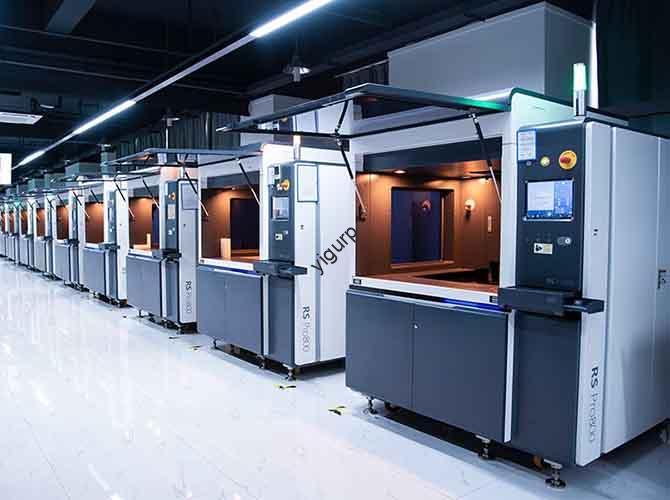
What Is Industrial 3D Printing?
Industrial 3D printing is more than just a prototyping tool—it’s a full-scale production technology that caters to diverse industrial needs. To understand its impact, let’s break down the essential terms and goals that drive this field:
| Term | Definition | Role in Industrial Use |
| 3D Printing Technology | A set of processes that create physical objects from digital designs by depositing material layer by layer. | Serves as the foundation for all industrial applications, from small prototypes to large-scale parts. |
| Additive Manufacturing | The official industry term for 3D printing, emphasizing the “additive” (material-building) nature of the process. | Differentiates 3D printing from traditional subtractive methods (e.g., milling, drilling) that waste material. |
| Layer-by-Layer Production | The core mechanism of 3D printing: parts are built one thin layer at a time (often 0.1–0.3mm thick) until the final shape is achieved. | Ensures precision even for complex geometries that traditional methods can’t replicate. |
| Digital Fabrication | The use of digital tools (e.g., CAD software) to design and control the 3D printing process. | Enables quick design tweaks and seamless integration with digital workflows. |
| Rapid Prototyping | One of the earliest and most common uses of 3D printing: creating physical prototypes in days (vs. weeks with traditional methods). | Helps teams test designs, fix flaws, and accelerate product development cycles. |
| Customized Production | The ability to create unique, one-off parts or small batches without extra tooling costs. | Ideal for industries like medical devices (custom implants) or automotive (limited-edition components). |
At its core, industrial 3D printing solves a critical pain point: it bridges the gap between digital innovation and physical production, making it easier to turn bold ideas into tangible, high-quality products.
Yigu Technology’s Capabilities: Powering Your Industrial 3D Printing Goals
What sets Yigu Technology apart? Our end-to-end capabilities are designed to meet the most demanding industrial requirements, from small-batch prototyping to large-scale manufacturing. Here’s how we deliver value:
- Advanced 3D Printing Systems: We use top-tier industrial printers (e.g., FDM, SLA, SLM) that handle high-temperature materials and complex builds. Our systems are regularly updated to keep up with the latest technological advancements.
- High-Precision Printing: With tolerance levels as tight as ±0.05mm, our printers ensure consistent quality—critical for industries like aerospace and medical, where even tiny defects can cause failures.
- Large-Scale Production: Unlike consumer-grade 3D printers, our industrial machines can produce parts up to 1.5m in length (depending on the technology), making them suitable for automotive chassis components or architectural models.
- Multi-Material Printing: We support a wide range of materials (from thermoplastics to metals) and can even print parts with mixed materials (e.g., rigid and flexible sections) in a single run—reducing assembly time and improving part performance.
- Complex Geometry Handling: Our software and printers excel at creating intricate shapes (e.g., lattice structures, internal channels) that are impossible with traditional methods. This is a game-changer for lightweight aerospace parts or medical implants that need to match human anatomy.
- Custom Software Solutions: We don’t just print—we provide tailored software for design optimization, slicing (converting 3D models into printer-ready code), and workflow management.
- Quality Control and Assurance: Every part goes through rigorous testing, including dimensional checks (using 3D scanners) and material strength analysis. We also maintain ISO 9001 certification to ensure consistency.
Industry-Specific Expertise: Our team has deep experience in automotive, aerospace, medical, and consumer products. We don’t just offer generic solutions—we understand your industry’s unique challenges and compliance needs.
Common Industrial 3D Printing Applications & Parts
Industrial 3D printing isn’t limited to one sector—it’s used across industries to create parts that are stronger, lighter, and more cost-effective. Below are the most common applications, along with examples of parts we produce at Yigu Technology:
| Industry | Common Parts | Key Benefits of 3D Printing |
| Automotive | Engine components (e.g., brackets, sensors), interior trim, tooling for assembly lines | Reduces part weight by 30–50% (improving fuel efficiency), cuts tooling costs by 70%. |
| Aerospace | Turbine blades, cabin components, lightweight structural parts | Meets strict aerospace standards (e.g., AS9100), enables complex lattice structures for weight savings. |
| Medical | Custom implants (e.g., hip replacements, dental crowns), surgical tools, patient-specific models for pre-op planning | Ensures a perfect fit for patients, uses biocompatible materials, speeds up surgery preparation. |
| Industrial Tooling | Jigs, fixtures, molds for injection molding | Reduces tooling lead time from 6–8 weeks to 1–2 weeks, allows for quick design iterations. |
| Consumer Products | Prototypes for electronics (e.g., phone cases), customized home goods (e.g., furniture knobs) | Accelerates time-to-market, enables low-volume custom production without high setup costs. |
| Architecture | Scale models of buildings, structural prototypes | Lets architects test design concepts physically, shows clients detailed, tangible models. |
| Electronics | Enclosures for IoT devices, heat sinks with complex cooling channels | Creates lightweight, durable enclosures, improves heat dissipation (critical for electronics performance). |
| Prototypes and Molds | Functional prototypes for any industry, short-run molds for plastic parts | Reduces prototyping costs by 50%, allows for rapid testing before mass production. |
The Industrial 3D Printing Process: From Design to Delivery
At Yigu Technology, we follow a structured, transparent process to ensure every project meets your expectations. Our workflow integrates digital tools, quality checks, and supply chain coordination to deliver parts on time and on spec:
- Design and Modeling: We start with your digital design (or help you create one using CAD software). Our engineers optimize the design for 3D printing—for example, adding support structures (to prevent collapse during printing) or simplifying geometries to reduce cost.
- Pre-Processing and Slicing: Using our custom slicing software, we convert the 3D model into a layer-by-layer “roadmap” for the printer. We adjust settings like layer height, print speed, and material temperature based on the part’s requirements.
- Printing and Layering: The printer builds the part layer by layer. Our team monitors the process in real time (via remote sensors and on-site checks) to catch any issues early—such as material jams or layer adhesion problems.
- Post-Processing (Finishing): After printing, parts go through finishing steps to improve appearance and performance. This may include removing support structures, sanding, painting, or heat treatment (to strengthen metal parts).
- Quality Inspection: Every part undergoes dimensional testing (using 3D scanners) and material testing (e.g., tensile strength for plastics, corrosion resistance for metals). We provide a detailed quality report for your records.
- Assembly and Integration: If your project requires multiple parts, we assemble them and test the final product to ensure it works as intended. We also integrate 3D printed parts with traditional components (e.g., adding 3D printed brackets to a metal frame).
- Iterative Design Improvements: If you need to tweak the design (e.g., to improve strength or reduce weight), we quickly update the digital model and print a new prototype—no need for expensive retooling.
Supply Chain Integration: For large-scale projects, we coordinate with your supply chain to deliver parts just-in-time (JIT), reducing inventory costs and ensuring seamless production.
Materials for Industrial 3D Printing: Choosing the Right Option
The success of a 3D printed part depends largely on the material. At Yigu Technology, we offer a wide range of materials to suit different applications, from lightweight plastics to high-strength metals. Here’s a breakdown of our most popular options:
| Material Category | Examples | Key Properties | Ideal Applications |
| Thermoplastics | PLA, ABS, PETG | Low cost, easy to print, good for prototypes | Consumer product prototypes, non-structural parts. |
| Engineering Plastics | Nylon (PA), Polycarbonate (PC), PEEK | High strength, heat resistance, chemical resistance | Automotive components, industrial tooling, electronics enclosures. |
| Metals | Aluminum, Titanium, Stainless Steel (316L) | Exceptional strength, durability, corrosion resistance | Aerospace parts, medical implants, structural automotive components. |
| Composites | Carbon Fiber-reinforced PLA, Glass Fiber-reinforced Nylon | Lightweight, high stiffness (stronger than pure plastics) | High-performance parts (e.g., drone frames, racing car components). |
| Ceramics | Alumina, Zirconia | Heat resistance, biocompatibility, electrical insulation | Medical implants (e.g., dental crowns), high-temperature industrial parts. |
| Bio-compatible Materials | Medical-grade PLA, PEEK, Titanium | Safe for use in the human body (meets FDA/CE standards) | Custom implants, surgical tools, patient-specific models. |
| Conductive Materials | Carbon-filled ABS, Metal-infused filaments | Conduct electricity (for electronics) | Sensors, circuit boards, IoT device components. |
| Flexible Materials | TPU (Thermoplastic Polyurethane) | Elastic, durable (can stretch without breaking) | Gaskets, seals, flexible enclosures (e.g., phone cases). |
Our team helps you select the right material based on your part’s function, environment (e.g., high temperature, moisture), and budget. For example, if you need a lightweight part for aerospace, we might recommend titanium; for a low-cost prototype, PLA or ABS.
The Advantages of Industrial 3D Printing
Industrial 3D printing offers clear benefits over traditional manufacturing methods—especially for businesses looking to innovate, reduce costs, and stay competitive. Here’s how it adds value:
- Reduced Production Time: Traditional manufacturing can take weeks (or months) to create tooling and produce parts. With 3D printing, you can go from design to part in days. For example, a prototype that once took 4 weeks to make with injection molding can be 3D printed in 2–3 days.
- Cost-Effective for Low-Volume Production: Traditional methods require expensive tooling (e.g., $10,000+ for injection molds) that only makes sense for large batches. 3D printing has no tooling costs, so it’s cheaper for small batches (1–100 parts) or custom one-offs.
- Enhanced Design Freedom: 3D printing lets you create shapes that are impossible with traditional methods—like internal channels, lattice structures, or parts with no assembly required. This means you can design parts that are lighter, stronger, and more efficient.
- Improved Product Performance: By using advanced materials (e.g., composites, high-strength plastics) and optimized designs, 3D printed parts often outperform traditional parts. For example, a 3D printed aerospace bracket can be 40% lighter than a milled bracket while maintaining the same strength.
- Sustainability and Waste Reduction: Traditional subtractive methods waste 70–90% of the raw material (e.g., cutting a metal block down to size). 3D printing only uses the material needed to build the part, reducing waste by 80–90%. Many of our materials are also recyclable.
- Faster Time-to-Market: With rapid prototyping and short production lead times, you can test designs faster, fix flaws earlier, and launch products ahead of competitors. A recent study found that businesses using 3D printing reduce time-to-market by 30–50%.
- Customization and Personalization: 3D printing makes it easy to create unique parts without extra cost. For example, a medical device company can 3D print custom hip implants for each patient, improving comfort and recovery time.
Enhanced Supply Chain Resilience: Instead of relying on overseas factories or large inventories, you can 3D print parts on-demand, locally. This reduces the risk of supply chain disruptions (e.g., shipping delays, material shortages) and lowers inventory costs.
Yigu Technology Case Studies
Don’t just take our word for it—here are examples of how we’ve helped clients transform their production with industrial 3D printing:
Case Study 1: Automotive Component Manufacturer
Challenge: A client needed to reduce the weight of their engine brackets to improve fuel efficiency. Traditional milling methods couldn’t create the lightweight lattice structure they needed, and tooling costs for small batches were too high.
Solution: We used SLM (Selective Laser Melting) 3D printing with aluminum to create the brackets. Our design team optimized the lattice structure to reduce weight by 45% while maintaining strength.
Result: The client reduced fuel consumption by 8%, cut production time from 6 weeks to 10 days, and saved $50,000 in tooling costs for a batch of 50 brackets.
Case Study 2: Medical Device Company
Challenge: A client needed custom dental crowns that fit patients perfectly. Traditional crowns required multiple fittings and often didn’t match the patient’s tooth shape.
Solution: We used SLA (Stereolithography) 3D printing with medical-grade resin. The client sent us 3D scans of patients’ teeth, and we printed crowns that matched the exact shape and color.
Result: Fitting time was reduced from 3 visits to 1, patient satisfaction increased by 90%, and the client expanded their custom crown business by 40% in 6 months.
Case Study 3: Aerospace Supplier
Challenge: A client needed a complex turbine blade prototype for testing. Traditional methods couldn’t create the internal cooling channels, and the prototype would have taken 8 weeks to make.
Solution: We used DMLS (Direct Metal Laser Sintering) 3D printing with titanium. Our team designed and printed the blade with internal channels in 2 weeks.
Result: The client tested the prototype 6 weeks earlier than planned, identified a design flaw, and launched their new turbine 3 months ahead of schedule.
Why Choose Yigu Technology for Your Industrial 3D Printing Needs?
With so many 3D printing providers, why partner with us? Here’s what makes Yigu Technology the right choice:
- Expertise in Industrial 3D Printing: Our team has 10+ years of experience in industrial applications. We don’t just sell printers—we solve problems, using our knowledge to recommend the best technology, materials, and processes for your project.
- Advanced Technology and Equipment: We invest in the latest industrial 3D printers (from brands like Stratasys, EOS, and Formlabs) and software. This means we can handle even the most complex, high-precision projects.
- Customized Solutions for Clients: Every business is different. We don’t offer one-size-fits-all packages—we work with you to understand your goals, budget, and timeline, then create a tailored solution.
- High-Quality Materials and Processes: We only use certified, industrial-grade materials (from trusted suppliers like BASF and EOS). Our quality control process ensures every part meets your specs and industry standards.
- Strong Industry Partnerships: We partner with material suppliers, software providers, and industry associations to stay ahead of trends. This means we can offer you the latest innovations (e.g., new biocompatible materials) before they’re widely available.
- Reliable After-Sales Support: Our service doesn’t end when you receive your parts. We offer ongoing support, including design tweaks, material recommendations, and troubleshooting. If you have an issue, our team responds within 24 hours.
- Proven Track Record of Success: We’ve helped 500+ clients across industries—from small startups to large enterprises—achieve their 3D printing goals. Our case studies speak to our ability to deliver results.
Commitment to Innovation: We’re constantly researching new technologies (e.g., multi-material printing, faster printers) and processes to help you stay competitive. We don’t just keep up with the industry—we help shape it.