
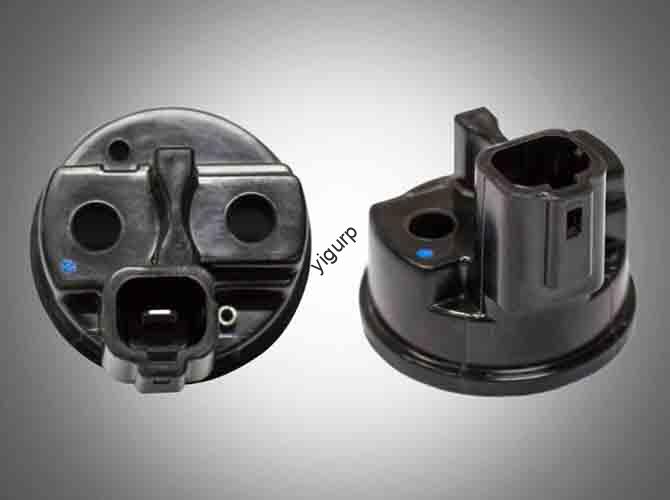
A well-executed CNC machining electric baking pan prototype model is a cornerstone of product development—it validates design aesthetics, verifica le prestazioni di riscaldamento, e garantisce l'affidabilità strutturale prima della produzione di massa. Questo articolo analizza sistematicamente l'intero processo di creazione, dalla progettazione preliminare al collaudo funzionale finale, utilizzando confronti chiari, linee guida passo passo, e soluzioni pratiche per affrontare le sfide comuni, helping you build a prototype that balances precision, funzionalità, and market readiness.
1. Preparazione preliminare: Lay the Groundwork for Prototype Success
Preliminary preparation directly determines the prototype’s accuracy and usability. It focuses on two core tasks: 3Modellazione D & detail design E selezione del materiale, both tailored to the unique needs of electric baking pans (per esempio., resistenza al calore, even heat distribution, user safety).
1.1 3Modellazione D & Key Detail Design
Use professional CAD software (per esempio., SolidWorks, UG, Rinoceronte) to create a comprehensive 3D model of the electric baking pan. The model must cover all components and prioritize critical details to avoid machining errors:
- Component Breakdown: Split the baking pan into independent parts like the upper cover, baking tray body, heating plate, thermostat mount, handle, E base for easier machining and assembly.
- Key Design Focus Areas:
- Baking Tray Shape: Define dimensions (per esempio., girare: φ28–32cm; piazza: 25×25cm) and thickness distribution (1.5–2mm for uniform heating) with a tolerance of ±0.05mm.
- Heating Element Layout: Mark positions for heating pipes/plates (even spacing to ensure ±5°C temperature variation) and reserve grooves for wire routing.
- Assembly Interfaces: Design fitting structures (per esempio., buckles for upper cover-base connection, screw holes for handle mounting) with clear tolerance requirements (±0,1 mm).
- Surface Features: Add anti-slip patterns (profondità: 0.3–0.5mm) on handles, brand logo embossments (altezza: 0.8–1 mm), and button grooves (to fit control knobs).
Why focus on these details? A poorly designed heating element layout can cause 30% uneven heating, while imprecise assembly interfaces may lead to loose upper covers—requiring rework that adds 2–3 days to the timeline.
1.2 Selezione dei materiali: Match Materials to Component Functions
Different components of the electric baking pan need materials with specific properties (per esempio., heat conductivity for heating plates, insulation for handles). The table below compares the most suitable materials:
| Tipo materiale | Vantaggi principali | Ideal Components | Fascia di costo (al kg) | Lavorabilità |
| Acciaio inossidabile (304/316) | Resistenza alle alte temperature (up to 800°C), resistente alla corrosione | Baking tray body, heating plate | \(15–)22 | Moderare (needs coolant to prevent sticking) |
| Lega di alluminio (6061) | Eccellente conduttività termica (167 W/m·K), leggero | Dissipatori di calore, rifinitura decorativa | \(6–)10 | Eccellente (fast cutting, low tool wear) |
| Plastica ABS | Elevata resistenza agli urti, easy to shape | Upper cover, handle, base housing | \(3–)6 | Bene (low cutting resistance, senza sbavature) |
| computer (Policarbonato) | Trasparente, resistente al calore (fino a 135°C) | Viewing windows (for monitoring food) | \(8–)12 | Moderare (requires high-speed cutting to avoid cracking) |
| Gomma siliconica | Resistente al calore, impermeabile | Sealing rings (between upper cover and tray) | \(9–)13 | N / A (modellato, not CNC-machined) |
Esempio: The heating plate, needing efficient heat transfer, usi lega di alluminio. The baking tray body, requiring corrosion resistance for food contact, is made of 304 acciaio inossidabile.
2. Processo di lavorazione CNC: Turn Design into Physical Components
The CNC machining phase follows a linear workflow—programmazione & toolpath planning → workpiece clamping → roughing & finitura—with special attention to electric baking pan-specific structures (per esempio., curved tray surfaces, heating element grooves).
2.1 Programmazione & Toolpath Planning
Import the 3D model into CAM software (per esempio., Mastercam, PowerMill) to generate toolpaths and G-code. Key steps include:
- Cutting Parameter Setting (by Material):
- Acciaio inossidabile: Speed = 800–2000 rpm; Feed = 0.05–0.1mm/tooth; Cutting depth = 0.3–1mm (use carbide tools).
- Lega di alluminio: Speed = 3000–6000 rpm; Feed = 0.1–0.2mm/tooth; Cutting depth = 1–2mm (use high-speed steel tools).
- Plastica (ABS/PC): Speed = 1500–3000 rpm; Feed = 0.08–0.15mm/tooth; Cutting depth = 0.5–1mm (use coolant for PC to prevent softening).
- Selezione dello strumento:
- Roughing: Use 8–16mm diameter end mills/face mills to remove 80–90% of excess material.
- Finitura: Use 2–6mm diameter ball nose mills (for curved tray surfaces) or fine boring cutters (for thermostat mount holes).
- Special Structures: Utilizzo five-axis machining for complex curved trays (avoids tool interference) E Elettroerosione (Lavorazione ad elettroerosione) for heating element grooves (ensures positional accuracy ±0.03mm).
2.2 Workpiece Clamping & Esecuzione della lavorazione
Proper clamping prevents deformation and ensures precision. The table below outlines clamping methods for different components:
| Component Type | Materiale | Clamping Method | Key Precautions |
| Baking Tray Body | Acciaio inossidabile | Flat pliers + support blocks | Add anti-slip pads to avoid surface scratches; ensure flatness during clamping |
| Heating Plate | Lega di alluminio | Vacuum adsorption platform | Even pressure distribution to prevent thin-wall deformation |
| Upper Cover | Plastica ABS | Custom soft claws | Reduce clamping force (≤50N) per evitare fessurazioni |
| Handle | Plastica ABS | Indexing head | Align with pre-marked hole positions for accurate drilling |
Machining Execution Tips:
- For curved baking trays: Utilizzo spiral layered milling (0.5mm per layer) to ensure smooth surfaces (Ra <0.8µm).
- For heating element grooves: After CNC milling, polish the bottom plane to Ra <0.4µm (reduces thermal conduction resistance).
- Per parti in plastica: Utilizzo ad alta velocità, low-feed cutting (per esempio., ABS: 2500 giri/min, 0.1mm/tooth) to avoid melt sticking to tools.
3. Post-elaborazione & Assemblea: Enhance Performance & Estetica
Post-processing removes machining flaws and prepares components for assembly, while careful assembly ensures the prototype functions safely and smoothly.
3.1 Post-elaborazione
- Metal Parts:
- Acciaio inossidabile: Sandblast (matte texture) or electropolish (alta brillantezza) to remove tool marks; apply food-grade anti-rust oil.
- Lega di alluminio: Anodize (color options: black/silver) per la resistenza alla corrosione; hard oxidize (spessore: 5–10μm) per la resistenza all'usura.
- Plastic Parts:
- ABS/PC: Paint (matte/glossy) or UV print (loghi del marchio, operation instructions); laser engrave graduation lines (for temperature knobs) with 0.1mm depth.
- Sealing Rings: Clean with food-grade disinfectant and apply high-temperature adhesive (for bonding to upper cover grooves).
3.2 Step-by-Step Assembly
- Pre-Assembly Check: Verify all components meet dimensional standards (per esempio., baking tray flatness ≤0.1mm, handle hole alignment ±0.05mm).
- Core Component Assembly:
- Attach the heating plate to the baking tray body using M3 screws (coppia: 1.5–2.0 N·m); seal with silicone gaskets to prevent heat loss.
- Install the thermostat into its mount (threaded connection) and connect wires to the power interface (use heat-shrinkable tubes for insulation).
- Final Assembly:
- Fasten the upper cover to the base via buckles (ensure 0.5–1mm gap for easy opening/closing).
- Mount the handle to the upper cover (screw fixing, coppia: 1.0–1.2 N·m) and install control knobs into button grooves.
4. Test funzionali & Problem Troubleshooting
Testing validates the prototype’s performance, while troubleshooting resolves common issues to ensure reliability.
4.1 Functional Testing Checklist
Test the prototype in four key areas to validate performance:
| Test Category | Tools/Methods | Pass Criteria |
| Heating Performance | Thermocouple, temperature data logger | Reaches 200°C within 5–8 minutes; temperature variation ≤±5°C across the tray |
| Controllo della temperatura | Multimeter, manual knob adjustment | Shuts off at set temperature (per esempio., 180°C) and restarts at 160°C; no overheating |
| Safety | Infrared thermometer, pull test | Handle temperature <40°C after 30 minutes of use; handle resists 5kg pull force |
| Sealing | Water filling (tray 50% full) | No water leakage from upper cover-tray junction after 10 minuti |
4.2 Common Problems & Soluzioni
| Problema | Cause | Soluzione |
| Baking tray flatness exceeding standard (>0.1mm) | Clamping deformation, usura degli utensili | Add support blocks during clamping; replace with new carbide tools |
| Large gap between heating plate and thermostat | Positional errors, tolerance accumulation | Use jigs for precise thermostat mounting; optimize machining sequence |
| ABS upper cover cracking | Residual stress, aggressive cutting parameters | Anneal plastic before machining (80°C per 2 ore); reduce feed rate to 0.08mm/tooth |
| Heat dissipation hole burrs | Dull drill bits, improper retraction | Replace with new high-speed steel drills; optimize retraction path (arc retraction) |
La prospettiva della tecnologia Yigu
Alla tecnologia Yigu, we see CNC machining electric baking pan prototype models as a “performance validator”—they bridge design concepts and mass production while ensuring user safety. Our team prioritizes two core aspects: precision and heat efficiency. For critical parts like heating plates, we use aluminum alloy with five-axis machining to ensure thermal conductivity uniformity (±3% variation). Per parti a contatto con gli alimenti, we strictly select 304 stainless steel and apply food-grade post-processing. We also integrate 3D scanning post-machining to verify dimensional accuracy (tolerance ±0.03mm). By focusing on these details, we help clients reduce post-production defects by 25–30% and cut time-to-market by 1–2 weeks. Whether you need an appearance prototype for exhibitions or a functional one for testing, we tailor solutions to meet global safety standards.
Domande frequenti
- Q: How long does it take to produce a CNC machining electric baking pan prototype model?
UN: Typically 7–10 working days. This includes 1–2 days for 3D programming, 2–3 days for CNC machining, 1–2 days for post-processing, 1–2 days for assembly, E 1 day for testing & Risoluzione dei problemi.
- Q: Can I use PC plastic instead of stainless steel for the baking tray body?
UN: Non è raccomandato. PC plastic has lower heat resistance (max 135°C) and may deform under long-term baking (180–220°C). Acciaio inossidabile (304/316) can withstand high temperatures and resist food acid corrosion, making it the only safe choice for the tray body.
- Q: What should I do if the prototype has uneven heating across the baking tray?
UN: Primo, check the heating element layout (ensure even spacing between pipes/plates). If the layout is correct, verify the heating plate flatness (should be ≤0.1mm). If uneven, re-machine the heating plate with a precision grinder to restore flatness—this fix takes 1–2 hours and resolves most heating uniformity issues.