
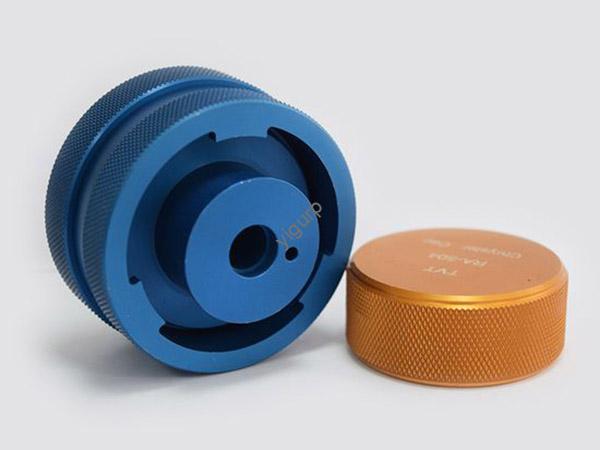
H13 tool steel is a widely used hot-work tool steel celebrated for its exceptional hot hardness, tenacità equilibrata, e resistenza all'usura affidabile. Its tailored chemical composition—with precise amounts of chromium, molibdeno, e vanadio: consente di mantenere la durezza a temperature elevate (fino a 550°C) resistendo alla fatica termica, rendendolo la scelta migliore per gli stampi per forgiatura a caldo, extrusion tools, and high-temperature plastic molding components. In questa guida, ne analizzeremo i tratti principali, usi nel mondo reale, processi di produzione, e come si confronta con altri materiali, helping you select it for projects that demand durability in repeated high-heat cycles.
1. Key Material Properties of H13 Tool Steel
H13 tool steel’s performance is defined by its carefully calibrated chemical composition, which shapes its robust proprietà meccaniche, coerente physical properties, and standout high-temperature characteristics.
Composizione chimica
H13’s formula is optimized for hot-work applications, with fixed ranges for key elements:
- Carbon content: 0.30-0.45% (balances strength and toughness—high enough for wear resistance, low enough to avoid brittleness during repeated heating/cooling)
- Chromium content: 4.75-5.50% (forms heat-resistant carbides for eccellente resistenza all'usura and enhances hardenability, critical for uniform heat treatment)
- Manganese content: 0.20-0.60% (boosts hardenability without creating coarse carbides that weaken the steel under high temperatures)
- Silicon content: 0.15-0.35% (aids in deoxidation during manufacturing and improves high-temperature stability, reducing thermal distortion)
- Molybdenum content: 1.10-1.75% (enhances hot hardness and resists thermal fatigue—key for tools exposed to repeated heating/cooling cycles)
- Vanadium content: 0.80-1.10% (refines grain size, improves toughness, and forms hard vanadium carbides that boost wear resistance at high temperatures)
- Phosphorus content: ≤0.03% (strictly controlled to prevent cold brittleness, especially in tools used in post-heat-treatment low-temperature storage)
- Sulfur content: ≤0.03% (ultra-low to maintain toughness and avoid cracking during hot forming or machining)
Proprietà fisiche
H13 tool steel has consistent physical characteristics that simplify design for high-temperature applications:
| Proprietà | Fixed Typical Value |
| Densità | ~7.85 g/cm³ |
| Conduttività termica | ~35 W/(m·K) (at 20°C—higher than cold-work tool steels, enabling efficient heat dissipation during hot working) |
| Specific heat capacity | ~0.48 kJ/(kg·K) (at 20°C) |
| Coefficient of thermal expansion | ~11 x 10⁻⁶/°C (20-500°C—lower than austenitic stainless steels, minimizing thermal distortion in dies) |
| Magnetic properties | Ferromagnetico (retains magnetism in all heat-treated states, consistent with hot-work tool steels) |
Proprietà meccaniche
After standard heat treatment (ricottura + tempra + tempera), H13 delivers reliable performance for hot and moderate cold-work applications:
- Resistenza alla trazione: ~1800-2000 MPa (on par with high-performance hot-work steels, suitable for high-load hot forging dies)
- Yield strength: ~1400-1600 MPa (ensures tools resist permanent deformation under heavy hot-working loads, like forging pressure)
- Allungamento: ~10-15% (In 50 mm—high ductility for a hot-work steel, allowing minor reshaping of dies without cracking)
- Durezza (Rockwell C scale): 58-62 HRC (after heat treatment—adjustable to 52-56 HRC for maximum toughness in high-impact hot tools)
- Fatigue strength: ~700-800 MPa (at 10⁷ cycles—superior to cold-work steels like D2, ideal for tools under repeated heating/cooling)
- Impact toughness: Moderate to high (~45-55 J/cm² at room temperature)—higher than most hot-work steels, reducing risk of thermal fatigue cracking
Other Critical Properties
- Excellent wear resistance: Chromium and vanadium carbides resist abrasion even at 500°C, making it ideal for hot forging of steel or aluminum.
- Good toughness: Balanced with strength, so it can withstand impact from forging hammers or extrusion pressure without cracking.
- High hot hardness: Retains ~48 HRC at 550°C (far higher than cold-work steels like A2)—critical for maintaining die shape during hot working.
- Lavorabilità: Bene (before heat treatment)—annealed H13 (hardness ~220-250 Brinell) is easy to machine with carbide tools; avoid machining after hardening (58-62 HRC).
- Weldability: Fair—high carbon and alloy content increase cracking risk; preheating (300-400°C) and post-weld tempering are required to restore toughness and prevent brittleness.
2. Real-World Applications of H13 Tool Steel
H13’s blend of elevata durezza a caldo, eccellente resistenza all'usura, and toughness makes it ideal for hot-work and high-temperature applications across industries. Ecco i suoi usi più comuni:
Hot Working Tools
- Hot forging dies: Dies for forging automotive parts (per esempio., alberi a gomiti, connecting rods) use H13—hot hardness retains shape during 500-550°C forging, and toughness resists impact from forging hammers.
- Hot extrusion dies: Dies for extruding aluminum profiles (per esempio., infissi, dissipatori di calore) use H13—wear resistance handles friction from molten aluminum, and thermal fatigue resistance extends die life.
- Hot stamping tools: Tools for hot stamping high-strength steel (per esempio., pannelli di carrozzeria automobilistica) use H13—retains hardness at 500°C, ensuring consistent panel shape over 80,000+ stampings.
Case Example: An automotive forging plant used standard hot-work steel (H11) for crankshaft dies but faced frequent cracking after 10,000 cicli. They switched to H13, and the dies lasted 15,000 cicli (50% longer) with no cracking—cutting die replacement costs by $25,000 annualmente.
Utensili da taglio
- Milling cutters: Cutters for machining heat-resistant alloys (per esempio., titanio, Inconel) use H13—hot hardness maintains sharpness at 400-500°C cutting temperatures, outperforming standard HSS cutters.
- Turning tools: Lathe tools for turning high-temperature metals use H13—wear resistance reduces tool changes, improving production efficiency by 30%.
- Broaches: Broaches for shaping aerospace components (per esempio., pale della turbina) use H13—toughness resists chipping, and hot hardness maintains precision during long machining runs.
Strumenti di formazione & Stampaggio plastica
- Punches and dies: Hot-forming punches for thick metal sheets (per esempio., parti di telai automobilistici) use H13—strength handles high loads, and thermal fatigue resistance avoids cracking from repeated heating.
- Injection molding tools: Molds for high-temperature plastics (per esempio., nylon, SBIRCIARE) use H13—resists wear from plastic flow and retains shape at 300°C molding temperatures, ensuring consistent part quality.
- Blow molding tools: Tools for blow molding large plastic parts (per esempio., serbatoi di carburante, bottiglie d'acqua) use H13—toughness resists pressure, and wear resistance maintains mold precision over 100,000+ cicli.
Aerospaziale & Automotive Industries
- Industria aerospaziale: High-temperature components (per esempio., turbine blade forging dies, engine heat shields) use H13—hot hardness handles 550°C engine temperatures, and strength supports structural loads.
- Industria automobilistica: Componenti ad alte prestazioni (per esempio., racing engine valves, exhaust manifolds) use H13—heat resistance withstands 500°C+ exhaust temperatures, and wear resistance reduces component degradation.
3. Manufacturing Techniques for H13 Tool Steel
Producing H13 tool steel requires precision to maintain its chemical balance and optimize high-temperature performance. Here’s the detailed process:
1. Metallurgical Processes (Composition Control)
- Forno ad arco elettrico (EAF): The primary method—scrap steel, cromo, molibdeno, vanadio, and other alloys are melted at 1,650-1,750°C. Sensors monitor chemical composition to keep elements within H13’s fixed ranges (per esempio., 4.75-5.50% chromium and 1.10-1.75% molibdeno), critical for hot hardness.
- Fornace ad ossigeno basico (BOF): For large-scale production—molten iron from a blast furnace is mixed with scrap steel, then oxygen is blown to adjust carbon content. Leghe (molibdeno, vanadio) are added post-blowing to avoid oxidation.
2. Rolling Processes
- Hot rolling: The molten alloy is cast into ingots, heated to 1,100-1,200°C, and rolled into bars, piatti, or sheets. Hot rolling breaks down large carbides and shapes the material into tool blanks (per esempio., forging die blocks).
- Cold rolling: Rarely used—H13 is primarily for thick hot-work tools; cold rolling is only used for thin sheets (per esempio., small cutting tools) to improve surface finish.
3. Trattamento termico (Critical for Hot Performance)
H13’s heat treatment is tailored to maximize hot hardness and toughness:
- Ricottura: Heated to 850-900°C and held for 2-4 ore, poi raffreddato lentamente (50°C/ora) to ~600°C. Reduces hardness to 220-250 Brinell, making it machinable and relieving internal stress.
- Tempra: Heated to 1,020-1,080°C (austenitizing) and held for 30-60 minuti (a seconda dello spessore della parte), then quenched in oil or air. Oil quenching hardens the steel to 62-64 HRC; air quenching (slower) reduces distortion but lowers hardness to 58-60 HRC.
- Temperamento: Reheated to 500-550°C (for hot-work tools) or 300-400°C (for cold-work use) and held for 1-2 ore, then air-cooled. Tempering at 500-550°C balances hot hardness and toughness—critical for forging dies; lower tempering temperatures prioritize strength for cutting tools.
- Stress relief annealing: Optional—heated to 600-650°C for 1 hour after machining (before final heat treatment) to reduce cutting stress, which could cause cracking during quenching.
4. Forming and Surface Treatment
- Forming methods:
- Press forming: Uses hydraulic presses (5,000-10,000 tonnellate) to shape H13 plates into large forging die blocks—done before heat treatment, when the steel is soft.
- Piegatura: Rarely used—H13 is for thick, heavy tools; most shaping is done via machining or press forming.
- Lavorazione: CNC mills with carbide tools shape H13 into die cavities or cutting tool geometries (per esempio., mill teeth) when annealed. Coolant is required to prevent overheating—machining speeds are 10-15% slower than low-alloy steels.
- Rettifica: Dopo il trattamento termico, rettifica di precisione (with diamond wheels) refines die cavities or tool edges to tight tolerances (per esempio., ±0.001 mm for extrusion dies).
- Trattamento superficiale:
- Indurimento: Final heat treatment (tempra + tempera) is sufficient for most applications—no additional surface hardening needed.
- Nitrurazione: For high-wear hot tools (per esempio., extrusion dies)—heated to 500-550°C in a nitrogen atmosphere to form a hard nitride layer (5-10 µm), boosting wear resistance by 30% without reducing core toughness.
- Rivestimento (PVD/CVD): Thin coatings like titanium aluminum nitride (PVD) are applied to cutting tools—reduces friction and extends tool life by 2x, especially for machining high-temperature alloys.
5. Controllo qualità (Hot Performance Assurance)
- Test di durezza: Uses Rockwell C testers to verify post-tempering hardness (58-62 HRC) and hot hardness (≥48 HRC at 550°C)—critical for hot-work performance.
- Microstructure analysis: Examines the alloy under a microscope to confirm uniform carbide distribution (no large carbides that cause thermal cracking) and proper tempering (no brittle martensite).
- Dimensional inspection: Uses coordinate measuring machines (CMM) to check die cavities or tool dimensions—ensures precision for hot forging or extrusion.
- Thermal fatigue testing: Simulates repeated heating/cooling cycles (500-550°C to room temperature) to verify resistance to cracking—essential for hot-work tools.
- Prove di trazione: Verifies tensile strength (1800-2000 MPa) and yield strength (1400-1600 MPa) to meet H13 specifications.
4. Caso di studio: H13 Tool Steel in Aluminum Extrusion Dies
An aluminum extrusion company used D2 tool steel for extrusion dies that produce heat sink profiles. The D2 dies failed after 3,000 cycles due to thermal cracking and wear, requiring $20,000 monthly in replacements. They switched to H13 tool steel, with the following results:
- Thermal Fatigue & Resistenza all'usura: H13 dies lasted 8,000 cicli (167% longer than D2) with no cracking—cutting replacement costs by 60%.
- Profile Quality: H13 dies maintained consistent heat sink dimensions (±0,02 mm) throughout their lifespan, while D2 dies showed dimensional drift after 1,500 cycles—reducing defective parts by 90%.
- Risparmio sui costi: While H13 dies cost 30% more upfront, the longer lifespan and lower defects saved the company $120,000 annualmente.
5. H13 Tool Steel vs. Other Materials
How does H13 compare to other hot-work tool steels and high-performance materials? Let’s break it down with a detailed table:
| Materiale | Costo (contro. H13) | Durezza (HRC) | Hot Hardness (HRC at 550°C) | Resistenza all'impatto | Resistenza all'usura | Lavorabilità |
| Acciaio per utensili H13 | Base (100%) | 58-62 | ~48 | Moderate-High | Eccellente | Bene |
| Acciaio per utensili H11 | 110% | 58-62 | ~50 | Moderare | Eccellente | Bene |
| Acciaio per utensili A2 | 75% | 52-60 | ~35 | Alto | Very Good | Bene |
| Acciaio per utensili D2 | 85% | 60-62 | ~30 | Basso | Eccellente | Difficult |
| Lega di titanio (Ti-6Al-4V) | 400% | 30-35 | ~25 | Alto | Bene | Povero |
Application Suitability
- Hot Forging Dies: H13 is more cost-effective than H11 (10% più economico) and has better toughness—ideal for high-impact forging of automotive parts.
- Aluminum Extrusion Dies: H13 outperforms D2 (no thermal cracking) and A2 (better hot hardness)—suitable for high-volume extrusion.
- Plastic Molding Tools: H13 balances heat resistance and cost better than titanium—perfect for high-temperature plastics like PEEK.
- High-Temperature Cutting Tools: H13 is superior to A2/D2 (better hot hardness) for machining heat-resistant alloys—reduces tool changes.
Yigu Technology’s View on H13 Tool Steel
Alla tecnologia Yigu, we see H13 as a versatile, cost-effective solution for hot-work applications. Suo elevata durezza a caldo, tenacità equilibrata, E eccellente resistenza all'usura make it ideal for our clients in automotive forging, aluminum extrusion, and plastic molding. We often recommend H13 for hot forging dies, extrusion tools, and injection molds—where it outperforms D2 (no thermal cracking) and is more affordable than H11. While it has slightly lower hot hardness than H11, its better toughness and lower cost deliver better overall value, aligning with our goal of sustainable, soluzioni ad alte prestazioni.