
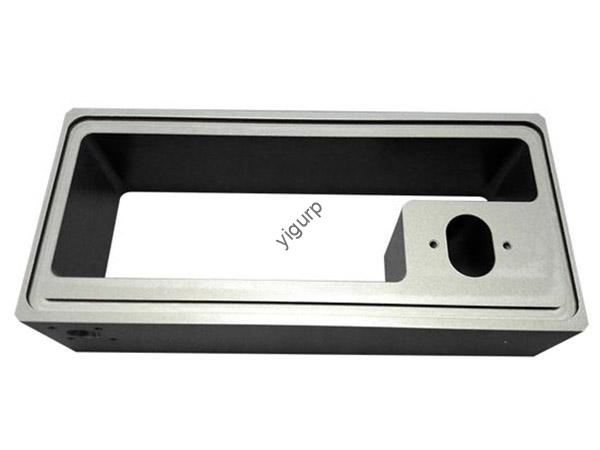
Se stai lavorando su progetti che necessitano di forte, acciaio modellabile, come parti di macchinari pesanti, componenti costruttivi, or automotive engine parts—GM190 cast steel è la scelta migliore. Questo acciaio fuso bilancia la colabilità, forza, e durata, ma come si comporta negli scenari del mondo reale? Questa guida ne analizza i tratti principali, applicazioni, e confronti con altri materiali, so you can make informed decisions for your projects.
1. Material Properties of GM190 Cast Steel
GM190’s value lies in its ability to be cast into complex shapes while maintaining reliable mechanical performance. Let’s explore the properties that define its usability.
1.1 Composizione chimica
IL chemical composition of GM190 is tailored for castability and strength (per industry standards):
| Elemento | Gamma di contenuti (%) | Key Function |
| Carbonio (C) | 0.20 – 0.30 | Provides moderate strength without brittleness |
| Manganese (Mn) | 0.80 – 1.20 | Enhances castability and ductility |
| Silicio (E) | 0.40 – 0.80 | Improves fluidity during casting (critical for complex shapes) |
| Zolfo (S) | ≤ 0.040 | Minimized to avoid casting defects (per esempio., porosità) |
| Fosforo (P) | ≤ 0.040 | Controlled to prevent cracking during cooling |
| Cromo (Cr) | 0.50 – 0.80 | Boosts wear resistance and toughness |
| Nichel (In) | 0.30 – 0.60 | Enhances impact resistance, especially at low temperatures |
| Molibdeno (Mo) | 0.15 – 0.25 | Improves hardenability and fatigue resistance |
| Other alloying elements | Trace (per esempio., rame) | No major impact on core properties |
1.2 Proprietà fisiche
Questi physical properties make GM190 suitable for casting and real-world use:
- Densità: 7.85 g/cm³ (consistent with most structural steels)
- Punto di fusione: 1420 – 1460°C (low enough for easy casting into complex molds)
- Conduttività termica: 45 Con/(m·K) at 20°C (prevents overheating in high-use parts)
- Specific heat capacity: 460 J/(kg·K)
- Coefficient of thermal expansion: 13.2 × 10⁻⁶/°C (20 – 100°C, minimizes warping during cooling)
1.3 Proprietà meccaniche
GM190’s mechanical traits balance strength and workability for cast parts:
- Resistenza alla trazione: 600 – 750 MPa
- Yield strength: ≥ 350 MPa
- Allungamento: ≥ 18% (enough flexibility to avoid breaking under moderate loads)
- Durezza: 180 – 240 HB (Brinell scale, adjustable via heat treatment)
- Resistenza agli urti: ≥ 40 J at -20°C (handles cold-weather shocks, like mining equipment in freezing conditions)
- Fatigue resistance: ~280 MPa (suitable for parts under repeated light loads, per esempio., componenti del motore)
- Resistenza all'usura: Bene (chromium content reduces wear from friction, ideal for gears or bearings)
1.4 Altre proprietà
- Resistenza alla corrosione: Moderare (needs coatings like paint or galvanizing for outdoor use)
- Castability: Eccellente (fluidity allows casting into complex shapes, per esempio., engine blocks or crusher jaws)
- Lavorabilità: Bene (can be milled or turned to precise tolerances after casting)
- Magnetic properties: Ferromagnetico (works with magnetic inspection tools for casting defects)
- Duttilità: Moderare (can be bent slightly without cracking, useful for adjusting cast parts)
- Toughness: Alto (resists brittle fracture, critical for heavy equipment parts like excavator buckets)
2. Applications of GM190 Cast Steel
GM190’s castability and strength make it ideal for parts that are hard to shape with other methods. Ecco i suoi usi più comuni, con esempi reali:
- General construction:
- Componenti strutturali: Custom-shaped brackets for high-rise building steel frames. A Chinese construction firm used GM190 for a skyscraper’s beam connectors—its castability let them create unique shapes to fit tight spaces.
- Beams and columns: Small cast columns for heritage building restorations (needs matching historical shapes).
- Mechanical engineering:
- Machine parts: Gear housings for industrial conveyors. A German factory uses GM190 for its conveyor gear housings—castability allows integrated mounting points, reducing assembly time.
- Shafts and axles: Corto, thick axles for small machinery (per esempio., woodworking tools).
- Industria automobilistica:
- Componenti del motore: Small cast parts like oil pump housings. A Japanese carmaker uses GM190 for its compact car oil pumps—castability reduces part count from 3 A 1, tagliando i costi.
- Parti di trasmissione: Gear selector housings (complex internal channels for fluids).
- Macchinari industriali:
- Ingranaggi: Grande, low-speed gears for cement mixers. An Italian machinery brand uses GM190 for its mixer gears—wear resistance handles abrasive cement dust.
- Cuscinetti: Cast bearing housings for factory motors (integrated lubrication channels).
- Railway industry:
- Locomotive components: Brake caliper housings for freight trains. A Russian railway firm uses GM190 for its locomotive brakes—toughness resists vibration and heavy loads.
- Railway tracks: Cast rail joiners for curved tracks (needs custom shapes to fit curves).
- Mining and heavy equipment:
- Excavator parts: Bucket teeth and arm hinges. An Australian mining equipment maker uses GM190 for excavator bucket teeth—wear resistance lasts 2x longer than carbon steel.
- Crusher components: Jaw plates for rock crushers. A South African mine uses GM190 for its crusher jaws—toughness handles hard rock impacts.
3. Manufacturing Techniques for GM190 Cast Steel
Turning GM190 into usable parts relies on precise casting and post-processing steps:
3.1 Casting Processes
- Sand casting: The most common method. GM190 molten steel is poured into sand molds (cheap for large, simple parts like columns or gear housings).
- Investment casting: Utilizzato per complesso, parti precise (per esempio., componenti del motore). A wax model is coated in ceramic, melted out, and replaced with molten GM190—creates tight tolerances.
- Pressofusione: Rarely used for GM190 (punto di fusione elevato), but done for small, parti sottili (per esempio., bearing caps) with metal molds.
3.2 Trattamento termico
Heat treatment refines GM190’s properties after casting:
- Ricottura: Heated to 800 – 850°C, slow cooling. Reduces internal stress from casting and softens steel for machining.
- Normalizing: Heated to 850 – 900°C, air cooling. Improves strength and uniformity for load-bearing parts like shafts.
- Quenching and tempering: Heated to 830 – 860°C (quenched in oil), then tempered at 500 – 600°C. Increases hardness for wear-prone parts like crusher jaws.
3.3 Fabrication Methods
- Lavorazione: Fresatura (shapes flat surfaces) E girando (shapes cylindrical parts like shafts). GM190’s machinability lets it be refined to ISO 8 tolleranze.
- Welding techniques: Arc welding (repairs cast defects or joins parts). Preheating to 150 – 200°C prevents cracking.
- Assembly and finishing: Cast parts are cleaned (removes mold residue), painted or coated, and assembled into final products (per esempio., engine systems).
3.4 Controllo qualità
- Metodi di ispezione:
- Ultrasonic testing: Checks for internal casting defects (per esempio., porosità) in thick parts like crusher jaws.
- Magnetic particle inspection: Finds surface cracks (critical for safety parts like locomotive brakes).
- Dimensional testing: Uses calipers or CMMs to ensure cast parts match design specs.
- Certification standards: Must meet ISO 1083 (cast steels for general engineering) E ASTM A216 (cast carbon steel for pressure-containing parts) to ensure quality.
4. Casi di studio: GM190 in Action
4.1 Mining: Excavator Bucket Teeth
An Australian mining equipment maker switched to GM190 for its excavator bucket teeth. Previously, carbon steel teeth wore out after 2 months in iron ore mines; GM190 teeth last 4+ mesi. IL resistenza all'usura (from chromium) E tenacità handled abrasive ore, cutting replacement costs by $120,000 per mine annually.
4.2 Automobilistico: Engine Oil Pump Housings
A Japanese carmaker used GM190 to cast oil pump housings for its compact cars. Investment casting let them integrate oil channels and mounting points into one part (contro. 3 separate parts with carbon steel). This reduced assembly time by 25% and cut per-unit cost by \(3—saving \)1.5 million annually for 500,000 cars.
5. Comparative Analysis: GM190 vs. Other Materials
How does GM190 stack up to common alternatives? Let’s compare:
5.1 contro. Other Types of Steel
| Feature | GM190 Acciaio fuso | Acciaio al carbonio (A36, Wrought) | Acciaio legato (EN19, Wrought) |
| Castability | Eccellente | Povero (not designed for casting) | Povero |
| Resistenza alla trazione | 600 – 750 MPa | 400 – 550 MPa | 620 – 780 MPa |
| Costo (per ton) | \(900 – \)1,200 | \(600 – \)800 | \(800 – \)1,000 |
5.2 contro. Non-Metallic Materials
- Calcestruzzo: GM190 is 10x stronger in tension and 3x lighter. But concrete is cheaper for large, low-stress parts (per esempio., building foundations); GM190 is better for complex, load-bearing cast parts.
- Materiali compositi (per esempio., fibra di vetro): Composites are lighter but have lower tensile strength (300 – 400 MPa) and cost 2x more. GM190 is better for heavy-duty cast parts like crusher components.
5.3 contro. Other Metallic Materials
- Leghe di alluminio: Aluminum is lighter but has lower tensile strength (200 – 300 MPa) and wears faster. Used for lightweight cast parts (per esempio., car valve covers); GM190 for heavy loads.
- Acciaio inossidabile: Stainless steel resists corrosion but costs 3x more and is harder to cast. Used for food industry cast parts; GM190 for general engineering.
5.4 Costo & Environmental Impact
- Cost analysis: GM190 costs more than wrought carbon steel but saves money on complex parts—casting integrates features that would need welding with wrought steel. A factory saved $50,000 annually by using GM190 cast gear housings.
- Environmental impact: 100% riciclabile (scrap GM190 can be remelted for new castings, risparmio 70% energy vs. acciaio vergine). Casting uses less energy than forging wrought steel.
6. Yigu Technology’s View on GM190 Cast Steel
Alla tecnologia Yigu, we recommend GM190 for projects needing complex, load-bearing cast parts. Suo ottima colabilità lets clients create custom shapes (per esempio., mining equipment jaws) senza sacrificare la forza, and its buona resistenza all'usura extends part life. We help optimize casting molds for minimal defects and advise on heat treatment (quenching for wear parts, annealing for machinable parts). While GM190 costs more than basic carbon steel, its ability to reduce assembly steps and part count makes it a cost-effective choice for specialized applications.
FAQ About GM190 Cast Steel
- Can GM190 be cast into very complex shapes?
Yes—its good fluidity makes it ideal for complex shapes like engine housings with internal channels. Investment casting with GM190 can achieve tolerances as tight as ±0.1 mm for small parts.
- Is GM190 suitable for high-temperature applications?
It works for moderate temperatures (fino a 300°C), like engine components or factory machinery. For temperatures above 400°C (per esempio., parti del forno), choose heat-resistant cast steels with more chromium.
- How does GM190 compare to wrought steel for mechanical parts?
GM190 is better for complex shapes (cheaper to cast than weld wrought steel parts). Wrought steel (per esempio., EN19) has higher tensile strength for simple parts like straight shafts. Choose GM190 for custom cast parts, wrought steel for standard shapes.