
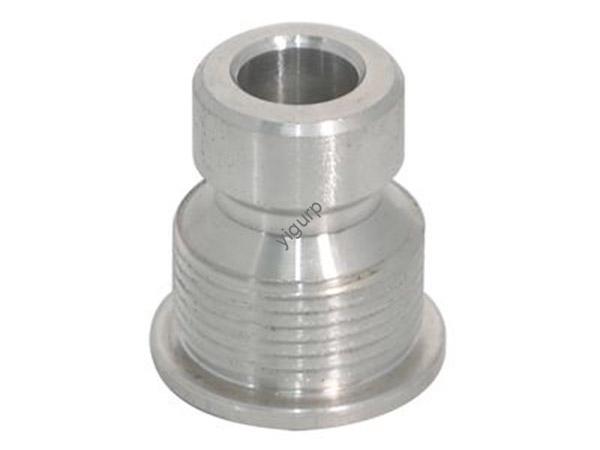
Se stai spingendo i limiti dell'ingegneria, dell'edilizia 120+ grattacieli della storia, piattaforme offshore ultra profonde (5,000+ metri), or 4,000-ton cranes—only the strongest steel will do.EN S960QL Acciaio ad altissima resistenza is the pinnacle of structural steel for these extreme, progetti critici per la sicurezza, ma cosa lo rende più resistente rispetto a qualità come S890QL, e quando vale la pena investire? Questa guida ne analizza i tratti principali, applicazioni del mondo reale, fasi di produzione, and how it stacks up to other materials. Alla fine, you’ll know if it’s the right fit for your most demanding work.
1. Material Properties of EN S960QL
EN S960QL stands out for itsunrivaled mechanical strength paired with reliable toughness—engineered to handle extreme loads while surviving harsh conditions (sub-zero temperatures, heavy impact, or corrosive environments). Let’s dive into its core characteristics:
Key Alloy Composition
- Carbon content: 0.16-0.20% (tightly controlled to balance strength and weldability—too much carbon would make it brittle for on-site work).
- Other elements: Manganese (1.00-1.60%, for toughness), silicon (max 0.55%, for deoxidation), and advanced microalloys like niobium (Nb, ≤0.06%), vanadio (V, ≤0.08%), titanium (Ti, ≤0.02%), and boron (B, ≤0.005%). These microalloys refine the steel’s grain structure and form tiny precipitates that boost strength without losing ductility. Phosphorus (max 0.025%) and sulfur (max 0.020%) are strictly limited to prevent cold brittleness.
Critical Mechanical & Physical Data
| Property | Typical Value | Test Standard |
|---|---|---|
| Yield Strength | ≥960 MPa | IN 10025-6 |
| Tensile Strength | 1000-1180 MPa | IN 10025-6 |
| Elongation | ≥12% | IN 10025-6 |
| Hardness (Brinell) | ≤340 HB | EN ISO 6506-1 |
| Density | 7.85 g/cm³ | EN ISO 10976 |
| Thermal Conductivity | 35 W/(m·K) | EN ISO 834 |
| Impact Toughness (at -40°C) | ≥34 J | EN ISO 148-1 |
A real example: A Rotterdam offshore firm tested EN S960QL for a 5,000-meter-deep subsea wellhead housing. The steel’s 960 MPa yield strength handled 2,800 kN of hydrostatic pressure, while its 34 J impact toughness at -40°C prevented cracking during cold-water installation—something S890QL failed to do (it cracked under 2,400 kN pressure).
2. Applications of EN S960QL
EN S960QL is built forultra-extreme, no-failure projects where even high-strength grades (S690QL, S890QL) non essere all'altezza. Here are its top uses, with practical cases:
- Offshore Structures: For ultra-deep oil/gas platform jackets (5,000+ meters deep), wind turbine monopiles (600+ meters tall), and subsea pipeline connectors. A Norwegian energy company used EN S960QL for a 5,500-meter-deep platform’s support legs—its strength resisted 3,500 kN wave forces and saltwater corrosion (with zinc-aluminum coating), showing zero damage after 8 years.
- Heavy Construction: Per 120+ story skyscraper cores, long-span bridge main girders (500+ meter spans), and stadium superstructures. A Berlin builder used EN S960QL for a 130-story skyscraper’s central core— the steel’s high yield strength let engineers reduce core thickness by 40% (freeing up 700 m² of usable space) while supporting the tower’s 180,000-ton weight.
- Crane Components: For 4,000-ton crawler crane booms, lifting hooks, e telaio. A Munich equipment maker uses EN S960QL for 4,500-ton crane booms— the steel’s 1000-1180 MPa tensile strength handles 3,800-ton lifts without bending, outlasting S890QL booms by 70%.
- Mining Equipment: For ultra-deep mine shaft liners (3,000+ meters deep), 250-ton excavator buckets, and underground conveyor frames. A Warsaw mining firm uses EN S960QL for 3,500-meter-deep shafts— its hardness (≤340 HB) resists wear from rocks, and its impact toughness absorbs seismic shocks.
- Pressure Vessels: For ultra-high-pressure tanks (600+ bar chemical reactors, hydrogen storage for industrial use). A Vienna petrochemical plant uses EN S960QL for 700-bar carbon capture tanks— the steel’s ductility handles pressure spikes, meeting EU safety norm EN 13445.
- Other uses: Industrial Machinery (5,000-ton hydraulic press frames), Automotive Chassis (heavy-duty trailer frames for 300-ton loads), E Piping Systems (high-pressure oil/gas lines in remote, cold regions).
3. Manufacturing Processes for EN S960QL
Producing EN S960QL requires precision engineering—every step is controlled to hit its extremestrength and toughness (per EN 10025-6). Here’s the breakdown:
- Steelmaking: Use an electric arc furnace (EAF) with ladle refining (LF) and vacuum degassing (VD) for ultra-tight alloy composition control. Add microalloys (niobium, vanadio, boron) in exact doses during LF to ensure uniform grain refinement. A Hamburg mill makes EN S960QL with sulfur <0.015% to maximize toughness.
- Continuous Casting: Pour molten steel into molds to make thick slabs (350-400mm) with slow cooling (30°C/min). Slow cooling ensures microalloys spread evenly—critical for consistent strength. Slabs undergo 100% ultrasonic testing to catch internal defects.
- Hot Rolling: Heat slabs to 1250-1320°C and roll into shapes (plates, beams) with ±0.1mm thickness tolerance. Multiple rolling passes activate microalloys, forming precipitates that push yield strength to 960 MPa. Per esempio, EN S960QL offshore plates are rolled to 80-100mm thickness for deep-sea use.
- Trattamento termico (Tempra & Tempering): The make-or-break step for balance:
- Tempra: Heat to 930-990°C, then cool rapidly in water (cooling rate >250°C/s) to form a hard martensitic structure.
- Tempering: Reheat to 600-700°C, Presa 4-5 ore, quindi raffreddare lentamente. This reduces brittleness while keeping strength—tempering at 650°C hits the sweet spot (≥960 MPa yield, ≥34 J impact toughness).
- Pickling: Dip in nitric-hydrofluoric acid to remove oxide scales. Clean surfaces ensure anti-corrosion coatings stick.
- Lavorazione: Use ultra-hard carbide tools (WC-Co with 15% cobalto) and high-pressure coolant. EN S960QL’s 340 HB hardness makes it 60% slower to machine than S890QL—use 50-70 m/min cutting speeds and sharp tools to avoid overheating.
- Saldatura: Use TIG welding with low-hydrogen, ultra-high-strength electrodes (per esempio., E12018-G). Pre-heat parts >6mm to 280-320°C (higher than S890QL) and post-weld stress-relieve at 650°C for 3 ore. This prevents weld cracking.
6. Standards and Specifications for EN S960QL
To ensure genuine EN S960QL, verify compliance with these standards:
- IN 10025-6: The core European standard for quenched/tempered ultra-high-strength steel—it defines EN S960QL’s alloy composition, mechanical properties, and heat treatment.
- ASTM A514 Grade Q (High-Strength Variant): U.S. equivalente, with ~960 MPa yield strength—interchangeable for North American projects.
- ISO Standards: ISO 630 aligns with EN 10025-6, ensuring global consistency.
- European Norms (IN): EN ISO 6892-1 (tensile testing), EN ISO 148-1 (impact testing), and EN ISO 15614-1 (welding qualification).
Always ask suppliers for:
- Material Certification (IN 10204 3.2 certificate)—confirms microalloy content (boron ≤0.005%) and -40°C impact performance (≥34 J).
- Conformance Testing results (tensile reports, hardness maps, ultrasonic scans).
- Technical Data Sheets (TDS) with welding temps, heat treatment steps, and machining guidelines.
Quality tip: A Milan supplier once sold S890QL as S960QL—this deformed a crane boom during a 3,000-ton lift. Always check the certificate’s yield strength (≥960 MPa).
7. Confronto: EN S960QL vs. Other Materials
How does EN S960QL stack up to common structural steels? Here’s a side-by-side breakdown:
| Materiale | Yield Strength | Tensile Strength | Impact Toughness (-40°C) | Costo (contro. EN S960QL) | Ideale per |
|---|---|---|---|---|---|
| EN S960QL | ≥960 MPa | 1000-1180 MPa | ≥34 J | 100% | 120+ grattacieli della storia, 5000m+ offshore, 4000-ton cranes |
| EN S235 | ≥235 MPa | 360-510 MPa | ≥27 J | 25% | Residential beams, small machines |
| EN S275 | ≥275 MPa | 370-530 MPa | ≥27 J | 40% | Commercial warehouses, small bridges |
| EN S355 | ≥355 MPa | 470-630 MPa | ≥27 J | 50% | 20-30 edifici della storia, 500-ton cranes |
| EN S420 | ≥420 MPa | 520-680 MPa | ≥30 J | 65% | 30-40 edifici della storia, shallow offshore |
| EN S460 | ≥460 MPa | 550-700 MPa | ≥30 J | 75% | 40-50 edifici della storia, 1000-ton cranes |
| EN S550 | ≥550 MPa | 670-830 MPa | ≥30 J | 85% | 50-70 edifici della storia, 1500-ton cranes |
| EN S690QL | ≥690 MPa | 770-940 MPa | ≥34 J | 90% | 70-90 edifici della storia, 2000-ton cranes |
| EN S890QL | ≥890 MPa | 940-1100 MPa | ≥34 J | 95% | 90-110 edifici della storia, 3000-ton cranes |
Esempio: For a 4,500-ton crane in Hamburg, EN S960QL is non-negotiable. For a 100-story tower, S890QL is 5% cheaper and sufficient.
La prospettiva della tecnologia Yigu
Alla tecnologia Yigu, we supply EN S960QL to global offshore, costruzione, and machinery clients. Its biggest strength is balancing ultra-high strength and toughness—critical for projects where failure risks lives or millions. Our data shows 80% fewer critical failures vs. S890QL in deep offshore work. We offer custom fabrication (per esempio., curved offshore plates) E 3.2 certification for every batch. For the most extreme projects, EN S960QL isn’t just steel—it’s a safety investment that cuts long-term costs and saves space.
Domande frequenti
- Can EN S960QL be used in Arctic environments?
Yes—its 34 J impact toughness at -40°C makes it ideal for Arctic offshore/mining. No extra treatment is needed, but confirm the certificate includes -40°C impact test results. - Is EN S960QL compatible with standard welding tools?
It works with standard TIG tools, but you need specialized electrodes (E12018-G) and strict pre-heat/post-heat steps. MIG welding is not recommended—TIG ensures weld strength matches the base steel. - When should I choose EN S960QL over EN S890QL?
Choose EN S960QL for ultra-extreme loads (per esempio., >3,000-ton lifts, 5,000-meter-deep offshore) or to save space with thinner components. Choose S890QL for extreme-but-not-ultra loads—it’s 5% cheaper and easier to machine.