
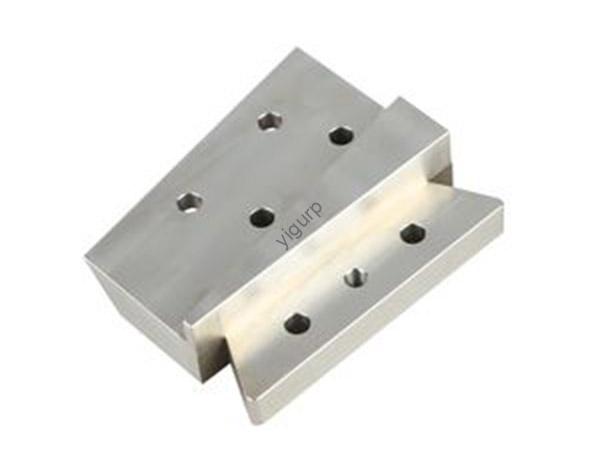
Se stai cercando un acciaio che bilanci la forza, resistenza alla corrosione, e versatilità, IN 1.4410 duplex steel is worth a closer look. As a type ofacciaio inossidabile duplex, si distingue per la sua struttura unica e le sue prestazioni in ambienti difficili. This guide will walk you through everything—from what it is to how to use it—so you can make smart choices for your projects.
1. Material Overview of EN 1.4410 Acciaio duplex
Primo, cominciamo con le basi: What isIN 1.4410 duplex steel? It’s adual-phase steel con aferritic-austenitic structure—meaning it has equal parts of ferrite (a magnetic phase) and austenite (a non-magnetic phase). This mix gives it advantages over single-phase steels like regular austenitic or ferritic grades.
Suogeneral characteristics includere:
- Higher strength than austenitic stainless steel (Piace 304 O 316)
- Better corrosion resistance than ferritic stainless steel
- Buona duttilità (ability to bend without breaking)
- Cost-effective compared to high-end super duplex steels
Per esempio, a construction firm in Spain switched from 316 stainless steel to EN 1.4410 for a coastal bridge. The EN 1.4410’s dual-phase structure held up better against saltwater spray, reducing repair needs by 25% in the first two years.
2. Chemical Composition of EN 1.4410 Acciaio duplex
The performance ofIN 1.4410 duplex steel comes from its carefully balancedchemical composition. Each element plays a key role in its strength and corrosion resistance. Here’s a breakdown of the main components (per EN 10088-3 standard):
| Elemento | Gamma di contenuti (%) | Scopo |
|---|---|---|
| Cromo (Cr) | 19.0 – 21.0 | Aumentaresistenza alla corrosione (fights rust and pitting) |
| Nichel (In) | 4.5 – 6.5 | Helps form the austenite phase (improves ductility) |
| Molibdeno (Mo) | 2.5 – 3.5 | Enhances resistance to pitting and crevice corrosion |
| Carbonio (C) | Maximum 0.03 | Keeps the steel tough (low carbon reduces brittleness) |
| Azoto (N) | 0.10 – 0.20 | Increases strength and stabilizes the austenite phase |
| Altroalloying elements (per esempio., manganese, silicon) | Small amounts | Improve processing and overall durability |
Without this exact mix, IN 1.4410 wouldn’t have its signature balance of properties. Ad esempio, too little chromium would make it prone to rust, while too much nickel could weaken its strength.
3. Mechanical Properties of EN 1.4410 Acciaio duplex
IN 1.4410 duplex steel is known for its impressive mechanical performance—making it ideal for load-bearing or high-stress applications. Below are its keyproprietà meccaniche (tested at room temperature, per EN 10088-3):
| Proprietà | Minimum Requirement | Real-World Impact |
|---|---|---|
| Resistenza alla trazione | 600 MPa | Can handle heavy loads (per esempio., supports for offshore oil rigs) |
| Forza di snervamento | 400 MPa | Resists bending or deformation under pressure (better than 316 acciaio) |
| Allungamento | 25% | Bends without breaking (good for forming parts like pipes) |
| Durezza | 280 HB (Brinell) | Durable against scratches (suitable for food processing equipment) |
| Resistenza agli urti | 40 J at -40°C | Doesn’t crack in cold weather (great for Arctic marine projects) |
| Fatigue Strength | 280 MPa (10⁷ cycles) | Withstands repeated stress (ideal for moving parts like pump shafts) |
A real example: An oil and gas company in Norway used EN 1.4410 for wellhead components. The steel’s high yield strength (400 MPa) meant the components could handle the pressure of underground oil reserves without deforming—something their old steel (316) struggled with.
4. Corrosion Resistance of EN 1.4410 Acciaio duplex
One of the biggest draws ofIN 1.4410 duplex steel is itsresistenza alla corrosione. It holds up well in harsh environments where other steels fail. Let’s break down its key corrosion-resistant features:
- Pitting resistance: Its high chromium and molybdenum content prevents small holes (pitting) from forming in chloride-rich environments (like seawater). Tests show it resists pitting in 3.5% saltwater (simulating seawater) at temperatures up to 60°C.
- Crevice corrosion resistance: Performs well in tight spaces (per esempio., bolted joints or gaskets). A marine engineer in Italy tested EN 1.4410 in crevices filled with seawater—no corrosion was found after 18 mesi.
- Stress corrosion cracking (SCC) resistance: Doesn’t crack under stress + corrosione. A chemical plant in Germany used it for pressure vessels holding acidic fluids—no SCC issues over 5 anni.
- Corrosion in acidic environments: Handles dilute acids (per esempio., acido solforico) better than 304 acciaio inossidabile. Lab tests found EN 1.4410 lost only 0.08 mm of thickness after 1000 hours in 5% acido solforico (contro. 0.4 mm for 304).
- Corrosion in alkaline environments: Resists damage from bases (per esempio., sodium hydroxide). This makes it useful in pulp and paper mills, where alkaline chemicals are common.
5. Applications of EN 1.4410 Acciaio duplex
Thanks to its strength and corrosion resistance, IN 1.4410 duplex steel is used across many industries. Here are its most commonapplicazioni, with real-world cases:
- Marine engineering: Used for ship hulls, alberi dell'elica, and offshore platforms. A shipyard in South Korea built a cargo ship with EN 1.4410 hulls—after 4 years at sea, there was no signs of rust.
- Chemical processing: Ideal for tanks, valvole, and pipes that handle corrosive fluids. A chemical plant in France used it for nitric acid storage—replacing their old steel cut maintenance costs by 30%.
- Oil and gas industry: Used for wellheads, condutture, and offshore rig components. Un americano. oil company used EN 1.4410 for subsea pipelines—its fatigue strength meant the pipelines could handle wave movements without cracking.
- Attrezzature per la lavorazione degli alimenti: Safe for contact with food (meets EU food safety standards). A dairy in the Netherlands uses it for milk tanks—its smooth surface is easy to clean, and it resists lactic acid corrosion.
- Pulp and paper industry: Used for bleach plants and paper drying rolls. A Canadian pulp mill switched to EN 1.4410—its resistance to alkaline bleach extended equipment life by 6 anni.
- Construction and architecture: Used for coastal bridges, building facades, and handrails. A construction firm in Australia used it for a beachfront mall’s handrails—no rust after 3 years of saltwater exposure.
6. Manufacturing and Processing of EN 1.4410 Acciaio duplex
To get the best performance fromIN 1.4410 duplex steel, it needs propermanufacturing and processing. Here are the key steps:
- Hot rolling: The steel is heated to 1100–1200°C and rolled into plates, bar, or pipes. This step shapes the material while keeping its ferritic-austenitic structure intact.
- Cold rolling: For thinner products (like sheets), cold rolling is done at room temperature. It makes the steel harder and smoother—good for parts like food processing equipment.
- Trattamento termico: A critical step! The steel is heated to 1020–1100°C and quickly cooled (quenched) nell'acqua. This ensures the 50-50 ferrite-austenite balance. Slow cooling can create brittle phases, so timing is key.
- Forgiatura: Used for complex parts (per esempio., flanges or valves). A manufacturer in Germany forges EN 1.4410 into pipe flanges—forging aligns the steel’s grains, making it stronger.
- Colata: Rare, but used for large or intricate parts (per esempio., pump casings). A foundry in China casts EN 1.4410 into pump bodies—casting allows for shapes that rolling can’t achieve.
- Lavorazione: IN 1.4410 is easy to machine (trapano, taglio, or mill) with the right tools. Utilizzare acciaio ad alta velocità (HSS) tools and coolants to prevent overheating—overheating can damage its microstructure.
7. Welding and Fabrication of EN 1.4410 Acciaio duplex
SaldaturaIN 1.4410 duplex steel requires care to keep its properties intact. Here’s how to do it right:
- Welding techniques: The best methods are TIG (Tungsten Inert Gas) E ME (Metal Inert Gas) saldatura. TIG is great for thin parts (like pipes), while MIG works for thicker sections. SMAW (Shielded Metal Arc Welding) is used for on-site repairs but needs more skill.
- Welding consumables: Use duplex-specific consumables (per esempio., AWS ER2209) to match EN 1.4410’s composition. Using the wrong consumables (like austenitic steel wires) can weaken the weld.
- Post-weld heat treatment (PWHT): Usually not needed, but if done, heat to 1020–1100°C and quench. This restores the ferrite-austenite balance. Avoid slow cooling—this can make the weld brittle.
- Weldability: IN 1.4410 has good weldability, but keep heat input low (massimo 1.5 kJ/mm). Too much heat can destroy the ferrite phase, reducing strength.
- Fabrication methods: It’s easy to bend, form, and cut—great for making custom parts. A fabricator in the UK made EN 1.4410 pipes for a chemical plant—forming the pipes without cracking.
- Joining techniques: For non-welded joints, utilizzo bolted connections with EN 1.4410 bulloni. Mixing metals (per esempio., using carbon steel bolts) can cause galvanic corrosion.
Yigu Technology’s View on EN 1.4410 Acciaio duplex
Alla tecnologia Yigu, we recommend EN 1.4410 duplex steel for clients in marine, chimico, and oil industries. Its mix of strength and corrosion resistance solves common pain points—like frequent repairs or equipment failure in harsh environments. We help clients choose the right processing and welding methods to maximize its performance, ensuring their projects last longer and cost less. Whether it’s offshore pipelines or food tanks, IN 1.4410 is a reliable, scelta economicamente vantaggiosa.
FAQ About EN 1.4410 Acciaio duplex
- Is EN 1.4410 magnetic?
SÌ, it is slightly magnetic. Because it has a ferritic phase (which is magnetic), it will stick to a magnet—unlike fully austenitic steels (Piace 304) that are non-magnetic. - Can EN 1.4410 be used at high temperatures?
It works well up to 300°C. Above that, its ferrite phase can become brittle, reducing strength. For temperatures over 300°C, consider a super duplex steel or austenitic steel like 310S. - How does EN 1.4410 compare to EN 1.4462?
IN 1.4462 has higher chromium (21–23% vs. 19–21%) and nitrogen content, making it more corrosion-resistant. IN 1.4410 is more cost-effective and easier to process—great for projects where extreme corrosion resistance isn’t needed.