
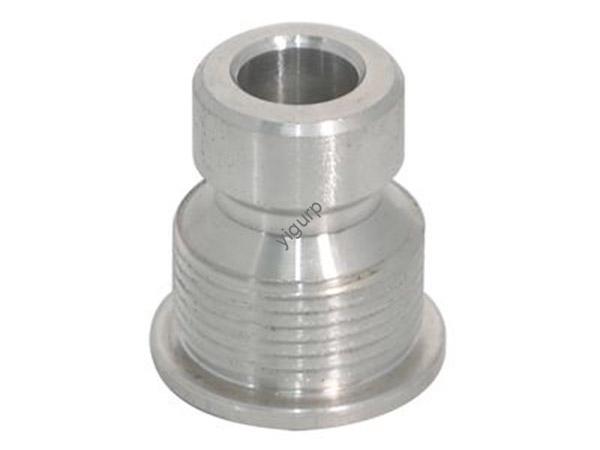
Se stai cercando un versatile, acciaio inossidabile resistente alla corrosione per progetti quotidiani e industriali, IN 1.4301 acciaio inossidabile è la scelta migliore. Come l'equivalente europeo dell'AISI 304, è ampiamente utilizzato in tutti i settori, dalla lavorazione alimentare all'architettura, grazie alle sue prestazioni equilibrate. Questa guida copre tutto ciò che devi sapere, dalle sue specifiche alle applicazioni del mondo reale.
1. IN 1.4301 Acciaio inossidabile: Panoramica & Key Specifications
Let’s start with the basics ofIN 1.4301 acciaio inossidabile—its composition, standard, e proprietà fondamentali.
Composizione chimica
ILIN 1.4301 composition is what makes it reliable. It contains 18–20% chromium (per la resistenza alla corrosione) and 8–10.5% nickel (for austenitic structure), with small amounts of manganese (massimo 2.0%) and silicon (massimo 1.0%). This blend creates a metal that’s both strong and ductile.
Standard di settore & Equivalents
IN 1.4301 is defined by strict European and global standards:
- 1.4301 AISI 304 equivalente: It’s the direct European counterpart to AISI 304, so you can swap them in most projects.
- 1.4301 UNS S30400: The Unified Numbering System identifier, used in North America.
- 1.4301 ASTM A240: ASTM standard for plates/sheets, E 1.4301 IN 10088-2: European standard for flat products (sheets/plates).
Fisico & Proprietà meccaniche
Below is a table of critical properties that makeIN 1.4301 acciaio inossidabile so versatile:
| Proprietà | Valore |
|---|---|
| 1.4301 densità | 7.9 g/cm³ |
| 1.4301 punto di fusione | 1400 °C |
| 1.4301 forza di snervamento | 210 MPa |
| 1.4301 resistenza alla trazione | 520–720 MPa |
| 1.4301 Brinell hardness | ≈215 HB |
| 1.4301 austenitic structure | Non magnetico, with excellent ductility |
Esempio: A kitchen appliance maker usesIN 1.4301 acciaio inossidabile for oven doors. Suoaustenitic structure makes it easy to form into curved shapes, e il suoBrinell hardness (≈215 HB) resists scratches from daily use.
2. Resistenza alla corrosione & Environmental Performance
IN 1.4301 acciaio inossidabile is known for its strong corrosion resistance—here’s how it performs in different environments.
Key Corrosion Behaviors
- 1.4301 PREN 18–19: The Pitting Resistance Equivalent Number (Legna) measures resistance to pitting. A PREN of 18–19 means it handles mild chlorides (like indoor plumbing) well.
- 1.4301 atmospheric corrosion: Excellent resistance to dry, umido, and urban air. It’s used for architectural cladding that stays rust-free for decades.
- 1.4301 oxidation resistance up to 870 °C: Maintains strength and resists scaling at high temperatures, making it suitable for heat exchanger shells.
- 1.4301 seawater splash zone limits: Can handle occasional seawater splashes (per esempio., coastal building trim) but avoid full submersion—use 316 for underwater parts.
Critical Corrosion Considerations
- 1.4301 pitting corrosion: Low risk in clean environments, but may occur in high-chloride settings (per esempio., saltwater pools).
- 1.4301 crevice corrosion threshold: Avoid tight crevices (per esempio., unsealed bolts) in wet areas—they can trap moisture and cause corrosion.
- 1.4301 chloride stress corrosion cracking: Low risk at room temperature, but avoid high temperatures (Sopra 60 °C) and high chlorides together.
- 1.4301 intergranular corrosion after welding: Welding can cause sensitization (carbide precipitation), so post-weld passivation helps prevent this.
Caso di studio: A brewery usesIN 1.4301 acciaio inossidabile for piping. The metal’smild chemical resistance handles beer’s acids and sugars, and regular cleaning keeps it rust-free. The piping has lasted 15+ years with no issues.
3. Trattamento termico & Controllo della microstruttura
Proper heat treatment helps maintainIN 1.4301 acciaio inossidabile’s performance—here’s what you need to know.
Common Heat Treatment Processes
| Processo | Temperature | Scopo |
|---|---|---|
| 1.4301 solution annealing 1000–1100 °C | 1000–1100 °C (water quench) | Removes carbide precipitation, restores corrosion resistance |
| 1.4301 residual stress relief | 300–500 °C | Reduces stress from welding or cold working |
| 1.4301 hot working range 1150–900 °C | 1150–900 °C | Shapes the metal (per esempio., forgiatura, rotolamento) senza rompersi |
Critical Considerations
- 1.4301 carbide precipitation range 450–850 °C: Avoid holding the metal at this temperature range for long—carbides form, reducing corrosion resistance.
- 1.4301 sensitization prevention: Use solution annealing after welding to prevent sensitization (which causes intergranular corrosion).
- 1.4301 grain size ASTM 5–8: Controlled heating keeps grain sizes small (ASTM 5–8), balancing strength and ductility.
- 1.4301 sigma phase absence: Unlike ferritic grades, it doesn’t form brittle sigma phase—great for high-temperature parts.
Esempio: A manufacturer of chemical storage tanks usesIN 1.4301 acciaio inossidabile. After welding the tank seams, they solution anneal at 1050 °C to restore corrosion resistance—ensuring the tank safely holds mild chemicals.
4. Saldatura, Fabbricazione & Machining Guidelines
IN 1.4301 acciaio inossidabile is easy to work with—here are the best practices for welding, fabbricazione, e lavorazione.
Welding Tips
- 1.4301 weldability rating: Eccellente (valutato 9/10)—it welds well with most methods (TIG, ME, stick).
- 1.4301 no preheat required: Unlike martensitic grades (per esempio., 410), it doesn’t need preheating, risparmiando tempo.
- 1.4301 filler metal ER308L: Use this filler for TIG/MIG welding—it matches the base metal’s composition.
- 1.4301 MIG wire 308LSi: Ideal for MIG welding; the silicon improves wire feedability.
- 1.4301 post-weld passivation: Apply a nitric acid solution after welding to boost corrosion resistance.
Lavorazione & Fabbricazione
- 1.4301 machining speeds and feeds: Use speeds of 150–250 m/min (girando) and feeds of 0.1–0.3 mm/rev—avoid overheating.
- 1.4301 tool life with carbide inserts: Carbide tools last 2–3x longer than high-speed steel (HSS) when machining EN 1.4301.
- 1.4301 deep drawability: Excellent—its austenitic structure lets it be deep-drawn into shapes like food cans or sink basins.
- 1.4301 forming limits: Can be bent up to 180° (per lamiere sottili) without cracking—great for architectural trim.
Caso di studio: An automotive supplier makesIN 1.4301 acciaio inossidabile ordinare. They use deep drawing to shape the trim, then machine edges with carbide tools. The process produces 50,000+ trim pieces per month with minimal defects.
5. Product Forms, Sizes & Supply Chain
IN 1.4301 acciaio inossidabile comes in many forms to fit different projects—here’s what’s available.
Common Product Forms
- 1.4301 stainless steel plate thicknesses: 3–200 mm (used for chemical storage tanks, parti strutturali).
- 1.4301 sheet gauge chart: 26 misura (0.45 mm) A 8 misura (4.0 mm) (used for kitchen appliances, ordinare).
- 1.4301 coil slit widths: 50–1600 mm (used for mass-produced parts like heat exchanger fins).
- 1.4301 round bar stock: Diameters 5–300 mm (used for fasteners, alberi).
- 1.4301 seamless pipe EN 10216-5: Sizes ½–24 inches (used for chemical piping).
- 1.4301 welded tube EN 10217-7: Sizes ½–12 inches (used for plumbing, brewery lines).
Supply Chain Tips
- 1.4301 flat bar tolerances: Most suppliers offer tolerances of ±0.1 mm for thickness—ideal for precision parts.
- 1.4301 angle iron sizes: Common sizes include 20x20x3 mm to 100x100x10 mm (used for structural supports).
- 1.4301 hollow bar suppliers: Look for ISO 9001-certified suppliers to ensure consistent wall thickness.
- 1.4301 mirror finish sheets: Available in 0.5–5 mm thicknesses (used for elevator panels, display cabinets).
6. Applicazioni industriali & Use Cases
IN 1.4301 acciaio inossidabile is used in countless industries—here are the most common applications.
Applicazioni chiave
- 1.4301 attrezzature per la lavorazione degli alimenti: Used for mixers, trasportatori, and storage bins—its corrosion resistance handles food acids.
- 1.4301 elettrodomestici da cucina: Frigoriferi, forni, and dishwashers—its ductility makes it easy to form, and it resists scratches.
- 1.4301 rivestimento architettonico: Facciate degli edifici, handrails—its atmospheric corrosion resistance keeps it looking new.
- 1.4301 pharmaceutical vessels: Used for drug storage and mixing—meets strict hygiene standards.
- 1.4301 heat exchanger shells: Gestisce le alte temperature (fino a 870 °C) and resists corrosion from coolants.
Esempio del mondo reale: A hospital usesIN 1.4301 acciaio inossidabile for surgical tables. The metal’s corrosion resistance stands up to frequent cleaning with disinfectants, and its smooth surface is easy to sanitize—meeting medical hygiene standards.
7. IN 1.4301: Standard, Test & Certificazione
Per garantire la qualità, IN 1.4301 acciaio inossidabile must meet strict testing and certification requirements.
Key Standards & Test
- 1.4301 IN 10088-3 chemical analysis: This standard specifies the required chemical composition (per esempio., 18–20% chromium) per garantire la resistenza alla corrosione.
- 1.4301 NELL'ISO 9445 tolleranze: Defines dimensional tolerances for flat products (sheets/plates) per garantire la coerenza.
- 1.4301 AD 2000-Merkblatt W2 approval: A European certification for pressure equipment (per esempio., serbatoi chimici) — ensures the metal can handle high pressure safely.
Esempio: A manufacturer of pressure vessels usesIN 1.4301 acciaio inossidabile certified to AD 2000-Merkblatt W2. This certification lets them sell their vessels across Europe, as customers trust the metal’s safety.
La prospettiva di Yigu Technology sull’EN 1.4301 Acciaio inossidabile
Alla tecnologia Yigu, we supplyIN 1.4301 acciaio inossidabile to food, medico, and architectural clients. Its versatility—great corrosion resistance, facile fabbricazione, and global standards compliance—makes it a top seller. We offer custom cuts (per esempio., mirror finish sheets for elevators) and provide certification documents (IN 10088-3, AD 2000-Merkblatt W2) per soddisfare le esigenze del cliente. For food clients, we ensure passivation to meet hygiene standards, so their equipment is safe and durable.
Domande frequenti su EN 1.4301 Acciaio inossidabile
- È IT 1.4301 magnetico in acciaio inossidabile?
NO! Suo 1.4301 austenitic structure makes it non-magnetic—unlike martensitic (410) or ferritic (430) gradi. This is useful for parts that need to avoid magnetic interference (per esempio., attrezzature mediche). - Può EN 1.4301 essere utilizzato in acqua di mare?
It works for 1.4301 seawater splash zone areas (per esempio., coastal building trim) but not for full submersion. Its PREN (18–19) is too low for constant seawater exposure—use EN 1.4401 (AISI 316) for underwater parts. - What’s the difference between EN 1.4301 e EN 1.4307?
IN 1.4307 (AISI 304L) has lower carbon content (massimo 0.03%) than EN 1.4301 (massimo 0.08%). Questo fa 1.4307 less likely to sensitize after welding—choose it for thick welded parts (per esempio., large tanks).