
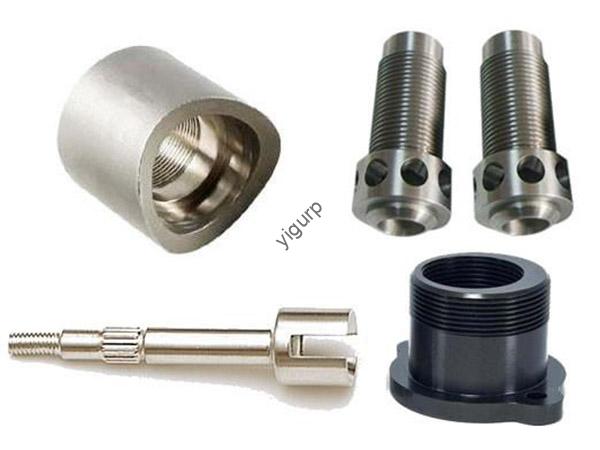
Se lavori con lavorazioni ad alta velocità o hai bisogno di strumenti che rimangano affilati anche sotto calore e pressione, IN 1.3343 high speed steel è un punto di svolta. This alloy is built for tough cutting tasks—from milling hard metals to drilling precision holes—thanks to its exceptionaldurezza rossa e resistenza all'usura. In questa guida, analizzeremo le sue proprietà chiave, applicazioni del mondo reale, come è fatto, and how it compares to other cutting materials. Alla fine, you’ll know if it’s the right choice for your high-performance tool needs.
1. Material Properties of EN 1.3343 Acciaio ad alta velocità
EN 1.3343’s reputation as a top-tier high speed steel comes from its carefully balanced composition and standout properties. Let’s break this into four critical areas:
1.1 Composizione chimica
The elements in EN 1.3343 work together to boost heat resistance, durezza, and durability—essential for high-speed cutting. Below is its typical composition (per EN standards):
| Elemento | Gamma di contenuti (%) | Key Role |
|---|---|---|
| Carbonio (C) | 0.80 – 0.90 | Forms hard carbides with other elements, boosting wear resistance. |
| Manganese (Mn) | 0.15 – 0.40 | Improves hardenability and reduces brittleness during heat treatment. |
| Silicio (E) | 0.15 – 0.40 | Enhances strength and resistance to oxidation at high temperatures. |
| Cromo (Cr) | 3.80 – 4.50 | Supports carbide formation and improvestemprabilità; aumenta la resistenza alla corrosione. |
| Tungsten (W) | 5.50 – 6.75 | A key element fordurezza rossa—retains strength at 600+ °C, critical for high-speed cutting. |
| Molibdeno (Mo) | 4.50 – 5.50 | Works with tungsten to enhance red hardness and reduce brittleness. |
| Vanadium (V) | 1.70 – 2.20 | Forms ultra-hard vanadium carbides, improving edge retention and wear resistance. |
| Cobalt (Co) | 4.50 – 5.50 | Further boosts red hardness and high-temperature stability. |
| Zolfo (S) | ≤ 0.030 | Minimized to avoid weakening the steel and reducing tool life. |
| Fosforo (P) | ≤ 0.030 | Kept low to prevent brittleness, especially under high heat. |
1.2 Proprietà fisiche
These properties determine how EN 1.3343 behaves during machining and tool use—like heat transfer or dimensional stability. All values are measured at room temperature unless stated:
- Densità: 8.10 g/cm³ (slightly higher than standard steels, due to tungsten and cobalt content).
- Punto di fusione: 1420 – 1480 °C (high enough to withstand forging and heat treatment without melting).
- Conducibilità termica: 25 Con/(m·K) (lower than carbon steel, which helps retain heat in the tool edge during cutting).
- Coefficiente di dilatazione termica: 11.0 × 10⁻⁶/°C (da 20 A 600 °C; low expansion means tools keep their shape during high-speed cutting).
- Specific Heat Capacity: 450 J/(kg·K) (efficient at absorbing heat, reducing the risk of overheating during prolonged use).
1.3 Proprietà meccaniche
EN 1.3343’s mechanical properties are optimized for cutting tools—prioritizing hardness, edge retention, e resistenza al calore. Below are its typical properties after standard heat treatment (tempra + tempera):
| Proprietà | Valore tipico | Test Standard | Why It Matters |
|---|---|---|---|
| Durezza (HRC) | 63 – 66 | EN ISO 6508 | Ultra-high hardness ensures excellent edge retention (critico permilling cutters Otrapani). |
| Resistenza alla trazione | ≥ 2400 MPa | EN ISO 6892 | Handles high cutting forces without breaking—ideal for machining hard materials. |
| Forza di snervamento | ≥ 2000 MPa | EN ISO 6892 | Resists permanent deformation, so tools keep their cutting geometry. |
| Allungamento | ≤ 5% | EN ISO 6892 | Low ductility (expected for hard high speed steels; a trade-off for hardness). |
| Resistenza all'impatto (Charpy V-notch) | ≥ 12 J (A 20 °C) | EN ISO 148-1 | Moderate toughness—avoids brittle fracture during light shock (per esempio., tool loading). |
| Red Hardness | Retains 90% hardness at 600 °C | EN ISO 6508 | Lets tools cut at high speeds (30–50 m/min for steel) without softening. |
| Fatigue Strength | ~900 MPa (10⁷ cycles) | EN ISO 13003 | Resists failure from repeated cutting cycles (key for high-volume machining). |
1.4 Altre proprietà
- Resistenza alla corrosione: Moderare. Chromium content helps resist rust in workshop environments, but avoid long exposure to chemicals or moisture.
- Resistenza all'usura: Eccellente. Tungsten, vanadio, and cobalt carbides create a hard surface that resists abrasive wear—even when machining hard materials like stainless steel or alloy steel.
- Lavorabilità: Povero (in hardened state). It’s extremely hard to machine after heat treatment, so most shaping is done when the steel is annealed (softened to HRC 24–28).
- Temprabilità: Eccellente. It hardens evenly across thick sections (fino a 30 mm), so large tools like gear cutting tools have consistent performance.
- High-temperature Stability: Outstanding. It maintains strength and hardness at temperatures up to 650 °C—far better than standard tool steels or carbon steel.
2. Applications of EN 1.3343 Acciaio ad alta velocità
EN 1.3343’s red hardness and wear resistance make it ideal for high-speed, high-heat cutting tasks. Ecco i suoi usi più comuni, con esempi reali:
2.1 Utensili da taglio
- Esempi: Milling cutters, strumenti di tornitura, trapani, E alesatori for machining metals like alloy steel, acciaio inossidabile, or cast iron.
- Why it works: Red hardness lets tools cut at high speeds without softening. A German machine shop used EN 1.3343 milling cutters for alloy steel parts—tool life increased by 200% contro. standard high speed steel (HSS).
2.2 Broaches
- Esempi: Internal or external broaches for creating complex shapes (per esempio., splines or keyways) in metal parts.
- Why it works: Wear resistance keeps broach teeth sharp through hundreds of cuts. Un americano. automotive supplier used EN 1.3343 broaches for gear splines—broach life jumped from 5,000 A 15,000 parti.
2.3 Gear Cutting Tools
- Esempi: Hob cutters or shaping tools for manufacturing gears (automotive or industrial).
- Why it works: Precision edge retention ensures gear teeth have accurate geometry. A Japanese gear maker used EN 1.3343 hob cutters—gear quality improved (fewer surface defects) and tool changes dropped by 60%.
2.4 Machining of Hard Materials
- Esempi: Tools for machining hardened steel (up to HRC 45), acciaio inossidabile, or heat-resistant alloys (per esempio., Inconel).
- Why it works: Ultra-hard carbides resist wear from tough materials. A Chinese aerospace manufacturer used EN 1.3343 drills for Inconel parts—drill life increased from 20 A 80 holes per tool.
3. Manufacturing Techniques for EN 1.3343 Acciaio ad alta velocità
Turning EN 1.3343 into high-performance tools requires precise, specialized steps. Ecco un'analisi dettagliata:
- Fusione: Materie prime (iron, tungsteno, cobalto, ecc.) are melted in an electric arc furnace (EAF) or induction furnace at 1550–1650 °C. This ensures uniform mixing of high-value elements like tungsten and cobalt.
- Colata: Molten steel is poured into ingot molds (small sizes, 5–20 kg) to avoid internal defects. Raffreddamento lento (10–20 °C/hour) prevents carbide segregation.
- Forgiatura: Ingots are heated to 1100–1180 °C and hammered or pressed into tool blanks (per esempio., 10x10x100 mm for drill bits). Forging breaks up large carbides, improving tool strength.
- Trattamento termico: The most critical step for maximizing performance:
- Ricottura: Heat to 850–900 °C, hold 2–4 hours, cool slowly. Softens steel to HRC 24–28 for machining.
- Preriscaldamento: Heat to 800–850 °C, Presa 1 ora. Prepares the steel for quenching.
- Austenitizing: Heat to 1200–1240 °C, hold 15–30 minutes. Critical for dissolving carbides.
- Tempra: Cool rapidly in oil or air (depending on tool size). Hardens steel to HRC 64–67.
- Temperamento: Reheat to 540–580 °C, hold 1–2 hours, cool. Repeat 2–3 times. Reduces brittleness and sets final hardness (HRC 63–66).
- Lavorazione: Most shaping (fresatura, perforazione, macinazione) is done before quenching (annealed state). Carbide tools or diamond grinders are used for post-quenching finishing.
- Rettifica: Precision grinding (CNC grinders) creates sharp cutting edges and tight tolerances (±0.001 mm for drills or reamers).
- Trattamento superficiale (Opzionale):
- Rivestimento: Add TiN (nitruro di titanio) or TiAlN (titanium aluminum nitride) coatings to boost wear resistance by 50–100%.
- Nitrurazione: Creates a hard surface layer (HRC 70+) for tools needing extra wear protection.
4. Caso di studio: IN 1.3343 in Milling Cutters for Hardened Steel
A European automotive parts manufacturer faced a problem: their standard HSS milling cutters were wearing out every 500 parts when machining hardened steel (HRC 40) mozzi del cambio. They switched to EN 1.3343 cutters (coated with TiAlN), and here’s what happened:
- Processo: Cutters were forged, ricotto, machined to shape, trattato termicamente (1220 °C quenching + 560 °C tempering), ground to sharp edges, and coated with TiAlN.
- Risultati:
- Cutter life increased to 2,000 parti (300% miglioramento) thanks to EN 1.3343’s red hardness and TiAlN coating.
- Machining speed increased from 25 A 40 m/mio (60% Più veloce), reducing production time.
- Part quality improved: gear hubs had smoother surfaces (Ra 0.8 μm vs. 1.6 μm with old cutters).
- Why it worked: EN 1.3343’s tungsten and cobalt retained hardness at the high cutting temperatures (500+ °C), while the TiAlN coating reduced friction between the cutter and steel—minimizing wear.
5. IN 1.3343 contro. Other Cutting Materials
How does EN 1.3343 stack up against common alternatives? Let’s compare key properties for cutting tools:
| Materiale | Durezza (HRC) | Red Hardness (600 °C) | Resistenza all'usura | Lavorabilità | Costo (contro. IN 1.3343) | Ideale per |
|---|---|---|---|---|---|---|
| IN 1.3343 Acciaio ad alta velocità | 63 – 66 | Eccellente | Eccellente | Povero (temprato) | 100% | High-speed cutting of hard metals |
| Standard HSS (IN 1.3340) | 60 – 63 | Bene | Bene | Giusto (temprato) | 60% | General cutting (acciaio dolce) |
| Utensili in carburo | 85 – 90 (alta tensione) | Eccellente | Very Good | Very Poor | 300% | Ultra-high-speed cutting (50+ m/mio) |
| Strumenti in ceramica | 90 – 95 (alta tensione) | Outstanding | Very Good | Extremely Poor | 500% | Machining super-alloys (per esempio., Inconel) |
| Acciaio al carbonio (1095) | 55 – 60 | Povero | Povero | Eccellente | 20% | Low-speed cutting (soft materials) |
| Acciaio legato (4140) | 30 – 40 | Very Poor | Giusto | Eccellente | 30% | Non-cutting tools (per esempio., portautensili) |
Key takeaway: IN 1.3343 offers the best balance of red hardness, resistenza all'usura, and cost for high-speed cutting of hard metals. It’s cheaper than carbide or ceramic tools and more durable than standard HSS or carbon steel.
Yigu Technology’s View on EN 1.3343 Acciaio ad alta velocità
Alla tecnologia Yigu, IN 1.3343 is our top choice for clients needing tools that perform in high-speed, high-heat machining. Its unique carbide blend solves the common issue of tool softening—critical for machining hard materials like stainless steel or alloy steel. We often pair it with TiAlN coatings to extend tool life further, helping clients cut costs and boost productivity. Per il settore automobilistico, aerospaziale, or industrial manufacturers, IN 1.3343 isn’t just a tool material—it’s a way to achieve consistent, high-quality results in demanding applications.
FAQ About EN 1.3343 Acciaio ad alta velocità
1. Can EN 1.3343 be used for machining non-metallic materials (per esempio., plastics or wood)?
While EN 1.3343 is technically capable, it’s overkill for non-metallic materials. Its high hardness and red hardness are designed for metal cutting, and using it for plastics/wood would be costly and unnecessary. Per i non metalli, choose standard HSS or carbon steel tools instead.
2. What’s the best coating for EN 1.3343 utensili?
For most applications, TiAlN (titanium aluminum nitride) is the best choice. It resists high temperatures (fino a 800 °C) and reduces friction, making it ideal for high-speed cutting of steel or stainless steel. For machining aluminum, use TiCN (titanium carbonitride) to prevent material buildup on the tool edge.
3. Is EN 1.3343 more expensive than standard HSS?
SÌ, IN 1.3343 costs about 60–70% more than standard HSS (per esempio., IN 1.3340) due to its cobalt and tungsten content. But it’s worth the investment: IN 1.3343 tools last 2–3x longer, reduce downtime from tool changes, and let you machine at faster speeds—saving money in the long run.