
Our CNC Punching Services
Elevate your sheet metal production with our CNC Punching services—the gold standard for automated punching and sheet metal punching across industries. Leveraging high-speed punch presses and advanced CNC technology, we craft complex geometries (holes, slots, notches) in metals (stainless steel, aluminum), plastics, and composites—delivering tight tolerances, minimal material waste, and consistent results for aerospace, automotive, and architectural projects. Whether you need high-volume HVAC components or custom electronic enclosures, our efficient, versatile solutions turn sheet materials into high-quality parts fast.
What Is CNC Punching?
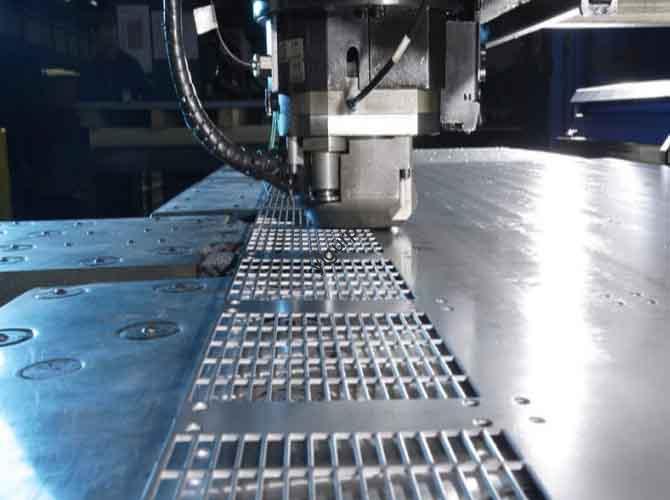
CNC Punching is an automated sheet metal fabrication technology that uses computer-controlled punch presses to create holes, slots, notches, or formed features in flat sheet materials. Unlike manual punching (which relies on human alignment and is limited to simple shapes), it uses pre-programmed tool paths to drive a punch and die set—punching precise features into sheets with minimal human intervention.
The process overview is straightforward: A sheet of material (metal, plastic, etc.) is secured on a punch press table. A CNC system interprets design files to position the sheet (via X/Y linear axes) and actuate the punch— which descends into a matching die to cut or form the desired feature. Multiple tools (stored in a turret) can be swapped automatically to create diverse features in one setup.
To explain “how it works” simply: Imagine a digital stamping machine that can punch 100 identical holes in a steel sheet, then switch tools to add slots and notches—all without moving the sheet to another machine. For example, an aluminum HVAC vent (with dozens of air holes and mounting slots) can be fully punched in 5 minutes. This blend of automation, speed, and precision is what makes CNC Punching ideal for high-volume sheet metal parts with repetitive features.
Our CNC Punching Capabilities
We offer comprehensive punching capabilities tailored to sheet material projects, with a focus on precision levels, tolerance achievements, and high-speed efficiency. Below is a detailed breakdown of our key capacities:
| Capability | Specification |
|---|---|
| Machine Configuration | – Punch Press Type: Turret punch presses (up to 40-station turrets)- Axis Travel: X-axis (3000mm), Y-axis (1500mm)- Punch Force: 20–60 tons (adjustable for material thickness) |
| Precision Levels | – Hole position accuracy: ±0.1mm- Feature repeatability: ±0.05mm- Edge straightness: ≤0.05mm/m |
| Tolerance Achievements | – Standard: ±0.1–0.2mm (metals), ±0.2–0.3mm (non-metals)- Critical parts: ±0.05mm (e.g., aerospace brackets)- Meets ISO 2768-1 (medium-fine grade) and ASME Y14.5 |
| Maximum Sheet Size | – Length: Up to 3000mm- Width: Up to 1500mm- Weight: Up to 50kg (supported by automatic sheet feeders) |
| Material Thickness Range | – Metals: 0.3mm–6mm (stainless steel), 0.2mm–8mm (aluminum), 0.5mm–10mm (mild steel), 0.3mm–5mm (galvanized steel), 0.3mm–4mm (copper)- Non-Metals: 0.5mm–10mm (plastics), 0.5mm–8mm (composites), 1mm–6mm (acrylic)- Special Materials: 0.5mm–5mm (high-strength alloys like HSLA steel) |
| Custom Punching | – Features: Holes (0.5mm–100mm diameter), slots (width 0.5mm+), notches, embossments, louvered vents- Compatibility: CAD/CAM files (DXF, DWG, STEP, DXF)- Volume: Prototypes (1–100 sheets) to high-volume (10,000+ sheets/month) |
| Tooling Options | – Turret Tools: Round punches, oblong punches, slot punches, forming tools (emboss, flange)- Tool Materials: High-speed steel (HSS) for soft metals/plastics, carbide for hard metals/alloy- Tool Change: Automatic (≤1 second per tool change) |
| High-Speed Punching | – Punch Rate: Up to 600 hits per minute (HPM) for small holes (≤5mm diameter)- Sheet Feed Speed: Up to 30m/min (automated feeders) |
| Quality Assurance | – In-line Inspection: Vision systems (real-time feature position checks)- Post-punching: CMMs (for critical parts), calipers/micrometers (for standard parts)- Compliance: ISO 9001, AS9100 (aerospace), ISO 13485 (medical) |
Whether you need 100 stainless steel control panels (with 50 holes each) or 5,000 acrylic display casings (with custom slots), our capabilities scale to match your project’s complexity.
The CNC Punching Process
Our step-by-step process is optimized to maximize efficiency and precision for sheet metal and non-metal punching:
Post-Punching Inspection: Parts undergo quality control—we check feature positions with calipers/CMMs, verify hole sizes with gauge pins, and inspect edges for burrs. Parts requiring finishing move to deburring or painting; nested parts are separated (via shearing if needed).
Design and CAD Modeling: We start by reviewing your CAD model (or creating one from sketches) to identify all features (holes, slots, etc.). Our engineers optimize the design for CNC punching—e.g., ensuring hole spacing meets tooling constraints and features are arranged to minimize material waste (via nesting software).
CAM Programming: The CAD model is imported into CAM software (Lantek, SolidWorks CAM) to generate tool paths. We program the sequence of operations: selecting tools for each feature, setting punch force (based on material thickness), and optimizing sheet movement (X/Y axes) to reduce cycle time. For high-volume runs, we use nesting software to fit multiple parts on one sheet.
Setup and Calibration: The sheet material is loaded into an automatic sheet feeder (for high-volume) or manually secured to the press table (for prototypes). We calibrate the punch press—setting tool offsets (to ensure feature accuracy) and testing punch force on a scrap piece of material. The turret is loaded with required tools (round punches, slot punches, etc.).
Punching Execution: The CNC system runs the program:
The sheet is positioned via X/Y axes to the first feature location.
The punch descends into the die to cut/form the feature (punch force adjusts automatically for material thickness).
The turret swaps tools (if needed) for subsequent features.
For formed features (e.g., embossments), a forming tool replaces the standard punch to shape the material without cutting.
Post-Punching Inspection: Parts undergo quality control—we check feature positions with calipers/CMMs, verify hole sizes with gauge pins, and inspect edges for burrs. Parts requiring finishing move to deburring or painting; nested parts are separated (via shearing if needed).
Materials We Work With
CNC Punching works best with flat, ductile materials—though tool selection and punch force vary based on material hardness and thickness. Below is a breakdown of our supported materials, key properties, and ideal uses:
| Material Category | Examples | Key Properties | Punching Notes (Force/Tools) | Ideal Applications |
|---|---|---|---|---|
| Metals | Stainless Steel | Corrosion-resistant, moderate hardness | 30–50 tons force; carbide punches | Food processing equipment, medical panels |
| Aluminum | Lightweight, soft, ductile | 10–30 tons force; HSS punches | Automotive body panels, HVAC components | |
| Mild Steel | Strong, cost-effective, ductile | 20–40 tons force; HSS/carbide punches | Structural brackets, industrial enclosures | |
| Galvanized Steel | Corrosion-resistant (zinc coating) | 25–45 tons force; carbide punches (avoids coating damage) | Roofing panels, electrical boxes | |
| Copper | Highly conductive, soft | 15–35 tons force; HSS punches | Electrical busbars, heat sinks | |
| Non-Metals | Plastics (ABS/Polycarbonate) | Lightweight, durable, low melting point | 5–20 tons force; HSS punches (low speed to avoid melting) | Electronic enclosures, consumer goods casings |
| Composites | High strength, lightweight, abrasive | 20–40 tons force; diamond-coated punches | Aerospace interior panels, racing car parts | |
| Acrylic | Transparent, rigid, brittle | 5–15 tons force; sharp HSS punches (low force to avoid cracking) | Display cases, signage | |
| Special Materials | High-Strength Alloys (HSLA Steel) | High tensile strength, wear-resistant | 40–60 tons force; carbide punches | Automotive safety components, defense parts |
We test all materials to optimize punch force, tool type, and sheet feed speed—ensuring clean cuts/forms without material damage.
Surface Treatment & Finishing Options
After CNC punching, we offer a range of surface treatment and finishing options to enhance part durability, appearance, and functionality. Our most popular services include:
| Finishing Option | Process Description | Key Benefits | Material Compatibility | Cost (per sq. meter, avg.) | Best For |
|---|---|---|---|---|---|
| Deburring | Removes sharp edges (via tumbling, brushing, or manual tools) | Improves safety; prevents assembly issues | All materials | $5–$15 | Medical panels, consumer goods |
| Painting | Applies spray/powder paint (matte/gloss) for corrosion resistance | Enhances aesthetics; protects from rust | Metals, composites | $15–$40 | Outdoor architectural parts, automotive components |
| Coating | Options: Powder coating (thick, scratch-resistant), clear coat (protective) | Durability; UV resistance | Metals, plastics | $20–$50 | Industrial enclosures, signage |
| Anodizing | Adds oxide layer to aluminum (dyed or clear) for corrosion resistance | Decorative finish; scratch resistance | Aluminum | $18–$35 | Electronics enclosures, aerospace parts |
| Heat Treatment | Heats/cools metals (e.g., mild steel) to increase hardness | Improves strength; wear resistance | Steel, high-strength alloys | $30–$60 | Tooling components, defense parts |
| Surface Cleaning | Removes oil/ debris (via solvent cleaning or ultrasonic cleaning) | Prepares surface for painting/coating | All materials | $3–$10 | Parts requiring post-finishing |
| Electroplating | Coats metals with thin layer (zinc, nickel, chrome) for conductivity/corrosion resistance | Enhances functionality; aesthetics | Steel, copper, brass | $25–$60 | Electrical components, decorative parts |
For example, we use anodizing for aluminum electronics enclosures (to resist scratches) and powder coating for mild steel HVAC panels (to protect against outdoor corrosion).
Tolerances & Quality Assurance
Tolerances for CNC Punching focus on feature position (hole/slot alignment) and size consistency—critical for parts that require assembly (e.g., panels with fastener holes). Our quality control processes ensure strict adherence to standards:
| Material | Position Tolerance (Holes/Slots) | Size Tolerance (Holes) | Edge Quality (Burr Height) | Accuracy Standard Used | Measurement Technique |
|---|---|---|---|---|---|
| Stainless Steel | ±0.08–0.15mm | ±0.05–0.1mm | ≤0.03mm | ISO 2768-1 (medium-fine), ASME Y14.5 | CMM + Gauge Pins |
| Aluminum | ±0.1–0.2mm | ±0.08–0.15mm | ≤0.05mm | ISO 2768-1 (medium), AMS 2750 | Calipers + Vision System |
| Mild Steel | ±0.1–0.2mm | ±0.08–0.15mm | ≤0.04mm | ISO 2768-1 (medium), EN 10025 | Micrometer + CMM |
| ABS Plastic | ±0.2–0.3mm | ±0.15–0.25mm | ≤0.08mm | ISO 2768-1 (coarse), ASTM D638 | Vision System + Calipers |
| High-Strength Alloy | ±0.08–0.12mm | ±0.05–0.1mm | ≤0.03mm | ISO 2768-1 (medium-fine), AS9100 | CMM + Laser Scanner |
Our quality control processes include:
Post-punching: 100% inspection for critical parts (aerospace/medical); statistical sampling (5–10%) for high-volume parts. We also document every batch with inspection reports.
Pre-punching: Inspecting raw sheets for defects (e.g., warping, scratches) and verifying thickness with micrometers.
In-process: Real-time checks via vision systems (for feature position) and punch force monitors (to detect tool wear).
Key Advantages of CNC Punching
Compared to other sheet metal processes (e.g., laser cutting, manual punching), CNC Punching offers unique benefits:
Minimal Material Waste: Nesting software optimizes part placement on sheets, reducing waste to 5–10% (vs. 15–25% for manual cutting).
High Precision: Achieves feature position accuracy of ±0.1mm—critical for parts that require precise assembly (e.g., electrical panels with connector holes).
Consistency and Repeatability: CNC programming ensures every part is identical—even for high-volume runs (e.g., 10,000 HVAC vents). No variation from manual alignment.
Complex Geometries: Automatic tool changes let you create diverse features (holes, slots, embossments) in one setup—eliminating the need for multiple machines.
Reduced Setup Time: Turret punch presses store up to 40 tools, cutting setup time by 60–80% compared to manual punching (which requires tool changes between runs).
Increased Efficiency: High-speed punching (up to 600 HPM) and automated sheet feeders reduce cycle time—producing 3–5x more parts per hour than manual methods.
Versatility: Works with metals, plastics, composites, and acrylic—making it a one-stop solution for diverse sheet material projects.
Cost-Effectiveness: Lower operational costs than laser cutting (no expensive laser tubes) and reduced labor costs (automated operation). For high-volume runs, it’s 20–30% cheaper than other processes.
High-Quality Surface Finish: Clean, burr-free edges (≤0.05mm burr height) reduce the need for post-finishing—saving time and money.
Industry Applications
CNC Punching is widely used across industries that rely on sheet metal or flat non-metal parts. Here are its most common applications:
| Industry | Common Uses | Key Benefit of CNC Punching |
|---|---|---|
| Aerospace | Aluminum interior panels, stainless steel control boxes, composite brackets | Precision for safety-critical assembly |
| Automotive | Mild steel body panels, aluminum trim pieces, galvanized steel battery boxes | High-volume consistency + cost-effectiveness |
| Medical Devices | Stainless steel equipment panels, copper electrical components, plastic enclosures | Clean edges + compliance (ISO 13485) |
| Industrial Manufacturing | Mild steel machine guards, aluminum control panels, composite conveyor parts | Durability + efficiency |
| Electronics | Aluminum heat sinks, ABS plastic enclosures, copper busbars | Precision for component fitment |
| Defense | High-strength alloy armor plates, stainless steel equipment casings | Strength |
For example, in the architectural industry, our CNC-punched aluminum facade panels (with custom slot patterns) feature consistent hole spacing (±0.1mm) that ensures seamless installation—critical for large-scale building projects. In electronics, our punched copper busbars (with precision holes for wiring) ensure reliable conductivity, reducing equipment failure rates.
Advanced Manufacturing Techniques in CNC Punching
To maximize efficiency, precision, and versatility in CNC Punching, we leverage specialized machining techniques and optimized processes:
9.1 Core Punching Techniques
- Turret Punching:The most common technique—uses a rotating turret (with 10–40 tool stations) to hold different punches/dies (round, slot, forming). The turret indexes to the required tool, and the punch descends to cut/form the feature. We use two turret types:
- Stationary Turret: The turret stays fixed; the sheet moves via X/Y axes (ideal for large sheets).
- Rotating Turret: The turret rotates to position tools; the sheet moves minimally (faster for small parts).
- Application: High-volume parts with multiple features (e.g., HVAC vents with holes and slots).
- Nesting Optimization:Uses software (Lantek Nesting, SigmaNEST) to arrange multiple parts on a single sheet—minimizing material waste. For example, we can fit 20 small electrical boxes on a 1500×3000mm mild steel sheet (vs. 15 with manual placement), reducing waste from 15% to 7%. We prioritize nesting based on part quantity (high-volume parts first) and feature orientation (aligning holes to reduce tool changes).
- Forming (Non-Cutting) Punching:Uses specialized forming tools (instead of cutting punches) to shape the material without removing it. Common forming operations include:
- Embossing: Creates raised features (e.g., logos on control panels).
- Flanging: Adds a folded edge (e.g., mounting tabs on enclosures).
- Louvers: Cuts and bends slits to create vents (e.g., heat sinks for electronics).
- Benefit: Eliminates secondary forming operations (e.g., bending), saving time.
- High-Speed Punching:For small, repetitive features (e.g., 2mm diameter holes in circuit boards), we use high-speed punch presses (up to 600 HPM) with servo-driven punches. The machine uses “gang punching” (punching multiple identical holes in one pass) and quick tool indexing to reduce cycle time.
- Application: High-volume electronic components (e.g., copper busbars with dozens of small holes).
9.2 Supporting Technologies
Locating Pins: Ensure sheet alignment (±0.05mm) for repeatable feature positions.
Tool Selection & Maintenance:We match tools to material and feature type:
Round Punches: HSS for soft metals/plastics; carbide for hard metals (stainless steel, high-strength alloys).
Slot/Oblong Punches: Carbide-tipped for clean edges (critical for parts requiring tight fits).
Forming Tools: Hardened steel (for embossing) or polyurethane (for soft forming on plastics).We maintain tools via regular sharpening (every 5,000–10,000 hits) and coating (TiN coating for HSS tools to extend life by 30%).
Sheet Feeding Systems:To handle high-volume production, we use automated sheet feeders:
Stack Feeders: Load sheets from a stack (up to 50 sheets at a time) and feed them to the press table.
Coil Feeders: For continuous production (e.g., 10,000+ parts/month)—unroll coil material (up to 300m long) and feed it to the press.
Benefit: Eliminates manual sheet loading, reducing labor costs and increasing consistency.
Coolant/Lubrication:For metal punching, we use light oil-based lubricants (applied via spray nozzles) to:
Reduce friction between punch and material (extending tool life).
Prevent material galling (especially on stainless steel and aluminum).
Ensure clean cuts (reducing burrs).For plastics/acrylic, we use dry punching (no lubricant) to avoid residue buildup.
Fixture Design:Custom fixtures secure sheets during punching—critical for thin or flexible materials:
Vacuum Chucks: Hold thin aluminum/plastic sheets (≤1mm thick) to prevent movement.
Clamps: Secure thick steel sheets (≥5mm thick) during high-force punching.
Case Studies: CNC Punching Success Stories
Our CNC Punching services have solved sheet metal challenges for clients across automotive and electronics industries. Below are two successful projects showcasing our expertise:
Case Study 1: Automotive Supplier (Mild Steel Battery Boxes)
- Challenge: The client needed 10,000 mild steel battery boxes monthly for electric vehicles—each requiring 12 mounting holes (8mm diameter), 4 ventilation slots (10×50mm), and a flanged edge (for sealing). Their previous supplier used manual punching, which caused 15% of boxes to have misaligned holes (delaying assembly) and 8% waste due to poor nesting. Lead time was 3 weeks, which threatened the client’s EV production schedule.
- Solution: We used a 40-station turret punch press with automated stack feeders. We optimized the design with nesting software (fitting 12 boxes per 1500×3000mm sheet, reducing waste to 6%) and programmed the press to punch holes, cut slots, and form the flange in one setup. We used carbide punches for clean edges and light lubrication to prevent galling. In-line vision systems checked hole position (±0.1mm) after punching, rejecting out-of-tolerance parts immediately.
- Results:
- Misalignment rate dropped from 15% to 0.5%—only 50 boxes failed per month (vs. 1,500 previously).
- Material waste decreased from 8% to 6%—saving the client $12,000 monthly in steel costs.
- Lead time shortened from 3 weeks to 10 days—helping the client meet their EV launch deadline.
- Client Testimonial: “CNC punching transformed our battery box production. The consistent hole alignment eliminated assembly delays, and the nesting optimization saved us thousands. We’ve expanded our order to include other sheet metal parts.” — Mark T., Automotive Production Manager.
- Before and After: Manual punched boxes had uneven slot widths and misaligned holes; CNC-punched boxes featured uniform slots and perfectly positioned holes that fit EV battery assemblies seamlessly.
Case Study 2: Electronics Manufacturer (Aluminum Heat Sinks)
Client Testimonial: “The CNC-punched heat sinks are perfect—fast, affordable, and burr-free. They’ve become our standard for all aluminum cooling components.” — Jennifer L., Electronics Component Buyer.
Challenge: The client needed 5,000 aluminum heat sinks monthly for computer processors—each requiring 20 louvered vents (5×20mm) and 4 mounting holes (4mm diameter). The heat sinks required a burr-free finish (≤0.03mm burr height) to avoid damaging circuit boards, and the client needed a 2-week lead time. Their previous supplier used laser cutting, which was slow (3 minutes per heat sink) and costly.
Solution: We used a high-speed turret punch press (400 HPM) with louver forming tools. We programmed the press to punch holes and form louvers in one setup (cycle time: 45 seconds per heat sink) and used HSS punches (ideal for soft aluminum) with minimal lubrication. Post-punching, we used a vibratory deburring machine to remove any small burrs (ensuring ≤0.02mm burr height). We nested 25 heat sinks per 1200×2400mm aluminum sheet (waste: 5%).
Results:
Production speed increased by 4x (from 3 minutes to 45 seconds per heat sink).
Cost per heat sink decreased by 35% (vs. laser cutting).
All heat sinks met the burr requirement—no circuit board damage reported.
Challenge Overcome: Laser cutting was too slow for high-volume; CNC punching’s forming tools and high speed solved both speed and cost issues.
Why Choose Our CNC Punching Services?
With numerous CNC punching providers, here’s what sets us apart as a trusted partner for sheet metal projects:
Commitment to Quality: We’re ISO 9001, AS9100, and ISO 13485 certified—our quality control processes ensure 99.8% of parts meet your specifications. We also provide full traceability (each batch’s nesting plans, inspection reports) for compliance.
Expertise in CNC Punching: Our team has 16+ years of specialized experience—we master turret punching, nesting optimization, and forming techniques. Our engineers are certified in AS9100 (aerospace) and ISO 13485 (medical) and can solve complex challenges (e.g., burr-free punching for electronics, precision forming for aerospace parts) that other providers struggle with.
Experience in Various Industries: We’ve served 600+ clients across 10 industries—from automotive OEMs to architectural firms. This cross-industry experience means we understand sector-specific needs: FDA compliance for medical panels, corrosion resistance for architectural parts, and precision fitment for electronics.
High-Quality Equipment: We invest in state-of-the-art CNC punch presses—10 turret presses (20–60 tons), 5 high-speed punch presses (up to 600 HPM), and automated sheet feeders. All machines are calibrated weekly (using laser alignment tools) to maintain ±0.1mm precision.
Excellent Customer Service: Our team is available 24/7 to support your project—from design consultation (optimizing parts for punching) to post-delivery follow-up. We offer free nesting analysis (showing how to minimize material waste) and free sample punching (up to 5 parts) so you can verify quality before placing large orders. For urgent projects (e.g., automotive production shortages), we assign a dedicated project manager.
Fast Turnaround Times: Our optimized processes deliver industry-leading lead times:
Prototypes (1–100 parts): 1–3 days
Low-volume (100–1,000 parts): 3–7 days
High-volume (1,000+ parts): 7–14 daysFor rush orders (e.g., emergency HVAC replacements), we can deliver 1,000+ parts in 4 days by running machines 24/7.
Cost-Effective Solutions: We help you save money through:
Nesting optimization: Reduces material waste by 5–10% (critical for expensive metals like stainless steel).
Automated operation: One operator runs 2–3 machines (reducing labor costs by 40%).
Volume discounts: 10% off orders over 5,000 parts and 15% off orders over 20,000 parts—ideal for automotive/consumer goods high-volume runs.