
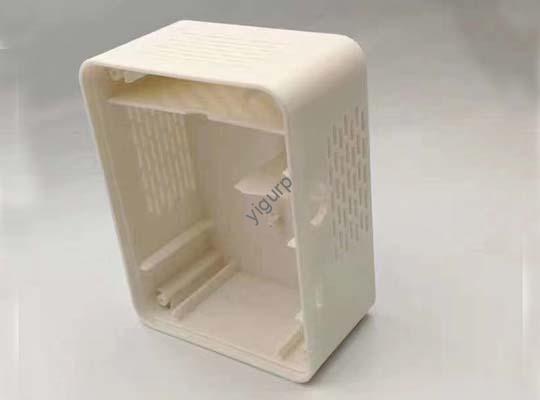
Se stai lavorando allo sviluppo del prodotto, sia per l'elettronica di consumo, dispositivi medici, o strumenti industriali: probabilmente hai affrontato la sfida di trasformare un progetto 2D in un modello fisico. Ecco dove CNC plastic prototype processing entra. In termini semplici, è una tecnica di produzione che utilizza il controllo numerico computerizzato (CNC) machines to carve plastic materials into precise prototypes. These prototypes let you test design fit, verificare la funzionalità, and spot flaws early—saving you from costly mistakes in full-scale production. Let’s dive into everything you need to know to use this process effectively.
1. Common Plastic Materials for CNC Prototype Processing
Not all plastics are the same for CNC prototypes. The material you pick depends on your product’s end use, like impact resistance or transparency. Below is a detailed table of the most popular options, i loro tratti chiave, and ideal applications:
| Plastic Material | Proprietà chiave | Precisione della tolleranza | Typical Application |
| ABS (Acrilonitrile Butadiene Stirene) | Elevata resistenza agli urti (15 kj /), facile da lavorare, basso costo (\(1–)3 al kg) | ±0,02 mm | Parti di giocattoli, involucri di elettronica di consumo (per esempio., telecomandi) |
| computer (Policarbonato) | Trasparente (85% trasmissione della luce), elevata resistenza al calore (melting point 220°C) | ±0,03 mm | Coperture leggere, alloggiamenti per dispositivi medici, safety goggles |
| PMMA (Acrilico) | Ottima trasparenza (92% trasmissione della luce), resistente ai graffi | ±0.015 mm | Display panels, componenti ottici (per esempio., lenti), segnaletica |
| PA (Nylon) | Elevata resistenza all'usura, buona flessibilità, oil-resistant | ±0,025 mm | Ingranaggi, cuscinetti, parti interne automobilistiche (per esempio., maniglie delle porte) |
| POM (Acetale) | Basso coefficiente di attrito (0.2), elevata rigidità | ±0,02 mm | Parti di precisione (per esempio., cerniere, componenti meccanici), valvole |
| PP (Polipropilene) | Resistente agli agenti chimici, leggero (0.9 g/cm³), basso costo (\(0.8–)2 al kg) | ±0,03 mm | Contenitori per alimenti, attrezzature da laboratorio, paraurti automobilistici (small prototypes) |
2. Step-by-Step Workflow of CNC Plastic Prototype Processing
Creating a CNC plastic prototype follows a clear, repeatable process to ensure accuracy. Ecco i 6 key steps, with details to help you avoid common pitfalls:
- Revisione del disegno: Primo, your team checks the client’s 2D/3D design drawings. This step is to catch issues like unmachinable shapes or unclear dimensions—for example, a slot that’s too narrow for CNC tools to reach. Fixing these early saves time later.
- Drawing Breakdown : Split the assembly drawing into individual parts. Per esempio, if your prototype is a plastic toy car, you’ll separate the body, ruote, and axle into single components. This makes machining easier and lets you produce parts in parallel.
- Programmazione CNC: Use CAM (Produzione assistita da computer) software (per esempio., Mastercam, Fusione 360) to write the machining code. The code tells the CNC machine how fast to cut, which tools to use, and where to remove material. For plastic, slower cutting speeds (500–1500 rpm) are often used to prevent melting.
- Preparazione del materiale: Cut the plastic into a “blank” (a solid block) that’s slightly larger than the final prototype. Per esempio, if your part is 10cm × 5cm × 3cm, use a blank of 11cm × 6cm × 4cm to leave room for cutting.
- Lavorazione CNC: Load the blank into the CNC machine (usually a CNC mill for plastics) and run the program. The machine uses rotating tools (frese, trapani) per rimuovere la plastica in eccesso, creating the prototype shape. Most CNC plastic prototypes reach a precision of ±0.01–0.03 mm—accurate enough for most product tests.
- Manual Finishing: Dopo la lavorazione, the prototype may have small burrs (plastic shavings) o bordi irregolari. Usa la carta vetrata (400–1000 grit) to smooth surfaces, and acetone (for ABS/PMMA) to polish if needed. This step improves appearance and ensures the prototype feels like the final product.
3. Why CNC Plastic Prototype Processing Beats 3D Printing for Many Projects
You might wonder: Why choose CNC over 3D printing for plastic prototypes? Ecco 4 key advantages that solve common product development problems:
- Better Material Performance: 3D-printed plastics are often brittle or have layered structures. CNC prototypes use solid plastic blocks, so they have the same strength, flessibilità, and chemical resistance as the final product. Per esempio, a CNC-machined Nylon gear will wear like a production gear—something a 3D-printed one can’t match.
- Higher Precision: As shown in the material table, CNC plastic prototypes hit tolerances of ±0.015 mm (per PMMA), while 3D printing usually only reaches ±0.1 mm. This is critical for parts that need to fit together, like a plastic hinge or a medical device component.
- Faster for Medium-to-Large Parts: For parts larger than 10cm × 10cm, CNC machining is faster. A 3D-printed plastic panel might take 8–12 hours, but a CNC machine can make the same part in 2–4 hours—great for tight deadlines.
- Lower Cost for Small Batches: If you need 5–50 prototypes, CNC is cheaper. 3D printing requires time to set up and often wastes material, while CNC uses almost all the plastic blank. Per esempio, 10 ABS prototypes cost 20–30% less with CNC than 3D printing.
4. When to Use CNC Plastic Prototype Processing (Key Scenarios)
CNC plastic prototyping isn’t just for “any” project—it’s best for specific needs. Ecco i migliori 3 scenarios where it’s the ideal choice:
- Convalida del progetto: When you need to check if parts fit together (per esempio., a plastic phone case and its battery cover). CNC’s precision ensures the fit is accurate, so you don’t find out about issues during production.
- Function Testing: If your product needs to work under stress—like a plastic handle that must hold 5kg—CNC prototypes use real plastic, so test results are reliable. 3D-printed prototypes might break early and give false results.
- Visual Presentations: For showing clients or investors a “final-looking” product. CNC’s smooth surfaces and accurate shapes make the prototype look like it came from a production line, which builds confidence.
Yigu Technology’s View on CNC Plastic Prototype Processing
Alla tecnologia Yigu, we see CNC plastic prototype processing as a must-have for product teams. It solves a big pain point: turning ideas into testable, real-world models quickly. We’ve helped clients cut design iteration time by 35%—for example, a consumer electronics firm used our CNC prototypes to fix a phone case fit issue in 2 giorni, instead of the 5 days 3D printing would take. Our team uses high-speed CNC mills for plastics, ensuring ±0.01 mm precision, and offers custom finishing to match your final product’s look. For businesses that value speed, precisione, and reliable testing, CNC plastic prototyping is the way to go.
FAQ About CNC Plastic Prototype Processing
- How long does it take to make a CNC plastic prototype?
It depends on size and complexity. Piccolo, parti semplici (per esempio., a 5cm × 5cm plastic bracket) take 1–2 days. Larger or complex parts (per esempio., a 20cm × 15cm PC display cover) impiegare 3-5 giorni, including manual finishing.
- Can CNC plastic prototypes be colored to match the final product?
SÌ! Dopo la lavorazione, you can add color via painting, dyeing (for ABS/PA), O (film lamination). Per esempio, we often dye ABS prototypes to match a client’s brand color—with a 95% color match accuracy.
- Is CNC plastic prototyping suitable for flexible plastics (per esempio., soft PA)?
Assolutamente. We adjust machining parameters (slower speed, sharper tools) to avoid deforming flexible plastics. For soft PA prototypes, we’ve achieved the same flexibility as production parts—perfect for testing items like plastic gaskets.