
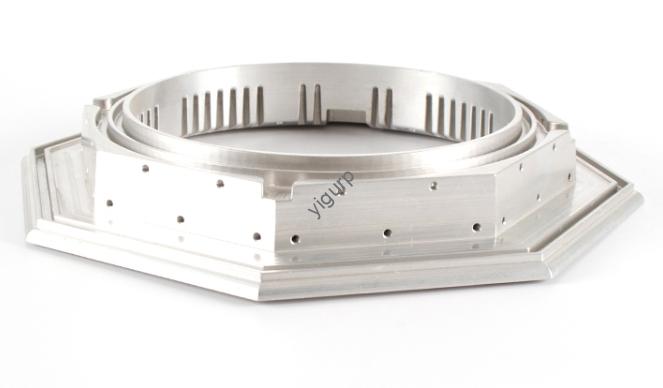
Se sei un ingegnere di prodotto o un professionista dell'approvvigionamento incaricato di creare prototipi precisi rotondi o simili, CNC circular prototype machining is your go-to solution. Questo processo controllato da computer trasforma le materie prime in parti circolari precise, fondamentali per convalidare la progettazione di prodotti in settori come quello automobilistico, aerospaziale, e dispositivi medici. Esploriamo come funziona, esempi del mondo reale, and key strategies to avoid common pitfalls.
What Is CNC Circular Prototype Machining?
CNC circular prototype machining uses computer numerical control (CNC) technology to manufacture round or round-like prototypes. These prototypes—such as gears, alberi, or cylindrical housings—are essential for testing fit, funzione, and durability before mass production. A differenza della lavorazione manuale, CNC ensures consistency: even small batches (1-10 pezzi) have identical dimensions, con tolleranze strette fino a ±0,005 mm.
Take an aerospace startup, Per esempio. Ne avevano bisogno 5 titanium circular shaft prototypes (15 diametro mm, 100 lunghezza mm) to test in a new engine component. Using CNC circular machining, they achieved a roundness error of just 0.002 mm—well below the required 0.008 mm. Manual machining would have taken 3x longer and failed to meet the roundness standard.
Step-by-Step Process of CNC Circular Prototype Machining
The process has 8 fasi chiave, each vital to getting a high-quality prototype. We’ll use a case study of an automotive parts maker (prototyping a 25 mm diameter aluminum alloy gear) to illustrate each step.
1. Progetto & Programmazione
Primo, engineers create a 3D model of the circular prototype (using software like AutoCAD or SolidWorks). Poi, they write a CNC program that defines the machining path, velocità, and tool movements—precision here eliminates costly mistakes later.
- Case Example: The automotive maker’s 3D model specified a gear with 20 teeth and a 25 diametro esterno mm. The CNC program used G-code to map a spiral cutting path, ensuring each tooth had the same shape.
- Key Tool: Most shops use CAM (Produzione assistita da computer) software to convert 3D models into G-code—saving 50% of programming time compared to manual coding.
2. Selezione dei materiali
Choose raw materials based on the prototype’s purpose. Per esempio, use aluminum for lightweight parts or stainless steel for corrosion-resistant components.
| Materiale | Ideale per | Key Property | Example Use in the Automotive Case |
| Lega di alluminio (6061) | Leggero, low-cost prototypes | Densità: 2.7 g/cm³; Resistenza alla trazione: 310 MPa | Gear prototype (reduces testing weight) |
| Acciaio inossidabile (304) | Corrosion-resistant parts | Rust-proof; Durezza: 187 HB | Marine equipment prototypes |
| Titanio (Ti-6Al-4V) | Alta resistenza, high-temperature parts | Strength-to-weight ratio: 260 MPa/(g/cm³) | Aerospace engine shafts |
3. Machine & Impostazione dello strumento
Select the right CNC machine (usually a CNC lathe for circular parts) and tools. The tool’s material and size must match the raw material to avoid wear or poor surface finish.
In the automotive case, the team used a CNC lathe with a 3-jaw chuck (to hold the aluminum securely). They chose a carbide cutting tool (WC-Co) because it works well with aluminum—reducing tool wear by 40% compared to high-speed steel tools.
4. Machining Strategy Planning
For circular prototypes, focus on path and cutting method to prevent material deformation. Common strategies include:
- Spiral Cutting: Best for gears or threaded parts (ensures even material removal).
- Face Cutting: Used to smooth the prototype’s end surfaces.
- Peck Drilling: For holes in the circular part (avoids chip buildup).
The automotive team used spiral cutting for the gear’s teeth, with a cutting depth of 0.1 mm per pass—this prevented the aluminum from warping (a common issue with deeper passes).
5. Roughing & Finitura
Primo, roughing removes excess material quickly. Poi, finishing polishes the surface and refines dimensions.
- Case Example:
- Roughing: The CNC lathe removed 80% of the aluminum (from a 35 mm diameter blank to 27 mm) A 1,500 RPM and a feed rate of 0.2 mm/rev. This took 8 minuti.
- Finitura: The machine cut from 27 mm to the final 25 mm diameter at 2,000 giri al minuto (slower feed rate: 0.05 mm/rev) to get a smooth surface (Ra 0.8 µm). This added 5 minuti.
6. Controllo qualità
Check the prototype’s dimensions and surface finish at every stage. Use tools like:
- Digital Caliper: Measures diameter (precisione: ±0,001 mm).
- Macchina di misura a coordinate (CMM): Scans the entire part to check roundness and symmetry.
- Surface Roughness Tester: Verifies Ra values (critical for parts that need smooth movement).
In the automotive case, the CMM found one gear had a 0.003 mm roundness error (just under the 0.005 mm limit). The team adjusted the cutting path for the next prototypes, fixing the issue.
7. Post-elaborazione
Dopo la lavorazione, improve the prototype’s appearance and performance with these steps:
- Pulizia: Use a degreaser to remove cutting fluid (prevents residue buildup).
- Sbavatura: File or sand sharp edges (the automotive team used a 200-grit sandpaper for this).
- Spraying/Coating: Add a protective layer (per esempio., anodizing for aluminum to prevent scratches).
8. Error Control
Monitor for common errors and adjust immediately. Here’s how the automotive team handled issues:
| Error Type | Impact | Soluzione |
| Roundness Error (>0.005 mm) | Gear won’t fit with other parts | Reduced finishing feed rate from 0.08 A 0.05 mm/rev |
| Surface Scratches (Ra >1.6 µm) | Poor aesthetics; increased friction | Replaced worn carbide tool; added a coolant (5% concentrazione) |
| Material Warping | Prototype’s length increased by 0.1 mm | Reduced roughing pass depth from 0.2 A 0.1 mm; cooled the part mid-process |
Technological Innovations in CNC Circular Prototype Machining
New tech is making the process faster and more precise:
- Fresatura ad alta velocità: Uses speeds over 10,000 RPM—cuts machining time by 30% (great for plastic prototypes).
- Dry Cutting: No cutting fluid—reduces waste and costs (works for aluminum and brass).
- AI-Powered Monitoring: Sensors detect tool wear in real time (prevents 90% of surface defects).
A medical device company used AI monitoring for stainless steel circular prototypes. The system alerted operators when the tool was 80% worn, so they replaced it before it caused scratches—saving 10 prototypes from being scrapped.
Environmental Protection & Safety
Don’t overlook sustainability and safety:
- Cutting Fluid Disposal: Recycle or treat fluid (the automotive team used a filtration system to reuse 70% of their coolant).
- Waste Management: Recycle metal shavings (aluminum shavings can be melted and reused—reducing material costs by 20%).
- Safety Gear: Operators must wear gloves and safety glasses (prevents cuts from sharp metal edges).
Yigu Technology’s View on CNC Circular Prototype Machining
Alla tecnologia Yigu, we’ve supported 400+ clients with CNC circular prototype machining. We believe this process is irreplaceable for fast, accurate prototyping—especially for parts where roundness and symmetry are non-negotiable. Our team uses AI monitoring and high-speed milling to cut lead times to 3-5 giorni (down from the industry average of 7-10 giorni). For procurement teams, this means lower costs (no wasted materials) and faster design validation. We also prioritize sustainability, recycling 80% of metal waste to reduce environmental impact.
Domande frequenti
- Q: Qual è la quantità minima dell'ordine (MOQ) for CNC circular prototype machining?
UN: Most shops accept MOQs of 1 piece—perfect for early-stage design testing. Per esempio, we’ve made single titanium shaft prototypes for aerospace startups.
- Q: How long does it take to make a CNC circular prototype?
UN: It depends on size and complexity. A simple 10 mm diameter shaft takes 1-2 giorni; a complex gear (like the automotive case) takes 3-4 giorni.
- Q: Can CNC circular prototype machining handle plastic materials?
UN: SÌ! It works well with plastics like ABS, computer, and POM. We recently made 5 ABS circular housing prototypes for a consumer electronics client—achieving a smooth Ra 0.4 μm surface finish.