
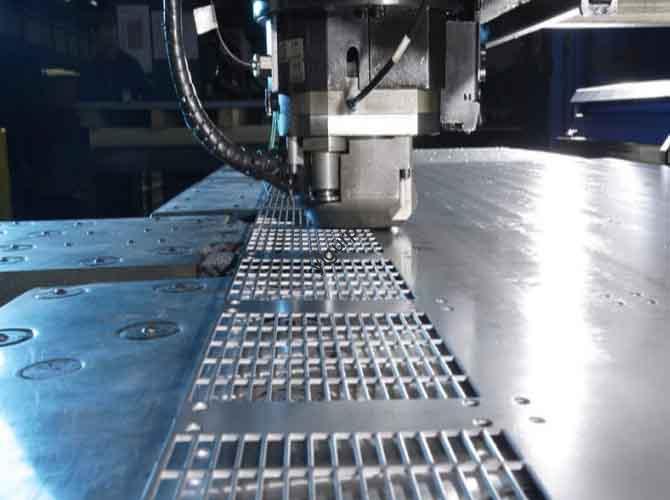
Se ti sei mai chiesto come i produttori creano sedi per chiavetta precise, spline, or complex internal shapes in metal parts—especially in high-volume production—you’re likely thinking aboutbroaching in machining. Che tu sia un nuovo macchinista che sta imparando le corde, un responsabile di produzione che cerca di ottimizzare i processi, o un ingegnere che progetta parti per settori come quello automobilistico o aerospaziale, this guide will break down everything you need to know. We’ll start with the basics, move to tools and machines, and even dive into real-world applications and common challenges—so you can walk away with actionable insights, not just theory.
1. What Is Broaching in Machining? The Fundamentals
Let’s start simple: brocciatura is a machining process that uses a specialized tool called abroach to remove material in a single, linear stroke. Unlike milling or drilling, which require multiple passes, broaching gets the job done in one go—making it a workhorse for high-volume jobs where precision and speed matter.
Al suo centro, broaching relies on a tool with a series of progressively larger teeth. As the tool (or workpiece) moves in a straight line (called abroaching stroke), each tooth cuts away a small amount of material, until the final tooth achieves the desired shape and size.
IL 3 Main Types of Broaching (With Real-World Examples)
Not all broaching is the same—its application depends on the part’s geometry and whether you’re cutting inside or outside the workpiece. Here’s how the most common types break down:
| Type of Broaching | Come funziona | Key Use Case | Esempio |
|---|---|---|---|
| Internal Broaching | The broach is pulled or pushedinside a pre-drilled hole to create internal features (per esempio., scanalature per chiavette, spline). | Creating internal splines in transmission shafts (automobilistico). | A Tier 1 auto supplier usespull broaching to add splines to 500+ drive shafts per hour—faster than milling and with tighter tolerances. |
| External Broaching | The broach cutsoutside the workpiece to shape external surfaces (per esempio., denti dell'ingranaggio, flat edges). | Manufacturing gear blanks for industrial motors. | An aerospace shop useslinear broaching to machine the external profile of turbine blades—ensuring a smooth surface finish that reduces aerodynamic drag. |
| Surface Broaching | The broach skims thetop surface of a workpiece to flatten or add shallow features (per esempio., slot, serrations). | Adding serrations to tool handles or conveyor belts. | A tool manufacturer usescontinuous broaching (where the workpiece moves past a stationary broach) to add serrations to 1,000+ plier handles daily—cutting production time by 40% contro. macinazione. |
2. Strumenti di brocciatura: Progetto, Materiali, and Maintenance
ILbroach tool is the star of the show—and its design directly impacts quality, velocità, e costo. A poorly designed or worn broach can ruin parts, slow down production, and eat into profits. Let’s break down what makes a broach effective, and how to keep it working well.
Key Parts of a Broach Tool (And Why They Matter)
Every broach has three main sections of teeth, each with a specific job:
- Roughing Teeth: The first set of teeth—they remove the bulk del materiale (fino a 90% in some cases). These teeth are spaced farther apart (wider tooth pitch) to handle heavy chip loads without breaking.
- Semi-finishing Teeth: These follow the roughing teeth, trimming away smaller amounts of material to refine the shape. Their pitch is tighter, and their edges are sharper to prepare the part for the final cut.
- Finishing Teeth: The last set of teeth—they create the final shape, misurare, e finitura superficiale. These teeth have the most precise dimensions, with carefully ground rake angles (to reduce cutting force) E relief angles (to prevent the tool from rubbing against the part).
Broach Materials: Choosing the Right One for Your Job
Broaches are made from hard, wear-resistant materials to stand up to repeated cutting. The most common options are:
- High-Speed Steel (HSS): The go-to for most applications (per esempio., machining steel, alluminio). HSS is tough, easy to sharpen, and cost-effective for medium-volume jobs (10,000–50.000 parti).
- Carbide Broach: Per materiali duri (per esempio., titanio, acciaio inossidabile) or high-volume production (100,000+ parti). Carbide stays sharp longer than HSS but is more brittle—so it requires careful handling to avoid chipping.
Maintenance Tip: Sharpening and Regrinding
A dull broach doesn’t just produce bad parts—it also increases cutting forces, which can damage your machine. Here’s what you need to know:
- Broach Sharpening: Use a dedicated broach sharpener to grind the top of the teeth (never the sides, as this changes the tool’s dimensions). Most shops sharpen HSS broaches after 5,000–10,000 strokes.
- Broach Regrinding: When teeth become too worn to sharpen (per esempio., Dopo 50,000+ strokes), regrind the entire tool to restore its original shape. This can extend a broach’s life by 2–3 times—saving you money on new tools.
3. Broaching Operations: Applicazioni in tutti i settori
Broaching shines in jobs where precision and speed are non-negotiable. Let’s look at the most common operations and which industries rely on them.
Common Broaching Operations (With Use Cases)
- Keyway Broaching: Creates slots (scanalature per chiavette) in shafts and hubs to lock them together (per esempio., a motor shaft and pulley). Esempio: A lawnmower manufacturer uses keyway broaching to produce 2,000+ shafts daily—ensuring the pulley never slips during use.
- Spline Broaching: Adds multiple parallel slots (spline) to a shaft or hole for torque transfer (per esempio., alberi di trasmissione automobilistici). Esempio: A luxury car brand uses spline broaching to make transmission shafts that handle 500+ lb-ft of torque—with tolerances as tight as ±0.001 inches.
- Gear Broaching: Machines gear teeth directly into a workpiece (faster than hobbing for large gears). Esempio: A wind turbine company uses gear broaching to make 100+ large gears per month—each with 50+ teeth and a surface finish of 0.8 Ra (roughness average).
- Hole Broaching: Enlarges or shapes pre-drilled holes (per esempio., square holes in tooling plates). Esempio: A tool-and-die shop uses hole broaching to create square holes in 500+ clamping plates—something that’s nearly impossible with drilling or milling.
Top Industries Using Broaching
- Automobilistico: 60% of all broached parts end up in cars (alberi, ingranaggi, componenti dei freni). The high production volumes (10,000+ parti al giorno) make broaching ideal.
- Aerospaziale: Broaching is used for turbine blades, involucri del motore, and landing gear parts—where precision (±0,0005 pollici) and material strength (titanio, Inconel) sono critici.
- Heavy Equipment: Manufacturers of tractors, excavators, and trucks use broaching for large shafts and gears that handle heavy loads.
4. Broaching Machines: Tipi, Impostare, and Workholding
Even the best broach won’t work without the right machine. Broaching machines come in different sizes and configurations—each suited to specific jobs. Let’s break down the options.
4 Common Types of Broaching Machines
| Tipo di macchina | Ideale per | Caratteristica fondamentale | Example Use Case |
|---|---|---|---|
| Vertical Broaching Machine | Brocciatura interna (per esempio., keyways in small shafts). | The broach moves up/down vertically—saves floor space. | A small machine shop uses a vertical hydraulic broaching machine to make keyways in 500+ small motor shafts per day. |
| Horizontal Broaching Machine | External or long-part broaching (per esempio., spazi vuoti degli ingranaggi). | The broach moves left/right horizontally—handles longer workpieces. | A large automotive supplier uses a horizontal CNC broaching machine to broach gears up to 3 piedi lunghi. |
| Hydraulic Broaching Machine | Heavy-duty jobs (per esempio., thick material cutting). | Uses hydraulic power for consistent force—ideal for HSS or carbide broaches. | A steel fabricator uses a hydraulic broaching machine to cut splines in 2-inch-thick steel shafts. |
| CNC Broaching Machine | Complesso, high-precision jobs (per esempio., parti aerospaziali). | Computer-controlled for repeatability—can adjust speed, feed, and stroke length automatically. | An aerospace contractor uses a CNC broaching machine to machine turbine blades with 5-axis control—ensuring each blade is identical. |
Configurazione della macchina: Critical Steps for Success
Poor setup is one of the biggest causes of broaching errors (per esempio., uneven cuts, rottura dell'utensile). Here’s a step-by-step checklist to get it right:
- Secure the Workpiece: Utilizzare un broaching fixture E workholding utensili (per esempio., clamps, trappole) to keep the part stationary. Even 0.001 inches of movement can ruin the cut.
- Align the Broach: Make sure the broach is perfectly straight with the workpiece. Use a laser alignment tool for precision.
- Set the Stroke Length: The stroke should be long enough to cover the entire part (add 1–2 inches for safety). Too short, and the broach won’t finish the cut; too long, e perdi tempo.
- Adjust Cutting Speed: Start with the manufacturer’s recommendations (per esempio., 10–20 ft/min for steel, 20–30 ft/min for aluminum). Increase slowly if the cut is smooth—decrease if you see sparks or hear a loud noise.
5. Broaching Advantages, Limitazioni, and Optimization Tips
No machining process is perfect—broaching has clear strengths, but it’s not right for every job. Let’s weigh the pros and cons, and share how to get the most out of your broaching operations.
Advantages of Broaching (Why It’s Used for High-Volume Jobs)
- Tasso di produzione elevato: Completes a cut in one stroke—up to 10x faster than milling for simple shapes (per esempio., scanalature per chiavette). Dati: A shop can produce 1,000+ broached parts per hour, contro. 100–200 with milling.
- Excellent Surface Finish: Finishing teeth create smooth surfaces (0.4–1.6 Ra)—often eliminating the need for secondary grinding.
- Tolleranze strette: Achieves tolerances of ±0.0005 inches (for CNC broaching)—critical for aerospace and automotive parts.
- Coerenza: Once set up, every part is identical—great for mass production.
Limitations of Broaching (When to Choose Another Process)
- High Initial Tooling Cost: A custom broach can cost $500–$5,000 (or more for carbide)—not worth it for low-volume jobs (meno di 1,000 parti).
- Complex Tool Manufacturing: Broaches for non-circular shapes (per esempio., square holes) require specialized design and machining—lead times can be 4–6 weeks.
- Limited to Specific Geometries: Broaching works best for linear shapes (scanalature per chiavette, spline)—it can’t handle curved or 3D shapes (use milling or 3D printing instead).
- Chip Removal Challenges: If chips get stuck between the broach and workpiece, they can scratch the part or break the tool.
Optimization Tips: Boost Speed, Qualità, and Tool Life
- Use the Right Coolant: Coolant reduces friction and heat—extending tool life by 30–50%. Per acciaio, use a water-soluble coolant (10–15% concentration); per alluminio, use a mineral oil-based coolant.
- Optimize Feed per Tooth: IL feed per tooth (amount of material each tooth removes) should be 0.001–0.003 inches. Too much, and you’ll break the tool; too little, and you’ll waste time.
- Control Vibration: Use a rigid machine and fixture—vibration causes uneven cuts and tool wear. If you see vibration, reduce cutting speed or add damping pads to the machine.
- Monitor Tool Wear: Check the broach after every 500–1,000 strokes for chipping or dullness. Replace or sharpen the tool early to avoid part defects.
6. Yigu Technology’s Perspective on Broaching in Machining
Alla tecnologia Yigu, we’ve supported manufacturers in optimizing broaching processes for over a decade—from small shops to large automotive suppliers. What stands out most is how broaching balances precision and productivity—when used correctly, it’s one of the most cost-effective ways to produce high-volume, parti complesse.
We often see clients overlook maintenance (per esempio., skipping broach sharpening) to save time—but this backfires. A dull broach can increase scrap rates by 20–30% and damage machines, costing more in the long run. Il nostro consiglio: Invest in quality tools (carbide for high-volume jobs) and schedule regular maintenance—you’ll see a 15–25% boost in production efficiency.
We also recommend CNC broaching for clients in aerospace or medical manufacturing. The computer control ensures repeatability, even for parts with tight tolerances, and integrates easily with other automated processes (per esempio., carico/scarico robotizzato). As materials like titanium become more common, we’re seeing a shift toward carbide broaches and high-pressure coolant systems—trends that will only grow in the next 5 anni.
Domande frequenti: Common Questions About Broaching in Machining
Q1: Is broaching better than milling for keyways?
UN: For high-volume jobs (1,000+ parti), yes—broaching is 5–10x faster and produces a smoother finish. For low-volume jobs (meno di 100 parti), milling is cheaper (no custom broach needed).
Q2: How long does a broach tool last?
UN: It depends on the material and usage. HSS broaches last 10,000–50,000 strokes; carbide broaches last 50,000–200,000 strokes. Regular sharpening can extend life by 2–3 times.
Q3: Can broaching be used for non-metallic materials?
UN: Yes—broaching works for plastics, compositi, and even wood (per applicazioni specializzate). You’ll need a softer broach (per esempio., HSS) and lower cutting speeds to avoid material melting or chipping.
Q4: What’s the maximum size of a part that can be broached?
UN: Most broaching machines handle parts up to 6 feet long and 2 feet in diameter. Per parti più grandi (per esempio., wind turbine gears), custom horizontal broaching machines are available.
Q5: How much does a broaching machine cost?
UN: Entry-level vertical machines start at $10,000–$20,000; high-end CNC horizontal machines cost $100,000–$500,000. Used machines can be 30–50% cheaper.