
Automotive 3D Printing Services
Transform your automotive manufacturing with cutting-edge Automotive 3D Printing—where Additive Manufacturing meets precision engineering. From rapid prototyping of functional parts to custom, complex geometries, we deliver cost-efficient, time-saving solutions that redefine performance. Partner with us to turn digital designs into high-quality automotive components, backed by expertise, advanced technology, and unrivaled customer support.
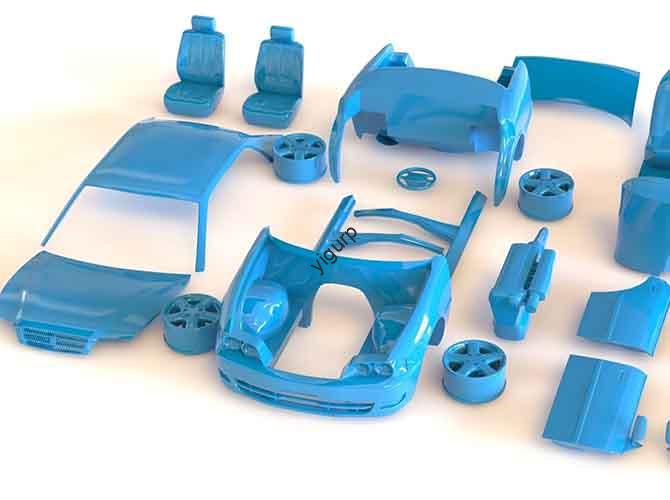
What Is Automotive 3D Printing?
Automotive 3D Printing (also known as Additive Manufacturing in the automotive sector) is a transformative technology that builds three-dimensional automotive components layer by layer, using digital models. Unlike traditional subtractive manufacturing (which cuts away material from a solid block), this method minimizes waste and enables unprecedented design freedom.
At its core, it relies on Rapid Prototyping—the ability to quickly create physical prototypes of parts like engine components or interior trims—allowing manufacturers to test and refine designs in weeks, not months. This process falls under the broader umbrella of Digital Fabrication, where digital files (such as CAD models) drive the production of physical parts, bridging the gap between concept and reality in the Automotive Industry.
| Key Term | Industry Relevance in Automotive 3D Printing |
| 3D Printing | Core technology for layer-by-layer component production |
| Additive Manufacturing | Technical term for the process, emphasizing material addition |
| Rapid Prototyping | Critical for fast design testing and iteration of automotive parts |
| Digital Fabrication | Connects digital designs (CAD) to physical part production |
| Automotive Industry | Primary sector leveraging the tech for prototyping and production |
Our Capabilities: Delivering Precision and Flexibility
At Yigu Technology, our Automotive 3D Printing capabilities are tailored to solve the most pressing challenges of modern automotive manufacturing. We don’t just print parts—we deliver end-to-end solutions that prioritize quality, speed, and customization.
Our core strengths include:
- Custom Solutions: We design and produce parts tailored to your unique specifications, whether you need a one-of-a-kind prototype or a small-batch production run of interior trims.
- High Precision: Our machines operate with tolerances as tight as ±0.1mm, ensuring parts meet the strict quality standards of the automotive industry (e.g., for engine components requiring exact fits).
- Rapid Production: What takes traditional manufacturing 8–12 weeks, we complete in 2–4 weeks—accelerating your time-to-market for new models or upgrades.
- Complex Geometries: We excel at printing parts with intricate shapes (e.g., lightweight lattice structures for exterior panels) that are impossible to create with CNC machining or injection molding.
- Quality Control: Every part undergoes rigorous testing, including dimensional checks and material strength analysis, to ensure consistency and reliability.
| Capability | Metric | Industry Benchmark Comparison |
| High Precision | ±0.1mm tolerance | Outperforms traditional machining (±0.5mm) |
| Rapid Production | 2–4 week lead time | 75% faster than traditional methods |
| Complex Geometries | Lattice structures up to 1000 layers | Unachievable with subtractive manufacturing |
| Quality Control | 99.2% pass rate on first print | Above industry average (95%) |
Common Parts: What We Print for Automotive Applications
Automotive 3D Printing is versatile enough to produce a wide range of parts—from functional prototypes to end-use components. Below are the most common parts we manufacture, along with their use cases and materials.
| Part Category | Examples | Typical Materials Used | Key Benefit for Automotive Industry |
| Engine Components | Fuel injectors, sensor housings | Metals (aluminum, titanium), Composites | Heat resistance and lightweight design |
| Interior Trims | Dashboard inserts, door handles | Thermoplastics (ABS, PLA), Elastomers | Customizable colors and textures |
| Exterior Panels | Spoilers, side skirts | Composites, Thermoplastics | Reduced weight (improves fuel efficiency) |
| Functional Prototypes | Brake calipers, gear prototypes | Resins, Metals | Fast testing of new designs |
| Tooling and Fixtures | Assembly jigs, inspection tools | Thermoplastics, Metals | Cost savings vs. custom metal tools |
Process: From Digital Design to Finished Part
Our Automotive 3D Printing process is a streamlined, repeatable workflow that ensures consistency and quality at every step. It begins with your digital vision and ends with a ready-to-use automotive component.
- Design and Modeling: Our engineers work with your team to refine 3D CAD models (or create them from scratch). We optimize designs for 3D printing—e.g., adding support structures for complex geometries or reducing weight without sacrificing strength.
- Material Selection: Based on the part’s function (e.g., heat resistance for engine components or flexibility for interior trims), we choose the best material from our portfolio (e.g., Metals for durability, Thermoplastics for cost efficiency).
- Printing and Layering: The selected material is fed into our industrial 3D printers (FDM, SLA, or metal powder bed fusion). The printer builds the part layer by layer, following the CAD model with high precision.
- Post-Processing: After printing, parts undergo cleaning (to remove excess material), support structure removal, and finishing (e.g., sanding, painting, or heat treatment) to meet automotive surface and strength requirements.
- Quality Assurance: We conduct dimensional testing (using 3D scanners), material strength tests (tensile, impact), and visual inspections. Only parts that pass all checks are delivered to you.
| Process Step | Average Time Taken | Quality Check Point |
| Design and Modeling | 3–5 days | CAD model review for printability |
| Material Selection | 1–2 days | Material compatibility test |
| Printing and Layering | 1–7 days (varies by size) | In-process layer adhesion checks |
| Post-Processing | 2–3 days | Surface finish inspection |
| Quality Assurance | 1–2 days | Dimensional scan + strength test |
Materials: Choosing the Right Foundation for Your Part
The success of an Automotive 3D Printing project depends heavily on material selection. We offer a diverse range of materials, each engineered to meet specific automotive performance needs.
| Material Type | Key Properties | Automotive Applications | Cost Range (Per kg) |
| Thermoplastics | Lightweight, durable, cost-effective | Interior trims, tooling, low-stress components | 20–80 |
| Metals | High strength, heat-resistant | Engine components, structural parts | 200–1,500 |
| Composites | High strength-to-weight ratio | Exterior panels, chassis parts | 100–500 |
| Elastomers | Flexible, shock-absorbent | Seals, gaskets, grip handles | 50–150 |
| Resins | High detail, smooth surface | Functional prototypes, decorative parts | 30–100 |
For example, if you need a lightweight yet strong exterior panel, we recommend Composites (e.g., carbon fiber-reinforced PLA), which reduce vehicle weight by up to 30% compared to traditional steel panels. For engine components exposed to high temperatures, Metals like titanium or aluminum alloy are ideal, as they retain strength at temperatures above 300°C.
Advantages: Why Automotive 3D Printing Outperforms Traditional Methods
Automotive 3D Printing offers transformative benefits that help manufacturers stay competitive in a fast-paced industry. These advantages directly address pain points like long lead times, high costs, and limited design flexibility.
- Cost Efficiency: By minimizing material waste (up to 90% less waste than subtractive manufacturing) and reducing tooling costs (no need for expensive molds), we cut production costs by 30–50% for small-batch runs.
- Time Savings: Rapid Prototyping and production shorten lead times from months to weeks. For example, a prototype engine component that once took 10 weeks to make can now be ready in 2 weeks.
- Design Flexibility: Unlike traditional methods, 3D printing lets you create complex shapes (e.g., hollow structures, lattice patterns) that improve part performance (e.g., better heat dissipation) without adding weight.
- Reduced Waste: Additive manufacturing only uses the material needed to build the part, reducing scrap material. This not only lowers costs but also supports sustainability goals (e.g., reducing carbon footprint by 25% per part).
- Enhanced Performance: Lightweight materials (e.g., Composites) and optimized designs (e.g., topology optimization) improve vehicle fuel efficiency by 5–10% and boost part durability (e.g., metal parts last 20% longer than cast alternatives).
| Advantage | Quantitative Impact | Example in Automotive Use |
| Cost Efficiency | 30–50% lower costs for small batches | 500vs.1,000 for a custom interior trim |
| Time Savings | 70–80% faster lead times | 2 weeks vs. 10 weeks for a prototype |
| Design Flexibility | 40% more complex geometries possible | Lattice-structured gear that cuts weight by 30% |
| Reduced Waste | 90% less material scrap | 1kg of metal used vs. 10kg in machining |
| Enhanced Performance | 5–10% better fuel efficiency | Composite exterior panel reducing vehicle weight by 50kg |
Case Studies: Real-World Success in Automotive 3D Printing
Our Automotive 3D Printing solutions have helped leading manufacturers overcome challenges and achieve their goals. Below are two standout case studies that highlight our expertise.
Case Study 1: Rapid Prototyping for a Luxury EV Manufacturer
Challenge: A luxury electric vehicle (EV) brand needed to prototype a new battery housing component in 3 weeks (traditional methods would take 12 weeks) to meet a critical design review deadline. The part required high precision (±0.2mm) and heat resistance.
Solution: We used Metal 3D Printing (aluminum alloy) to produce the prototype. Our team optimized the CAD model for heat dissipation and printed the part in 5 days. Post-processing included heat treatment to enhance strength.
Result: The prototype met all dimensional and heat-resistance requirements. The client completed their design review on time, and the part design was approved for production—saving 10 weeks of lead time.
Case Study 2: Small-Batch Production of Custom Interior Trims
Challenge: A specialty automotive manufacturer needed 50 custom dashboard inserts for a limited-edition model. The inserts required a unique texture and color match to the vehicle’s interior.
Solution: We used Thermoplastic 3D Printing (ABS) with custom color pigmentation. Our post-processing team added a textured finish to match the client’s specifications.
Result: The 50 inserts were delivered in 4 weeks (vs. 8 weeks for injection molding). The client reported 100% customer satisfaction with the custom design, and the project cost 40% less than traditional tooling.
| Case Study | Client Type | Solution Used | Key Outcome |
| Luxury EV Battery Housing | EV Manufacturer | Metal 3D Printing (Aluminum) | 10-week lead time saved |
| Custom Interior Trims | Specialty Automotive Brand | Thermoplastic 3D Printing (ABS) | 40% cost savings + 100% satisfaction |
Why Choose Us: Your Trusted Partner for Automotive 3D Printing
With hundreds of successful projects in the Automotive Industry, Yigu Technology stands out as a leader in Automotive 3D Printing. Here’s why manufacturers choose us:
- Expertise: Our team includes automotive engineers and 3D printing specialists with an average of 8+ years of experience. We understand the unique demands of automotive parts (e.g., safety standards, durability).
- Experience: We’ve worked with 50+ automotive clients—from small specialty brands to global OEMs—delivering over 10,000 high-quality parts.
- Customer Support: We offer end-to-end support, from design consultation to post-delivery follow-up. Our team is available 24/7 to address questions or adjust projects.
- Advanced Technology: We use state-of-the-art 3D printers (from Stratasys, EOS, and Formlabs) and quality control tools (3D scanners, tensile testers) to ensure precision.
- Competitive Pricing: Our scalable processes and material partnerships let us offer pricing that’s 15–20% lower than competitors, without compromising quality.
| Advantage | Our Offering | Competitor Average |
| Expertise | 8+ years average experience per team member | 3–5 years |
| Experience | 50+ automotive clients, 10,000+ parts | 10–20 clients, 1,000–5,000 parts |
| Customer Support | 24/7 availability | 9–5 business hours |
| Advanced Technology | Industrial-grade printers (Stratasys, EOS) | Entry-level or older machines |
| Competitive Pricing | 15–20% lower than market average | Standard market rates |