
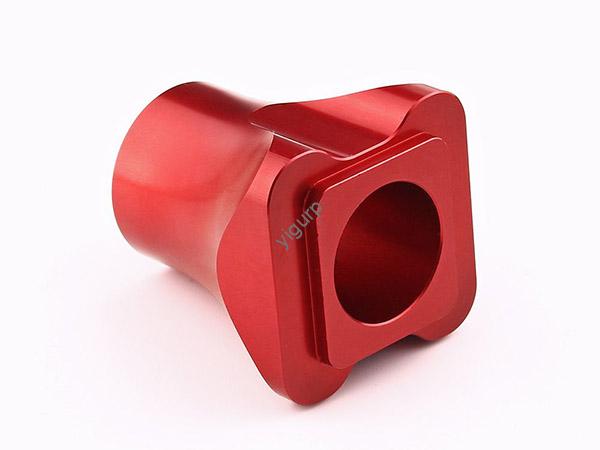
Se stai progettando componenti meccanici che devono resistere a sollecitazioni elevate, Indossare, o alberi industriali simili a impatti, ingranaggi automobilistici, o parti aerospaziali: hai bisogno di un materiale che bilanci la resistenza, tenacità, and machinability.AISI 4140 acciaio legato is the industry’s workhorse: come cromo-molibdeno (Cr-Mo) lega, it delivers exceptionalresistenza alla trazione, durezza, e resistenza alla fatica dopo il trattamento termico, outperforming plain carbon steels and even lower-alloy grades like AISI 4130. Questa guida ne analizza le proprietà, applicazioni del mondo reale, processo di produzione, and material comparisons to help you solve component design challenges across industries.
1. Proprietà dei materiali dell'AISI 4140 Acciaio legato
AISI 4140’s performance stems from its optimized Cr-Mo composition and heat-treatable design—chromium boosts corrosion resistance and hardenability, while molybdenum enhances high-temperature strength andlimite di fatica. Esploriamo nel dettaglio le sue principali proprietà.
1.1 Composizione chimica
AISI 4140 adheres to ASTM A29/A29M standards, with strict control over alloy elements to ensure consistent performance. Below is its typical composition:
| Elemento | Simbolo | Gamma di contenuti (%) | Ruolo chiave |
|---|---|---|---|
| Carbonio (C) | C | 0.38 – 0.43 | Enables heat treatment; aumentadurezza Eresistenza alla trazione |
| Cromo (Cr) | Cr | 0.80 – 1.10 | Miglioraresistenza alla corrosione e temprabilità; improves wear resistance |
| Molibdeno (Mo) | Mo | 0.15 – 0.25 | Aumenta la resistenza alle alte temperature; raiseslimite di fatica for cyclic loading |
| Manganese (Mn) | Mn | 0.75 – 1.00 | Affina la struttura del grano; miglioraduttilità without reducing strength |
| Silicio (E) | E | 0.15 – 0.35 | Aids deoxidation; supports structural stability at high temperatures |
| Fosforo (P) | P | ≤ 0.035 | Minimized to prevent brittle fracture in cold or high-stress conditions |
| Zolfo (S) | S | ≤ 0.040 | Controlled to improvelavorabilità (free-machining grades may have higher S) |
| Nichel (In) | In | ≤ 0.25 | Oligoelemento; slightly enhancestenacità all'impatto |
| Vanadio (V) | V | ≤ 0.03 | Oligoelemento; refines grains for uniform strength |
| Rame (Cu) | Cu | ≤ 0.30 | Oligoelemento; adds mild atmospheric corrosion resistance |
1.2 Proprietà fisiche
These traits make AISI 4140 suitable for diverse industrial environments—from automotive engines to aerospace components:
- Densità: 7.85 g/cm³ (come la maggior parte degli acciai al carbonio)—simplifies weight calculations for components like shafts or gears
- Punto di fusione: 1,425 – 1,450 °C (2,597 – 2,642 °F)—compatible with forging and welding processes
- Conducibilità termica: 42.0 Con/(m·K) A 20 °C; 38.0 Con/(m·K) A 300 °C—ensures even heat distribution during heat treatment
- Coefficiente di dilatazione termica: 11.5 × 10⁻⁶/°C (20 – 100 °C)—minimizes distortion during quenching and tempering
- Proprietà magnetiche: Ferromagnetic—enables non-destructive testing (NDT) like magnetic particle inspection to detect hidden defects.
1.3 Proprietà meccaniche
AISI 4140’s mechanical performance varies with heat treatment, but it consistently outperforms plain carbon steels. Below are typical values for common heat-treated conditions:
| Proprietà | Metodo di misurazione | Ricotto (Soft Condition) | Quenched & Tempered (300 °C) | Quenched & Tempered (600 °C) |
|---|---|---|---|---|
| Durezza (Rockwell) | HRC | 19 – 22 HRC | 50 – 53 HRC | 28 – 32 HRC |
| Durezza (Vickers) | alta tensione | 180 – 210 alta tensione | 480 – 510 alta tensione | 270 – 300 alta tensione |
| Resistenza alla trazione | MPa (ksi) | 650 MPa (94 ksi) | 1,700 MPa (247 ksi) | 950 MPa (138 ksi) |
| Forza di snervamento | MPa (ksi) | 400 MPa (58 ksi) | 1,500 MPa (218 ksi) | 800 MPa (116 ksi) |
| Allungamento | % (In 50 mm) | 25 – 30% | 8 – 10% | 18 – 20% |
| Resistenza all'impatto | J (A 20 °C) | ≥ 80 J | ≥ 35 J | ≥ 60 J |
| Limite di fatica | MPa (raggio rotante) | 320 MPa | 750 MPa | 450 MPa |
1.4 Altre proprietà
AISI 4140’s traits solve key component design challenges:
- Saldabilità: Good—requires preheating to 200–300 °C and post-weld heat treatment (per evitare fessurazioni) but produces strong joints for load-bearing parts.
- Lavorabilità: Excellent—especially in the annealed condition (19–22 HRC); free-machining grades (with higher sulfur) further reduce tool wear.
- Formabilità: Moderate—can be forged, piegato, o arrotolato in forme complesse (per esempio., spazi vuoti degli ingranaggi) quando ricotto, then heat-treated for strength.
- Resistenza alla corrosione: Moderate—resists mild chemicals and atmospheric rust; per ambienti difficili, add plating (per esempio., zinc or chrome) or coatings.
- Robustezza: Balanced—quenched & tempered conditions offer both high strength and enough duttilità to absorb impact (critical for automotive and construction parts).
2. Applicazioni dell'AISI 4140 Acciaio legato
AISI 4140’s versatility makes it a top choice across industries where strength and durability matter. Ecco i suoi usi principali:
- Componenti meccanici: Alberi (per esempio., alberi motore, alberi della pompa), bulloni, and nuts—handles high torque and cyclic loading without fatigue failure.
- Ingranaggi & Cuscinetti: Ingranaggi di trasmissione automobilistici, riduttori industriali, and bearing races—its durezza (50–53 HRC when quenched) resists wear from metal-to-metal contact.
- Parti automobilistiche: Alberi a gomiti, alberi a camme, and suspension components—tolerates engine heat and road vibrations, surclassando gli acciai semplici al carbonio.
- Macchinari industriali: Hydraulic cylinders, press rams, and machine tool spindles—supports heavy loads and repeated use in manufacturing plants.
- Attrezzature per l'edilizia: Excavator buckets, bulldozer axles, and crane hooks—withstands impact and abrasion on job sites.
- Componenti aerospaziali: Landing gear parts and engine brackets (in non-critical systems)—balances strength and weight for aircraft applications.
3. Tecniche di lavorazione dell'AISI 4140 Acciaio legato
Produzione AISI 4140 requires precise control over alloy content and heat treatment to unlock its full potential. Ecco la procedura dettagliata:
- Produzione dell'acciaio:
- AISI 4140 è realizzato utilizzando un Forno ad arco elettrico (EAF) (recycles scrap steel) O Fornace ad ossigeno basico (BOF). Chromium and molybdenum are added during melting to reach the 0.80–1.10% and 0.15–0.25% ranges, rispettivamente.
- Rotolamento & Forgiatura:
- The steel is Laminato a caldo (1,100 – 1,200 °C) nei bar, piatti, or tubes—hot rolling refines grains and improves formability. Per parti complesse (per esempio., ingranaggi), suo Hot Forged into blanks to shape the component before machining.
- Trattamento termico (Fondamentale per le prestazioni):
- Ricottura: Heated to 815–845 °C, tenuto per 2-4 ore, then slow-cooled to 650 °C. Ammorbidisce l'acciaio (19–22 HRC) per una facile lavorazione.
- Tempra: Heated to 845–870 °C (austenitizzante), tenuto per 1-2 ore, then rapidly cooled in oil or water. Hardens the steel to 55–60 HRC but increases brittleness.
- Temperamento: Reheated to 200–650 °C (based on desired hardness), held for 1–3 hours, poi raffreddato ad aria. Reduces brittleness and balances strength/toughness (per esempio., 300 °C for high strength, 600 °C for better ductility).
- Lavorazione:
- In the annealed condition, AISI 4140 is machined using turning, fresatura, or grinding—tools like high-speed steel (HSS) or carbide cutters work well. For tight tolerances (per esempio., gare dei cuscinetti), finish grinding ensures precision.
- Trattamento superficiale:
- Placcatura: Zincatura (for rust resistance) or chrome plating (per la resistenza all'usura)—common for automotive and industrial parts.
- Rivestimento: Epoxy or powder coating (per la resistenza chimica)—used in hydraulic cylinders or outdoor components.
- Heat Treatment Add-Ons: Carburazione (hardens surface for gears) or nitriding (improves wear resistance without distortion)—ideal for high-wear parts.
- Controllo qualità:
- Analisi chimica: La spettrometria verifica il contenuto della lega (per ASTM A29/A29M).
- Prove meccaniche: Trazione, impatto, and hardness tests confirm strength and toughness.
- NDT: Ultrasonic testing checks for internal defects; magnetic particle inspection finds surface cracks.
- Controllo dimensionale: Calibri, micrometri, o CMM (macchine di misura a coordinate) ensure parts meet design tolerances.
4. Casi di studio: AISI 4140 in azione
Real-world projects demonstrate AISI 4140’s reliability in demanding applications.
Caso di studio 1: Industrial Shaft Failure Prevention (NOI.)
A manufacturing plant in Ohio was replacing pump shafts (made from plain carbon steel) ogni 6 months due to fatigue failure. They switched to AISI 4140 alberi, trattato termicamente a 300 °C (50 HRC) for highlimite di fatica (750 MPa). I nuovi alberi durarono 3 years—reducing maintenance costs by $40,000 annualmente. The molybdenum in AISI 4140 prevented crack growth from constant pump vibration.
Caso di studio 2: Automotive Gearbox Durability (Germania)
A car manufacturer needed transmission gears that could handle high torque (350 N·m) without wear. They chose AISI 4140 spazi vuoti degli ingranaggi, carburized to harden the surface (60 HRC) and tempered to 300 °C for core toughness. Dopo 100,000 km of testing, the gears showed only 0.1 mm of wear—half the wear rate of gears made from AISI 1045 acciaio al carbonio. This improved the gearbox’s lifespan by 50%.
5. AISI 4140 contro. Altri materiali
Come funziona l'AISI 4140 compare to other popular materials for mechanical components?
| Materiale | Somiglianze con l'AISI 4140 | Differenze chiave | Ideale per |
|---|---|---|---|
| AISI 4130 | Cr-Mo alloy steel | Meno carbonio (0.28–0.33%); forza inferiore; better weldability; 15% più economico | Welded parts (per esempio., telai degli aerei) |
| AISI 1045 | Acciaio al carbonio | No alloying; forza inferiore (600 MPa a trazione); 30% più economico | Parti a basso carico (per esempio., non-critical bolts) |
| 304 Acciaio inossidabile | Resistente alla corrosione | Excellent rust resistance; forza inferiore (515 MPa a trazione); 2× more expensive | Food processing or marine components |
| Lega di titanio (Ti-6Al-4V) | Elevata resistenza al peso | Più leggero (4.5 g/cm³); forza più elevata; 8× more expensive | Aerospace or medical implants |
| Composito (Fibra di carbonio) | Elevata resistenza al peso | Più leggero; nessuna corrosione; lower impact toughness; 5× more expensive | High-performance automotive (per esempio., race car parts) |
La prospettiva di Yigu Technology su AISI 4140 Acciaio legato
Alla tecnologia Yigu, AISI 4140 is our top recommendation for high-stress mechanical components. Its Cr-Mo composition balances strength, tenacità, and machinability—solving the “strength vs. workability” pain point for clients in automotive, industriale, and construction sectors. We supply AISI 4140 in annealed, spento & temperato, or custom heat-treated conditions, with options for plating or coating. For clients upgrading from plain carbon steels, AISI 4140 delivers a cost-effective performance boost—extending component lifespan by 2–5x without the premium of titanium or composites.
Domande frequenti sull'AISI 4140 Acciaio legato
- Può AISI 4140 be used for high-temperature applications (Sopra 300 °C)?
Yes—its molybdenum content maintains strength up to 450 °C. For temperatures above 450 °C (per esempio., engine exhaust parts), choose AISI 4340 (higher molybdenum) or alloy steels with more heat resistance. - Is AISI 4140 suitable for welding load-bearing components?
Yes—with proper preheating (200–300 °C) e rinvenimento post-saldatura (600 °C). This reduces residual stress and prevents cracking. Utilizzare elettrodi a basso contenuto di idrogeno (per esempio., E8018-B2) per i migliori risultati. - What’s the difference between AISI 4140 and AISI 4140H?
AISI 4140H is a “hardenable” grade with stricter carbon control (0.38–0.43% vs. 0.38–0.43% for standard 4140) and higher hardenability. It’s ideal for large parts (per esempio., thick shafts) where uniform heat treatment is critical—standard 4140 may not harden evenly in sections over 50 mm di spessore.