
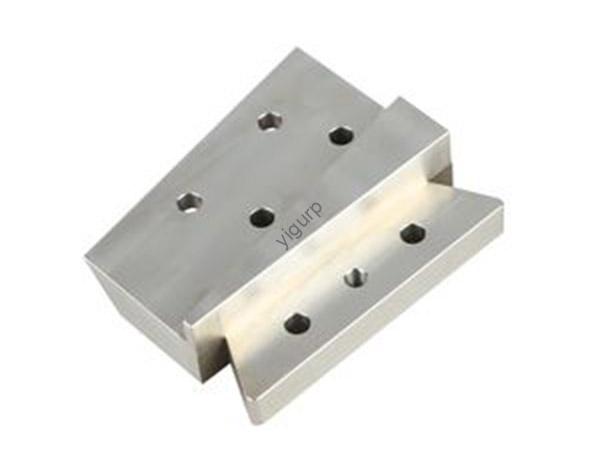
Se stai progettando componenti o parti saldati che necessitano di un equilibrio di resistenza, saldabilità, e duttilità, come i telai aerospaziali, roll-bar per autoveicoli, or industrial machinery shafts—AISI 4130 acciaio legato is your ideal choice. Come cromo-molibdeno a basso contenuto di carbonio (Cr-Mo) lega, supera gli acciai al carbonio semplici in termini di tenacità offrendo allo stesso tempo una migliore saldabilità rispetto alle leghe ad alto contenuto di carbonio come AISI 4140. Questa guida ne analizza le proprietà, applicazioni del mondo reale, processo di produzione, and material comparisons to help you solve design challenges where welding and strength go hand in hand.
1. Material Properties of AISI 4130 Acciaio legato
AISI 4130’s performance comes from its carefully balanced composition: a basso contenuto di carbonio (0.28–0.33%) ensures easy welding, while chromium (0.80–1.10%) and molybdenum (0.15–0.25%) boost strength andresistenza alla fatica. Let’s explore its key properties in detail.
1.1 Chemical Composition
AISI 4130 follows ASTM A29/A29M standards, with strict control over elements to prioritize weldability and toughness. Below is its typical composition:
| Element | Symbol | Content Range (%) | Key Role |
|---|---|---|---|
| Carbon (C) | C | 0.28 – 0.33 | Provides moderate strength; kept low to enablesaldabilità (no post-weld cracking) |
| Chromium (Cr) | Cr | 0.80 – 1.10 | Enhancesresistenza alla corrosione e temprabilità; improves wear resistance |
| Molibdeno (Mo) | Mo | 0.15 – 0.25 | Boosts high-temperature strength; raiseslimite di fatica for cyclic loading |
| Manganese (Mn) | Mn | 0.40 – 0.60 | Refines grain structure; enhancesduttilità without reducing strength |
| Silicon (Si) | Si | 0.15 – 0.35 | Aids deoxidation; supports stability during welding and heat treatment |
| Phosphorus (P) | P | ≤ 0.035 | Minimized to prevent brittle fracture in welded joints or cold conditions |
| Sulfur (S) | S | ≤ 0.040 | Controlled to balancelavorabilità and weld quality (lower S = better welds) |
| Nichel (In) | In | ≤ 0.25 | Trace element; slightly improvesimpact toughness at low temperatures |
| Vanadium (V) | V | ≤ 0.03 | Trace element; refines grains for uniform strength across thick sections |
| Rame (Cu) | Cu | ≤ 0.30 | Trace element; adds mild atmospheric corrosion resistance for outdoor parts |
1.2 Physical Properties
These traits make AISI 4130 suitable for welded and formed components across industries:
- Density: 7.85 g/cm³ (same as most carbon steels)—simplifies weight calculations for aerospace or automotive parts
- Melting Point: 1,420 – 1,450 °C (2,588 – 2,642 °F)—compatible with welding (MIG/TIG) and forging processes
- Thermal Conductivity: 42.5 W/(m·K) A 20 °C; 38.5 W/(m·K) A 300 °C—ensures even heat distribution during welding (reduces hot spots)
- Coefficient of Thermal Expansion: 11.4 × 10⁻⁶/°C (20 – 100 °C)—minimizes distortion when bending or welding components
- Magnetic Properties: Ferromagnetic—enables non-destructive testing (NDT) like magnetic particle inspection to check weld quality.
1.3 Mechanical Properties
AISI 4130’s mechanical performance shines in both annealed (weld-ready) and heat-treated (ad alta resistenza) conditions. Below are typical values:
| Property | Measurement Method | Annealed (Weld-Ready) | Quenched & Tempered (300 °C) | Quenched & Tempered (600 °C) |
|---|---|---|---|---|
| Hardness (Rockwell) | HRC | 17 – 20 HRC | 45 – 48 HRC | 25 – 28 HRC |
| Hardness (Vickers) | HV | 160 – 190 HV | 430 – 460 HV | 240 – 270 HV |
| Tensile Strength | MPa (ksi) | 560 MPa (81 ksi) | 1,450 MPa (210 ksi) | 850 MPa (123 ksi) |
| Yield Strength | MPa (ksi) | 345 MPa (50 ksi) | 1,300 MPa (188 ksi) | 700 MPa (102 ksi) |
| Elongation | % (In 50 mm) | 28 – 32% | 10 – 12% | 20 – 22% |
| Impact Toughness | J (A 20 °C) | ≥ 90 J | ≥ 40 J | ≥ 70 J |
| Fatigue Limit | MPa (rotating beam) | 290 MPa | 680 MPa | 420 MPa |
1.4 Other Properties
AISI 4130’s traits solve key challenges for welded and formed components:
- Weldability: Excellent—requires minimal preheating (150–200 °C) and no mandatory post-weld heat treatment (PWHT) for thin sections, saving time on fabrication.
- Formabilità: Great—can be bent, rolled, or forged into complex shapes (per esempio., roll-bar per autoveicoli) when annealed, then heat-treated for strength.
- Lavorabilità: Good—soft in the annealed condition (17–20 HRC), so it cuts easily with standard tools; heat-treated parts need carbide tools for precision.
- Resistenza alla corrosione: Moderate—resists mild rust and chemicals; for harsh environments (per esempio., marino), add zinc plating or epoxy coating.
- Toughness: Superior—even after welding, it maintains enough duttilità to absorb impact (critical for aerospace and automotive safety parts).
2. Applications of AISI 4130 Acciaio legato
AISI 4130’s focus on weldability and balanced strength makes it a top choice for components that need to be joined or formed. Here are its key uses:
- Aerospace Components: Aircraft frames, landing gear struts, and fuel lines—weldable, leggero, and strong enough for flight loads.
- Automotive Parts: Roll cages, chassis tubes, and high-performance exhaust manifolds—resists vibration and heat, with welds that hold up to stress.
- Mechanical Components: Welded shafts, hydraulic cylinder rods, and pulley hubs—ideal for parts where welding is cheaper than forging.
- Industrial Machinery: Conveyor rollers, robotic arms, and machine frames—tough enough for daily use, easy to repair with welding.
- Construction Equipment: Loader buckets, backhoe arms, and scaffolding joints—handles impact and abrasion, with welds that don’t crack under load.
- Motorcycle & Racing Parts: Frame rails, swingarms, and engine mounts—combines light weight and strength for performance vehicles.
3. Manufacturing Techniques for AISI 4130 Acciaio legato
Producing AISI 4130 requires focusing on weldability and formability, with heat treatment tailored to end-use strength needs. Here’s the step-by-step process:
- Steelmaking:
- AISI 4130 is made using an Electric Arc Furnace (EAF) (recycles scrap steel) O Basic Oxygen Furnace (BOF). Chromium and molybdenum are added to hit the 0.80–1.10% and 0.15–0.25% ranges, while carbon is kept low (0.28–0.33%).
- Rolling & Forming:
- The steel is Hot Rolled (1,100 – 1,200 °C) into bars, tubes, or plates—hot rolling makes it easy to bend or shape. For thin-walled parts (per esempio., exhaust tubes), suo Cold Rolled for tighter tolerances.
- Trattamento termico (Flexible for Needs):
- Ricottura: Heated to 815–845 °C, held 2–3 hours, slow-cooled to 650 °C. Softens the steel (17–20 HRC) for welding and forming.
- Tempra: Heated to 845–870 °C, held 1 hour, cooled in oil. Hardens to 50–52 HRC but increases brittleness.
- Tempering: Reheated to 200–650 °C (based on strength needs), held 1–2 hours, air-cooled. Reduces brittleness—300 °C for high strength, 600 °C for better ductility.
- Saldatura (Critical Advantage):
- Uses MIG, TIG, or stick welding with low-hydrogen electrodes (per esempio., E8018-B2) to avoid weld cracks. Preheat thin sections (<10 mm) A 150 °C; thick sections (>20 mm) A 200 °C. No PWHT needed for most parts, but it can be done to reduce residual stress.
- Lavorazione & Finitura:
- Annealed AISI 4130 is machined with HSS tools for turning, fresatura, o perforazione. Heat-treated parts need carbide tools. For smooth surfaces, finish with grinding or polishing.
- Trattamento superficiale:
- Placcatura: Zinc plating (rust resistance) for automotive parts; chrome plating (resistenza all'usura) for shafts.
- Coating: Heat-resistant paint (fino a 500 °C) for exhaust parts; epoxy coating (chemical resistance) for industrial machinery.
- Nitriding: Optional—heats to 500–550 °C in ammonia gas to harden the surface (50–55 HRC) without distortion, ideal for wear parts.
- Controllo qualità:
- Chemical Analysis: Spectrometry checks alloy content (per ASTM A29/A29M).
- Mechanical Testing: Tensile, impatto, and hardness tests confirm strength and toughness.
- Weld Inspection: Radiographic testing (Raggi X) or ultrasonic testing checks for weld defects like porosity.
- Dimensional Checks: Calipers or CMM ensure parts meet design tolerances.
4. Case Studies: AISI 4130 in Action
Real projects show how AISI 4130 solves welding and strength challenges.
Case Study 1: Aerospace Frame Welding (Canada)
An aircraft manufacturer needed to build lightweight, welded frame sections for a small cargo plane. They chose AISI 4130 tubes (annealed, 17 HRC) for easy TIG welding. The frames were then tempered to 300 °C (45 HRC) for strength. After testing, the frames withstood 120% of the design load without weld cracking—outperforming aluminum frames (which failed at 90% load). This cut frame weight by 15% contro. steel alternatives.
Case Study 2: Automotive Roll Cage Durability (U.S.)
A racing team needed a roll cage that could absorb crash impact and be welded on-site. They used AISI 4130 DOM (drawn-over-mandrel) tubes, welded with MIG and no PWHT. During a crash test, the cage bent but didn’t break—itsduttilità protected the driver. The cage lasted 3 racing seasons, while a previous AISI 1018 carbon steel cage cracked after 1 season. This saved the team $8,000 in replacement costs.
5. AISI 4130 contro. Other Materials
How does AISI 4130 compare to similar materials for welded and high-strength parts?
| Materiale | Similarities to AISI 4130 | Differenze chiave | Ideale per |
|---|---|---|---|
| AISI 4140 | Cr-Mo alloy steel | Higher carbon (0.38–0.43%); stronger but harder to weld; 10% pricier | Non-welded parts (per esempio., ingranaggi, alberi) |
| AISI 1018 | Carbon steel | No alloying; cheaper but weaker (440 MPa tensile); poor fatigue resistance | Low-stress parts (per esempio., brackets) |
| 6061 Alluminio | Lightweight | Lower density (2.7 g/cm³); weaker (310 MPa tensile); better corrosion resistance; 2× pricier | Lightweight, low-load parts (per esempio., bike frames) |
| 304 Acciaio inossidabile | Corrosion-resistant | Excellent rust resistance; harder to weld; lower strength (515 MPa tensile); 3× pricier | Marine or food-grade welded parts |
| Carbon Fiber | High strength-to-weight | Lighter; no corrosion; poor impact toughness; 8× pricier | High-performance, non-welded parts (per esempio., race car bodies) |
Yigu Technology’s Perspective on AISI 4130 Acciaio legato
Alla tecnologia Yigu, AISI 4130 is our go-to for welded, componenti ad alta resistenza. Its low-carbon Cr-Mo composition solves the biggest pain point for clients: getting strong parts that are easy to weld without cracking. We supply AISI 4130 in tubes, bars, or plates—annealed for welding, or custom heat-treated for strength. For aerospace, automobilistico, or industrial clients moving from carbon steel or aluminum, AISI 4130 offers a cost-effective upgrade: better strength than aluminum, better weldability than AISI 4140, and longer lifespan than plain carbon steel.
FAQ About AISI 4130 Acciaio legato
- Do I need post-weld heat treatment (PWHT) for AISI 4130?
No—for thin sections (<20 mm) or low-stress parts, PWHT isn’t required. For thick sections (>20 mm) or high-stress parts (per esempio., aerospace frames), PWHT (600–650 °C for 1 hour) reduces residual stress and improves toughness. - Can AISI 4130 be used for high-temperature applications (above 300 °C)?
Yes—its molybdenum content keeps it strong up to 400 °C. For temperatures above 400 °C (per esempio., industrial furnaces), choose AISI 316 stainless steel or alloy steels with more heat resistance. - What’s the difference between AISI 4130 and AISI 4130 DOM?
AISI 4130 DOM (drawn-over-mandrel) is a tube variant made by drawing hot-rolled tube over a mandrel. It has a smoother interior, tighter wall thickness tolerances, and higher strength than standard AISI 4130 tube—ideal for automotive roll cages or aerospace tubes.