
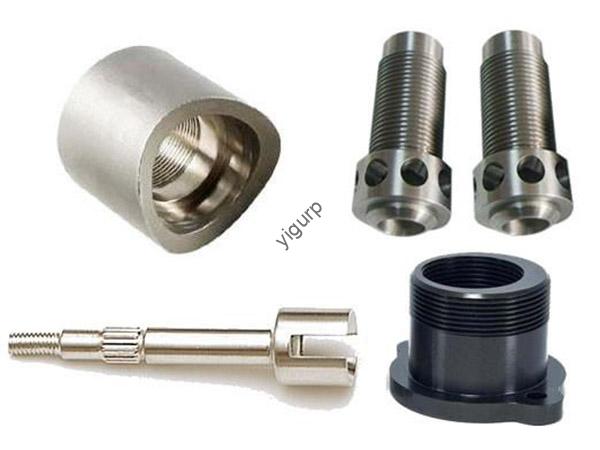
AISI 321 l'acciaio inossidabile è una lega austenitica stabilizzata al titanio, famoso per la sua resistenza alle alte temperature e alla corrosione intergranulare. Che tu stia progettando scarichi di aerei o reattori chimici, le caratteristiche uniche di questo materiale risolvono sfide comuni come il decadimento della saldatura e la deformazione da scorrimento viscoso. Questa guida ne analizza le specifiche, prestazione, and uses—with real-world examples to help you apply it effectively.
1. Material Overview & Key Specifications
Understanding AISI 321’s core properties is essential for choosing it for your project. Below is a clear breakdown of its composition, standard, and mechanical traits.
Composizione chimica & Standard
ILAISI 321 composition includes 17–19% chromium, 9–12% nickel, and 0.10–0.50% titanium—this321 titanium stabilisation is what sets it apart from standard 304. There’s no single321 stainless steel chemical formula; instead, it follows global standards to ensure consistency:
- 321 UNS S32100 (Unified Numbering System)
- 321 ASTM A240 / 321 ASME SA-240 (for plates, fogli, and strips)
- 321 IN 1.4541 equivalente (European standard for matching performance)
Physical & Proprietà meccaniche
AISI 321 delivers reliable strength and stability. Key metrics are shown in the table below:
| Proprietà | Valore |
|---|---|
| Densità | 8.0 g/cm³ |
| Punto di fusione | 1398 °C |
| Minimum yield strength | 205 MPa |
| Minimum tensile strength | 515 MPa |
| Brinell hardness | 217 HB (maximum) |
Un americano. aircraft manufacturer, Per esempio, usi321 ASTM A240 sheets for engine components—they rely on the 205 MPa yield strength to handle vibration and heat during flight.
2. High-Temperature & Oxidation Resistance
AISI 321’s biggest strength is its performance under extreme heat. It outperforms many alloys in long-term high-temperature service.
Critical High-Temperature Traits
- Oxidation Resistance: It resists rust and scaling up to 900 °C—321 oxidation resistance up to 900 °C makes it ideal for furnace parts and exhaust systems.
- Creep Strength: IL 321 1000-hour creep strength is ~150 MPa at 600 °C, meaning it won’t deform easily under long-term stress. Per riferimento, 321 creep rupture data shows it can last 10,000+ ore a 700 °C under light loads.
- Service Limits: IL 321 continuous service limit È 870 °C, e il 321 intermittent service limit (short bursts of heat) È 980 °C.
- Sigma Phase Risk: 321 sigma phase formation (a brittle phase) can occur if heated to 600–800 °C for months—but this is rare in most industrial uses.
A case study: A European refinery installed321 refinery flare stacks (operating at 850 °C). Dopo 8 anni, the stacks showed no signs of oxidation or creep, saving the refinery from costly replacements.
3. Resistenza alla corrosione & Stabilization Benefits
IL321 titanium stabilisation isn’t just for high heat—it also makes the alloy highly resistant to corrosion, especially intergranular corrosion (IGC).
Key Corrosion-Resistant Traits
- Intergranular Corrosion Resistance: 321 intergranular corrosion resistance comes from titanium binding with carbon to form TiC (titanium carbide). This prevents chromium depletion at grain boundaries, stopping 321 weld decay immunity (a common issue in unstabillized alloys like 304).
- Pitting & Stress Corrosion: 321 pitting corrosion vs 304 is a clear win—321 resists small holes (pitting) in salty or acidic environments better. It also has strong 321 chloride stress corrosion cracking resistance, making it suitable for marine parts.
- Chemical Performance: 321 sulfuric acid performance is solid (resists dilute sulfuric acid up to 60 °C), e il 321 seawater corrosion rate is ≤0.01 mm/year (tested per 321 salt spray test ASTM B117).
- 321 vs 304L corrosion comparison: 304L is cheaper but fails faster in high-heat or acidic settings—321 lasts 2–3x longer in these conditions.
A food processing plant in Asia switched from 304L to 321 for acid tanks—321 intergranular corrosion resistance eliminated tank leaks, riducendo i costi di manutenzione 50%.
4. Trattamento termico & Microstructure Control
Proper heat treatment ensures AISI 321 keeps its strength and corrosion resistance. The goal is to control grain size and prevent harmful phases.
Essential Heat Treatment Processes
- Solution Annealing: Riscaldare a 950–1100 °C, hold for 30–60 minutes, then water-quench. This dissolves unwanted carbides and restores a uniform austenitic structure.
- Stabilizing Anneal: Riscaldare a 870–900 °C to ensure titanium fully reacts with carbon—this enhances 321 carbide precipitation avoidance.
- Hot Working: Utilizzo 321 hot working temperature 1150–900 °C for forging or rolling—this keeps the material ductile.
- Grain Size Control: IL 321 grain size ASTM 5–8 (finer grains = higher strength) is required by standards like ASME SA-240.
Other Considerations
- Cold Working: 321 cold working magnetic permeability increases slightly (but it stays mostly non-magnetic).
- Residual Stress Relief: Heat to 450–600 °C to reduce stresses from welding or forming—this prevents warping.
5. Saldatura, Fabbricazione & Machining Guidelines
Welding and machining AISI 321 è semplice, but following best practices preserves its properties.
Welding Tips
- Filler Metal: Utilizzo 321 filler metal ER321 to match the base metal’s titanium content—this keeps the weld corrosion-resistant.
- Preheat & PWHT: 321 no preheat required for most thicknesses (fino a 25 mm). 321 post-weld stabilisation heat treatment (870–900 °C) is optional but recommended for thick parts to enhance stability.
- Parameters: Per 321 TIG welding parameters, use 120–160 amps, 10–14 volts, and argon shielding gas. This ensures a clean weld with 321 HAZ sensitisation free (no intergranular corrosion in the heat-affected zone).
Lavorazione & Formare
- Speeds & Feeds: 321 machining speeds and feeds should be 10–15% lower than carbon steel. Per esempio, use 80–100 m/min speed with 321 tool life with carbide inserts (lasts 2x longer than uncoated tools).
- Formabilità: 321 formability deep drawing works well for parts like expansion bellows—just use oil lubrication to avoid scratches.
- Distortion Control: 321 distortion control techniques (per esempio., clamping during welding, slow cooling) keep parts true to size. For pressure vessels, follow 321 joint design for pressure vessels standards to ensure safety.
6. Product Forms, Sizes & Supply Chain
AISI 321 is available in a wide range of forms to fit different projects, from small rods to large plates.
Common Product Forms
- Plates & Sheets: 321 stainless steel plate thicknesses range from 3 mm a 200 mm; 321 sheet gauge chart includes 16 misura (1.5 mm) A 1/2 inch (12.7 mm) for architectural or industrial use.
- Pipes & Bars: 321 seamless pipe ASTM A312 (for high-pressure piping), 321 round bar stock (10 mm a 300 diametro mm), E 321 angle iron sizes (20×20 mm to 100×100 mm).
- Specialty Forms: 321 coil slit widths (10 mm a 1250 mm), 321 flat bar tolerances (±0.1 mm for precision), 321 hollow bar suppliers (for lightweight parts), E 321 perforated sheet patterns (for filtration).
Supply Chain Tips
Work with suppliers who offer321 custom forgings per pezzi unici (per esempio., turbocharger housings). Molti321 threaded rod grades are also available—choose Grade 1 for general use and Grade 2 for high-strength applications.
7. Applicazioni industriali & Use Cases
AISI 321’s versatility makes it a top choice across industries. Here are some common uses:
- Aerospaziale: 321 aircraft exhaust systems handle 800+ °C heat and resist corrosion from jet fuel.
- Automobilistico: 321 automotive turbocharger housings stand up to hot exhaust gases (no creep or cracking).
- Elaborazione chimica: 321 chemical processing reactors resist acids and high temperatures—ideal for making fertilizers or plastics.
- Power Generation: 321 power plant piping E 321 heat exchanger tubes operate reliably in steam and high-pressure environments.
- Specialized Uses: 321 nuclear reactor internals (resist radiation and corrosion) E 321 furnace liners (handle 900 °C continuous heat).
A real example: Un americano. power plant replaced 304 pipes with321 seamless pipe ASTM A312—the 321 pipes lasted 15 anni (contro. 5 years for 304), reducing downtime by 70%.
La prospettiva della tecnologia Yigu
Alla tecnologia Yigu, we recommend AISI 321 for clients needing high heat and corrosion resistance. Forniamo321 ASTM A240 plates and321 seamless pipe ASTM A312 from certified mills, ensuring compliance with global standards. For aerospace and automotive clients, diamo la priorità321 titanium stabilisation checks to avoid weld decay. Our team also advises on heat treatment—321 solution annealing 950–1100 °C is key for maximum performance. For projects where durability and safety matter, AISI 321 is a cost-effective, long-lasting choice.
Domande frequenti
- What’s the difference between AISI 321 and 316Ti?
321 uses titanium for stabilization (better high-temperature strength up to 900 °C), while 316Ti adds molybdenum (superior corrosion resistance in chloride environments like seawater). 321 is better for aerospace/automotive heat parts, while 316Ti excels in marine or chemical settings. - Do I need to preheat AISI 321 before welding?
NO-321 no preheat required for most thicknesses (fino a 25 mm). Titanium stabilizes the weld, so you avoid intergranular corrosion without preheating. Only preheat if welding extremely thick parts (Sopra 25 mm) to reduce cracking risk. - Can AISI 321 be used in seawater?
Yes—its 321 seawater corrosion rate is very low (≤0.01 mm/year). Tuttavia, 316Ti or 317L are better for long-term seawater use (more molybdenum resists pitting). Utilizzo 321 for seawater parts that also need high heat resistance (per esempio., marine exhaust elbows).