
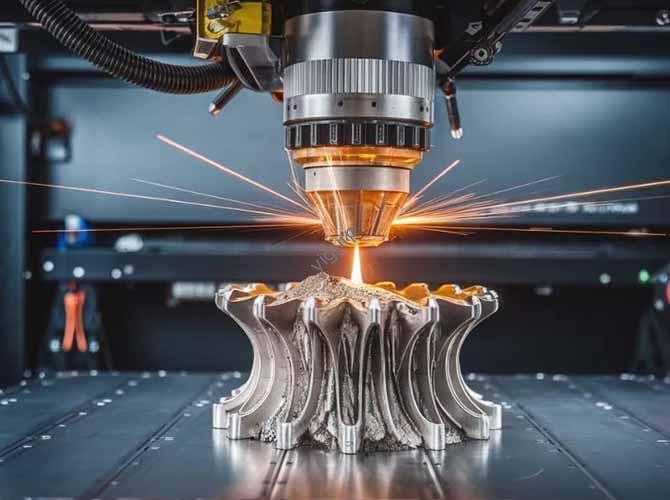
In settori come quello aerospaziale, automobilistico, e dispositivi medici, 5-axis CNC machined prototype parts are game-changers. Trasformano intricati progetti 3D, quelli con superfici curve, sottosquadri, o caratteristiche multi-angolo, in tangibili, prototipi di alta precisione. Ma molti team di prodotto faticano a ottenere il massimo da questa tecnologia: Come evitare costosi errori di programmazione?? Quali materiali funzionano meglio? And how do you ensure the final prototype meets every design standard? Let’s break down the process step by step, solve common pain points, and unlock the full potential of 5-axis CNC machining.
1. Pre-Machining Preparation: Set the Stage for Success
Just like building a house needs a solid foundation, 5-axis CNC machined prototype parts depend on thorough prep work. Skipping these steps often leads to rework, materiali sprecati, e tempistiche ritardate.
1.1 Progetto & Programmazione: Turn Ideas into Machinable Plans
The biggest risk here is creating a design that’s “unmachinable”—think sharp internal corners or un reachable undercuts. Fix this with careful design and smart programming.
| Compito | Action Steps | Why It Matters |
| 3D Modeling with Machinability in Mind | Use CAD software (per esempio., SolidWorks, Fusione 360) A: – Avoid internal angles smaller than 0.5mm (hard to reach with 5-axis tools). – Add clear tolerances (per esempio., ±0.02mm for critical surfaces). – Label all features (per esempio., “curved surface: R5mm”). | A machinable design cuts programming time by 40% and reduces error rates by half. |
| 5-Axis Programming Best Practices | Use CAM software (per esempio., Mastercam, HyperMill) A: – Simulate the entire machining path (check for tool collisions). – Optimize tool paths (per esempio., use spiral cuts for curved surfaces). – Set feed rates (slower for hard materials like titanium alloy). | Simulation catches collisions before machining—saving $1,000+ in tool replacement costs per mistake. |
Esempio: An aerospace startup once designed a turbine blade prototype with a 0.2mm internal angle. Their first 5-axis program failed because the tool couldn’t reach the angle, breaking a $500 strumento di taglio. By adjusting the angle to 0.6mm in the CAD model, they machined the part perfectly on the second try.
1.2 Material Prep: Scegliere & Treat for 5-Axis Success
The wrong material or poor pretreatment ruins even the best program. Follow these rules to avoid issues:
1.2.1 Material Selection Guide
- Match material to industry needs:
- Lega di titanio: Ideal for aerospace prototypes (leggero + high strength at high temps).
- Acciaio inossidabile: Great for medical devices (resistente alla corrosione + facile da sterilizzare).
- Lega di alluminio (7075): Perfect for automotive parts (forte + conveniente).
- Check material quality: Use only high-grade materials (per esempio., ASTM B265 for titanium) to avoid internal defects like air bubbles—these cause cracks during machining.
1.2.2 Pretreatment Must-Dos (4 Semplici passaggi)
- Cut to size: Trim the raw material to a “blank” (slightly larger than the final prototype—add 5–10mm for machining).
- Deburr: Use a CNC deburring tool to remove sharp edges from the blank—rough edges cause uneven clamping.
- Pulito: Wipe the blank with isopropyl alcohol to remove oil, dust, or fingerprints—dirty surfaces shift during machining.
- Clamp test: Attach the blank to the 5-axis machine’s fixture and run a “dry test” (nessun taglio) to ensure it’s stable—movement of just 0.01mm ruins precision.
2. Core 5-Axis CNC Machining: Master Roughing & Finitura
This is where the magic happens—5-axis CNC machined prototype parts get their shape through two key steps: roughing and finishing. Each needs a different approach to balance speed and precision.
2.1 Roughing: Remove Excess Material Fast
Roughing is about speed—you want to strip away extra material without damaging the blank. Here’s how:
- Tools to use: Frese in metallo duro (4-flute) for hard materials (titanio); acciaio rapido (HSS) end mills for soft materials (alluminio).
- Key settings:
- Velocità di avanzamento: 100–200 mm/min (titanio); 300–500 mm/min (alluminio).
- Depth of cut: 2–5mm per pass (don’t go deeper—this strains the tool).
- Pro tip: Use “adaptive clearing” in CAM software—this tool path follows the part’s shape, reducing tool wear by 30% compared to straight-line cuts.
2.2 Finitura: Achieve Precision & Smooth Surfaces
Finishing is about quality—this step ensures the prototype matches the design’s size, forma, and surface roughness.
| Feature | Roughing | Finitura |
| Tool Type | 4-flute carbide end mill | 6-flute carbide ball end mill (for curves) |
| Tolleranza | ±0,1 mm (close enough to avoid cutting too much) | ±0,02 mm (matches design specs) |
| Rugosità superficiale | Ra 12.5 µm (ruvido, but okay for roughing) | Ra 0.8 µm (smooth—like a mirror for critical surfaces) |
| Time per Part | 10–20 minutes (titanio); 5–10 minutes (alluminio) | 15–30 minutes (titanio); 8–15 minuti (alluminio) |
Question: My prototype has a curved surface that needs Ra 0.8 μm—how do I get that smooth finish?
Answer: Use a 6-flute ball end mill and slow down the feed rate to 50–100 mm/min (titanio) or 150–200 mm/min (alluminio). Anche, use “constant surface speed” (CSS) in the CNC program—this keeps the tool’s speed consistent across the curve, avoiding rough spots. Finalmente, make two light finishing passes (0.1mm depth each) instead of one deep pass—this reduces tool vibration.
3. Post-Machining Steps: Polish & Inspect to Perfect the Prototype
Even a well-machined part needs post-treatment and inspection to become a “production-ready” prototype. Don’t skip these steps—they turn a “good” part into a “great” one.
3.1 Post-trattamento: Fix Imperfections & Protect the Part
| Fare un passo | Action | Beneficio |
| Cleanup | Use compressed air to blow away cutting fluid and debris; wipe with a lint-free cloth. | Removes residue that hides defects during inspection. |
| Rettifica & Lucidatura | For critical surfaces: – Grind with 240-grit sandpaper (removes tool marks). – Polish with 600-grit sandpaper (achieves Ra 0.8 μm or smoother). | Makes the prototype look and feel like the final product; improves aerodynamics for aerospace parts. |
| Optional Coating | Fare domanda a: – Anodizzazione (aluminum—adds corrosion resistance). – Passivazione (stainless steel—enhances rust resistance). – TiN coating (cutting tool prototypes—boosts durability). | Extends the prototype’s life during functional testing; mimics the final product’s finish. |
3.2 Ispezione di qualità: 2 Key Checks to Validate Precision
You can’t trust a prototype until you measure it. Use these inspections to ensure 5-axis CNC machined prototype parts meet design specs:
3.2.1 Controllo dimensionale
- Tools needed: Macchina di misura a coordinate (CMM—measures 3D features to ±0.001mm), calibri digitali, and a surface roughness tester.
- What to check:
- All critical dimensions (per esempio., “curved surface R5mm”—is it really 5.00 ±0,02 mm?).
- Feature positions (per esempio., “hole centered 10mm from edge”—is it 10.00 ±0,01 mm?).
- Rugosità superficiale (per esempio., Ra 0.8 μm—does it match the design?).
3.2.2 Functional & Visual Testing
- Functional: Test the prototype in its intended use case. Per esempio: – Aerospace turbine blade: Spin it at 10,000 RPM to check for vibration. – Medical device part: Sterilize it 50 times to verify corrosion resistance.
- Visual: Look for cracks, dents, o superfici irregolari. A tiny crack (even 0.5mm) means the material was defective—replace it.
Yigu Technology’s Viewpoint
Alla tecnologia Yigu, 5-axis CNC machined prototype parts are about merging speed with precision. We use advanced CAD/CAM software (SolidWorks + Mastercam) for collision-free programming and high-grade materials (lega di titanio, 7075 alluminio) per la durabilità. Our 5-axis machines deliver tolerances down to ±0.01mm, and we prioritize post-treatment (anodizzazione, passivazione) to match final production standards. Per i clienti, this means prototypes that validate designs fast—cutting product development time by 25%—and work seamlessly in testing. We don’t just make parts; we make prototypes that move projects forward.
Domande frequenti
- How long does it take to make a 5-axis CNC machined prototype part?
It depends on complexity: Una semplice staffa in alluminio (3 caratteristiche) takes 1–2 days (progetto + lavorazione + ispezione). A complex aerospace turbine blade (10+ curved features) richiede 3-5 giorni. The biggest time saver? A machinable CAD design—this cuts programming time by 40%.
- Can 5-axis CNC machining handle low-volume production (per esempio., 50 parti del prototipo)?
Assolutamente. 5-axis CNC is perfect for low-volume (1–100 parti) because it doesn’t need expensive molds (a differenza dello stampaggio ad iniezione). Per 50 parti, we reuse the same program and fixture—keeping costs 30% lower than traditional machining. It’s fast, coerente, ed economico.
- What’s the most common mistake in 5-axis CNC machined prototype parts—and how to avoid it?
IL #1 mistake is poor tool path planning (per esempio., tool collisions or uneven cuts). Avoid it by: 1) Simulating the entire program in CAM software (check for collisions). 2) Using adaptive clearing for roughing (riduce l'usura dell'utensile). 3) Testing the program on a scrap piece first (catches errors before machining the real part).