
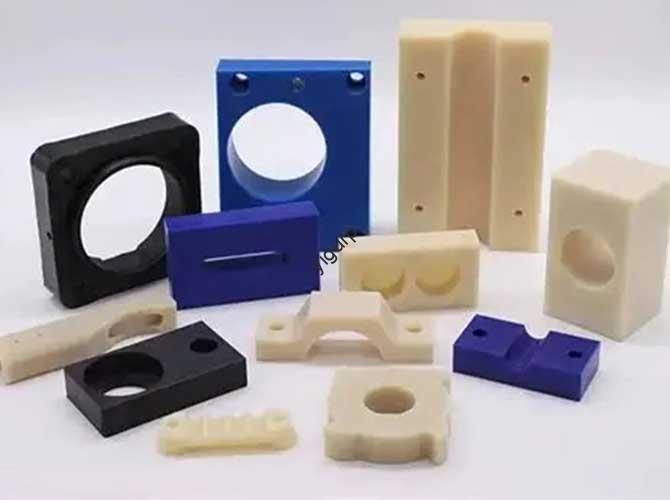
In 3Stampa D, perché una custodia flessibile per telefono funziona meglio con il TPU, mentre un componente aerospaziale richiede PEEK? La risposta sta dentro 3D printing thermoplastic material types—each with unique properties that match specific project needs. La scelta del materiale termoplastico sbagliato può portare a parti fragili, stampe non riuscite, o costi inutili. Questo articolo analizza il 6 most common types, their key features, usi nel mondo reale, and how to select the right one, helping you avoid mistakes and achieve successful prints.
What Are 3D Printing Thermoplastics?
3D printing thermoplastics are a class of plastic materials that soften or melt when heated (during printing) and harden when cooled (after extrusion or sintering). A differenza dei termoindurenti (which can’t be re melted), thermoplastics are reusable—making them ideal for 3D printing’s layer-by-layer process.
Think of them as “moldable building blocks”: each type has a unique “superpower”—some are flexible, some are heat-resistant, others are biodegradable—letting you tailor parts to your project’s goals.
6 Core 3D Printing Thermoplastic Material Types
Below are the most widely used thermoplastics, with detailed breakdowns of their properties, applicazioni, and printing tips—all aligned with industry standards and real-world use cases:
1. Poliammide (PA, Nylon)
- Core Properties: Eccellente resistenza alla trazione (80–90 MPa), buona flessibilità (resists bending without breaking), and moderate wear resistance.
- Vantaggio chiave: One of the first commercialized 3D printing thermoplastics—proven reliable for functional parts.
- Applicazioni ideali:
- Ingranaggi industriali (handles repeated friction).
- Attrezzatura sportiva (per esempio., bike pedal inserts—flexible yet strong).
- Automotive connectors (resists vibration).
- Printing Tips: Use a heated bed (80–100°C) per evitare deformazioni; dry PA for 4 hours at 80°C (absorbs moisture easily).
2. Policarbonato (computer)
- Core Properties: Outperforms ABS as an engineering material—higher resistenza meccanica (resistenza alla trazione: 65–70MPa), odorless, non tossico, basso ritiro (<0.5%), and good ritardante di fiamma (UL94 V-2 rating).
- Vantaggio chiave: Balances strength and safety—safe for food-contact or indoor parts.
- Applicazioni ideali:
- Home appliance shells (per esempio., small fan casings—non-toxic and flame-resistant).
- Clear light covers (low shrinkage keeps shape).
- Custodie per dispositivi medici (odorless, meets biocompatibility standards).
- Printing Tips: Nozzle temperature: 250–270°C; use an enclosed printer (maintains stable temperature).
3. Acrilonitrile-Butadiene-Stirene (ABS)
- Core Properties: One of the earliest materials for Stampaggio a deposizione fusa (FDM)—tough (resiste all'impatto), buona stabilità dimensionale, e basso costo.
- Vantaggio chiave: The “workhorse” of FDM printing—easy to source and print for functional prototypes.
- Applicazioni ideali:
- Finiture interne automobilistiche (per esempio., dashboard brackets—handles car vibrations).
- Prototipi funzionali (per esempio., tool handles—tough enough for testing).
- Parti di giocattoli (resiste alle gocce).
- Printing Tips: Heated bed: 90–110°C; use a layer of hairspray on the bed for better adhesion.
4. Polietere etere chetone (SBIRCIARE)
- Core Properties: Known as the “engineering plastic at the top of the pyramid”—excellent wear resistance, biocompatibilità (Approvato dalla FDA), stabilità chimica (resists oils/acids), e resistenza al calore (melts at 343°C).
- Vantaggio chiave: The gold standard for high-performance parts—survives harsh environments.
- Applicazioni ideali:
- Impianti medici (per esempio., spinal cages—biocompatible and strong).
- Componenti aerospaziali (per esempio., engine parts—handles high temperatures).
- Olio & gas tool parts (resists corrosive chemicals).
- Printing Tips: Nozzle temperature: 340–380°C; requires a high-temperature heated bed (120–140°C).
5. Acido Polilattico (PLA)
- Core Properties: UN biodegradable material made from renewable plant resources (corn starch)—odorless, facile da stampare, e basso costo.
- Vantaggio chiave: Perfect for beginners and eco-friendly projects—no harsh fumes during printing.
- Applicazioni ideali:
- Parti decorative (per esempio., vasi per piante, figurine).
- Prototipi (per esempio., phone case mockups—fast to print).
- Disposable items (per esempio., temporary packaging—biodegrades after use).
- Printing Tips: Nozzle temperature: 190–220°C; heated bed optional (50–60°C for large parts).
6. Poliuretano termoplastico (TPU)
- Core Properties: Alto elasticità (stretches up to 300% and returns to shape) and excellent abrasion resistance—soft to the touch.
- Vantaggio chiave: The only common thermoplastic for flexible parts—fills the gap between rigid plastics and rubber.
- Applicazioni ideali:
- Wearable devices (per esempio., smartwatch bands—flexible and comfortable).
- Protective covers (per esempio., phone cases—absorbs drops).
- Gaskets/seals (per esempio., water bottle lids—creates a tight seal).
- Printing Tips: Nozzle temperature: 210–230°C; use a slow print speed (30–50mm/s) to avoid stringing.
3D Printing Thermoplastic Comparison Table
Use this table to quickly compare key features and find your match:
| Tipo materiale | Resistenza alla trazione | Caratteristica chiave | Ideale per | Nozzle Temp | Heated Bed Temp |
| PA (Nylon) | 80–90 MPa | Forte + Flessibile | Ingranaggi, Connettori | 240–260°C | 80–100°C |
| computer | 65–70MPa | Forte + Flame-Resistant | Appliance Shells, Light Covers | 250–270°C | 90–110°C |
| ABS | 40–50MPa | Difficile + Basso costo | Prototipi, Auto Trim | 230–250°C | 90–110°C |
| SBIRCIARE | 90–100MPa | Alte prestazioni + Biocompatibile | Impianti, Aerospace Parts | 340–380°C | 120–140°C |
| PLA | 50–60 MPa | Biodegradabile + Easy to Print | Decor, Prototipi | 190–220°C | 50–60°C (opt.) |
| TPU | 30–40MPa | Elastico + Resistente all'abrasione | Bands, Guarnizioni | 210–230°C | 60–80°C |
How to Choose the Right 3D Printing Thermoplastic (4-Step Guide)
Follow this linear, problem-solving process to select your material:
- Define Your Project’s Goals
- Chiedere: Is the part funzionale (per esempio., un ingranaggio) O decorativo (per esempio., una statuetta)?
- Functional → Prioritize strength (PA/PEEK) o flessibilità (TPU).
- Decorative → Prioritize ease of printing (PLA) o costo.
- Check the environment: Will it face heat (choose PEEK/PC) o umidità (choose PC/ABS)?
- Match Traits to Needs
- Esempio 1: A medical implant needs biocompatibility → PEEK.
- Esempio 2: A flexible phone case needs elasticity → TPU.
- Esempio 3: An eco-friendly prototype needs biodegradability → PLA.
- Consider Printing Difficulty
- Principianti: Start with PLA (non è necessario un letto riscaldato, low stringing).
- Advanced users: Try PEEK (needs high temps) or TPU (needs slow speed).
- Test with a Small Sample
- Print a 2cm×2cm cube first. Check for warping (adjust bed temp) or brittleness (switch to a stronger material).
Casi di studio nel mondo reale
See how these thermoplastics solve industry problems:
Caso 1: Automotive Prototype with ABS
- Problema: A car maker needed 50 dashboard bracket prototypes fast—metal prototypes would take 2 weeks and cost $5,000.
- Soluzione: Used ABS to print brackets in 3 giorni. ABS’s toughness let engineers test fit and vibration resistance.
- Risultato: Cost dropped to $800 (84% risparmio), and the design was finalized 1 week early.
Caso 2: Medical Implant with PEEK
- Problema: A hospital needed a custom spinal cage—traditional metal cages were heavy and caused patient discomfort.
- Soluzione: 3D printed the cage with PEEK. Its biocompatibility let it fuse with bone, and its light weight improved patient recovery.
- Risultato: Tempo di recupero del paziente ridotto del 30%, and no implant failures were reported in 2 anni.
Caso 3: Eco-Friendly Toy with PLA
- Problema: A toy company wanted to reduce plastic waste—traditional PVC toys take 450+ years to decompose.
- Soluzione: Switched to PLA for toy production. PLA toys biodegrade in 12 months in industrial compost.
- Risultato: Waste reduced by 90%, and the company gained a “sustainable” brand reputation.
La prospettiva della tecnologia Yigu
Alla tecnologia Yigu, crediamo 3D printing thermoplastic material types are the foundation of versatile manufacturing. Our FDM printers (YG-FDM 800) are optimized for all 6 core thermoplastics: they have adjustable high-temperature nozzles (up to 400°C for PEEK) and smart bed heating (prevents warping for ABS/PC). We also provide material selection guides for clients—helping a startup switch from PLA to TPU for wearable devices cut product testing time by 25%. As thermoplastics evolve (per esempio., PA riciclata), we’ll keep updating our hardware to unlock their full potential.
Domande frequenti
- Q: Which 3D printing thermoplastic is best for outdoor use?
UN: Policarbonato (computer) is ideal—it resists UV rays, umidità, e variazioni di temperatura (from -40°C to 130°C), so parts won’t crack or fade.
- Q: Is PLA really biodegradable?
UN: SÌ! In industrial composting conditions (55–70°C, elevata umidità), PLA breaks down into carbon dioxide and water in 6–24 months. It won’t biodegrade in home compost (troppo freddo) but is still more eco-friendly than non-recyclable plastics.
- Q: Can I mix different thermoplastics in one print?
UN: It’s not recommended—most thermoplastics have different melting points (per esempio., PLA melts at 190°C, PEEK at 343°C). Mixing causes poor layer adhesion and failed prints. Stick to one material per part.