
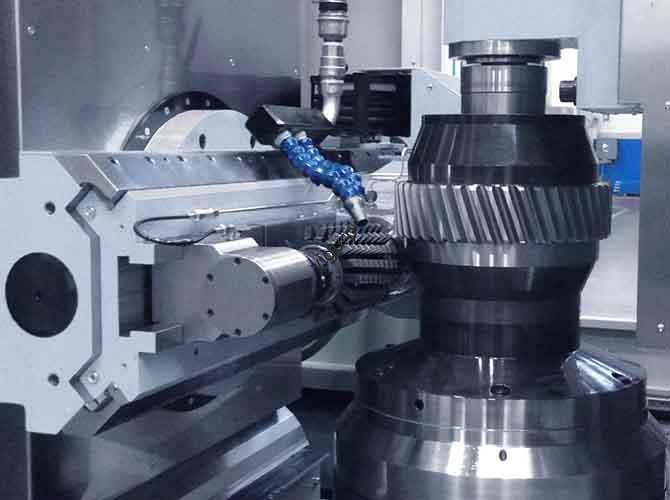
À l’ère du poids léger, électrification, et conception intégrée – des voitures traditionnelles à carburant aux véhicules à énergie nouvelle (NEV)—die casting for auto parts has become the backbone of automotive production. Il transforme les métaux fondus en matériaux de haute précision, composants hautes performances (par ex., carters moteur, supports de batterie) qui équilibre la réduction de poids, résistance structurelle, et rentabilité. Cet article décompose ses définitions principales, material choices, key applications, industrial chain dynamics, technical challenges, et les tendances futures, helping you fully grasp its value and application logic in the automotive industry.
1. What Is Die Casting for Auto Parts, and How Is It Classified?
To lay a foundation for practical understanding, we first clarify its core concept and material-based classification—two key starting points for distinguishing it from other manufacturing processes.
1.1 Core Definition
Die casting for auto parts refers to a high-pressure forming technology: Métal fondu (aluminium, magnésium, etc.) is injected into precision steel molds at pressures of 30-120MPa, then rapidly solidifies (dans 0.05-0.5 secondes) to form automotive components with complex shapes and tight tolerances. Unlike stamping (limited to sheet metals) ou forger (high energy consumption), it excels at producing near-net-shape parts, reducing post-processing by 50-70%.
1.2 Material Classification: Which Metals Dominate Automotive Die Casting?
Material selection directly affects part performance and cost. Aluminum alloy is the clear mainstream, while magnesium alloy is emerging for high-end lightweight needs. Below is a detailed comparison:
| Type de matériau | Key Alloys Used | Densité (g/cm³) | Avantages principaux | Typical Auto Parts | Market Share in Auto Die Casting |
| Alliage d'aluminium | A380, A356, ADC12 | 2.7 | – High cost-performance (1/3 the price of magnesium alloy)- Good heat dissipation (2x better than steel)- Easy to process (supports welding/heat treatment) | Engine housings, carters de transmission, shock absorber towers, NEV battery brackets | ~85% (dominant position) |
| Magnesium Alloy | AZ91D, AM60B | 1.8 | – Ultra-léger (33% lighter than aluminum alloy)- High specific strength (strength-to-weight ratio better than aluminum) | NEV motor shells, high-end car steering wheels, instrument panel frames | ~10% (growing rapidly in NEVs) |
| Zinc Alloy | ZA27, Zamak5 | 6.4 | – Point de fusion bas (400-450°C, économie d'énergie)- Excellent surface finish (Ra ≤0.8μm) | Petites pièces: poignées de porte, boîtiers de capteurs, garniture décorative | ~5% (limited to non-structural parts) |
2. Which Auto Parts Rely on Die Casting, and What Value Do They Bring?
Die casting is widely used across critical automotive systems, with applications expanding rapidly in NEVs (especially large integrated components). Below is a breakdown by vehicle system, highlighting its irreplaceable role:
2.1 Traditional Fuel Vehicle Key Die-Cast Parts
| Vehicle System | Die-Cast Parts | Core Functions | How Die Casting Adds Value |
| Engine & Transmission | – Culasses de moteur- Oil pans- Transmission housings | – Seal oil/ coolant- Support moving parts- Dissipate heat | – Complex internal channels (par ex., oil passages) formed in one step (stamping/forging can’t achieve this)- Précision dimensionnelle (IT8-IT9) ensures no leakage |
| Body & Chassis | – Shock absorber towers- Front longitudinal beams- A-pillar inner panels | – Bear collision forces- Maintain body rigidity | – Integrated design reduces part count (par ex., a shock absorber tower replaces 5+ stamped parts)- High structural strength (tensile strength ≥250MPa) improves collision safety |
| Steering & Suspension | – Steering gear housings- Suspension brackets | – Transmit steering force- Support wheel loads | – Haute précision (±0,05 mm) ensures stable steering- Fatigue resistance (100,000+ load cycles without failure) |
2.2 NEV-Specific Die-Cast Parts: The Rise of Large Integrated Components
NEVs have driven a revolution in die casting—moving from “split parts” to “large integrated structures” to reduce assembly costs and weight. Below are the most impactful innovations:
| NEV-Specific Part | Size/Weight | How It Changes Traditional Production | Core Benefits for NEVs | Representative Adopters |
| Integrated Rear Floor | – Size: ~2m (longueur) × 1.5m (largeur)- Poids: 30-50kilos | Replaces 70+ stamped/welded parts with 1 die-cast component | – Reduces body weight by 15-20%- Cuts assembly time by 60%- Lowers part logistics costs by 40% | Tesla (Model Y), NIO (ET5) |
| Front Nacelle | – Size: ~1.8m × 1m- Poids: 25-40kilos | Integrates motor mounts, battery connectors, and cooling brackets | – Simplifies NEV powertrain layout- Improves structural rigidity (body torsion stiffness +10%) | Xpeng (G9), Li Auto (L9) |
| Battery Case Upper Cover | – Size: ~2.5m × 1.2m- Poids: 40-60kilos | Seals and protects battery cells (IP68 waterproof) | – Thick-walled structure (5-8mm) resists impact- One-step forming avoids welding seams (reduces water leakage risk) | BYD (Han EV), GAC AION S |
3. What Does the Auto Die Casting Industrial Chain Look Like?
The industrial chain has clear division of labor: upstream provides key materials and equipment, midstream focuses on production, and downstream is dominated by automakers. Understanding this chain helps identify supply chain risks and opportunities.
3.1 Industrial Chain Structure & Key Enterprises
| Chain Segment | Core Products/Services | Global Representative Enterprises | Key Technical Barriers |
| Upstream (Fournisseurs) | – Heat-free aluminum alloy materials- Large die-casting machines (>9000T)- Super-large precision molds | – Matériels: Lizhong Group (Chine), Novelis (NOUS)- Machines: LK Technology (Chine), Idra (Italy, Tesla’s supplier)- Moules: Savida (Chine), Schuler (Germany) | – Heat-free alloys: Patented formulas (seulement 5-10 global companies master them)- Large machines: Clamping force accuracy (±1% of rated force)- Moules: Super-large mold development (cycle 6-12 mois, coût >$1M) |
| Midstream (Die Casters) | – Custom die-cast parts (small/medium)- Large integrated die-cast structures (NEV) | – Wencan Co., Ltd. (Chine), Tuopu Group (Chine), Guangdong Hongtu (Chine), Ryobi (Japan) | – Contrôle des processus (par ex., controlling porosity <0.5% for NEV battery cases)- Mass production capacity (large integrated parts need 24/7 continuous production) |
| Downstream (Automakers) | – Assemble die-cast parts into vehicles- Set technical standards for parts | – Traditionnel: Toyota, Volkswagen, Ford- NEV: Tesla, NIO, BYD, Xpeng | – Strict quality inspection (par ex., 100% X-ray detection for structural parts)- Cost pressure (push midstream to reduce unit prices by 5-10% annuellement) |
4. What Technical Challenges & Future Trends Define Auto Die Casting?
While die casting is mature, NEVs are driving new challenges (par ex., large integrated parts) and trends (par ex., intelligent manufacturing). Below is a balanced analysis:
4.1 Current Technical Challenges: What’s Holding Back Auto Die Casting?
| Challenge Category | Specific Issue | Impact on Production |
| Equipment Shortage | Large die-casting machines (>9000T) are in short supply (global annual output <100 unités) | NEV makers (par ex., Tesla, BYD) face capacity bottlenecks for integrated parts |
| Material Limitations | Heat-free aluminum alloys (needed for large integrated parts to avoid deformation) are patented by a few companies | High material costs (20-30% more expensive than ordinary aluminum alloys); supply risks |
| Process Control Difficulty | Large integrated parts (par ex., rear floors) have uneven wall thickness (5-15mm), leading to shrinkage/porosity | Defect rate up to 5-8% (contre. 1-2% pour petites pièces); rework costs high |
| High Initial Investment | A 9000T die-casting machine costs ~\(15M; a super-large mold costs ~\)2M | Small die casters can’t enter the NEV integrated parts market; industry concentration increases |
4.2 Future Trends: How Will Auto Die Casting Evolve?
| Trend Direction | Technical/Market Changes | Expected Impact by 2030 |
| Integration of Body-in-White (BIW) | From “integrated rear floor” to “full BIW integration” (1 die-cast part replaces 300+ stamped parts) | NEV body weight reduced by 25-30%; assembly lines shortened by 50% |
| Material Innovation | Wider use of “aluminum-magnesium composite alloys” (combines aluminum’s cost advantage and magnesium’s lightweight) | NEV battery case weight reduced by 10-15% without cost increases |
| Intelligent Manufacturing | – AI-based process monitoring (real-time adjustment of injection speed/pressure)- Digital twins for mold life prediction | Defect rate reduced to <1%; mold life extended by 20-30% |
| Green Production | Use of recycled aluminum (recycled aluminum uses 5% of the energy of primary aluminum) | Auto die casting carbon emissions reduced by 40-50% (aligns with global carbon neutrality goals) |
5. Yigu Technology’s Perspective on Die Casting for Auto Parts
Chez Yigu Technologie, we see die casting for auto parts as the “cornerstone of automotive lightweight and integration”—especially in the NEV era. Our practice shows that 60% of NEV weight reduction gains come from optimized die-cast parts (par ex., replacing steel brackets with aluminum die-cast ones).
We recommend a “demand-driven, multi-material collaboration” approach: For mid-range NEVs, we prioritize cost-effective aluminum alloy die casting (par ex., A356 for battery brackets) paired with CAE mold simulation to cut defect rates to <2%; For high-end NEVs, we use magnesium-aluminum composite die casting to balance lightweight and cost. We also help clients address equipment bottlenecks by partnering with large machine suppliers (par ex., LK Technology) to secure 9000T+ die-casting machine resources. Looking ahead, integrating intelligent process monitoring (Capteurs IoT + IA) will be key to staying competitive in auto die casting.
6. FAQ: Common Questions About Die Casting for Auto Parts
Q1: Can die-cast auto parts be repaired if they have defects (par ex., small cracks)?
It depends on the part’s function. For non-structural parts (par ex., boîtiers de capteurs), small cracks can be repaired via laser welding (weld strength ≥90% of the base material). For structural parts (par ex., carters moteur, NEV battery cases), even small defects make the part unsafe—they must be scrapped (norme de l'industrie: zero tolerance for structural defects).
Q2: Why are large integrated die-cast parts (par ex., Tesla’s rear floor) only used in NEVs, not traditional fuel vehicles?
NEVs have two key drivers: 1) Lightweight demand is more urgent (every 100kg weight reduction increases range by ~100km); 2) NEV powertrains (simpler than fuel vehicles) allow integrated part design. Traditional fuel vehicles have complex engine/transmission layouts that require split parts for maintenance—integrated die-cast parts would make repairs impossible (par ex., replacing a single component would require removing the entire integrated structure).
Q3: How does die casting compare to 3D printing for auto parts?
Die casting is better for mass production: It has a lower unit cost (\(1-10 per part for aluminum die casting vs. \)50-100 for 3D printing) and higher production speed (1000+ parts per hour vs. 1-2 parts per hour for 3D printing). 3D printing is only suitable for small-batch, highly customized parts (par ex., racing car prototypes, limited-edition car trim). For mainstream auto parts (produced in 100,000+ unités), die casting is irreplaceable.