
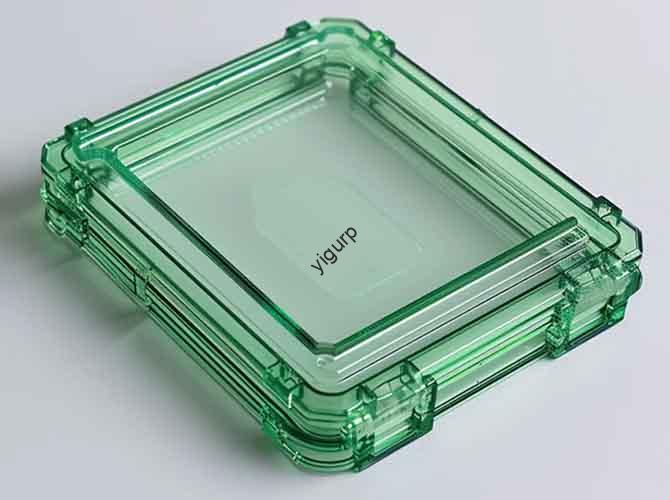
Silicone retourné (également appelé silicone à retournement de moule) est un matériau clé pour la réplication de prototypes, fabrication artisanale, et moulage industriel. Sa température de durcissement affecte directement l'efficacité de la production, performances du moule, et l'adéquation de l'application : l'utilisation d'une température incorrecte peut entraîner un durcissement incomplet, faible durabilité, voire déformation du moule. This article breaks down the curing temperatures of different flipped silicone types, explains how to match temperatures to scenarios, and addresses common temperature-related issues—with clear data and practical tips to help you achieve optimal curing results.
1. Curing Temperatures by Flipped Silicone Type
Flipped silicone is categorized by curing temperature needs, and each type has a specific temperature range to ensure optimal performance. The table below details the core parameters, based on industry standards and practical application data:
| Flipped Silicone Type | Curing Temperature Range | Typical Curing Time (at Recommended Temp) | Key Performance After Curing | Applications idéales |
| Room-Temperature Curing (RTV) | 20°C–25°C | 24 heures (full curing); 6–8 heures (initial setting) | – Moderate hardness (Shore A 20–40)- Good flexibility; no heating damage to master models | Small-batch crafts (par ex., jewelry wax molds), temperature-sensitive prototypes (par ex., wax TV remote models), on-site construction, and rapid low-volume prototyping. |
| Heating-Curing (HTV) – Medium Temp | 80°C–120°C | 1–3 heures (full curing) | – Higher hardness (Shore A 40–60)- Better abrasion/tear resistance; stable for 50+ casting cycles | Industrial mass production (par ex., auto part molds, TV back cover molds), scenarios requiring fast turnaround, and molds with high durability demands. |
| Heating-Curing (HTV) – High Temp | 150°C–200°C | 30 minutes–1 hour (full curing) | – Dureté extrême (Shore A 60–80)- Excellente résistance à la chaleur; suitable for high-stress applications | Special industrial parts (par ex., heavy-duty machinery gaskets), high-temperature casting molds, and scenarios needing ultra-fast curing (par ex., emergency mold repairs). |
| Low-Temperature Fast-Curing | 0°C–10°C (refrigerated environment) | 4–10 hours (full curing) | – Resists low-temperature brittleness- Maintains flexibility in cold conditions | Cold-region manufacturing (par ex., mold production in winter for northern factories), cold-storage-related prototypes, and projects where room-temperature curing is impossible. |
| High-Temperature Resistant | 80°C–120°C (guérir); 200°C–300°C (service temp) | 2–3 heures (full curing) | – Cures like medium-temp HTV but withstands extreme service heat- No deformation at 250°C+ for 100+ heures | Composants aérospatiaux (par ex., engine heat shields), high-temperature industrial molds (par ex., metal alloy casting), and parts for high-heat environments. |
Key Note: For most common scenarios (par ex., TV prototype mold replication, small crafts), room-temperature (20°C–25°C) ou medium-temperature heating (80°C–100°C) are the most practical choices—they balance ease of operation and performance.
2. How to Determine the Right Curing Temperature
Choosing the correct temperature isn’t just about matching the silicone type—it also depends on three critical factors: application scenario, mold thickness, and master model material. Use this step-by-step guide:
Étape 1: Prioritize the Master Model’s Heat Resistance
The master model (the original part you’re replicating) dictates the maximum safe temperature. Par exemple:
- If the master model is a wax TV button prototype (melts at 50°C+), you must use room-temperature curing (20°C–25°C)—heating would destroy the model.
- If the master model is a CNC-machined aluminum TV frame (heat-resistant to 300°C+), you can use medium or high-temp HTV for faster curing.
Étape 2: Adjust for Mold Thickness
Thicker molds trap heat, requiring longer curing times or slightly adjusted temperatures to avoid uneven hardening:
| Mold Thickness | Room-Temp Curing (20°C–25°C) | Medium-Temp HTV (80°C–120°C) |
| ≤5mm | 24 heures (full cure) | 1 heure (full cure) |
| 6–10mm | 30–36 hours (full cure) | 1.5–2 heures (full cure) |
| >10mm | 40–48 heures (full cure) | 2–2.5 hours (full cure) |
Exemple: A 8mm-thick TV back cover mold using medium-temp HTV needs 1.5 hours at 100°C—1 hour would leave the center under-cured, alors que 2.5 hours would waste time.
Étape 3: Align with Production Efficiency Goals
If you need fast turnaround (par ex., 10 TV prototype molds for a trade show in 3 jours), choose medium-temp HTV (80°C–100°C) (1–2 hours per mold) instead of room-temperature curing (24 hours per mold). If time isn’t a constraint, room-temperature curing is cheaper (no heating equipment needed).
3. Common Temperature-Related Issues & Solutions
Even with the right type, incorrect temperature control can cause defects. Below are the most frequent problems and how to fix them:
| Issue | Root Cause | Solution |
| Mold remains sticky after curing | – Room-temp curing: Humidity >60% or temperature <18°C (slows cross-linking).- HTV: Temperature too low (par ex., 60°C for medium-temp silicone) or time too short. | – Room-temp: Move to a dehumidified area (humidité <50%) and extend curing by 6–8 hours.- HTV: Raise temperature by 10–20°C and cure for an extra 30 minutes. |
| Mold cracks during demolding | – HTV: Rapid temperature spikes (par ex., 60°C → 150°C in 5 minutes) cause thermal stress.- Low-temp curing: Temperature <0°C (brittles silicone). | – HTV: Use staged heating (par ex., 60°C pour 30 mins → 100°C for 1 heure).- Low-temp: Keep curing temp between 0°C–10°C (use a controlled refrigerator). |
| Uneven hardness (soft in some areas) | – Thick molds: Heat doesn’t penetrate the center (HTV) or humidity varies across the mold (room-temp).- Poor temperature distribution (par ex., HTV oven has hot spots). | – Thick molds: For HTV, use a rotating oven; for room-temp, flip the mold every 8 hours.- Oven: Test temperature with a thermometer and adjust vents to eliminate hot spots. |
4. Yigu Technology’s Perspective on Flipped Silicone Temperatures
Chez Yigu Technologie, we’ve found that 70% of flipped silicone failures come from ignoring temperature nuances—especially for TV prototype and electronic part molds. For clients replicating small TV components (par ex., interface panels) with 3D-printed master models (heat-sensitive to 60°C+), we always recommend room-temperature curing (20°C–25°C) with humidity control (<50%)—this avoids model damage and ensures detailed mold replication. For clients producing 50+ TV back cover molds, we suggest medium-temp HTV (90°C–100°C) with staged heating—this cuts curing time from 24 heures pour 1.5 hours while maintaining mold durability (60+ casting cycles). A recent client once used 150°C (high-temp HTV) for a plastic TV frame mold, causing the master model to warp—switching to 90°C fixed the issue and saved $2,000 in rework. Our key advice: Never prioritize speed over compatibility—always check the master model’s heat resistance first, then adjust temperature for thickness and efficiency.
5. FAQ: Common Questions About Flipped Silicone Temperatures
Q1: Can I use a hair dryer to heat-cure flipped silicone (HTV) if I don’t have an oven?
A1: No—hair dryers produce uneven heat (hot spots and cold spots), leading to uneven curing or cracks. For small HTV molds, utilisez un pistolet thermique à réglage bas (80°C–100°C) with constant movement; for larger molds, invest in a small thermostatic oven (affordable for small-batch production).
Q2: My room-temperature flipped silicone is curing too slowly (winter, 15°C in the workshop)—what can I do?
A2: Raise the room temperature to 20°C–25°C (use a space heater) and reduce humidity to <50% (with a dehumidifier). If temperature can’t be raised, extend curing time by 50% (par ex., 24 hours → 36 heures) to ensure full hardening—avoid using heat (it may damage temperature-sensitive master models).
Q3: For a 12mm-thick high-temperature resistant flipped silicone mold, what temperature and time should I use?
A3: Cure it at 100°C–120°C (standard for high-temperature resistant silicone) for 2.5–3 hours. Use a rotating oven to ensure heat penetrates the 12mm thickness evenly. Après durcissement, test its service temperature (200°C+ if needed) with a small sample before full use—this confirms it meets high-heat requirements.