
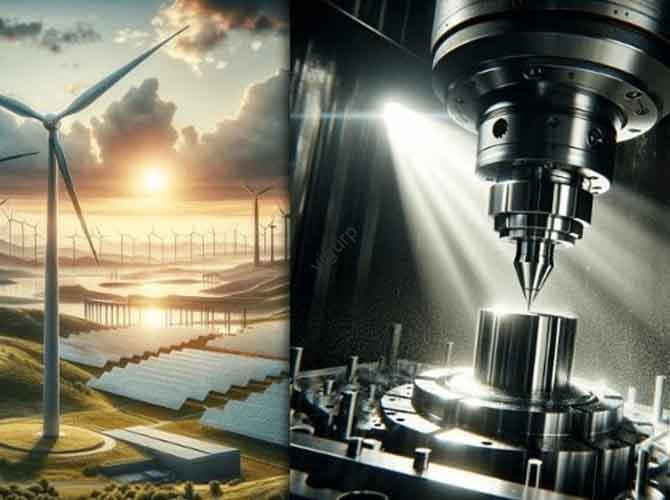
L'usinage de prototypes de matériel professionnel est la pierre angulaire du développement de produits, relier les concepts de conception et la production de masse. Cela implique des processus de précision pour créer des prototypes métalliques qui répondent aux exigences structurelles., fonctionnel, et exigences de performance, que ce soit pour les composants aérospatiaux, dispositifs médicaux, ou équipement industriel. Cet article décompose systématiquement les processus d'usinage de base, sélection des matériaux, contrôle de précision, and cost-saving strategies for professional hardware prototypes, with practical tools and comparisons to guide engineers and businesses.
1. Core Machining Processes for Professional Hardware Prototypes
Different machining processes excel at specific prototype types, based on complexity, volume, et du matériel. Choosing the right process is critical to balancing quality and efficiency.
1.1 Process Comparison & Application Scenarios
| Processus d'usinage | Avantages clés | Unit Price Range (Single Piece, CNY) | Applicable Prototype Characteristics | Typical Use Cases |
| Usinage CNC | Haute précision (±0.05-0.1mm), suitable for complex geometries (fils de discussion, surfaces courbes) | 500 – 3,000 | – Solid metal parts (aluminium, acier inoxydable)- Parts requiring tight tolerances- Low to medium volume (1-50 pièces) | Equipment shells, mechanical brackets, dissipateurs de chaleur |
| Impression 3D en métal | No mold needed; ideal for intricate structures (cavités internes, treillis) | 1,000 – 5,000 | – Complexe, non-traditional shapes- Petites pièces (50-200g)- Low volume (1-20 pièces) | Composants aérospatiaux, implants médicaux, custom gears |
| Estampillage | Fast production for thin-walled parts; cost-effective for medium volume | 1,000 – 5,000 (including mold) | – Thin metal sheets (0.5-3mm épaisseur)- Simple to moderately complex flat parts- Medium to high volume (50+ pièces) | Boîtiers électroniques, auto body panels, coques de connecteurs |
| Moulage sous pression | High efficiency for complex metal housings; excellent for mass production transition | 2,000 – 8,000 (including mold) | – Complex 3D shapes with thin walls- High-volume prototypes (100+ pièces)- Métaux non ferreux (aluminium, alliage de zinc) | Auto parts (composants du moteur), consumer electronics housings |
1.2 Key Considerations for Process Selection
- Complexité: For parts with internal channels or lattice structures (par ex., lightweight aerospace brackets), metal 3D printing is the only feasible option—CNC machining cannot reach internal features without splitting the part.
- Volume: If you need 1-10 prototypes for design testing, CNC machining avoids mold costs. Pour 100+ pièces (pre-mass production), die casting or stamping becomes cost-effective (mold costs are spread across more units).
- Matériel: Stamping works best with ductile metals (aluminium, cuivre), while CNC machining handles rigid materials (acier inoxydable, alliage de titane) more effectively.
2. Material Selection for Hardware Prototypes
Material choice directly impacts prototype performance, difficulté d'usinage, et le coût. Understanding material properties helps align prototypes with end-use requirements.
2.1 Matériaux courants & Machining Compatibility
| Type de matériau | Propriétés clés | Machining Difficulty | Cost Level (Relative) | Recommended Machining Process |
| Alliage d'aluminium (6061/6063) | Léger (2.7g/cm³), bonne conductivité thermique, facile à usiner | Faible | Faible (Base cost: ~20-30 CNY/kg) | Usinage CNC, moulage sous pression |
| Acier inoxydable (304/316) | Haute résistance, résistance à la corrosion, durable | Moyen | Moyen (Base cost: ~80-100 CNY/kg) | Usinage CNC (5-axis for complex parts), impression 3D métal |
| Cuivre | Excellent electrical/thermal conductivity, malléable | Low to Medium | Moyen-élevé (Base cost: ~60-80 CNY/kg) | Usinage CNC, estampillage |
| Alliage de titane | Rapport résistance/poids élevé, biocompatible, résistant à la corrosion | Haut (dur, faible conductivité thermique) | Haut (Base cost: ~500-800 CNY/kg) | Usinage CNC (vitesses d'alimentation lentes), impression 3D métal |
| Zinc Alloy | Point de fusion bas, facile à lancer, bonne stabilité dimensionnelle | Faible | Low-Medium (Base cost: ~30-50 CNY/kg) | Moulage sous pression |
2.2 Material Selection Tips
- Tests fonctionnels: For load-bearing parts (par ex., supports industriels), use stainless steel (304) to simulate real-world strength—aluminum may deform under stress, leading to inaccurate test results.
- Optimisation des coûts: For appearance-only prototypes (par ex., boîtiers d'appareils), use aluminum alloy instead of titanium—aluminum costs 1/10 of titanium and is easier to machine.
- Special Scenarios: For medical prototypes (par ex., outils chirurgicaux), choose titanium alloy (biocompatible) ou 316 acier inoxydable (corrosion-resistant for sterilization).
3. Precision Control in Hardware Prototype Machining
Precision is non-negotiable for professional hardware prototypes—even 0.1mm deviations can cause assembly failures or functional issues. Below is how to ensure and measure precision.
3.1 Niveaux de précision & Achieving Methods
| Precision Requirement | Tolérance typique | Machining Equipment/Technology | Exemples d'application |
| Conventional Precision | ±0,1mm | 3-axis CNC machining centers, standard end mills | General mechanical parts (parenthèses, simple shells) |
| Haute précision | ±0,05 mm | 5-axis CNC machining centers, slow wire EDM | Composants aérospatiaux (pièces de moteur), dispositifs médicaux (implants) |
| Ultra-High Precision | ±0.005-0.01mm | Precision grinding machines, laser machining | Micromechanical parts (composants du capteur, micro-connecteurs) |
3.2 Quality Inspection Tools & Processus
To verify precision, use these tools after machining:
- Étriers & Micromètres: For basic dimension checks (par ex., longueur, diamètre) with ±0.01mm accuracy.
- Machine de mesure de coordonnées (MMT): For 3D dimensional analysis of complex parts—scans 1000+ points to confirm tolerance compliance.
- Surface Roughness Tester: Measures surface smoothness (Valeur Ra)—critical for parts with fluid flow (par ex., composants hydrauliques) or tight fits (Ra ≤0.8μm recommended).
4. Surface Treatment for Professional Hardware Prototypes
Surface treatment enhances prototype durability, esthétique, et fonctionnalité. Choosing the right treatment aligns with end-use conditions.
4.1 Common Surface Treatments & Avantages
| Traitement de surface | But | Coût (Added per Piece, CNY) | Compatibility with Materials |
| Anodization | – Résistance à la corrosion- Color customization (noir, argent, rouge)- Improved surface hardness | 200 – 500 | Alliage d'aluminium (6061/6063) |
| Galvanoplastie | – Conductivité améliorée (cuivre, gold plating)- Résistance à la corrosion (nickel, chromage)- Aesthetic shine | 500 – 2,000 | Acier inoxydable, cuivre, alliage de zinc |
| Sablage | – Finition mate (réduit l'éblouissement)- Hides minor machining marks- Adhérence améliorée | 200 – 400 | Aluminium, acier inoxydable, titane |
| Polissage | – Mirror-like surface (Ra ≤0.2μm)- Frottement réduit (pour pièces mobiles)- Esthétique améliorée | 100 – 300 | Tous les métaux (especially stainless steel, cuivre) |
| Gravure Laser | – Part numbering/Branding- Decorative patterns- No material removal (preserves precision) | 100 – 300 | Tous les métaux (high contrast on anodized aluminum) |
5. Cost-Saving Strategies for Hardware Prototype Machining
Professional hardware prototypes can be costly, but strategic choices reduce expenses without compromising quality.
5.1 Practical Cost-Reduction Tips
- Optimize Design:
- Simplify geometries: Remove non-functional features (par ex., decorative grooves) that increase machining time—saves 20-30% on CNC costs.
- Merge parts: Combiner 3 separate brackets into 1 integrated design—reduces machining and assembly steps.
- Choose Cost-Effective Processes:
- Use CNC machining for 1-10 pieces instead of metal 3D printing (enregistre 50-70% pour les pièces simples).
- Pour 50+ thin-walled parts, switch from CNC to stamping (mold costs are offset by lower unit prices).
- Control Surface Treatment:
- Skip electroplating for internal parts (use basic anodization instead)—saves 300-1,500 CNY per piece.
- Use sandblasting to hide minor machining marks instead of expensive polishing.
- Leverage Local Suppliers:
- Work with suppliers in Shenzhen or Dongguan (mature hardware clusters)—logistics costs are 10-20% inférieur, and communication is faster (reduces rework from misinterpretation).
5.2 Getting Accurate Quotes to Avoid Hidden Costs
To prevent budget surprises, follow this quote request process:
- Provide Detailed 3D Drawings: Submit STEP, IGS, or STL files (not 2D sketches) to clarify dimensions and tolerances.
- Specify Requirements Clearly:
- Matériel (par ex., “6061 aluminum alloy, 5mm thickness”)
- Précision (par ex., “±0.1mm for external dimensions”)
- Traitement de surface (par ex., “black anodization, Ra ≤1.6μm”)
- Quantity (par ex., “5 pieces for iteration testing”)
- Ask for Cost Breakdown: Request separation of material, usinage, traitement de surface, and setup fees—identifies expensive components (par ex., if surface treatment is 40% of the cost, you can opt for a cheaper alternative).
Yigu Technology’s Viewpoint
For professional hardware prototype machining, process-material-precision alignment is key. Yigu Technology recommends starting with clear prototype goals: if it’s functional testing, prioritize CNC machining (haute précision, cost-effective for small batches); if it’s complex geometry, metal 3D printing is worth the investment. Material selection should avoid over-engineering—aluminum works for most non-critical parts, while titanium is only necessary for special scenarios (aérospatial, médical). Precision control requires collaboration with suppliers: specify tolerances based on actual needs (±0.1mm suffices for most parts, avoiding unnecessary high-precision costs). Enfin, local suppliers in Shenzhen/Dongguan offer the best balance of quality, vitesse, and cost—their mature supply chains reduce lead times and rework risks.
FAQ
- When should I choose metal 3D printing over CNC machining for hardware prototypes?
Choose metal 3D printing if your prototype has: 1) Intricate internal structures (par ex., lattice cores, canaux internes) that CNC cannot reach; 2) Petite taille (50-200g) with complex 3D shapes; 3) Low volume (1-5 pièces) where mold costs for other processes are prohibitive. CNC is better for solid parts, larger sizes, or higher volume (10+ pièces).
- How does material choice affect machining time and cost?
Harder materials (par ex., alliage de titane) increase machining time—CNC feed rates are 50-70% slower than for aluminum, raising labor costs. Material cost also scales with rarity: titanium costs ~20x more than aluminum, so a 100g titanium prototype is ~20x more expensive than an aluminum one of the same size. Choose softer, matériaux courants (aluminium, 304 acier inoxydable) for cost-sensitive projects.
- What is the most cost-effective surface treatment for aluminum alloy prototypes?
Anodization is the most cost-effective option. It costs 200-500 CNY per piece (contre. 500+ CNY for electroplating) and provides corrosion resistance and color customization. For internal or non-visible parts, even basic sandblasting (200-400 CNY) works—it hides machining marks and avoids unnecessary costs. Only use electroplating if you need enhanced conductivity (par ex., connecteurs électriques).