
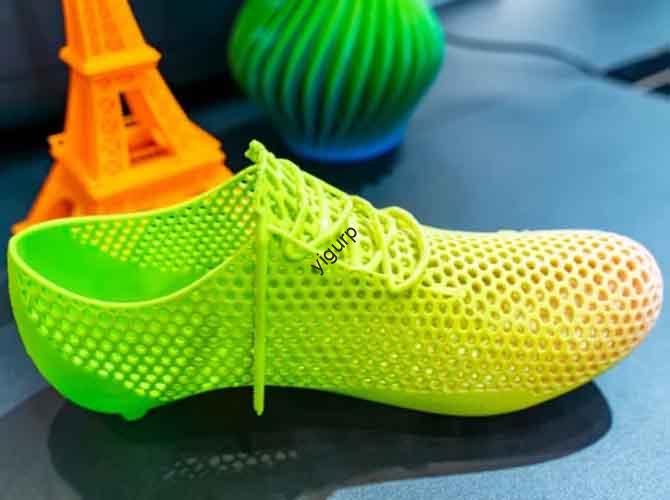
Si vous utilisez l'impression 3D pour des prototypes, modèles dentaires, ou des pièces très détaillées, Comprendre le prix par gramme de résine photosensible est la clé d'une budgétisation efficace. Le coût de cette résine n’est pas fixe : il varie de 0.5 RMB/gramme à 50 RMB/gramme depending on type, marque, performance, et volume d'achat. This guide breaks down the core factors affecting price, provides practical price references, shares cost-saving tips, and addresses common questions to help you make informed decisions.
1. 5 Core Factors That Affect the Price Per Gram of 3D Printing Photosensitive Resin
The price per gram of photosensitive resin is shaped by tangible factors—from material performance to purchase quantity. Below is a detailed breakdown of each factor, with real-world examples to illustrate their impact:
(1) Resin Type & Performance
Performance is the biggest driver of price. Resins are categorized by their functional use, and higher-performance options (par ex., résistant à la chaleur, biocompatible) cost significantly more:
| Resin Category | Key Performance Traits | Price Range (RMB/gramme) | Typical Applications |
| General-Purpose Resin | Basic detail, low heat resistance (≤60°C) | 0.5 ~ 3 | Ordinary prototypes, model making (par ex., pièces de jouets) |
| High-Performance Resin | Haute ténacité, résistance à la chaleur (60–120°C), résistant à l'usure | 3 ~ 10 | Pièces industrielles (par ex., petits engrenages, boîtiers électroniques) |
| Special-Functional Resin | Biocompatible (dental/medical), optical grade, fluorescent | 10 ~ 50 | Dental models, implants médicaux, composants optiques |
Exemple: A general-purpose resin for a simple prototype costs 0.5–3 RMB/gram, while a dental-grade resin (requiring biocompatibility certification) costs 10–30 RMB/gram—5–20x more.
(2) Brand Origin (Domestic vs. Imported)
Brand origin affects both price and quality. Domestic brands offer cost-effective options, while imported brands (especially high-end ones) command premium prices:
| Brand Type | Price Range (RMB/gramme) | Qualité & Support Traits | Popular Brands |
| Domestic Brands | 0.5 ~ 5 | Performance close to imports; livraison plus rapide | Zhongshan Blue Whale, eSUN, Huixiang |
| Imported Brands | 2 ~ 10 | Contrôle de qualité strict; wider certification (par ex., FDA) | laboratoires de formulaire, Stratasys, EnvisionTEC |
| High-End Medical/Dental Brands | 15 ~ 50 | Medical-grade certification (par ex., OIN 10993); biocompatible | 3D Systems (dental line), Formlabs BioMed |
Exemple: A domestic general-purpose resin costs 0.5–1.5 RMB/gram, while an imported general-purpose resin (par ex., Formlabs Standard Resin) costs 1.5–3 RMB/gram—2–3x more.
(3) Purchase Volume
Buying in bulk unlocks significant discounts, as suppliers reduce unit prices to offset fixed costs (par ex., conditionnement, logistique). The larger the order, the lower the price per gram:
| Purchase Volume | Price Discount (contre. Petits lots) | Exemple: Domestic General-Purpose Resin (Original Price: 1 RMB/gramme) |
| Petit lot (<1kilos) | 0% (No Discount) | 1 RMB/gram → Total for 1kg: 1,000 RMB |
| Medium Batch (1–10kg) | 10 ~ 20% | 0.8 ~ 0.9 RMB/gram → Total for 5kg: 4,000 ~ 4,500 RMB |
| Large Batch (>10kilos) | 20 ~ 50% | 0.5 ~ 0.8 RMB/gram → Total for 20kg: 10,000 ~ 16,000 RMB |
Key Tip: Even if you don’t need 10kg immediately, ask suppliers about “cumulative orders” (par ex., 5kg now + 5kg in 3 mois) to qualify for bulk discounts.
(4) Color & Special Effects
Standard colors are cheaper, while custom colors or special effects (par ex., métallique, fluorescent) add to the cost:
| Color/Effect Type | Price Range (RMB/gramme) | Use Case Example |
| Standard Colors (blanc, noir, transparent) | 0.5 ~ 3 | Basic prototypes, non-visible parts |
| Special Colors (translucide, gradient) | 2 ~ 5 | Aesthetic parts (par ex., display models) |
| Special Effects (fluorescent, métallique) | 3 ~ 10 | Pièces décoratives (par ex., custom figurines) |
Exemple: A transparent general-purpose resin costs 0.8 RMB/gramme, while a fluorescent version of the same resin costs 3–5 RMB/gram—4–6x more.
(5) Supplier Channel
Where you buy the resin also impacts price. Official channels offer security but cost more, while direct manufacturer purchases save money for large orders:
| Supplier Channel | Price Level | Avantages | Inconvénients |
| Official Brand Stores/Platforms | Haut | Assurance qualité; after-sales support | Higher prices; no negotiation for small orders |
| Direct Manufacturer | Medium-Low | Bulk discount negotiation; fresh stock | Minimum order quantity (often ≥1kg) |
| Third-Party Distributors | Moyen | Convenient one-stop shopping; small order options | Potential stock delays; limited discount |
2. Practical Price Reference Table for 3D Printing Photosensitive Resin
To help you quickly gauge reasonable prices, below is a comprehensive table of common resin types, marques, and their price per gram:
| Resin Type | Brand Origin | Price Range (RMB/gramme) | Principales fonctionnalités | Applicable Scenarios |
| General-Purpose Resin | Domestic | 0.5 ~ 1.5 | Facile à imprimer; good detail for basic use | Prototypes de jouets, simple model making |
| General-Purpose Resin | Imported | 1.5 ~ 3 | Qualité constante; wider printer compatibility | High-detail non-functional parts |
| High-Toughness Resin | Domestic | 2 ~ 5 | Résistant aux chocs; suitable for functional parts | Petits engrenages, electronic housing prototypes |
| High-Toughness Resin | Imported | 4 ~ 8 | Industrial-grade durability; résistant à la chaleur | Industrial functional parts (par ex., supports de capteur) |
| Dental/Medical Resin | Domestic | 10 ~ 20 | Biocompatible; meets dental standards | Dental crown models, orthodontic aligner prototypes |
| Dental/Medical Resin | Imported | 20 ~ 30 | FDA/CE certified; consistent biocompatibility | Implants médicaux, high-precision dental models |
| Special-Effect Resin (fluorescent) | Domestic | 3 ~ 7 | Glows in dark; good detail | Pièces décoratives, custom figurines |
| Special-Effect Resin (métallique) | Imported | 5 ~ 10 | Metallic finish; résistant à l'usure | High-end display models, prototypes de bijoux |
3. 4 Proven Tips to Reduce the Cost of 3D Printing Photosensitive Resin
Vous n’avez pas à sacrifier la qualité pour économiser de l’argent. Try these strategies to lower your resin costs:
(1) Choose Domestic Brands for Non-Critical Parts
Domestic resins (par ex., eSUN, Zhongshan Blue Whale) have performance levels close to imported ones but cost 30–50% less. For non-critical parts (par ex., prototype drafts), they’re an excellent choice. Par exemple, using a domestic general-purpose resin (0.8 RMB/gramme) instead of an imported one (2 RMB/gramme) enregistre 60% par gramme.
(2) Buy in Bulk (or Join Group Buys)
If you use resin regularly, order 10kg+ to get 20–50% discounts. If your needs are small, join industry group buys (par ex., via 3D printing forums) to pool orders and qualify for bulk pricing. A 10kg order of domestic high-toughness resin (original 5 RMB/gramme) drops to 2.5–4 RMB/gram with a 20–50% discount.
(3) Prioritize General-Purpose Resins
Only use special-functional resins (par ex., dentaire, fluorescent) when necessary. For most prototypes, general-purpose resin (0.5–3 RMB/gram) fonctionne parfaitement. Par exemple, a display model doesn’t need heat-resistant resin—using a standard transparent resin saves 50–80% vs. a high-performance one.
(4) Optimize Resin Usage
Reduce waste by optimizing your 3D prints:
- Design lightweight parts: Use hollow structures or lattice infills to cut resin use by 15–30%.
- Calibrate your printer: Proper exposure settings prevent over-curing (which wastes resin) and under-curing (which ruins parts, requiring reprints).
- Reuse uncured resin: Collect excess resin from the build plate and return it to the bottle (if clean) to avoid waste.
4. Key Precautions When Buying 3D Printing Photosensitive Resin
To avoid overpaying or buying unsuitable resin, keep these precautions in mind:
(1) Check Printer Compatibility
Not all resins work with all 3D printers. Par exemple, some resins are designed for DLP printers, while others work with SLA printers. Using incompatible resin leads to poor prints (wasting money) or even printer damage. Always confirm compatibility with your printer model before purchasing.
(2) Verify Certification for Special Use Cases
For medical/dental parts, ensure the resin has relevant certifications (par ex., OIN 10993 pour la biocompatibilité, FDA approval). Uncertified resin may be cheaper but poses safety risks (par ex., skin irritation or toxicity) and fails to meet industry standards.
(3) Check Storage & Shelf Life
Photosensitive resin degrades when exposed to light or heat. Buy only as much as you can use within 6 mois (the typical shelf life after opening) to avoid wasting expired resin. Store resin in a cool, dark place and seal the bottle tightly after use.
Yigu Technology’s Perspective on 3D Printing Photosensitive Resin Pricing
Chez Yigu Technologie, we believe équilibrer performances et coûts is the key to choosing photosensitive resin. Many clients overspend by using high-end imported resin for non-critical parts—for example, buying Formlabs resin (2–3 RMB/gram) for simple prototypes when domestic eSUN resin (0.8–1.5 RMB/gram) works just as well. Our team helps clients match resin to their needs: for dental models, we recommend certified domestic resin (10–20 RMB/gram) to save 30–50% vs. imported options; for industrial parts, we suggest domestic high-toughness resin (2–5 RMB/gram) to cut costs without sacrificing durability. We also assist with bulk ordering, helping small clients join group buys to access 20–50% discounts. Our goal is to help clients get the right resin at the right price.
FAQ
- Why is dental-grade photosensitive resin so expensive (10–30 RMB/gram)?
Dental resin requires strict biocompatibility (to avoid harming oral tissue) et haute précision (to match tooth shapes). It undergoes expensive testing and certification (par ex., OIN 10993), and its formulation uses high-quality, non-toxic ingredients—all of which drive up the price.
- Can I mix different brands of photosensitive resin to save money?
No—mixing brands is not recommended. Different resins have different chemical compositions (par ex., monomer ratios, photoinitiators), which can cause poor curing (resulting in weak or deformed parts), resin separation, or even damage to your printer’s resin tank. Stick to one brand for consistent results.
- Is it cheaper to buy resin in large bottles (par ex., 5kilos) contre. small bottles (par ex., 1kilos)?
Yes—large bottles have lower price per gram. Par exemple, a 1kg bottle of domestic general-purpose resin costs 1,000 RMB (1 RMB/gramme), while a 5kg bottle costs 4,000 RMB (0.8 RMB/gramme)—a 20% discount. Cependant, only buy large bottles if you can use the resin within its shelf life (6 months after opening) to avoid waste.