
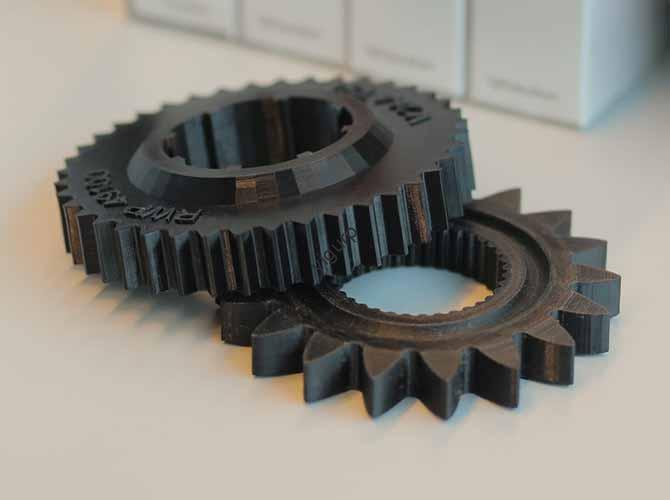
In die casting production—whether for new energy vehicle motor housings or 5G base station cooling modules—post-processing of die casting is the final step that turns raw castings into high-performance, pièces prêtes à être commercialisées. Il corrige les défauts de moulage, optimise la qualité de la surface, et garantit que les pièces répondent aux normes de conception. Cet article détaille ses objectifs fondamentaux, processus clés, quality control methods, defect solutions, and cost-saving tips, helping you build a efficient post-processing workflow.
1. What Are the Core Goals and Principles of Die Casting Post-Processing?
Post-processing isn’t random—it follows clear goals and principles to avoid rework and ensure consistency.
1.1 Core Goals
The work focuses on four key objectives, tailored to part functions:
- Eliminate Casting Defects: Fix issues like shrinkage, pores, and flash left from casting.
- Optimize Surface Quality: Achieve smooth finishes or protective coatings for appearance and durability.
- Adjust Mechanical Properties: Boost strength, dureté, or creep resistance through heat treatment.
- Meet Design Accuracy: Ensure dimensions, platitude, and other specs match engineering requirements.
1.2 Guiding Principles
To prevent secondary damage and save time, two rules are non-negotiable:
- “Rough First, Then Fine”: Do heavy-duty work (like cutting sprues) d'abord, then precision tasks (like grinding). This avoids scratching finished surfaces.
- “Inside First, Then Outside”: Machine internal features (like holes) before external ones. Internal machining is more likely to cause minor deformation, which can be corrected when finishing the exterior.
2. What Are the Key Processes in Die Casting Post-Processing?
Post-processing has five core steps, each with specific techniques and parameters. Below is a detailed breakdown for industrial use:
2.1 Sprue, Riser, and Flash Removal
This step cleans up excess material from casting. The method depends on production volume and precision needs:
| Production Batch | Recommended Method | Avantages clés | Critical Parameters |
| Mass Production | Automatic Stamping & Tonte | Haute efficacité (1000+ pièces/heure); Flat cross-sections | Retain 1-2mm margin to protect the part body; Cut angle <5° |
| Small-Medium Batches | Grinding Wheel/Diamond Saw Cutting | Flexible (works for odd-shaped parts); Low equipment cost | Use diamond blades for aluminum alloys to reduce burrs |
| High-Precision Parts | Five-Axis Laser Cutting | No deformation risk; Cuts complex shapes | Laser power: 500-1000W; Cutting speed: 100-300mm/min |
Note: Utiliser cold cutting for aluminum-magnesium alloys to avoid heat-affected zones that weaken the part.
2.2 Surface Treatment Combinations
Surface treatment improves appearance, résistance à la corrosion, et fonctionnalité. Choose based on material and part use:
| Treatment Level | Techniques | Key Specifications | Suitable Materials | Avantages |
| Basic Treatment | – Vibration Grinding (ceramic medium + alkaline solution)- Sablage (ASTM B243 ALMEN standard)- Chemical Degreasing (ultrasound-assisted) | – Deburrs edges- Ra=3.2-6.3μm (sablage)- Contact angle <5° (dégraissage) | All die casting metals | Prepares surfaces for advanced treatments; Removes oil/dirt |
| Advanced Treatment | – Anodisation- Micro-Arc Oxidation- Revêtement en poudre- Galvanoplastie | – Corrosion resistance ×3 (anodisation)- Hardness HV≥800 (micro-arc oxidation)- Salt spray test >1000h (revêtement en poudre)- Gloss 90GU (galvanoplastie) | – Anodisation: Alliages d'aluminium- Micro-arc oxidation: Al/Mg/Ti alloys- Revêtement en poudre: Tous les métaux- Galvanoplastie: Copper/zinc alloys | Tailored to needs—e.g., anodizing for automotive parts; electroplating for decorative components |
2.3 Usinage de précision
This step refines dimensions and shapes. Success depends on clamping strategies and parameter optimization:
2.3.1 Clamping Strategies for Different Part Types
| Part Type | Clamping Method | Précision | Use Case |
| Thin-Walled Parts (<3mm) | Vacuum Suction Cup + Honeycomb Support Pad | Prevents deformation | Aluminum alloy laptop casings |
| Irregular-Shaped Parts | 3D-Printed Custom Fixtures | Error <0.02mm | 5G base station cooling modules |
| Multi-Process Parts | Zero-Point Positioning System | Repeat positioning <0.01mm | New energy vehicle motor housings |
2.3.2 Optimized Machining Parameters
| Matériel | Process Type | Feed per Tooth (mm) | Depth of Cut (mm) | Cutting Speed (m/mon) | Cooling Method |
| Alliage d'aluminium | Roughing | 0.15-0.25 | 0.8-1.2 | N / A | Low-temperature compressed air + micro-lubrication |
| Acier inoxydable | Finition | N / A | Radial <0.5 | 80-120 | Same as above |
2.4 Heat Treatment Strengthening
Heat treatment boosts mechanical properties. Use material-specific schemes:
| Matériel | Heat Treatment Scheme | Key Parameters | Résultats |
| A380 Aluminum Alloy | T6 Solution Aging | 535±5°C for 8-12h; Quench transfer <30s | Tensile strength σb=320MPa; Elongation δ=8% |
| ZAM4-1 Magnesium Alloy | T6 Artificial Aging | 415±5°C for 24h; Inert gas protection | Brinell hardness HB=90; Creep resistance ↓40% |
| ZA27 Zinc Alloy | Age Hardening | 90-120°C for 4-8h; Temperature < eutectic point | Rockwell hardness HRB=95; Stabilité dimensionnelle |
Critical Notes: Magnesium alloys need inert gas to avoid oxidation; Zinc alloys must not exceed eutectic temperature (causes melting).
2.5 Special Processing
For residual stress relief and sealing protection:
| But | Techniques | Parameters | Avantages |
| Residual Stress Relief | – Vibration Aging- Cryogenic Treatment | – Frequency 2-50kHz; Amplitude 15-50μm- -196°C liquid nitrogen for 48h | Fatigue life ×2-3 (alliages d'aluminium); Prevents long-term deformation |
| Sealing Protection | – Silicone Rubber Impregnation (VIPI)- PARYLENE Vapor Deposition | – Pressure resistance IP68- Film thickness 5-25μm | Waterproof/dustproof; Protects electronics (par ex., boîtiers de capteurs) |
3. How to Control Quality in Die Casting Post-Processing?
Quality control ensures parts meet standards. Use the right tools and tests:
| Quality Aspect | Testing Method | Standards/Requirements |
| Précision dimensionnelle | Machine de mesure de coordonnées (MMT) | GB/T 6414 CT7 |
| Air Tightness | HE High-Pressure Leak Detection | Leakage rate <1cm³/min@0.3MPa |
| Rugosité de la surface | White Light Interferometer | Decorative surfaces: Ra≤0.8μm |
| Coating Adhesion | Grid Test + Tape Peeling | ASTM D3359 Method B |
| Internal Defects | X-Ray Fluorescence + CT Scanning | OIN 17636-1 Level B |
4. How to Fix Common Post-Processing Defects?
Defects like shrinkage or pores can be resolved with targeted solutions:
| Defect | Cause | Solution |
| Rétrécissement (X-ray cloud-like shadows) | Insufficient cooling during casting | Add cooling inserts; Extend holding time to 8-12s |
| Peeling (séparation des couches) | Large mold temperature gradient | Use mold temperature controller to keep inlet/outlet temp difference <5°C |
| Pores (tiny air bubbles) | Trapped air during casting | Add more exhaust grooves; Adjust backpressure valve |
| Deformation | Residual stress release | Manual aging treatment; Use calibration fixtures |
| Low Hardness (CRH<48) | Inadequate heat treatment | Laser cladding with TSN coating (hardness HRC62) |
5. How to Control Costs and Cycles in Post-Processing?
Post-processing accounts for a large portion of total costs—optimize to save money and time:
| Post-Processing Step | Cost Share | Cycle Share | Optimization Tips | Résultats |
| Basic Treatment | 15-25% | 20-30% | Use automatic rolling grinding lines | Manpower saved by 70% |
| Traitement de surface | 20-35% | 15-25% | Build coating recycling systems | Consumables reduced by 40% |
| Usinage de précision | 30-40% | 30-40% | Adopt turn-mill composite machining centers | Cycle time shortened by 50% |
| Contrôle qualité | 5-10% | 5-10% | Replace manual checks with AI visual inspection | Missed detection rate <0.1% |
6. Yigu Technology’s Perspective on Post-Processing of Die Casting
Chez Yigu Technologie, we see post-processing of die casting as the “value-adding bridge” between raw castings and high-quality parts. Our data shows 70% of part failures stem from rushed or mismatched post-processing—e.g., using heat treatment on porous aluminum parts causes cracking.
We recommend a “process-material matching” approach: For ADC12 aluminum alloy motor housings, we pair T6 heat treatment with precision boring to hit flatness <0.05mm/100mm; For Zamak5 zinc alloy medical handles, we use nano-chrome plating + laser engraving to meet ISO 10993 normes de biocompatibilité. By integrating automation (like AI inspection) and material-specific schemes, we help clients cut costs by 25% while improving part reliability.
7. FAQ: Common Questions About Post-Processing of Die Casting
Q1: Can all die casting materials use the same surface treatment?
Non. Par exemple, anodizing only works on aluminum alloys (it forms an oxide layer), while micro-arc oxidation is better for Al/Mg/Ti alloys. Zinc alloys are often electroplated for decoration, but powder coating works for most metals—always match the treatment to the material and part function.
Q2: Why is quench transfer time critical for aluminum alloy heat treatment?
Alliages d'aluminium (like A380) need fast quenching after solution treatment to trap strengthening elements. If transfer time exceeds 30 secondes, elements precipitate early, reducing tensile strength by up to 20%. We use automated quenching systems to keep transfer time <25 secondes.
Q3: How to reduce deformation in thin-walled die casting post-processing?
Use three methods: 1) Clamp with vacuum suction cups + honeycomb pads to spread pressure; 2) Use low cutting speeds (50-80m/min for aluminum) to minimize force; 3) Add a cryogenic treatment step (-196°C for 24h) to release residual stress before precision machining. These cut deformation by 60%.