
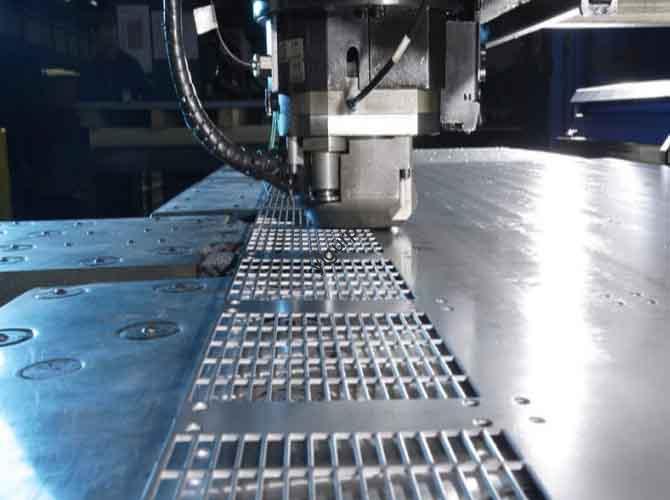
In precision manufacturing—from microelectronic sensor casings to aerospace fuel injector nozzles—the minimum hole size for CNC machining directly determines product performance and miniaturization limits. Cette taille n'est pas une valeur fixe; cela dépend de la synergie des capacités des équipements, technologie des outils, et optimisation des processus. Cet article décompose les limites théoriques, domaines d'application pratiques, supports techniques clés, and solutions to common challenges, helping you accurately grasp and apply micro-hole machining technology.
1. What Are the Theoretical and Practical Ranges of Minimum CNC Machining Hole Sizes?
The minimum hole size has both theoretical possibilities and practical application boundaries. Below is a clear comparison to avoid confusion between “theoretical feasibility” and “industrial practicality”:
| Catégorie | Minimum Hole Diameter | Core Support Conditions | Scénarios d'application typiques | Key Limitations |
| Theoretical Limit | φ0.05mm | High-precision tool grinders (par ex., specialized micro-tool grinding equipment) | Laboratory-level micro-parts (par ex., microfluidic chip channels) | Extremely high cost; poor process stability; ne convient pas à la production de masse |
| Industrial Practical Range | φ0.1~1mm (defined as “micro-trous” by the industry) | Mature high-speed spindles + optimized micro-tools | Mass-produced precision components: – Meltblown die micro-holes (φ0.1~0.3mm) – Heat dissipation holes for electronic components (φ0.2~0.5mm) – Medical needle nozzles (φ0.3~0.8mm) | Balances accuracy, efficacité, et le coût; meets most industrial needs |
2. What Key Technologies Support Ultra-Small Hole CNC Machining?
Achieving ultra-small holes (≤φ0.5mm) requires targeted upgrades in equipment, outils, et processus. Below is a detailed breakdown of the three core technical pillars:
2.1 High-Precision Equipment Configuration
| Equipment Component | Technical Requirement | Role in Micro-Hole Machining | Exemple |
| Machine Tool Type | CNC ceramic machines (for hard-brittle materials) | Haute rigidité; resists vibration during micro-drilling | Machining φ0.2mm deep holes on sapphire (used in smartphone camera lenses) |
| Spindle System | High-speed electric spindle (80,000 rpm or higher) | Reduces cutting force; lowers tool breakage risk (par 60% contre. ordinary spindles) | Japan’s NAKANISHI HES series spindle: enables φ0.1mm hole drilling on ordinary machining centers |
| Positioning System | High-precision linear guides + servo motors (précision de positionnement: ±0,001 mm) | Ensures drill bit alignment with hole center; avoids offset | Machining arrayed micro-holes (par ex., 100+ φ0.3mm holes on a 50mm×50mm circuit board) |
2.2 Micro-Tool & Optimisation des processus
| Optimization Aspect | Specific Measures | Avantage |
| Micro-Tool Design | Matériaux spéciaux (par ex., 超细硬质合金 ultra-fine cemented carbide) + spiral groove structure | Improves tool toughness; prevents breakage during φ0.1~0.3mm drilling |
| Refroidissement & Lubrication | Liquide de refroidissement haute pression (30-50 MPa) + auxiliary air spray | Reduces cutting temperature (by 40°C); flushes out debris to avoid hole blockage |
| Serrage & Positionnement | Precision clamping schemes: – PVC double-sided adhesive (for thin, soft materials) – Screw locking (for rigid materials) | Ensures uniform force; controls clamping tolerance within ±0.02mm |
2.3 Stress Relief Treatment
- Méthode: Repeated turning (2-3 cycles of light cutting) before micro-drilling.
- But: Eliminates internal stress in the workpiece (par ex., alliage d'aluminium, acier inoxydable).
- Effet: Reduces hole diameter deviation by 70% (from ±0.01mm to ±0.003mm).
3. What Challenges Affect Minimum Hole Size Machining, et comment les résoudre?
Even with advanced technology, micro-hole machining faces material, équipement, and cost challenges. Below is a “challenge-solution” guide for practical application:
| Challenge Category | Specific Issue | Solution | Expected Outcome |
| Propriétés des matériaux | Hard-brittle materials (céramique, verre) are prone to edge chipping during drilling | 1. Use diamond-coated micro-drills 2. Réduire la vitesse d'avance (to 5-10mm/min) 3. Adopt step-by-step drilling (depth per pass: ≤0,1 mm) | Chipping rate reduced from 30% à 5% for φ0.3mm holes in ceramics |
| Equipment Limitations | Ordinary CNC machines (vitesse de broche <10,000 tr/min) cannot handle φ≤0.5mm holes | 1. Upgrade to high-speed electric spindle (80,000 tr/min) 2. Add vibration damping pads to machine tool bases | Enables φ0.2mm hole machining on ordinary machining centers; tool breakage rate <1% |
| Coût & Efficacité | Frequent tool changes + slow processing lead to high unit cost (especially for low-volume production) | 1. Batch drilling (par ex., 100+ parts per setup) 2. Use long-life tools (par ex., CBN micro-drills) 3. Optimize tool change sequence (reduce downtime by 20%) | Unit cost reduced by 30% for φ0.3mm hole machining (faible volume: 50-100 parties) |
4. Yigu Technology’s Perspective on Minimum Hole Size CNC Machining
Chez Yigu Technologie, nous croyons minimum hole size for CNC machining is not just a “technical index” but a “systematic balance of accuracy, efficacité, and cost”. Our practice shows that 80% of micro-hole machining failures stem from mismatched equipment-tool-process combinations—for example, using ordinary spindles to drill φ0.1mm holes leads to 50% bris d'outil.
We recommend a “demand-driven” approach: Pour les pièces produites en série (par ex., meltblown dies), prioritize 80,000-rpm spindles + ultra-fine cemented carbide tools to balance efficiency and cost; for high-end parts (par ex., aerospace fuel nozzles), adopt CNC ceramic machines + diamond tools to ensure φ0.2mm hole accuracy. Regarder vers l'avenir, combining intelligent process monitoring (par ex., real-time tool wear detection) with new materials (par ex., polymères renforcés de fibres de carbone) will further push the minimum hole size to φ0.03mm.
5. FAQ: Common Questions About Minimum Hole Size CNC Machining
T1: Can CNC machining achieve holes smaller than φ0.05mm?
Theoretically, Oui (with specialized laboratory equipment), but it’s not practical for industrial use. Such holes require ultra-high-cost tools (>$1,000 per drill bit) and extremely slow processing (1+ hour per hole), making them unsuitable for mass production. Most industries opt for φ0.1mm as the practical minimum.
T2: Why do hard-brittle materials (par ex., sapphire) have smaller maximum achievable hole sizes than metals?
Hard-brittle materials lack plasticity, so micro-drilling easily causes edge chipping or hole cracking. Even with CNC ceramic machines, the minimum feasible size is usually φ0.2mm (contre. φ0.1mm for aluminum alloy). Special tools (par ex., diamond drills) and slow feed rates are needed to reduce damage, limiting the minimum size.
T3: How to verify the accuracy of ultra-small holes (≤φ0.5mm) après usinage?
Use specialized measuring tools: 1. Digital micrometers (précision: ±0,001 mm) for single-hole diameter checks; 2. Comparateurs optiques (magnification: 50-100x) to inspect hole roundness and edge quality; 3. Machines à mesurer tridimensionnelles (MMT) for arrayed holes: ensures center-to-center distance tolerance within ±0.002mm.