
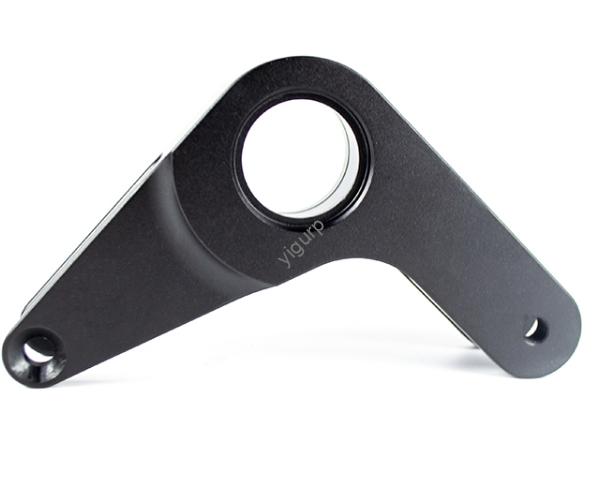
Si vous êtes un concepteur de produits, ingénieur, ou un entrepreneur se préparant au développement d'un prototype, l’une des premières et des plus critiques questions auxquelles vous serez confronté est: Quels matériaux peuvent être utilisés pour le traitement des prototypes? Le bon choix de matériau impacte directement la fonctionnalité de votre prototype, durabilité, coût, et même à quel point il représente bien le produit final. Dans ce guide, we’ll break down all common prototype materials—from metals to plastics and beyond—explain their key properties, ideal use cases, and processing tips, so you can make an informed decision for your project.
Why Material Choice Matters for Prototype Processing
Before diving into specific materials, let’s clarify why this decision is so important. A prototype isn’t just a “test piece”—it’s a tool to validate design, test performance, and showcase your product to stakeholders. The wrong material can lead to:
- Inaccurate performance tests: Par exemple, using a weak plastic for a structural part prototype won’t reflect how the final metal version will hold up.
- Wasted time and money: If a material is too hard to machine or doesn’t meet your project’s needs, you’ll have to restart the prototype process.
- Poor stakeholder perception: A low-quality prototype (par ex., a brittle plastic that cracks easily) can undermine confidence in your design.
That’s why understanding the pros, inconvénients, and best uses of each material is essential. Ci-dessous, we’ll cover the three main categories of prototype materials: alliages métalliques, acier inoxydable, et plastiques—plus special materials for unique needs.
Alliages métalliques: Strong and Durable Prototype Materials
Metal alloys are a top choice for prototypes that need strength, dureté, or resistance to wear. They’re commonly used for industrial parts, composants automobiles, and structural prototypes. Let’s break down the most popular metal alloys for prototype processing, leurs propriétés, and ideal applications.
| Metal Alloy Type | Notes communes | Propriétés clés | Processing Method (CNC/3D Printing) | Surface Treatment Options | Ideal Prototype Use Cases |
| Alliages d'aluminium | 2024, 6061, 6063, 6082, 7075, ADC12 | Léger (densité: 2.7 g/cm³), good strength, résistant à la corrosion | Usinage CNC (most common); 3D Impression (pour les formes complexes) | Sablage, anodisation, peinture | Pièces aérospatiales, supports automobiles, boîtiers électroniques |
| Bronze | C51000, C54400 | Haute ductilité, bonne conductivité électrique | Usinage CNC | Polissage, placage | Connecteurs électriques, pièces décoratives |
| Laiton | C26000 (Cartridge Brass) | Usinable, résistant à la corrosion, golden appearance | Usinage CNC | Polissage, lacquering | Decorative prototypes, hardware components |
| Cuivre | Electrolytic Copper (C11000) | Excellente conductivité électrique, malléable | Usinage CNC, 3D Impression (métal) | Polissage, tin plating | Dissipateurs de chaleur, electrical prototypes |
| Alliage de titane | Ti-6Al-4V | Rapport résistance/poids élevé, résistant à la corrosion (même en eau salée) | Usinage CNC (lent, due to hardness); 3D Impression | Anodisation, passivation | Dispositifs médicaux, composants aérospatiaux |
| Magnesium Alloy | AZ31B, AZ91D | Ultra-léger (densité: 1.8 g/cm³), good stiffness | Usinage CNC | Chemical conversion coating | Lightweight automotive parts, électronique grand public |
| Zinc Alloy | ZA-8, ZA-12 | Point de fusion bas, facile à lancer | Moulage sous pression (pour les petits lots), Usinage CNC | Chromate conversion coating | Prototypes de jouets, petites pièces structurelles |
Key Notes on Aluminum Alloys
Aluminum alloys are the most widely used metal materials for prototypes—and for good reason. Des notes comme 6061 et 6063 are easy to machine (CNC machining can finish a 6061 prototype in 1–3 days) and offer a great balance of strength and cost. 7075 aluminum is stronger (used for high-stress parts) but slightly harder to machine, so it may add 1–2 days to your prototype lead time.
Après usinage, aluminum prototypes are often sablé to remove tool marks and anodized (a process that adds a protective oxide layer) to improve surface quality and durability. Anodizing also lets you add color (par ex., noir, argent, bleu) to your prototype—perfect for presentation.
Acier inoxydable: High-Strength and Corrosion-Resistant
Stainless steel is a subset of steel that contains chromium (at least 10.5%), which gives it excellent corrosion resistance. It’s ideal for prototypes that will be exposed to moisture, produits chimiques, or high temperatures. Below are the most common stainless steel types for prototypes.
| Stainless Steel Type | Notes communes | Propriétés clés | Usinabilité (1=Easy, 5=Hard) | Magnétique? | Ideal Prototype Use Cases |
| Austenitic (Le plus courant) | 304, 316 | Non magnétique, high corrosion resistance, ductile | 3 (Modéré) | Non | Équipement de transformation des aliments, outils médicaux, pièces marines |
| Ferritic | 409, 430 | Magnétique, bonne résistance à la corrosion, moindre coût | 2 (Easy) | Oui | Automotive exhaust parts, appareils électroménagers |
| Martensitic | 410, 420 | Magnétique, durcissable (via heat treatment), haute résistance | 4 (Dur) | Oui | Outils de coupe, vannes, high-stress mechanical parts |
| Acier galvanisé | G90, G60 | Zinc-coated (empêche la rouille), faible coût | 2 (Easy) | Oui | Outdoor prototypes, supports structurels |
| Acier doux (Acier à faible teneur en carbone) | 1018, 1020 | Faible coût, facile à usiner, bonne soudabilité | 1 (Easy) | Oui | Basic structural prototypes, parenthèses |
Why 304 et 316 Stainless Steel Are Top Choices
304 acier inoxydable is the most popular for prototypes—it’s affordable, facile à usiner, and works for most non-extreme environments. 316 acier inoxydable is more corrosion-resistant (thanks to added molybdenum) but costs 20–30% more. It’s worth the extra cost for prototypes that will be exposed to saltwater (par ex., pièces marines) ou des produits chimiques (par ex., équipement de laboratoire).
One unique benefit of stainless steel is its magnetic absorption (for ferritic and martensitic grades). This makes it ideal for prototypes that need to attach to magnetic surfaces—like a tool prototype that needs to stick to a workshop magnet board.
Matières plastiques: Versatile and Cost-Effective for Prototypes
Plastics are the most versatile prototype materials—they come in a wide range of hardness, flexibilité, transparence, et résistance à la chaleur. They’re perfect for consumer products, électronique, dispositifs médicaux, and prototypes where weight or cost is a concern. Let’s break down the most common plastics for prototype processing, plus when to choose 3D printing vs. Usinage CNC.
Common Plastic Materials for Prototypes
| Plastic Type | Common Grades/Variants | Propriétés clés | Processing Suitability (3D Printing/CNC) | Résistance à la température (Max) | Ideal Prototype Use Cases |
| ABS | ABS standard, High-Temperature ABS | Résistant aux chocs, facile à usiner, faible coût | Usinage CNC (excellent); 3D Impression (FDM) | 80–100°C | Boîtiers pour appareils électroniques grand public, toy prototypes |
| PP (Polypropylène) | PP Homo, PP Copolymer | Résistant aux produits chimiques, flexible, léger | Usinage CNC; 3D Impression (FDM) | 100–120°C | Conteneurs alimentaires, boîtiers pour dispositifs médicaux |
| PC (Polycarbonate) | Lexan (brand name) | Haute résistance aux chocs, transparent, résistant à la chaleur | Usinage CNC; 3D Impression (SLA/FDM) | 120–135°C | Safety goggles, electronic display covers |
| PMMA (Acrylique) | Plexiglas (brand name) | Transparent (92% transmission de la lumière), résistant aux rayures | Usinage CNC; 3D Impression (ANS) | 80–90°C | Vitrines, transparent prototypes |
| POM (Acétal) | Delrin (brand name) | Faible frottement, haute rigidité, résistant à l'usure | Usinage CNC | 100–110°C | Engrenages, roulements, composants mécaniques |
| Unité centrale (Polyuréthane) | Domestic PU, Imported PU, Transparent PU, Soft PU | Flexible (Shore hardness: 30A–90D), durable | 3D Impression (SLA for soft variants); Usinage CNC (for rigid variants) | 80–100°C | Cushioned parts, poignées, enceintes flexibles |
| Silicone | Translucent 905, 918; Transparent T-4, 8678 | Résistant à la chaleur, flexible, biocompatible | 3D Impression (ANS); Mold Casting | 200–250°C | Medical seals, joints, flexible prototypes |
3D Impression vs. CNC Machining for Plastic Prototypes
When should you use 3D printing vs. CNC machining for plastic prototypes? It depends on your batch size, precision needs, and design complexity:
- 3D Impression: Idéal pour 1–5 unit prototypes with complex shapes (par ex., structures en treillis, contre-dépouilles). It’s faster for small batches (1–2 jours) and doesn’t require expensive tooling. Cependant, 3D printed plastics may have slightly lower precision (tolérance: ±0,1mm) compared to CNC machining.
- Usinage CNC: Idéal pour petits lots (5–50 unités) that need high precision (tolérance: ±0,05 mm) or better mechanical properties. CNC machined plastics have smoother surfaces (less post-processing needed) and are more durable for functional tests. The downside? It takes longer (3–5 jours) and costs more for very complex designs.
Special Materials for Unique Prototype Needs
While metal alloys, acier inoxydable, and plastics cover most prototype needs, some projects require special materials. These are used when the final product will operate in extreme conditions (par ex., chaleur élevée, produits chimiques) or has unique requirements (par ex., biocompatibilité). Examples include:
- Special Alloys: Inconel (for high-temperature aerospace parts), Hastelloy (pour la résistance chimique), and Titanium Grade 23 (biocompatible for medical implants). These are more expensive and harder to machine but essential for specialized prototypes.
- High-Performance Plastics: COUP D'OEIL (polyetheretherketone) – heat-resistant (max temp: 260°C) and biocompatible, used for medical and aerospace prototypes; PTFE (Téflon) – non-stick and chemical-resistant, used for lab equipment prototypes.
- Matériaux composites: Carbon fiber-reinforced plastics (CFRP) – lightweight and ultra-strong, used for high-performance prototypes like racing car parts or drone frames.
How to Choose the Right Material for Your Prototype
Avec autant d'options, how do you pick the best material for your project? Follow these four steps:
- Define Your Prototype’s Purpose:
- Is it for visual presentation (par ex., a client demo)? Prioritize materials with a nice finish (par ex., polished brass, transparent PMMA).
- Is it for tests fonctionnels (par ex., tests de résistance)? Choose a material with properties matching the final product (par ex., 6061 aluminum for a structural part that will be aluminum in production).
- Is it for environmental testing (par ex., moisture resistance)? Pick corrosion-resistant materials (par ex., 316 acier inoxydable, PP plastic).
- Consider Mechanical Property Requirements:
- Need strength? Go for 7075 aluminum or 304 acier inoxydable.
- Need flexibility? Choose soft PU or silicone.
- Need transparency? Opt for PMMA or transparent PC.
- Set a Cost Budget:
- Low budget: Plastique ABS, acier doux, ou 6063 aluminium.
- Mid budget: 6061 aluminium, 304 acier inoxydable, or PC plastic.
- High budget: Alliage de titane, 316 acier inoxydable, or PEEK plastic.
- Check Processing Feasibility:
- If your design has complex curves or undercuts, 3Impression D (with plastic or metal) may be the only option.
- If you need high precision, CNC machining is better than 3D printing for most materials.
Yigu Technology’s Perspective on Prototype Material Selection
Chez Yigu Technologie, we believe prototype material selection is a collaborative process—we don’t just “supply materials” but help clients match materials to their goals. Notre équipe: 1) Provides material samples (par ex., 6061 aluminium, 304 acier inoxydable, ABS) so clients can test feel and finish; 2) Recommends cost-effective alternatives (par ex., 6061 au lieu de 7075 if strength needs are moderate); 3) Optimizes processing (CNC/3D printing) for each material to cut lead time by 15–20%. We prioritize transparency—sharing material costs, machining challenges, and performance trade-offs upfront to avoid rework. For most projects, we help clients narrow down 2–3 ideal materials in 1–2 days.
FAQ:
1. Can I use a different material for my prototype than the final product?
Oui, but only if it doesn’t affect your prototype’s purpose. Par exemple, using ABS plastic for a visual prototype of a metal part is fine—since you’re only showcasing the design. But for functional testing (par ex., stress or heat tests), the prototype material should match the final product’s key properties (par ex., force, résistance à la chaleur) to get accurate results.
2. Which is more cost-effective: metal or plastic prototypes?
Plastic prototypes are usually cheaper—ABS or PP plastic costs 30–50% less than aluminum or stainless steel. They also require less machining time (faster turnaround) and lower post-processing costs. Cependant, if your prototype needs strength (par ex., a structural part), metal may be worth the extra cost to avoid testing failures.
3. How do I know if a material is suitable for 3D printing vs. Usinage CNC?
Check two things: 1) Design complexity: If your prototype has undercuts, structures en treillis, or internal channels, 3D printing is better (CNC can’t reach these areas easily). 2) Batch size: For 1–5 units, 3D printing is faster and cheaper. Pour 5+ unités, CNC machining is more cost-effective (it has higher per-unit speed once set up). Most plastics and some metals (aluminium, titane) work for both methods—ask your manufacturer for guidance if you’re unsure.