
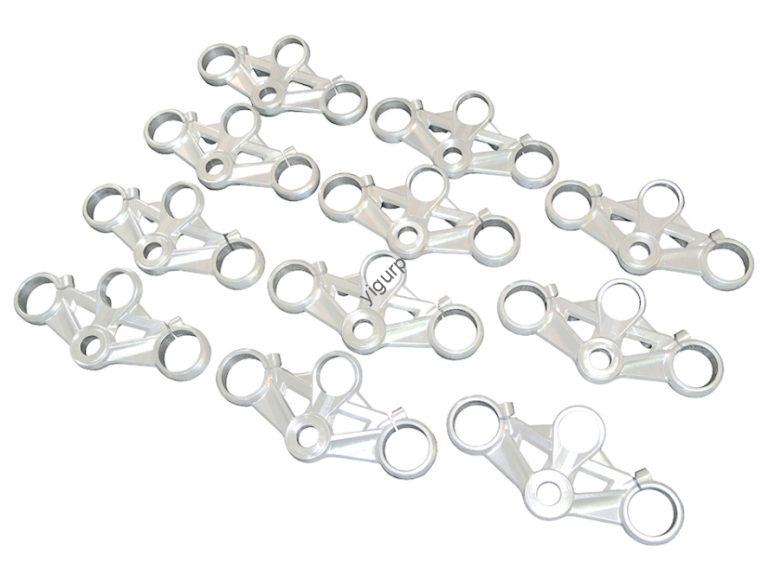
Choosing the right material for your échantillonnage de prototypes is make-or-break for product development. Le matériau que vous choisissez affecte la façon dont votre prototype teste la fonctionnalité, montre les détails de la conception, et s'aligne sur une utilisation réelle. Que vous construisiez un bâtiment en plastique (logement) pour un gadget ou une pièce métallique pour une voiture, understanding your material options helps you avoid rework, économiser de l'argent, and create a prototype that truly represents your final product.
Ci-dessous, we’ll break down the most common prototype sampling materials, their key features, ideal uses, and practical tips—with easy-to-read tables and real-world examples to guide your choice.
1. Plastic Materials for Prototype Sampling: Versatile and Cost-Effective
Plastics are the most popular choice for échantillonnage de prototypes because they’re lightweight, easy to shape, and mimic the properties of mass-produced plastic parts. From transparent lenses to durable gears, there’s a plastic for nearly every need. Let’s compare the top options:
| Matériel | Propriétés clés | Ideal Prototype Uses | Surface Treatment Options | Fourchette de coût (Par kg) |
| ABS | Good welding strength, matches injection molding plastic performance; available in standard and flame-retardant grades | General product housings (par ex., coques de téléphone, télécommandes), electronic device shells | Galvanoplastie (water/plating), vacuum evaporation plating, peinture | \(2.50 – \)4.00 |
| PC | Excellent strength, dureté, et transparence; glass fiber-reinforced versions boost rigidity and heat resistance | Lens parts (par ex., objectifs de caméra, LED covers), high-strength structural components (par ex., cadres d'ordinateurs portables) | Polissage, peinture, silk-screen printing | \(3.80 – \)5.50 |
| PMMA (Acrylic/Organic Glass) | High transparency (92% transmission de la lumière), facile à teindre | Transparent parts (par ex., couvertures d'affichage, light fixtures) | Dyeing, galvanoplastie, peinture, silk-screen printing | \(3.20 – \)4.80 |
| PP | Semi-transparent, haute résistance aux chocs, flexible | Impact-resistant products (par ex., car cup holders, packaging boxes, children’s toy parts) | Surface grinding, impression | \(2.20 – \)3.50 |
| PA66 + GF30 | Haute résistance, special thermal stability, hydrolysis resistance | Mechanical part shields (par ex., gear boxes, motor covers) requiring rigidity and dimension stability | Sablage, peinture | \(5.00 – \)7.20 |
| POM | Excellent mechanical properties (haute résistance, résistance à l'usure) due to regular molecular structure and crystallinity | High-strength moving parts (par ex., engrenages, rotating shafts, parenthèses) | Polissage, lubricant coating | \(4.50 – \)6.00 |
Why this matters: Par exemple, if you’re prototyping a wireless earbud case, ABS is a great fit—it’s cheap, easy to plate (for a shiny finish), and acts just like the plastic you’ll use in mass production. If your prototype needs to be transparent (like a smartwatch screen cover), PMMA ou PC would work better—just note that PMMA is more brittle, so it’s not ideal for parts that get frequent impact.
2. Metal Materials for Prototype Sampling: Résistance et durabilité
When your prototype needs to mimic metal parts (par ex., in aerospace or automotive projects), métal échantillonnage de prototypes materials are the way to go. They offer rigidity, résistance à la chaleur, and a premium feel that plastics can’t match. Here are the most widely used options:
2.1 Alliage d'aluminium: The Go-To for Lightweight Rigidity
Alliage d'aluminium is a favorite for échantillonnage de prototypes because it’s:
- Facile à usiner (faster and cheaper than steel)
- Léger (1/3 le poids de l'acier) but rigid
- Available in a wide range of anodizing colors (noir, argent, or, etc.)
Common uses: Composants aérospatiaux (par ex., cadres de drones), pièces automobiles (par ex., dashboard brackets), et électronique grand public (par ex., laptop bottom cases).
Data point: According to the Aluminum Association, aluminum alloy prototypes have a 30% faster machining time than steel prototypes—saving you 1-2 weeks on sample production.
2.2 Magnesium Alloy: Ultra-Light for 3C Products
Alliage de magnésium is the lightest structural metal, making it perfect for échantillonnage de prototypes in consumer 3C products (ordinateurs, communications, électronique grand public). Its key benefits include:
- Rapport résistance/poids élevé (stronger than plastic, plus léger que l'aluminium)
- Good heat dissipation (ideal for parts near batteries or chips)
Critical note: Magnesium alloy is flammable during machining, so it requires strict environmental control (par ex., low-temperature cutting fluids, well-ventilated workshops).
Exemple: Many smartphone manufacturers use magnesium alloy prototypes for phone middle frames—they reduce the device’s overall weight while keeping it sturdy.
2.3 Laiton: A Cost-Effective Stainless Steel Alternative
Laiton (an alloy of copper and zinc) is great for échantillonnage de prototypes when you need the look and feel of stainless steel but want to save on machining costs. Its advantages are:
- Haute résistance à l'usure (lasts longer than plastic in moving parts)
- Easy to polish and plate—after treatment, its surface and texture are nearly identical to stainless steel
- Lower machining difficulty than stainless steel (stainless steel is hard and can damage tools)
Ideal uses: Prototype parts that need a metallic finish (par ex., poignées de porte, watch casings) or require wear resistance (par ex., petits engrenages).
3. Key Factors to Consider When Choosing Prototype Sampling Materials
Picking a material isn’t just about its properties—it also needs to align with your prototype’s goals, budget, et chronologie. Voici les 3 most important factors to weigh:
3.1 Prototype Purpose: What Do You Need to Test?
- If testing appearance: Prioritize materials with good surface treatment options (par ex., ABS for plating, PMMA pour la transparence). Par exemple, a prototype of a luxury speaker would use ABS (electroplated for a metallic shine) to show off the final look.
- If testing functionality: Choose materials that match the final product’s strength or flexibility. For a prototype of a folding chair hinge, POM (haute résistance) ou laiton (résistance à l'usure) would work—they mimic how the hinge will perform in real use.
- If testing heat resistance: Go for glass fiber-reinforced PC ou alliage d'aluminium—these materials hold up in high-temperature environments (par ex., a prototype for a coffee machine part).
3.2 Coût: Balance Performance and Budget
Materials vary widely in price—PP ou ABS are budget-friendly (great for early-stage prototypes), alors que PA66 + GF30 ou alliage de magnésium cost more (better for late-stage prototypes that need to match final product specs).
Tip: For initial design validation, use a cheaper material (par ex., ABS) to test shape and fit. Once the design is locked in, switch to a material that matches mass production (par ex., PA66 + GF30 for mechanical parts) for final testing.
3.3 Usinabilité: Will It Slow Down Your Timeline?
Some materials are harder to shape than others. Par exemple:
- ABS et alliage d'aluminium are easy to machine—prototypes can be ready in 1-3 jours.
- Acier inoxydable (often replaced by laiton pour les prototypes) is hard and may take 5-7 days to machine.
If you’re on a tight deadline, choose materials with high machinability to avoid delays.
Yigu Technology’s Perspective
Chez Yigu Technologie, we believe prototype sampling material choice directly impacts product success. Sur 10 années, we’ve helped clients select materials that balance functionality, coût, and timeline—from startups using ABS for early phone case prototypes to automotive firms using alliage d'aluminium pour pièces de moteur. We always advise: Don’t just pick a material for its properties—align it with your prototype’s goal. Par exemple, if you need to test both appearance and impact resistance, nous recommandons PC (transparent and tough) sur PMMA (fragile). Our team provides material samples and machining support to ensure your prototype accurately reflects the final product.
FAQ
- Can I use PMMA for prototype parts that need to be impact-resistant?
No—PMMA is highly transparent but brittle. It’s prone to cracking if dropped or hit, so it’s not suitable for impact-resistant parts. Choisir PC (tough and transparent) ou PP (flexible and impact-resistant) instead.
- Is magnesium alloy a good choice for low-budget prototype sampling?
Usually not. Magnesium alloy costs more than alliage d'aluminium and requires special machining (to prevent flammability), which adds to expenses. For budget-friendly metal prototypes, alliage d'aluminium is a better option.
- How do I know if a material matches my mass-produced product?
Prioritize materials with the same “base properties” as your final production material. Par exemple, if your final product uses flame-retardant ABS, use flame-retardant ABS for prototyping (not standard ABS). Ask your material supplier for a “property sheet” to compare—this ensures your prototype behaves like the final product.