
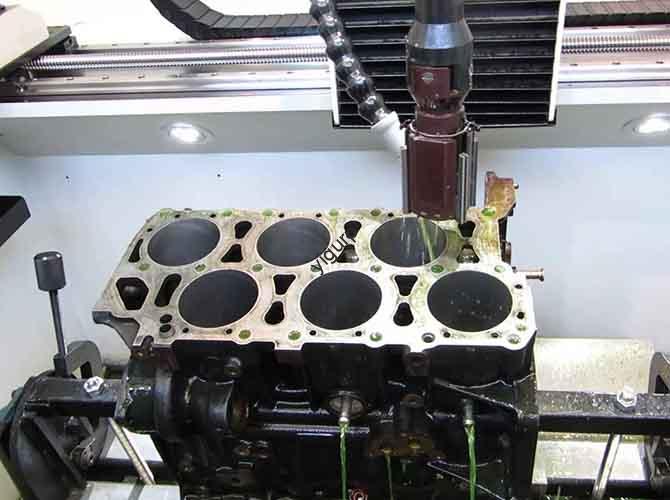
Le moulage sous pression des accessoires est devenu l’épine dorsale de la fabrication moderne, permettant la production efficace de produits de haute précision, pièces métalliques complexes dans tous les secteurs. En injectant des métaux en fusion dans des moules personnalisés sous haute pression, cette technologie équilibre la vitesse, qualité, et le coût – répondant aux exigences de la production à grande échelle et aux besoins d’accessoires personnalisés. Cet article détaille ses mécanismes de base, material choices, processus clés, and real-world applications to help you leverage it effectively for accessory manufacturing.
1. Core Basics: Définition & Unmatched Advantages
To understand why die casting dominates accessory production, start with its fundamental traits. Below is a 总分结构 breakdown of its definition and key benefits:
1.1 What Is Die Casting for Accessories?
Die casting for accessories is a metal forming process that involves:
- Melting metals (or their alloys) into a liquid state.
- Injecting the molten material into a précis, custom-designed mold (typically made of H13 hot-work steel) at high pressure (5–150 MPa) et la vitesse (0.5–5 m/s).
- Allowing the metal to rapidly solidify (10–60 secondes, en fonction de la taille de la pièce) under sustained pressure.
- Ejecting the finished accessory—often requiring minimal post-processing to meet dimensional and surface requirements.
This process excels at producing accessories with complex geometries (par ex., intricate brackets, thin-walled housings) that would be costly or impossible to make with other methods.
1.2 Key Advantages for Accessory Production
Die casting for accessories outperforms traditional manufacturing (par ex., sand casting, Usinage CNC) in three critical areas, as shown in the 对比式 table below:
| Avantage | Die Casting for Accessories | Traditional Methods (par ex., Sand Casting) | Impact on Accessory Production |
| Efficacité | Production en grand volume (3,000–7,000 cycles/day for small accessories) | Lent (100–200 parts/day for similar sizes) | Cuts lead times by 70–80% for bulk accessory orders |
| Précision | Dimensional accuracy of ±0.1 mm; surface finish of Ra 1.6–6.3 μm | Accuracy of ±0.5–1 mm; rough surface (Ra 12,5–25 μm) | Eliminates 80–90% of post-machining for precision accessories (par ex., electronic brackets) |
| Rentabilité | Material utilization rate of 90–95% (un minimum de déchets) | Material utilization of 60–70% (high scrap) | Lowers per-unit costs by 30–50% for high-volume accessory runs |
2. Sélection des matériaux: Matching Alloys to Accessory Needs
The right material determines an accessory’s performance, durabilité, et le coût. Below is a detailed breakdown of the most common alloys for accessory die casting, organized by use case:
| Alloy Type | Propriétés clés | Ideal Accessories | Exemples d'application |
| Alliages d'aluminium (ADC12, A380) | – Léger (2.7 g/cm³)- Excellente conductivité thermique- Bonne résistance à la corrosion (with surface treatment)- Faible coût (contre. magnesium/copper alloys) | Heat-sensitive, lightweight accessories; high-volume consumer goods | Electronic device heat sinks, new energy vehicle (NEV) motor housings, composants de châssis automobile |
| Alliages de zinc | – Point de fusion bas (380–420°C, reduces mold wear)- High dimensional stability (minimal shrinkage)- Easy to plate/paint (ideal for cosmetic parts) | Cosmetic accessories; petit, composants de précision | Cadres pour smartphones, remote control bodies, household hardware (par ex., poignées de porte) |
| Alliages de magnésium | – Ultra-léger (1.8 g/cm³, lightest structural metal)- Rapport résistance/poids élevé- Good electromagnetic shielding | Weight-critical, high-performance accessories | Supports aérospatiaux, high-end laptop casings, portable device frames |
| Alliages de cuivre | – Exceptional electrical/thermal conductivity- Haute dureté (HRC 30–40 after heat treatment)- Strong wear resistance | Conducteur, durable accessories | Connecteurs électriques, motor rotors, industrial valve components |
Exemple: Material Choice for NEV Accessories
For an NEV reducer housing (a critical accessory), ADC12 aluminum alloy is preferred:
- Its lightweight nature reduces vehicle weight (boosting fuel efficiency).
- Good thermal conductivity dissipates heat from the reducer.
- Low cost aligns with high-volume NEV production needs.
3. Critical Processes: From Mold to Finished Accessory
The quality of die-cast accessories depends on mastering four key process stages. Below is a 线性叙述 of each step, with actionable tips for optimization:
3.1 Conception de moules & Fabrication
The mold is the foundation of quality accessories. Follow these best practices:
- Matériel: Utiliser H13 hot-work mold steel—it withstands repeated thermal cycles (300–600°C) and extends mold life to 80,000–150,000 cycles.
- Traitement thermique: Appliquer vacuum quenching to H13 steel—this enhances hardness (HRC 48–52) and reduces mold distortion.
- Circuit de refroidissement: Integrate an independent cooling circuit (par ex., 8 mm diameter channels) to control mold temperature difference (≤5°C). This prevents accessory defects like warping or porosity.
3.2 Die Casting Parameter Control
Precise parameter adjustment avoids common accessory defects (par ex., porosité, cold shuts). Use these guidelines:
- Vitesse d'injection: Adopt segmented injection mode—slow for filling (pour éviter les turbulences) and fast for shrinkage (to compact the metal). For thin-walled accessories (≤1 mm), use “slow injection filling (0.5–1 m/s) + fast injection shrinkage (3–5 m/s)».
- Pression: Maintain 30–80 MPa for aluminum alloy accessories; 20–50 MPa for zinc alloy parts. Too low pressure causes porosity; too high leads to mold damage.
- Temperature: Heat aluminum alloys to 650–700°C, zinc alloys to 380–420°C. Consistent molten metal temperature ensures uniform accessory density.
3.3 Post-Processing for Accessory Perfection
Most die-cast accessories need minimal post-processing, but key steps enhance performance and aesthetics:
- Shot Blasting: Use 80–120 grit steel shots to improve surface roughness (from Ra 6.3 µm en Ra 1.6 µm)—critical for accessories requiring painting or anodizing.
- CNC Finishing: Target high-precision areas (par ex., trous de montage) with CNC machining—achieving tolerances of ±0.05 mm for critical accessory features.
- Traitement de surface: Apply anodizing (for aluminum accessories) to boost corrosion resistance; use electroplating (for zinc accessories) to enhance cosmetic appeal (par ex., chrome-plated hardware).
3.4 Quality Testing: Ensure Accessory Consistency
No accessory leaves the factory without rigorous testing. Key checks include:
- Water Pressure Testing: For sealed accessories (par ex., corps de pompe), test at 1–3 MPa to detect leaks—critical for hydraulic or fluid-handling applications.
- Contrôle dimensionnel: Use coordinate measuring machines (MMT) to verify 10–15 key dimensions per batch—ensuring ±0.1 mm accuracy for all accessories.
- Porosity Checks: Use X-ray or ultrasonic testing for high-stress accessories (par ex., composants de châssis automobile)—reject parts with porosity >2% (to avoid failure under load).
4. Key Application Areas: Accessories Across Industries
Die casting for accessories serves diverse sectors, chacun avec des besoins uniques. Below is a 行业 – par – 行业 breakdown with specific examples:
4.1 Industrie automobile
The automotive sector is the largest user of die-cast accessories, relying on them for:
- Composants du moteur: Raccords de tuyauterie, boîtiers de capteurs (aluminum alloy ADC12).
- Transmission Systems: Reducer housings, gear covers (aluminum alloy A380).
- NEV-Specific Parts: Motor housings, supports de batterie (magnesium alloy for weight savings).
These accessories require high strength and dimensional stability—die casting delivers both at scale.
4.2 Electronic & Electrical Appliances
For consumer electronics, die-cast accessories prioritize lightweight and thermal performance:
- Device Housings: Cadres pour smartphones, charnières pour ordinateur portable (zinc alloy for precision; aluminum for heat dissipation).
- Internal Components: Dissipateurs de chaleur (alliage d'aluminium, leveraging high thermal conductivity), circuit board brackets (zinc alloy for electromagnetic shielding).
4.3 Mechanical Equipment
Mechanical accessories demand durability and airtightness—die casting meets these via:
- Hydraulic/Pneumatic Parts: Corps de pompe, valve blocks (aluminum alloy with vacuum die casting to reduce porosity).
- Structural Components: Conveyor brackets, machine covers (steel-reinforced aluminum alloy for high strength).
4.4 Other Fields
- Architectural Decoration: Aluminum alloy curtain wall brackets, matériel décoratif (anodized for weather resistance).
- Home Hardware: Zinc alloy door handles, cabinet hinges (electroplated for aesthetics and rust resistance).
5. Future Trends: Innovations in Die Casting for Accessories
As manufacturing evolves, die casting for accessories is set to become even more versatile. Key trends include:
- Smart Mold Monitoring: Integrating sensors into molds to track temperature, pression, and wear in real time—reducing defect rates by 40–50%.
- Eco-Friendly Materials: Using recycled aluminum/zinc alloys (now accounting for 30–40% of raw materials) to lower carbon footprints.
- 3D-Printed Molds: For small-batch custom accessories (par ex., prototype automotive parts), 3D-printed molds cut lead times from weeks to days.
Yigu Technology’s Perspective
Chez Yigu Technologie, we see die casting for accessories as a solution that balances quality, efficacité, et le coût. Pour les clients automobiles, we use H13 steel molds with vacuum quenching and independent cooling circuits—ensuring reducer housings meet ±0.05 mm tolerance and 200,000+ cycle mold life. For electronics clients, we optimize zinc alloy parameters (380°C molten temp, 40 Pression MPa) to deliver smartphone frames with Ra 1.6 μm surface finish. We also adopt vacuum die casting for hydraulic accessories, cutting porosity to <1% and passing 3 MPa water pressure tests. Finalement, die casting for accessories isn’t just a process—it’s a way to turn complex designs into reliable, cost-effective products that drive industry innovation.
FAQ
- Can die casting for accessories produce parts with thin walls?
Yes—die casting excels at thin-walled accessories. For aluminum alloys, wall thicknesses as low as 0.5 mm are achievable; for zinc alloys, 0.3 mm. The key is using high injection speeds (3–5 m/s) and a well-designed cooling system to prevent premature solidification.
- Quelle est la quantité minimum de commande (MOQ) for die-cast accessories?
MOQs vary by mold cost: For low-cost zinc alloy molds (\(5,000–)15,000), MOQs start at 1,000–5,000 parts. For high-precision aluminum alloy molds (\(20,000–)50,000), MOQs are typically 10,000+ parts to justify mold investment. For custom prototypes, 3D-printed molds enable MOQs of 10–100 parts.
- How long does it take to produce die-cast accessories?
Lead times depend on mold production and cycle time:
- Mold manufacturing: 2–4 weeks for standard accessories; 4–8 weeks for complex designs.
- Production: For small accessories (par ex., smartphone hinges), 10,000 parts take 1–2 days (3,000 cycles/jour). Pour les pièces plus grandes (par ex., NEV motor housings), 10,000 parts take 5–7 days.