
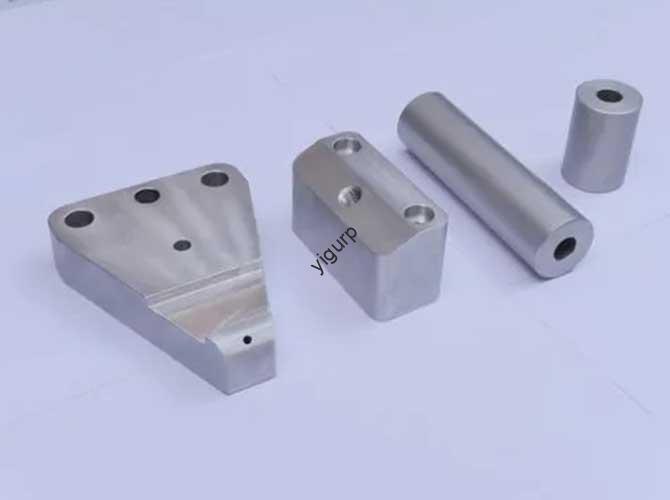
Dans le domaine de la fabrication de précision, machining inspection stands as the cornerstone of product quality and reliability. Que vous produisiez des composants usinés CNC pour l'aérospatiale, automobile, ou industries médicales, négliger tout maillon du processus d'inspection de l'usinage peut entraîner des reprises coûteuses, pannes de produits, ou même des risques pour la sécurité. This guide is designed to address the core questions and challenges faced by manufacturing professionals, quality control engineers, and production managers when it comes to implementing effective machining inspection practices. From understanding the fundamental importance of inspection to mastering the tools, étapes, and standards that define success, we’ll cover everything you need to elevate your machining quality control system.
Why Is Machining Inspection Critical for Precision Manufacturing?
Machining inspection is far more than a routine check—it’s a proactive strategy to ensure that machined parts meet design specifications, performance requirements, et les réglementations de l'industrie. The consequences of inadequate inspection are tangible: un 2023 study by the American Society of Mechanical Engineers (ASME) found that poor quality control in machining leads to an average of 15-20% of production costs being wasted on rework, scrap, and warranty claims. For high-precision industries like aerospace, a single faulty component can result in catastrophic failures; Par exemple, dans 2021, an aerospace supplier faced a $2.3 million fine and lost contracts due to unqualified machining of turbine blades, traced back to insufficient dimensional inspection.
Beyond cost and safety, machining inspection also supports brand reputation and customer trust. In a survey of 500 manufacturing buyers conducted by IndustryWeek in 2024, 87% stated that consistent product quality (verified through rigorous inspection) was the top factor in choosing a supplier. For small and medium-sized manufacturers (PME), effective inspection practices can also open doors to high-value markets that require strict quality certifications, comme l'ISO 9001 ou AS9100.
Définitions clés: Quality Control vs. Quality Inspection vs. Quality Assurance in Machining
Many professionals use the terms quality control (QC), inspection de la qualité, and quality assurance (QA) interchangeably, but they serve distinct roles in the machining process. Understanding these differences is essential for building a robust quality management system.
| Terme | Core Definition | Focus in Machining | Example Practices |
|---|---|---|---|
| Contrôle qualité | The process of measuring, examining, and testing components to verify compliance with specifications. | Detecting defects in individual parts (reactive and proactive). | Dimensional measurement of CNC parts, surface finish testing, hardness checks. |
| Contrôle de qualité | A broader system that includes inspection, plus processes to correct defects and prevent recurrence. | Controlling the machining process to maintain quality standards. | Contrôle statistique des processus (CPS), tool wear monitoring, in-process adjustments. |
| Assurance qualité | A proactive, systematic approach to ensure that the entire manufacturing process is capable of producing quality products. | Preventing defects before they occur through process design and standardization. | Implementing ISO 9001 procédures, training machinists on inspection skills, validating machining processes. |
Key Quality Control Parameters in Machining Inspection
To ensure that machined parts meet requirements, inspection must focus on specific quality parameters. These parameters vary by industry and application but generally fall into the following categories:
1. Dimensional Accuracy and Tolerance
Dimensional accuracy refers to how closely a part’s actual dimensions match the design specifications, while tolerance is the allowable variation from those dimensions. For precision machining, tolerances can be as tight as ±0.001 mm (40 microinches) pour composants aérospatiaux. A case in point: Yigu Technology worked with a medical device manufacturer to produce surgical drill bits, where a tolerance deviation of 0.002 mm would render the bit unusable. By implementing rigorous dimensional inspection using CMM (Machine de mesure de coordonnées), we reduced dimensional defects by 92%.
2. Surface Finish and Roughness
Finition superficielle (measured by roughness parameters like Ra, Rz) affects part performance, including friction, résistance à la corrosion, et attrait esthétique. Par exemple, hydraulic components require a smooth surface finish (Ra ≤ 0.8 µm) to prevent oil leakage. UN 2022 study by the Precision Machining Association found that poor surface finish is the second most common cause of component failure in hydraulic systems, comptabilité 28% of failures.
3. Material Hardness and Strength
The hardness and strength of machined materials must meet specifications to ensure durability and performance. Par exemple, automotive crankshafts require a minimum hardness of 55 CRH (Rockwell C scale) to withstand engine loads. During a project with an automotive supplier, Yigu’s team identified a batch of crankshafts with insufficient hardness (48 CRH) during raw material inspection, preventing the production of 500 defective parts and saving the client $75,000 in potential losses.
4. Tolérance géométrique
Tolérancement géométrique (par ex., rectitude, platitude, concentricity) ensures that parts function correctly when assembled. Par exemple, a shaft with poor concentricity (more than 0.01 mm) will cause vibration in a motor, reducing its lifespan. Cotation géométrique et tolérancement (DG&T) normes (ASME Y14.5) provide a common language for defining these tolerances in machining.
5. Other Critical Parameters
- Machining Process Control: Monitoring variables like cutting speed, vitesse d'avance, and coolant flow to maintain consistency.
- Tool Wear and Life: Worn tools can cause dimensional errors and poor surface finish; inspecting tool condition regularly reduces defects by up to 60% (pour un 2023 SPC Press report).
- Assembly and Fit: Ensuring that parts fit together seamlessly during assembly; this includes checking clearances and interference.
- Environmental Factors: Controlling temperature, humidité, and vibration in the machining shop, as these can affect measurement accuracy (par ex., a 1°C temperature change can cause a 0.01 mm/m expansion in steel parts).
Essential Tools and Techniques for Machining Inspection
The effectiveness of machining inspection depends on using the right tools and techniques for the job. Below is a categorized overview of essential inspection equipment and methods, along with their applications and benefits:
Dimensional Measurement Tools
| Tool | Accuracy Range | Typical Applications | Avantages clés |
|---|---|---|---|
| Étriers (Digital) | ±0,01 mm | Measuring lengths, diameters, and depths of simple parts. | Portable, facile à utiliser, cost-effective for basic inspection. |
| Micromètres | ±0,001 mm | Precision measurement of small diameters and thicknesses. | Haute précision, ideal for tight-tolerance parts. |
| Machine de mesure de coordonnées (MMT) | ±0.0005 mm | Complex 3D parts (par ex., composants aérospatiaux, dispositifs médicaux). | Automated measurement, high repeatability, handles complex geometries. |
| Comparateurs optiques | ±0,002 mm | Measuring contours, angles, and small features of parts. | Visual inspection combined with measurement, no contact with delicate parts. |
Surface and Material Testing Equipment
- Surface Roughness Testers: Measure Ra, Rz, and other roughness parameters; accuracy up to ±0.001 μm. Used for automotive, aérospatial, and medical parts where surface finish is critical.
- Hardness Testing Equipment: Includes Rockwell, Brinell, and Vickers testers. Rockwell testers (accuracy ±1 HRC) are common for metal parts; Vickers testers (accuracy ±0.5 HV) are used for small or thin parts.
- Material Analysis Equipment: X-ray fluorescence (XRF) analyzers (accuracy ±0.1% for element composition) verify material composition, preventing the use of counterfeit or substandard materials.
Non-Destructive Testing (CND) Méthodes
NDT methods inspect parts without damaging them, making them ideal for final inspection and in-service testing. Common NDT techniques in machining include:
- Ultrasonic Testing (UT): Detects internal defects (par ex., fissures, porosité) in metal parts; can penetrate up to 10 meters in steel. Used for aerospace engine components and pressure vessels.
- Magnetic Particle Testing (MPT): Identifies surface and near-surface cracks in ferromagnetic materials; sensitivity to cracks as small as 0.1 mm. Used for automotive gears and shafts.
- Dye Penetrant Testing (DPT): Detects surface cracks in non-ferromagnetic materials (par ex., aluminium, titane); easy to use and cost-effective for small batches.
- X-Ray Inspection: Provides 2D/3D images of internal structures; used for complex parts like electronic enclosures and medical implants.
Process Control and Documentation Tools
- Contrôle statistique des processus (CPS) Logiciel: Analyzes process data (par ex., mesures dimensionnelles, usure des outils) to identify trends and prevent defects. UN 2024 survey by Quality Magazine found that manufacturers using SPC reduce defect rates by an average of 35%.
- Tool Condition Monitoring (TCM) Systems: Track tool wear, vibration, and temperature in real time; alert operators to replace tools before they cause defects.
- Documentation and Traceability Systems: Record inspection results, lots de matières, and machining parameters; essential for compliance with ISO 9001 et AS9100. Digital systems (par ex., MES software) improve traceability and reduce documentation errors by 40%.
The Complete Machining Inspection Stages
Effective machining inspection is not a one-time step but a continuous process that spans the entire manufacturing lifecycle. Below are the key stages of inspection, from raw material to shipping, along with best practices for each stage:
1. Raw Material Inspection
Raw material inspection is the first line of defense against defects. It verifies that the material’s composition, dureté, and dimensions meet specifications. Par exemple, when Yigu Technology processes aluminum alloy for automotive parts, we use XRF analyzers to confirm the alloy composition (par ex., 6061-T6) and hardness testers to check for proper heat treatment. UN 2023 study by the Metal Powder Industries Federation found that 30% of machining defects originate from substandard raw materials, making this stage critical for cost savings.
2. First Article Inspection (FAI)
FAI is performed on the first part produced after a new setup or design change. It verifies that the machining process can produce parts that meet all design requirements. FAI typically includes dimensional measurement, geometric tolerancing checks, et tests de matériaux. Pour les pièces aérospatiales, AS9100 requires formal FAI documentation (par ex., AS9102 forms). Yigu’s team recently completed FAI for a client’s aerospace bracket, using a CMM to measure 127 dimensions and ensuring compliance with AS9100 standards.
3. In-Process Inspection
In-process inspection occurs during machining to catch defects early, before additional value is added to the part. Common in-process checks include: measuring critical dimensions after key machining operations, monitoring tool wear, and checking surface finish. Pour une production en grand volume, automated in-process inspection (par ex., on-machine probes) is ideal—it reduces inspection time by 50% and improves accuracy. Par exemple, a Yigu client producing 10,000 CNC-machined pins per day implemented on-machine probes, reducing in-process defects from 8% à 1.2%.
4. Inspection finale
Final inspection is the comprehensive check before a part is shipped or assembled. It includes all critical parameters: précision dimensionnelle, état de surface, dureté, tolérancement géométrique, and functional testing. Final inspection may also include NDT for internal defects. Pour les dispositifs médicaux, final inspection must be documented and traceable to meet FDA requirements. Yigu’s final inspection process for a client’s surgical implant included CMM measurement, ultrasonic testing, and functional fit testing, assurer 100% conformité aux normes FDA.
5. Post-Machining and Shipping Inspection
Post-machining treatments (par ex., placage, traitement thermique) can affect part quality, so inspection after these processes is essential. Shipping inspection ensures that parts are properly packaged to prevent damage during transit. Par exemple, Yigu inspects parts after anodizing to check for uniform coating thickness (using a coating thickness gauge) and packages precision parts in anti-static foam to prevent scratches.
6. Documentation and Record Keeping
At every inspection stage, detailed records must be kept. This includes inspection results, equipment calibration data, material batch numbers, and operator information. These records are required for compliance with ISO 9001, AS9100, and other industry standards. Digital record-keeping systems (par ex., cloud-based QA software) make it easy to access and audit these records.
Industry-Specific Machining Inspection Standards
Different industries have unique requirements for machining inspection, driven by safety, performance, and regulatory needs. Below are the most common standards and their implications for inspection practices:
OIN 9001 Attestation
OIN 9001 is a global quality management standard that applies to all industries. It requires organizations to implement a systematic approach to quality control, including documented inspection processes, equipment calibration, and continuous improvement. For machining inspection, OIN 9001 mandates that inspection methods are validated, and results are traceable. UN 2024 report by the International Organization for Standardization (OIN) found that companies with ISO 9001 certification have 22% fewer quality-related costs than non-certified companies.
AS9100 for Aerospace Industry
AS9100 is a specialized standard for the aerospace industry, built on ISO 9001. It has strict requirements for machining inspection, including FAI (per AS9102), NDT for critical components, and traceability throughout the supply chain. Aerospace parts often require tighter tolerances (±0.0005 mm) and more rigorous inspection than commercial parts. Par exemple, a jet engine turbine blade must undergo ultrasonic testing, essai de dureté, and dimensional inspection using a CMM before it is approved for use.
Medical Device Standards (par ex., OIN 13485)
OIN 13485 specifies quality management requirements for medical device manufacturers. Machining inspection for medical devices must ensure that parts are biocompatible, sterile (si nécessaire), and meet precise dimensional and functional requirements. Par exemple, surgical instruments must have a smooth surface finish to prevent bacterial growth, and implantable parts must undergo rigorous NDT to detect internal defects.
FAQ About Machining Inspection
Q1: What is the difference between on-machine inspection and offline inspection? On-machine inspection is performed directly on the CNC machine using integrated probes, allowing for real-time adjustments during machining. It is fast and reduces the need for part handling. Offline inspection is done using separate equipment (par ex., MMT, optical comparator) away from the machine. It is more accurate for complex parts but takes longer. The choice depends on production volume, complexité de la pièce, et exigences de tolérance.
Q2: How often should inspection equipment be calibrated? Calibration frequency depends on the equipment type, usage, et les normes de l'industrie. For precision tools like micrometers and CMMs, annual calibration is standard. High-usage equipment (par ex., surface roughness testers) may require calibration every 6 mois. OIN 9001 and AS9100 mandate that calibration records are kept and that equipment is taken out of service if it is out of calibration.
Q3: Can automated inspection replace manual inspection in machining? Automated inspection (par ex., MMT, on-machine probes) is ideal for high-volume, repetitive parts and complex geometries. Cependant, manual inspection is still necessary for tasks like visual inspection of surface defects (par ex., rayures, bavures) and small-batch production where automation is not cost-effective. The most effective systems combine automated and manual inspection for comprehensive quality control.