
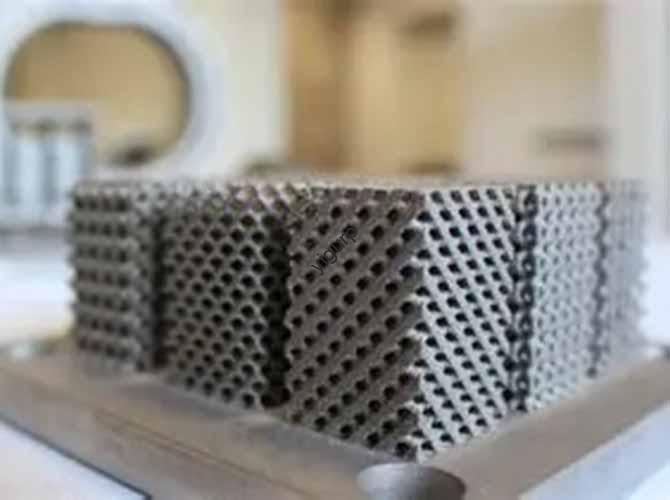
Coulée sous pression liquide (également connu sous le nom de moulage par compression ou de forgeage sous pression liquide) est une technologie révolutionnaire de formage des métaux qui comble le fossé entre le moulage sous pression traditionnel et le forgeage. Contrairement au moulage sous pression conventionnel, dans lequel le métal en fusion se solidifie rapidement avec un risque élevé de porosité, le moulage sous pression liquide applique une pression mécanique continue pendant la solidification., créer dense, composants à haute résistance. For manufacturers needing parts that balance complex shapes with dynamic load resistance (par ex., pièces de structure automobile, composants aérospatiaux), liquid die casting is a transformative solution. This article systematically breaks down its working principles, core advantages, process variants, and real-world applications to help you unlock its full potential.
1. Définition de base & Working Principles of Liquid Die Casting
To understand liquid die casting’s uniqueness, it’s essential to clarify its fundamental mechanism—how it combines casting’s shape flexibility with forging’s strength. This section uses a linear 叙述 structure with key terms highlighted for clarity.
1.1 Fundamental Definition
Liquid die casting is a near-net forming process that injects molten metal (aluminium, magnésium, alliages de cuivre) into a precision mold, then applies continuous static pressure (50-200 MPa) via a hydraulic punch until the metal fully solidifies. Its defining trait is the “pressure-assisted solidification”—this pressure squeezes out residual gas and shrinkage holes, resulting in a component with >99% densité (contre. 95-97% for traditional die casting).
Unlike forging (which uses solid metal billets), liquid die casting starts with liquid metal—retaining the ability to form complex features (par ex., integrated cooling channels, fine threads) while achieving forging-level mechanical properties.
1.2 Step-by-Step Working Process
The liquid die casting cycle follows 5 critical stages, each optimized to maximize density and precision:
- Préparation du moule: Preheat the mold to 180-250°C (pour l'aluminium) and apply a thin release agent (0.05-0.1mm épaisseur) pour éviter de coller. This ensures uniform heat distribution during filling.
- Injection de métal: Pour molten metal (680-720°C for aluminum alloy A356) into the mold cavity at a controlled speed (0.5-2 MS)—slower than traditional die casting to avoid turbulence and gas entrainment.
- Application de pression: Activate the hydraulic punch to apply 80-150 MPa pressure within 2-3 seconds of injection. Maintain this pressure throughout solidification (10-30 secondes, en fonction de l'épaisseur de la pièce).
- Solidification Under Pressure: The continuous pressure eliminates voids by:
- Compressing gas bubbles to <0.01mm (too small to affect strength).
- Refilling shrinkage gaps with molten metal from the sprue.
This step is why liquid die casting parts have 30-50% higher fatigue strength than traditional die castings.
- Démoulage & Finition: Open the mold, eject the part, and trim excess material (coureurs, éclair). Post-traitement (par ex., T6 heat treatment for aluminum) further enhances mechanical properties—tensile strength can reach 350-400 MPa.
2. Key Variants of Liquid Die Casting: Direct vs. Indirect Extrusion
Liquid die casting has two main process variants, each suited to different part complexities and production needs. The table below compares their technical differences, avantages, et applications idéales:
| Process Variant | Working Mechanism | Plage de pression | Avantages clés | Applications idéales |
| Direct Extrusion Liquid Die Casting | The punch applies pressure directly to the molten metal surface (no intermediate channels). The mold cavity is filled via gravity before pressure is activated. | 100-200 MPa | – Highest density (>99.5%) and mechanical properties.- No sprue-related material waste (3-5% less scrap than indirect).- Uniform pressure distribution for thick-walled parts. | High-criticality components: supports de moteur aérospatial, military equipment transmission parts, hydraulic cylinder blocks (require strict pressure tightness). |
| Indirect Extrusion Liquid Die Casting | Pressure is transmitted to the molten metal via a sprue or runner system (the punch pushes a metal plunger, which forces liquid into the cavity). | 50-120 MPa | – Lower mold complexity (cheaper tooling by 20-30%).- Faster cycle time (15-20 seconds/part vs. 25-30 seconds for direct).- Suitable for parts with thin-walled sections (<3mm). | Pièces industrielles générales: roues automobiles, motorcycle frame components, home appliance pump bodies (balance cost and performance). |
2.1 Critical Selection Factors for Variants
Choose between direct and indirect extrusion based on three criteria:
- Part Criticality: If the part bears dynamic loads (par ex., automotive suspension brackets), direct extrusion is better—its higher density ensures fatigue resistance.
- Cost Tolerance: Pour les gros volumes, pièces à bas prix (par ex., 100,000+ automotive wheels/year), indirect extrusion’s cheaper tooling and faster cycles reduce per-part costs by 15-20%.
- Wall Thickness: Direct extrusion excels at thick-walled parts (>5mm), while indirect extrusion is more efficient for thin-walled features (2-3mm) due to better flow control.
3. Avantages principaux: Why Liquid Die Casting Outperforms Traditional Processes
Liquid die casting’s value lies in its ability to solve the “strength vs. complexité” trade-off that plagues traditional casting and forging. The table below compares it to traditional die casting and gravity casting across 6 key metrics:
| Performance Metric | Liquid Die Casting | Traditional Die Casting | Gravity Casting |
| Material Density | >99% (near-full density) | 95-97% (porosité 3-5%) | 92-95% (high porosity) |
| Propriétés mécaniques | Résistance à la traction: 350-400 MPa; Résistance à la fatigue: 150-180 MPa | Résistance à la traction: 280-320 MPa; Résistance à la fatigue: 100-120 MPa | Résistance à la traction: 250-280 MPa; Résistance à la fatigue: 80-100 MPa |
| Complexity Capability | Handles integrated features (canaux de refroidissement, fils de discussion) avec <3mm épaisseur de paroi | Handles complex shapes but with higher porosity in thin sections | Limited to simple shapes (no fine features) |
| Efficacité de production | Temps de cycle: 15-30 seconds/part | Temps de cycle: 10-20 seconds/part (faster but lower quality) | Temps de cycle: 5-10 minutes/part (slowest) |
| Material Utilization | 90-95% (low scrap) | 85-90% (moderate scrap) | 75-80% (high scrap) |
| Post-Processing Need | Minimal (only trimming + optional heat treatment) | Extensive (impregnation to seal porosity + usinage) | Extensive (machining to correct dimensional errors) |
3.1 Real-World Advantage Example: Automotive Wheel Production
A leading automotive manufacturer switched from gravity casting to indirect extrusion liquid die casting for aluminum alloy wheels:
- Avant: Gravity cast wheels had 8% porosité, required 2 hours of machining per wheel, and failed fatigue tests at 100,000 cycles.
- Après: Liquid die cast wheels had <1% porosité, required 30 minutes of machining, and passed fatigue tests at 180,000 cycles.
- Impact sur les coûts: Per-wheel production cost dropped by $12 (due to less scrap and machining), and warranty claims related to wheel failure fell by 75%.
4. Key Application Scenarios: Where Liquid Die Casting Shines
Liquid die casting excels in industries that demand both complex geometries and high mechanical performance. Below are its three most impactful application fields, with specific examples:
4.1 Industrie automobile: Léger & Safety-Critical Parts
The automotive sector is the largest user of liquid die casting, driven by the need for lightweighting (pour améliorer le rendement énergétique) and crash safety:
- Composants structurels: Front subframes, supports de suspension, and brake calipers use liquid die cast aluminum alloys (A356, AlSi10Mg). These parts must withstand 100,000+ km of road vibration—liquid die casting’s high fatigue strength prevents cracking. Par exemple, Tesla’s Model Y front subframe uses liquid die casting to integrate 12 components into one, reducing weight by 18kg vs. a welded steel subframe.
- EV-Specific Parts: Battery pack frames and motor housings rely on liquid die casting’s pressure tightness. A 5mm-thick liquid die cast battery frame can withstand 1.2MPa internal pressure (contre. 0.8MPa for traditional die casting), ensuring no coolant leakage in EVs.
- Pièces de transmission: Gearbox housings and clutch carriers use liquid die cast magnesium alloys (AZ91D). Their high strength-to-weight ratio (1:1.8) reduces transmission weight by 25%, improving vehicle acceleration and handling.
4.2 Aérospatial & Défense: High-Reliability Components
Liquid die casting meets the strict standards of aerospace and defense, où l'échec n'est pas une option:
- Aerospace Brackets: Alliage de titane (Ti-6Al-4V) brackets for aircraft wings use direct extrusion liquid die casting. The process achieves 99.8% densité, meeting the Aerospace Material Specification (MSA) 4999 for structural titanium parts. These brackets withstand -50°C to 150°C temperature extremes without deformation.
- Military Equipment: Armored vehicle transmission casings use liquid die cast copper-chromium-zinc alloys. Their tensile strength (450MPa) et résistance aux chocs (150J/cm²) protect against battlefield vibrations and shrapnel.
4.3 Machines industrielles: Heavy-Duty & Pressure-Bearing Parts
Industrial machinery relies on liquid die casting for parts that handle high pressure and continuous operation:
- Hydraulic Components: Corps de pompe, noyaux de valve, and cylinder liners use liquid die cast aluminum alloys. A liquid die cast hydraulic pump body can operate at 30MPa pressure for 10,000+ hours without leakage—vs. 5,000 hours for traditional die cast versions.
- Production d'énergie: Wind turbine hub components use liquid die cast magnesium alloys. Their lightweight design (30% plus léger que l'acier) reduces turbine rotational inertia, increasing energy efficiency by 5-8%.
5. Optimisation des processus: Key Parameters to Maximize Quality
To achieve consistent results with liquid die casting, three parameters must be precisely controlled. The table below outlines their optimal ranges and impact on quality:
| Critical Parameter | Optimal Range (Aluminum Alloy A356) | Impact of Deviation |
| Injection Temperature | 680-720°C | – Too low (<680°C): Poor fluidity leads to underfilling.- Too high (>720°C): Increases oxide formation, reducing strength by 10-15%. |
| Applied Pressure | 80-120 MPa (indirect extrusion); 120-150 MPa (direct extrusion) | – Too low (<80 MPa): Porosity increases to 3-5% (fails pressure tightness tests).- Too high (>150 MPa): Causes mold wear (reduces die life by 20-30%). |
| Pressure Holding Time | 10-20 secondes (pièces fines <5mm); 20-30 secondes (thick parts >5mm) | – Trop court (<10 secondes): Shrinkage holes form in thick sections.- Too long (>30 secondes): Increases cycle time (reduces production efficiency by 15%). |
5.1 Advanced Optimization: Simulation-Driven Parameter Setting
Modern liquid die casting uses CAE simulation software (par ex., MAGMA, AnyCasting) to predict solidification behavior:
- The software maps temperature distribution and pressure transmission to identify potential hot spots (which cause shrinkage) and low-pressure zones (which cause porosity).
- Par exemple, simulating a 10mm-thick aluminum bracket revealed that increasing pressure holding time from 15s to 22s eliminated shrinkage in the bracket’s center—reducing defect rate from 8% à 0.5%.
6. Yigu Technology’s Perspective on Liquid Die Casting
Chez Yigu Technologie, we see liquid die casting as the “future of high-performance metal forming”—especially for EVs and aerospace. Many manufacturers hesitate to adopt it due to higher initial tooling costs, but the reality is that its 30-50% longer part life and 20% lower scrap rate deliver ROI within 1-2 years for high-volume projects.
We recommend a phased adoption strategy: Start with indirect extrusion for non-critical parts (par ex., roues automobiles) to master parameter control, then scale to direct extrusion for safety-critical components (par ex., Cadres de batterie EV). Pour les clients, we provide customized DFM (Conception pour la fabricabilité) services—redesigning traditional multi-part assemblies into single liquid die cast components (par ex., integrating 5 welded parts into one, réduire les coûts en 30%).
We also advocate green manufacturing integration: Liquid die casting’s high material utilization (90-95%) and minimal post-processing align with sustainability goals. By combining it with recycled aluminum (jusqu'à 50% recycled content), manufacturers can reduce carbon emissions by 25-30% contre. traditional processes.
7. FAQ: Common Questions About Liquid Die Casting
T1: Can liquid die casting be used for high-melting-point metals like steel or titanium?
Steel is not feasible—its melting point (1500°C+) exceeds the heat resistance of standard liquid die casting molds (H13 steel deforms at 600-700°C). Titanium is possible but requires specialized molds (par ex., ceramic-coated H13 steel) and higher pressure (150-200 MPa). Actuellement, titanium liquid die casting is limited to aerospace (faible volume, pièces de grande valeur) due to high costs.
T2: What is the maximum part size/weight that liquid die casting can produce?
Most commercial liquid die casting machines handle parts weighing 0.5-50kg and measuring up to 1.5m in length. Pour les pièces plus grandes (par ex., 100kg wind turbine hubs), specialized 2000-ton+ machines are available, but they are costly ($1-2M) and only economical for high-volume production (>10,000 unités/an).
T3: How does liquid die casting compare to 3D printing for small-batch complex parts?
Pour les petits lots (<1000 unités), 3Impression D (par ex., SLM for metal) is more flexible—no mold is needed. Cependant, liquid die casting has three advantages for larger batches: 1. Production plus rapide (15-30s/part vs. 1-2 hours/part for 3D printing). 2. Lower per-part cost (\(5-10 contre. \)50-100 for 3D printing). 3. Higher density (>99% contre. 95-98% for 3D printing). Choose 3D printing for prototypes, liquid die casting for production.