
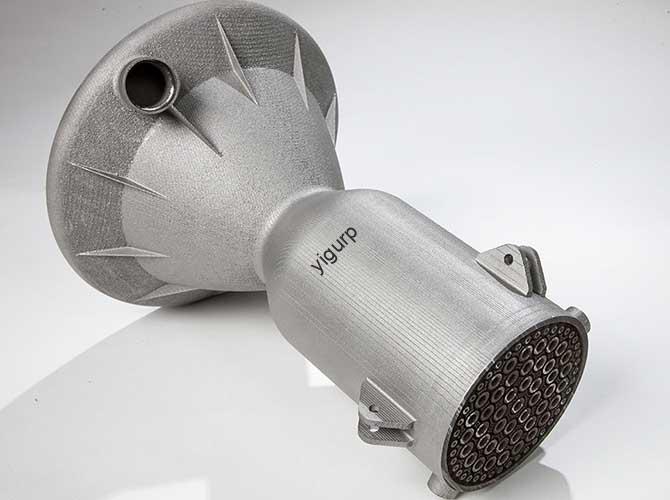
In modern manufacturing—from automotive transmission housings to 5G base station components—moulage sous pression haute pression (HPDC) se démarque comme un acteur révolutionnaire dans la production de solutions complexes, pièces métalliques en grand volume. Ce processus injecte du métal fondu ou semi-fondu dans des moules de précision à une vitesse et une pression extrêmes., précision d'équilibrage, efficacité, et le coût. Cet article détaille ses mécanismes de base, adaptabilité matérielle, applications industrielles, avantages et inconvénients, and practical optimization tips, helping you decide if HPDC fits your production needs.
1. What Are the Core Characteristics of High-Pressure Die Casting?
HPDC’s uniqueness lies in its “high-pressure, high-speed” filling mechanism, which defines its precision and efficiency. Below is a detailed breakdown of its key traits with actionable data:
| Core Characteristic | Key Technical Parameters | Practical Impact | Exemple concret |
| Injection haute pression | Typical pressure: 30~70MPa; Peak pressure can reach 100MPa | Forces metal fluid to fill tiny mold cavities (even 0.5mm thin walls) and eliminates gaps | Manufacturing aluminum alloy automotive water pumps: Ensures no leakage in sealing surfaces |
| High-Speed Filling | Filling speed: 0.5~120m/s; Filling time: 0.01~0.2 seconds | Reduces metal solidification time; avoids porosity caused by slow flow | Producing zinc alloy zipper sliders: 10,000+ parts per hour with minimal internal defects |
| Formage de précision | Tolérance dimensionnelle: IT8~IT10 (norme de l'industrie); Rugosité de la surface: Ra 1.6~6.3μm | Minimizes secondary processing (par ex., affûtage, polissage) par 60% | Making magnesium alloy laptop casings: Directly meets assembly requirements without extra finishing |
2. Which Materials Are Suitable for High-Pressure Die Casting?
HPDC excels with non-ferrous alloys, but material selection depends on part function (par ex., force, résistance à la corrosion). Vous trouverez ci-dessous une comparaison des matériaux les plus couramment utilisés:
2.1 Material Comparison for HPDC
| Type de matériau | Propriétés clés | Scénarios d'application typiques | Processing Notes |
| Alliages d'aluminium (par ex., Al-Si-Mg) | Léger (densité: 2.7g/cm³); Haute résistance (résistance à la traction: 200~300MPa); Bonne résistance à la corrosion | Pièces automobiles (supports de moteur, moyeux de roue); 5G communication device housings | Avoid overheating during melting (température maximale: 680°C) to prevent alloy segregation |
| Alliages de zinc (par ex., Zn-Al-Cu) | Point de fusion bas (380~420°C); High castability; Excellente finition de surface | Biens de consommation (pièces de jouets, hardware fittings); Electronic component shells (par ex., remote control casings) | Fast cooling recommended (refroidissement par eau) to improve hardness (HRC 8~12) |
| Alliages de magnésium (par ex., Mg-Al-Zn) | Ultra-léger (densité: 1.8g/cm³); High specific strength | Composants aérospatiaux (petites parenthèses); Laptop/tablet casings | Requires inert gas protection (par ex., SF₆) during melting to prevent oxidation |
| Alliages de cuivre (par ex., Cu-Zn-Si) | Conductivité thermique/électrique élevée; Haute dureté (HRC 15~20) | Dissipateurs de chaleur (for LED lights, power supplies); Connecteurs électriques | High melting point (900~1080°C) requires mold materials with high heat resistance (par ex., Acier H13) |
3. What Are the Pros and Cons of High-Pressure Die Casting?
Understanding HPDC’s advantages and limitations is critical for project planning. Below is a balanced comparison to help you weigh trade-offs:
3.1 Avantages: Why Choose HPDC?
- Haute efficacité: Fully automated production lines can achieve 500~10,000 parts per shift (en fonction de la taille de la pièce), 3x faster than sand casting.
- Faible coût: Material utilization rate >95% (un minimum de déchets); reduced secondary processing cuts labor costs by 40%.
- Stable Quality: Consistent dimensional accuracy across batches (variation <±0,05 mm pour les petites pièces), ideal for mass production.
3.2 Inconvénients: Key Challenges to Address
- Surface Defect Risk: High-speed filling may cause porosité (tiny air bubbles), cold separation (unfused metal layers), ou oxidation inclusions. These defects usually make HPDC parts unsuitable for heat treatment (heat can expand pores and cause cracking).
- High Mold Costs: Moules complexes (par ex., for automotive transmission cases) coût \(50,000~)500,000, with a manufacturing cycle of 2~6 months. This makes HPDC uneconomical for small-batch production (<10,000 parties).
- Material Limitations: Cannot process high-melting-point metals (par ex., acier, fer) due to mold wear and high energy consumption.
4. How to Optimize High-Pressure Die Casting Processes for Better Quality?
To mitigate defects and improve efficiency, targeted process adjustments are essential. Below are 3 proven optimization strategies:
- Mold Design Optimization
- Add overflow grooves (volume: 5~10% of part volume) to collect air and oxidation inclusions, reducing porosity by 70%.
- Utiliser variable-thickness gating systems (thicker near the sprue, thinner near the part) to control filling speed and avoid turbulence.
- Parameter Tuning
- Adjust injection speed based on part thickness: Use 0.5~5m/s for thick-walled parts (>5mm) to prevent shrinkage; use 10~50m/s for thin-walled parts (<2mm) to avoid incomplete filling.
- Control mold temperature: Maintain 150~250°C for aluminum alloys (prevents cold separation) and 100~180°C for zinc alloys (reduces mold wear).
- Post-Processing for Defect Repair
- For small pores, utiliser vacuum impregnation (infiltrate with resin under 0.09MPa vacuum) to seal leaks—suitable for pressure-bearing parts like hydraulic valve bodies.
- For surface burrs, utiliser robotic deburring (précision: ±0,1mm) pour assurer la cohérence, 2x faster than manual deburring.
5. Yigu Technology’s Perspective on High-Pressure Die Casting
Chez Yigu Technologie, we view high-pressure die casting as a “volume-driven precision solution”—its true value shines when paired with mass production and clear material/design goals. Our experience shows 60% of HPDC failures come from mismatched mold design and material selection (par ex., using zinc alloys for high-temperature parts).
We recommend a “design-for-manufacturing (DFM)” approach: Early in part design, we collaborate to optimize wall thickness (3~5mm for aluminum alloys is ideal) and integrate overflow grooves to avoid post-production defects. For auto and 5G clients, we use AI-based parameter monitoring (tracking injection pressure and mold temperature in real time) to reduce defect rates to <1%. While HPDC has mold cost barriers, its efficiency and precision make it irreplaceable for high-volume, pièces métalliques complexes.
6. FAQ: Common Questions About High-Pressure Die Casting
T1: Can high-pressure die casting parts undergo heat treatment to improve strength?
Generally no. HPDC parts often have internal porosity—heat treatment (par ex., solution aging) can expand these pores, causing cracking or deformation. Pour les besoins de haute résistance, choose alternative processes (par ex., low-pressure die casting) or use heat-treatable aluminum alloys with strict porosity control (taux de défauts <0.5%).
T2: What’s the minimum batch size to justify high-pressure die casting costs?
Typically 10,000~50,000 parts. For batches smaller than 10,000, mold costs (amortized per part) become too high—sand casting or CNC machining is more economical. For batches >50,000, HPDC’s efficiency leads to the lowest unit cost (par ex., \(0.5~)2 per small aluminum part).
T3: How to check for internal defects (comme la porosité) in HPDC parts?
Use non-destructive testing (CND) méthodes: 1. Inspection aux rayons X: Detects internal pores >0.1mm de diamètre (critical for safety parts like automotive brake calipers); 2. Essais hydrostatiques: Applies 1.5x the working pressure to check for leaks (used for hydraulic components); 3. Tests par ultrasons: Identifies near-surface defects (par ex., cold separation) with accuracy ±0.02mm.