
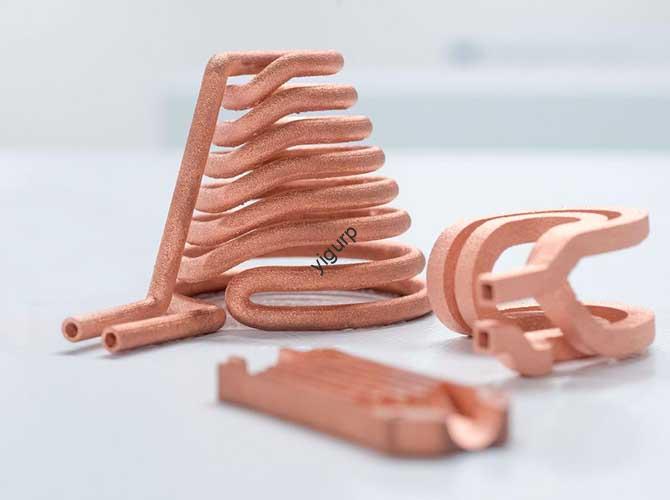
Verser (coulée par gravité) et le moulage sous pression sont deux processus fondamentaux de formage des métaux, chacun optimisé pour des besoins de production distincts. Tandis que le versement s'appuie sur la force naturelle de la gravité pour remplir les moules, le moulage sous pression utilise une haute pression pour injecter du métal en fusion à grande vitesse : ces différences fondamentales façonnent leurs performances, coût, et scénarios d'application. Pour les fabricants, choosing the wrong process can lead to wasted resources, pièces défectueuses, or missed market deadlines. This article systematically breaks down their differences, process characteristics, and selection logic, providing actionable guidance to match each process to your project’s unique requirements.
1. Core Definitions: What Make Pouring and Die Casting Unique?
Before comparing details, it’s critical to understand the fundamental principles of each process. This section uses a side-by-side definition structure to highlight their essence, with key terms emphasized for clarity.
1.1 Verser (Gravity Casting)
Pouring is a traditional metal-forming method that relies on gravity to drive molten metal into the mold cavity. The process works as follows:
- Métal fondu (par ex., cast iron, acier) is heated to its liquid state in a furnace.
- The liquid metal is slowly poured from a ladle into the open or closed mold cavity.
- The metal fills the cavity naturally under gravity, then cools and solidifies into the desired shape.
- The mold is opened (or broken, for disposable sand molds), and the part is removed for post-processing.
Its defining trait is minimal external force—the metal flows freely, making it highly adaptable to complex part geometries but slower and more prone to internal defects like shrinkage.
1.2 Moulage sous pression
Die casting is a high-pressure, high-speed process designed for mass production of non-ferrous metal parts. Its core steps include:
- A metal mold (mourir) is clamped shut, creating a precise cavity matching the part’s shape.
- Molten non-ferrous metal (par ex., alliage d'aluminium, alliage de zinc) is injected into the die cavity at high pressure (thousands to tens of thousands of kPa) et la vitesse (jusqu'à 50 MS) via a piston or plunger.
- The metal solidifies quickly under pressure to replicate the die’s microscopic details.
- Le dé s'ouvre, and ejector pins push the finished part out—ready for minimal post-processing.
Its key advantage is contrôle de processus: high pressure eliminates porosity, and fast filling ensures consistent quality across large batches.
2. Comprehensive Comparison: Pouring vs. Moulage sous pression
To help you quickly identify which process fits your needs, the table below compares 6 dimensions critiques—from process dynamics to cost structure—with specific data and examples.
| Comparison Dimension | Verser (Gravity Casting) | Moulage sous pression |
| Filling Mechanism | Relies on gravity (no external pressure); flow speed = 0.1-0.5 MS | Uses mechanical pressure (3,000-15,000 kPa); injection speed = 5-50 MS |
| Compatibilité des matériaux | Large gamme: métaux ferreux (cast iron, acier), high-melting-point alloys (nickel-based superalloys) | Limited to non-ferrous metals: aluminium (60-70% of die cast parts), zinc, magnésium; low-melting-point alloys only |
| Product Quality | – Coarse grain structure (slow cooling); mechanical properties fluctuate ±15%- Rugosité de la surface: Ra = 6.3-12.5 µm (requires machining)- Prone to shrinkage/looseness (fixed via risers) | – Fine grain structure (fast cooling under pressure); mechanical properties stable ±5%- Rugosité de la surface: Ra = 1.6-3.2 µm (near-finish quality)- Faible porosité (high pressure compresses gas gaps) |
| Mold Characteristics | – Moules: Disposable (sand molds) or low-cost metal molds (no pressure resistance)- Coût: \(1,000-\)50,000 per mold- Lifespan: Sand molds = 1 utiliser; metal molds = 10,000-50,000 shots | – Moules: High-strength tool steel (par ex., H13) with precision cooling/guidance systems- Coût: \(50,000-\)500,000 per mold- Lifespan: 100,000-1,000,000 shots (aluminum die casts) |
| Production Efficiency | – Temps de cycle: 10-60 minutes par partie (manual pouring)- Automation: Faible (reliant on manual ladling)- Batch suitability: Petits lots (1-1,000 parts/year) | – Temps de cycle: 10-60 secondes par partie (fully automated)- Automation: Haut (robotic part removal, continuous metal feeding)- Batch suitability: Production de masse (10,000+ parts/year) |
| Cost Structure | – Low upfront cost (moules); high per-part cost (\(10-\)100+) | – High upfront cost (moules); low per-part cost (\(0.5-\)10) |
3. Application Scenarios: Which Process Fits Your Project?
The choice between pouring and die casting depends largely on your part’s size, matériel, volume, et exigences de performance. Below are clear application guidelines with real-world examples to illustrate best practices.
3.1 When to Choose Pouring (Gravity Casting)
Prioritize pouring if your project meets any of these criteria:
- Large/Heavy Parts: Parts exceeding die casting machine capacity (par ex., machine tool beds, wind turbine hubs weighing 500kg+). Die casting machines max out at ~100kg per part—pouring handles unlimited sizes.
- High-Temperature/High-Load Requirements: Parts like engine blocks (cast iron) or valve components (acier) that need to withstand 300°C+ temperatures or heavy mechanical loads. Pouring’s slower cooling creates denser structures for these harsh conditions.
- Ferrous Metal Use: Projects requiring cast iron, acier, or other ferrous metals—die casting cannot handle their high melting points (1,500°C+ for steel).
- New Product Prototyping: Early-stage trials (1-100 parties) where high mold costs for die casting are unjustified. Pouring’s low-cost sand molds let you test designs quickly.
Exemple: A manufacturer producing 50 custom wind turbine hubs (each 800kg, cast steel) uses sand mold pouring—avoiding $200,000+ die mold costs and meeting the part’s high-load requirements.
3.2 When to Choose Die Casting
Opt for die casting if your project aligns with these needs:
- Thin-Walled Complex Parts: Consumer electronics shells (par ex., phone middle frames, boîtiers d'ordinateurs portables) or automotive gearbox housings that require tight tolerances (IT11-IT14) and smooth surfaces. Die casting’s high pressure fills narrow gaps (0.5-2murs mm) sans défauts.
- Mass Production: Pièces automobiles (par ex., Supports de batterie EV, poignées de porte) or household appliances (par ex., air conditioner compressor shells) with volumes >10,000 units/year. Die casting’s low per-part cost and fast cycle time drive profitability here.
- Non-Ferrous Metal Use: Parts made from aluminum, zinc, or magnesium—especially lightweight components for EVs (aluminum die casts reduce vehicle weight by 15-20%).
- Integrated Designs: Parts requiring embedded components (par ex., noix, roulements) to form a single structure. Die casting’s high pressure secures inserts firmly, eliminating assembly steps.
Exemple: A smartphone maker producing 1 million aluminum middle frames/year uses die casting—achieving Ra 1.6 μm surface finish, 30-second cycle times, et \(1.2 coût par pièce (contre. \)8+ with pouring).
4. Hybrid Processes: Combining the Best of Both Worlds
For projects with mixed requirements (par ex., high quality + rentabilité), three hybrid processes bridge the gap between pouring and die casting. This section uses a problem-solution structure to explain their value.
| Hybrid Process | Core Principle | Solved Problem | Applications idéales |
| Low-Pressure Casting | Pressurizes a closed furnace (0.5-200 kPa) to push molten metal into the mold—slower than die casting, faster than gravity pouring | Pouring’s slow speed + die casting’s high cost; balances quality and efficiency | Roues automobiles (alliage d'aluminium); requires uniform wall thickness and low porosity |
| Coulée par compression | Injects molten metal into the mold, then applies continuous high pressure (50-150 MPa) until solidification—combines casting’s shape flexibility with forging’s strength | Die casting’s limited material range; produces parts with forging-like properties | High-strength components (par ex., EV motor rotors, hydraulic cylinder blocks); uses aluminum or magnesium alloys |
| Coulée sous vide | Removes gas from the die cavity (vacuum degree >90%) before injection—eliminates air entrainment in die casting | Die casting’s internal porosity; enables heat treatment (traditional die casts can’t be heat-treated due to pores) | Des pièces performantes (par ex., aerospace sensor housings, EV battery top covers); requires post-heat treatment to boost strength |
Exemple: A manufacturer producing EV motor rotors uses squeeze casting—achieving 400 Résistance à la traction MPa (same as forging) with the complex shape flexibility of casting, à 30% lower cost than full forging.
5. Yigu Technology’s Perspective on Pouring and Die Casting
Chez Yigu Technologie, we believe the “either/or” mindset for pouring and die casting is outdated—modern manufacturing demands “which process, when” thinking. Many clients waste resources by forcing die casting for small-batch ferrous parts or using pouring for high-volume aluminum components.
We recommend a three-step selection framework: 1. Define non-negotiables (matériel, volume, qualité). 2. Test hybrid processes for edge cases (par ex., low-pressure casting for 5,000-unit aluminum wheel orders). 3. Use CAE simulation to predict defects before mold investment (par ex., AnyCasting for pouring’s shrinkage, Moldflow for die casting’s porosity).
For long-term projects, we also advocate process synergy: Use die casting for thin-walled aluminum skeletons, then pour a wear-resistant cast iron layer onto critical surfaces—combining lightweighting and durability. By matching processes to specific part functions, manufacturers can cut costs by 20-30% while improving performance.
6. FAQ: Common Questions About Pouring and Die Casting
Q1: Can die casting be used for ferrous metals like steel?
Non. Steel’s melting point (1,450-1,510°C) is too high for die casting molds—even high-strength H13 steel deforms at 600-700°C. For ferrous metal parts, pouring (coulée par gravité) or forging is the only option. If you need steel’s strength with complex shapes, consider post-casting machining of gravity-cast parts.
Q2: What is the minimum production volume to justify die casting?
Die casting becomes cost-effective at 10,000+ parts/year for aluminum components. Below this volume, pouring’s low mold costs are better—for example, 5,000 aluminum parts would cost \(8/unit with pouring vs. \)1.5/unit with die casting, but die casting’s \(100,000 mold cost would make total expenses higher (\)175,000 contre. $40,000).
Q3: How to fix shrinkage defects in pouring (coulée par gravité)?
Add risers (extra metal reservoirs) to the mold—these supply molten metal to the part as it shrinks during cooling. For thick-walled parts (par ex., 20mm+), utiliser “top risers” (placed above the thickest area); pour pièces à parois minces, utiliser “side risers” (attached to the part’s edge). The riser volume should be 1.5-2x the part’s shrinkage volume—calculate this via CAE simulation for accuracy.