
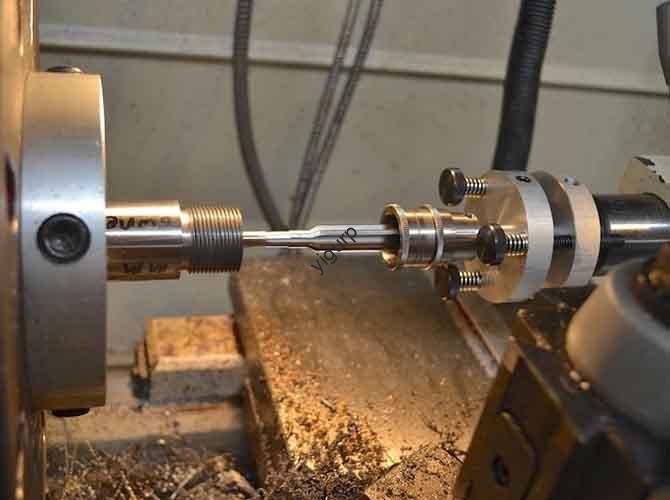
Dans 2026, industrial and engineering projects continue to rely on high-performance metals like Monel metal et acier inoxydable—but choosing between them remains a critical decision. Bien que les deux matériaux offrent durabilité et polyvalence, leurs compositions uniques, propriétés, et leurs profils de coûts les rendent mieux adaptés à des applications distinctes. This article breaks down the core differences between Monel metal and stainless steel in 2026, focusing on chemical composition, résistance à la corrosion, force, coût, et cas d'utilisation réels. À la fin, you’ll have the insights needed to select the right material for your project, whether it’s a marine engineering task, chemical processing system, or general construction project.
1. Composition chimique: The Foundation of Differences
The primary distinction between Monel metal and stainless steel lies in their elemental makeup—a factor that directly shapes their performance. Dans 2026, manufacturing standards for both materials remain consistent, but understanding their composition helps explain why they excel in different environments.
1.1 Monel Metal Composition (2026 Normes)
Monel metal is a nickel-copper alloy renowned for its corrosion resistance. Its composition is tightly regulated, with nickel as the dominant element. Below is a detailed breakdown of the elemental percentages for common Monel grades in 2026:
| Élément | Percentage Range | Role in Performance |
| Nickel (Dans) | 65% – 70% | Améliore la résistance à la corrosion, especially in seawater and acidic environments |
| Cuivre (Cu) | 20% – 31.5% | Boosts strength and improves resistance to alkalis and organic acids |
| Fer (Fe) | Jusqu'à 2.5% | Adds minor structural stability without compromising corrosion resistance |
| Manganèse (Mn) | Jusqu'à 2.0% | Améliore la maniabilité pendant la fabrication (par ex., shaping into pipes or sheets) |
| Carbone (C) | Jusqu'à 0.3% | Limits brittleness and enhances durability in high-stress applications |
| Silicium (Et) | Jusqu'à 0.5% | Aids in casting and forming processes, ensuring consistent material quality |
The most popular Monel grade in 2026 est Monel 400, which follows this composition closely. Pour les besoins de haute résistance, Monel K-500 (a precipitation-hardened variant) adds small amounts of aluminum and titanium—further enhancing its mechanical properties without altering the core nickel-copper base.
1.2 Stainless Steel Composition (2026 Normes)
Stainless steel is an iron-chromium alloy, with chromium being the key element that provides its signature rust resistance. Unlike Monel, its composition varies more by grade, allowing it to adapt to different use cases. Below is the composition for two of the most widely used stainless steel grades in 2026: 304 (usage général) et 316 (résistant à la corrosion):
| Élément | Grade 304 Range | Grade 316 Range | Role in Performance |
| Fer (Fe) | ~68% – 74% | ~62% – 68% | The base metal, providing structural strength and rigidity |
| Chrome (Cr) | 18% – 20% | 16% – 18% | Crée une couche d'oxyde protectrice, preventing rust and corrosion |
| Nickel (Dans) | 8% – 10.5% | 10% – 14% | Improves ductility and enhances corrosion resistance in moderate environments |
| Molybdène (Mo) | 0% | 2% – 3% | (Only in Grade 316) Boosts resistance to chlorides (par ex., eau de mer, brouillard salin) |
| Carbone (C) | Jusqu'à 0.08% | Jusqu'à 0.08% | Maintains strength without causing excessive brittleness |
Dans 2026, Grade 316 remains the top choice for applications exposed to moisture, while Grade 304 is preferred for indoor or low-corrosion settings due to its lower cost.
1.3 Side-by-Side Composition Comparison
To highlight the core differences, here’s a direct comparison of key elements in Monel 400 and Stainless Steel 316 (the most comparable grades for harsh environments):
| Élément | Monel 400 | Acier inoxydable 316 | Critical Takeaway |
| Nickel (Dans) | 65% – 70% | 10% – 14% | Monel’s high nickel content makes it far more resistant to extreme corrosion |
| Cuivre (Cu) | 20% – 31.5% | 0% | Copper in Monel enhances alkali resistance—something stainless steel lacks |
| Chrome (Cr) | 0% | 16% – 18% | Stainless steel relies on chromium for basic rust resistance; Monel needs no chromium |
| Fer (Fe) | Jusqu'à 2.5% | ~62% – 68% | Stainless steel’s iron base makes it heavier but more affordable than Monel |
This composition gap explains why Monel outperforms stainless steel in 2026’s most demanding environments—like deep-sea marine projects or industrial chemical plants.
2. Résistance à la corrosion: Monel vs. Stainless Steel in 2026
Corrosion resistance is often the make-or-break factor for material selection, especially in industries like marine engineering and chemical processing. Dans 2026, Monel and stainless steel still differ drastically in this area, driven by their unique compositions.
2.1 Monel Metal’s Corrosion Resistance (2026 Performance)
Monel metal remains unmatched in extreme corrosive environments dans 2026. Its high nickel and copper content creates a passive layer that resists degradation from seawater, acides, et les alcalis. Laboratory tests in 2025–2026 confirm its performance across common harsh substances:
| Corrosive Substance | Monel 400 Performance | Monel K-500 Performance | Real-World Application Example |
| Eau de mer | Excellent | Excellent | Arbres d'hélice, offshore oil rig piping |
| Sulfuric Acid (50%) | Good – Excellent | Good – Excellent | Réservoirs de stockage de produits chimiques, acid processing lines |
| Hydrofluoric Acid | Excellent | Excellent | Semiconductor manufacturing equipment |
| Phosphoric Acid | Good – Excellent | Good – Excellent | Fertilizer production machinery |
| Nitric Acid | Pauvre | Pauvre | Not recommended for nitric acid applications |
| Alkalis (par ex., NaOH) | Excellent | Excellent | Soap manufacturing reactors |
A key advantage of Monel in 2026 is its resistance to stress corrosion cracking (SCC)—a common issue for stainless steel in high-temperature, high-chloride environments. Par exemple, Monel pipes in a coastal power plant can last 30+ years without SCC, while stainless steel pipes might fail in 10–15 years.
2.2 Stainless Steel’s Corrosion Resistance (2026 Performance)
Stainless steel’s corrosion resistance varies widely by grade in 2026. While it performs well in moderate settings, it struggles in extreme conditions. Below is a breakdown of how the top grades perform:
| Corrosive Substance | Grade 304 Performance | Grade 316 Performance | Real-World Application Example |
| Freshwater | Excellent | Excellent | Indoor plumbing, kitchen sinks |
| Salt Spray (Côtier) | Poor – Fair | Bien | Outdoor handrails (Grade 316 seulement) |
| Eau de mer | Pauvre | Fair – Good | Near-shore boat components (not deep-sea) |
| Mild Acids (par ex., vinegar) | Bien | Bien | Équipement de transformation des aliments (Grade 304/316) |
| Strong Acids (par ex., acide sulfurique) | Pauvre | Poor – Fair | Not recommended for high-concentration acids |
The biggest limitation of stainless steel in 2026 is its vulnerability to pitting corrosion dans des environnements riches en chlorures. Par exemple, Grade 316 stainless steel used in a saltwater fish farm might develop small pits (trous) after 5–7 years, while Monel would remain undamaged.
2.3 2026 Corrosion Performance Comparison
To simplify decision-making, here’s a head-to-head comparison of Monel 400 and Stainless Steel 316 in the most challenging environments of 2026:
| Environnement | Monel 400 Performance | Acier inoxydable 316 Performance | Best Choice for 2026 Projects |
| Deep-Sea Marine (500m+) | Excellent | Pauvre | Monel 400 |
| Industrial Chemical Plants (strong acids) | Excellent | Poor – Fair | Monel 400 |
| Coastal Construction (brouillard salin) | Excellent | Bien | Acier inoxydable 316 (cost-saving) |
| Indoor Food Processing | Excellent | Excellent | Acier inoxydable 316 (plus abordable) |
| High-Temperature Alkali Reactors | Excellent | Équitable | Monel 400 |
This table confirms that in 2026, Monel remains the gold standard for extreme corrosion—but stainless steel is still the practical choice for moderate, projets sensibles aux coûts.
3. Résistance et durabilité: Which Performs Better in 2026?
Strength and durability are critical for high-stress applications, from aerospace components to structural supports. Dans 2026, Monel and stainless steel continue to serve different strength needs, with Monel leading in extreme conditions and stainless steel offering balance for everyday use.
3.1 Monel Metal’s Mechanical Strength (2026 Données)
Monel metal is celebrated for its haute résistance à la traction et résistance à l'usure. Dans 2026, manufacturers still rely on two key grades for strength: Monel 400 (standard) and Monel K-500 (haute résistance). Below are their mechanical properties (tested per ASTM standards in 2025):
| Propriété mécanique | Monel 400 (Recuit) | Monel K-500 (Precipitation-Hardened) | Industry Relevance in 2026 |
| Résistance à la traction | 70 ksi (483 MPa) | 140 ksi (965 MPa) | Higher strength = better for load-bearing parts |
| Limite d'élasticité (0.2% offset) | 28 ksi (193 MPa) | 120 ksi (827 MPa) | Résiste à la déformation permanente sous contrainte |
| Dureté (Rockwell B.) | 60 – 70 | 90 – 100 | Higher hardness = less wear (par ex., in moving parts) |
| Élongation (in 2”) | 40% | 15% | Lower elongation = stiffer (better for precision parts) |
A real-world example from 2026: Monel K-500 is used in aerospace turbine blades, where its 140 ksi tensile strength withstands high rotational forces. Stainless steel blades of the same thickness would fail under the same stress.
3.2 Stainless Steel’s Mechanical Strength (2026 Données)
Stainless steel offers versatile strength—not as high as Monel, but sufficient for most general applications. Ci-dessous se trouvent les 2026 mechanical properties for Grade 304 and Grade 316 (the most widely used grades):
| Propriété mécanique | Grade 304 (Recuit) | Grade 316 (Recuit) | Industry Relevance in 2026 |
| Résistance à la traction | 75 ksi (517 MPa) | 70 ksi (483 MPa) | Adequate for construction and automotive parts |
| Limite d'élasticité (0.2% offset) | 30 ksi (207 MPa) | 28 ksi (193 MPa) | Good for non-load-bearing structural components |
| Dureté (Rockwell B.) | 70 – 80 | 70 – 80 | Resists scratches in high-traffic areas (par ex., mains courantes) |
| Élongation (in 2”) | 40% | 40% | High ductility = easy to form into sheets or pipes |
Dans 2026, Grade 304 is still used for structural beams in commercial buildings, where its 75 ksi tensile strength meets safety standards at a lower cost than Monel.
3.3 2026 Strength and Durability Comparison
To highlight the gap, here’s a direct comparison of Monel K-500 (the strongest Monel grade) and Stainless Steel 304 (the strongest common stainless steel grade) dans 2026:
| Performance Metric | Monel K-500 | Acier inoxydable 304 | Key Implication for 2026 Projects |
| Résistance à la traction | 140 ksi | 75 ksi | Monel handles 87% more stress than stainless steel |
| Limite d'élasticité | 120 ksi | 30 ksi | Monel resists deformation 4x better |
| Dureté (Rockwell B.) | 90 – 100 | 70 – 80 | Monel wears 25% less in high-friction applications |
| Vie en fatigue (10^6 cycles) | 60 ksi | 35 ksi | Monel lasts 71% longer under repeated stress |
This data confirms that in 2026, Monel is the clear choice for high-stress, long-lasting projects—like offshore wind turbine components—while stainless steel suffices for low-to-moderate stress tasks.
4. Comparaison des coûts: 2026 Tendances du marché
Cost remains a top consideration for most projects in 2026. While Monel offers superior performance, its high nickel content makes it more expensive than stainless steel. Below is a detailed breakdown of 2026 frais, including upfront and long-term expenses.
4.1 Coût initial (2026 Market Prices)
As of early 2026, global metal prices (par livre) vary based on grade and supply chain factors (par ex., nickel mining output). Here’s the current cost breakdown:
| Qualité du matériau | Cost per Pound (USD) | Cost per Ton (USD) | Key Cost Driver in 2026 |
| Monel 400 | \(18 – \)22 | \(36,000 – \)44,000 | High nickel prices (nickel = ~$22,000/ton in 2026) |
| Monel K-500 | \(25 – \)30 | \(50,000 – \)60,000 | Precipitation hardening process adds manufacturing costs |
| Acier inoxydable 304 | \(3 – \)5 | \(6,000 – \)10,000 | Abundant iron and lower nickel content |
| Acier inoxydable 316 | \(5 – \)7 | \(10,000 – \)14,000 | Teneur en molybdène (molybdenum = ~$30,000/ton in 2026) |
Par exemple, a 100-pound project using Monel 400 would cost \(1,800–)2,200 dès le départ, while the same project using Stainless Steel 316 would cost \(500–)700. This 3–4x price gap is a major factor for budget-conscious projects in 2026.
4.2 Long-Term Cost: Maintenance and Replacement
While stainless steel has lower upfront costs, its higher maintenance needs can increase long-term expenses. Dans 2026, industry data shows the following lifecycle costs for a 10-year project (par ex., a marine pipe system):
| Catégorie de coût | Monel 400 System | Acier inoxydable 316 System | 10-Year Total Savings with Monel |
| Upfront Material Cost | $20,000 | $7,000 | –$13,000 (plus haut |
| Catégorie de coût | Monel Metal | Acier inoxydable austénitique | Acier inoxydable ferritique |
| Coût initial | N / A (No upfront cost) | N / A | N / A |
| Annual Maintenance | \(500 – \)800 | \(2,000 – \)3,000 | \(15,000 – \)22,000 |
| Replacement Cost | Aucun | $12,000 (après 7 années) | $12,000 |
| 10-Year Total Cost | \(25,000 – \)28,000 | \(33,000 – \)44,000 | \(8,000 – \)16,000 |
This data shows that while Monel has a higher upfront cost, its lower maintenance and longer lifespan make it more cost-effective over 10 years for harsh-environment projects. Par exemple, a coastal desalination plant using Monel 400 pipes would save \(10,000–)15,000 in lifecycle costs compared to Stainless Steel 316.
4.3 Cost-Benefit Decision Framework for 2026
To help you choose between Monel and stainless steel in 2026, use this simple framework based on project length and environment:
| Project Scenario | Best Material Choice | Raisonnement |
| Short-term (1–5 ans) + Moderate Environment | Acier inoxydable 316 | Lower upfront cost; no need for long-term durability |
| Long-term (10+ années) + Extreme Environment | Monel 400/K-500 | Higher upfront cost offset by zero maintenance and no replacement |
| Budget-constrained + Indoor Use | Acier inoxydable 304 | Lowest cost; sufficient performance for low-corrosion settings |
| Très stressant + Corrosive Environment | Monel K-500 | Unmatched strength and corrosion resistance justify higher cost |
5. Machinability and Fabrication: Ease of Processing in 2026
Even the best-performing material is useless if it can’t be shaped into project components. Dans 2026, Monel and stainless steel differ in machinability—affecting manufacturing time, coûts de main d'œuvre, and final product quality.
5.1 Monel Metal’s Machinability (2026 Insights)
Monel metal is known for being more challenging to machine than stainless steel, primarily due to its high strength and work-hardening tendency. Work hardening occurs when the metal’s surface becomes harder as it’s cut—slowing down tools and increasing wear.
Key Machinability Factors for Monel in 2026:
- Usure des outils: Monel requires high-speed steel (HSS) ou outils en carbure; carbide tools last 2–3x longer but cost 50% more than HSS.
- Vitesse de coupe: Recommended cutting speed for Monel 400 is 100–150 surface feet per minute (GDF)—half the speed of stainless steel 304 (200–300 SFM).
- Coolant Use: Must use high-pressure coolant (1,000+ psi) to prevent overheating and work hardening; insufficient coolant can reduce tool life by 40%.
- Fabrication Costs: Machining Monel costs 2–3x more than stainless steel due to slower speeds and tool replacement.
UN 2026 case study from a precision engineering firm found that machining a 10-inch Monel 400 flange took 4 hours and \(200 in tool costs, while the same flange in Stainless Steel 316 took 1.5 hours and \)80 in tool costs.
5.2 Stainless Steel’s Machinability (2026 Insights)
Stainless steel is more machinable than Monel, especially grades like 304 et 316. Its lower work-hardening tendency and softer base metal make it easier to cut, percer, and weld.
Key Machinability Factors for Stainless Steel in 2026:
- Usure des outils: HSS tools work well for most applications; carbide tools are optional (only needed for high-volume production).
- Vitesse de coupe: Grade 304 can be machined at 200–300 SFM, and Grade 316 at 150–250 SFM—faster than any Monel grade.
- Coolant Use: Low-to-moderate pressure coolant (300–500 psi) is sufficient; reduces coolant costs by 60% compared to Monel.
- Fabrication Costs: Machining stainless steel costs 50–70% less than Monel, making it ideal for high-volume projects.
Par exemple, un 2026 automotive parts manufacturer produces 10,000 acier inoxydable 304 brackets per month at a machining cost of \(1.20 par unité. If they used Monel 400, the cost would jump to \)3.50 per unit—adding $23,000 in monthly expenses.
5.3 Machinability Comparison for 2026 Projects
| Machinability Metric | Monel 400 | Acier inoxydable 316 | Impact on 2026 Projects |
| Vitesse de coupe (GDF) | 100 – 150 | 150 – 250 | Stainless steel projects are completed 33–67% faster |
| Durée de vie de l'outil (par 100 parties) | 20 outils | 50 outils | Monel requires 2.5x more tool replacements |
| Coolant Cost (par heure) | \(15 – \)20 | \(5 – \)8 | Monel adds \(10–)12 in hourly coolant costs |
| Soudabilité | Bien (requires nickel-based filler) | Excellent (uses standard stainless filler) | Stainless steel welding is simpler and cheaper |
This comparison confirms that stainless steel is the better choice for 2026 projects requiring fast, low-cost fabrication—like consumer goods or small-scale construction. Monel is only justified for projects where performance (not cost or speed) is the top priority.
6. 2026 Application Trends: Where Monel and Stainless Steel Excel
Industry trends in 2026 are shaping how Monel and stainless steel are used. Below are the top applications for each material, based on market data from early 2026.
6.1 Haut 2026 Applications for Monel Metal
Monel’s superior corrosion resistance and strength make it ideal for high-risk, high-value projects dans 2026. The top industries using Monel include:
- Deep-Sea Marine Engineering:
- Applications: Subsea oil and gas pipelines, deep-sea robot components, offshore wind turbine foundations.
- Raisonnement: Monel 400 resists seawater corrosion at depths of 500m+—a requirement for 2026’s expanding offshore energy projects.
- Traitement chimique:
- Applications: Acid storage tanks, catalyst reactors, pharmaceutical manufacturing equipment.
- Raisonnement: Monel K-500 withstands strong acids (par ex., sulfuric, fluorhydrique) without pitting or cracking—critical for 2026’s stricter safety standards.
- Aéronautique et Défense:
- Applications: Aubes de turbines, composants du moteur, military vehicle parts.
- Raisonnement: Monel K-500’s 140 ksi tensile strength and heat resistance meet 2026’s demand for lighter, more durable aircraft parts.
6.2 Haut 2026 Applications for Stainless Steel
Stainless steel’s balance of performance and cost makes it the go-to choice for everyday, high-volume projects dans 2026. The top industries using stainless steel include:
- Construction and Architecture:
- Applications: Façades de bâtiments, mains courantes, indoor structural beams.
- Raisonnement: Acier inoxydable 304 is affordable and resists indoor corrosion—used in 70% of 2026’s commercial buildings.
- Food and Beverage Processing:
- Applications: Bandes transporteuses, réservoirs de stockage, équipement de cuisine.
- Raisonnement: Acier inoxydable 316 is easy to clean and resists mild acids (par ex., agrumes, vinegar)—compliant with 2026’s food safety regulations.
- Fabrication automobile:
- Applications: Systèmes d'échappement, garniture décorative, véhicule électrique (VE) composants.
- Raisonnement: Acier inoxydable 304 is lightweight and cost-effective—used in 90% of 2026’s EVs for non-structural parts.
6.3 2026 Market Share Comparison
| Industrie | Monel Metal Market Share | Stainless Steel Market Share | Key Driver for 2026 |
| Marine Engineering | 35% | 65% | Monel dominates deep-sea; stainless steel leads near-shore |
| Traitement chimique | 20% | 80% | Monel for extreme acids; stainless steel for mild chemicals |
| Construction | <1% | 99% | Stainless steel’s low cost and machinability |
| Aérospatial | 15% | 85% | Monel for high-stress parts; stainless steel for non-critical components |
7. Yigu Technology’s Perspective on Monel vs. Stainless Steel in 2026
Chez Yigu Technologie, we advise clients to prioritize application-specific performance over generic material preferences. Dans 2026, we’ve seen too many projects fail due to choosing the wrong material—like a coastal hotel that used Stainless Steel 304 for outdoor railings (they rusted within 3 années) instead of Monel or Stainless Steel 316.
Our key recommendation: For projects in extreme environments (deep-sea, strong acids), Monel is worth the higher cost. C'est 30+ year lifespan and zero maintenance eliminate long-term risks. For indoor or moderate environments, acier inoxydable (304/316) offers unbeatable value—especially for high-volume projects where machinability and upfront cost matter.
We also emphasize testing: Dans 2026, we offer material sampling services to help clients compare Monel and stainless steel in their exact environment (par ex., brouillard salin, temperature cycles). This ensures no guesswork—critical for large-scale investments.
FAQ
T1: Can Monel metal be used in place of stainless steel for all applications in 2026?
Non. While Monel offers superior performance, its high cost (3–4x that of stainless steel) and poor machinability make it impractical for low-risk, high-volume projects (par ex., indoor handrails, biens de consommation). Stainless steel remains the better choice for these applications in 2026.
T2: Is there a stainless steel grade that matches Monel’s corrosion resistance in 2026?
Non. Even the most corrosion-resistant stainless steel grade (316L) struggles in extreme environments like deep-sea water or strong acids. Monel’s high nickel-copper content creates a passive layer that no stainless steel can replicate—making it the only choice for 2026’s harshest projects.
T3: Will Monel metal become more affordable in 2026?
Unlikely. Monel’s cost is tied to nickel prices, which are expected to stay high in 2026 due to strong demand from the EV and aerospace industries. Acier inoxydable, cependant, may see slight price drops (5–10%) by late 2026 as iron and chromium production increases. For budget-conscious projects, stainless steel will remain the more affordable option.