
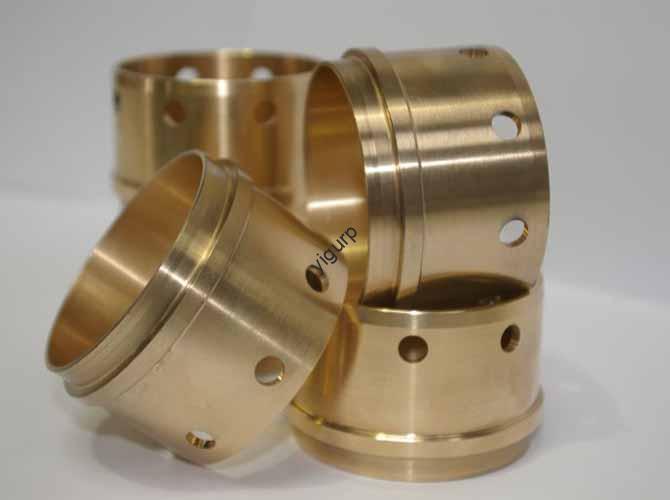
Une usine de moulage sous pression est un centre de fabrication spécialisé qui transforme les métaux en fusion en produits de haute précision., pièces complexes utilisant la technologie de moulage haute pression. Contrairement aux ateliers d'usinage général, it focuses exclusively on the pressure casting process—turning liquid aluminum, zinc, ou des alliages de magnésium dans des composants qui alimentent les industries de l'automobile aux dispositifs médicaux. But what exactly happens inside a die casting factory? What core capabilities set it apart from other manufacturers? And how does it ensure consistent quality for mass-produced parts? This article answers these questions with detailed insights into workflows, technologies, and industry applications.
1. Core Business: The End-to-End Die Casting Workflow
A die casting factory manages every step from raw material to finished part—no external outsourcing required for key processes. The workflow follows a linear, highly optimized sequence:
UN. Étape 1: Préparation du matériel & Refining
This stage ensures molten metal meets strict quality standards for fluidity and purity:
- Raw Material Handling: Receive metal ingots (par ex., ADC12 aluminum, les fardeaux 5 zinc) and sort them by alloy grade to avoid cross-contamination.
- Fusion & Contrôle de la température: Heat ingots in gas or electric furnaces to precise temperatures (680–720°C for aluminum, 380–420°C for zinc). Use digital thermocouples to maintain ±5°C tolerance—critical for consistent flow.
- Refining & Dégazage: Remove impurities (oxide slag, foreign particles) via ceramic foam filters (20–30 PPI). For aluminum alloys, use rotary degassing rods (400–600 rpm) to reduce hydrogen content to <0.2cc/100g—prevents porosity in finished parts.
B. Étape 2: Mold Management & Préparation
Molds are the “heart” of die casting—factories invest heavily in their design, entretien, and optimization:
- Conception de moules & Fabrication: In-house mold workshops use CNC machining centers (accuracy ±0.005mm) et GED (Usinage par électroérosion) to create molds from high-strength tool steel (par ex., Acier H13). Molds include cooling water channels (spaced 15–20mm apart) pour accélérer la solidification.
- Préchauffage & Lubrication: Preheat molds to 180–250°C (depending on alloy) to avoid cold shuts. Spray a thin layer of eco-friendly release agent (5–8μm thick) to ensure easy part removal—prevents surface damage.
- Mold Maintenance: Inspect molds after every 5,000–10,000 shots for wear. Repair minor scratches with laser cladding; replace worn cores when dimensional deviation exceeds ±0.1mm.
C. Étape 3: Die Casting Molding
The core production stage—high pressure transforms molten metal into finished part shapes:
- Machine Selection: Utiliser hot chamber machines (50–200 tons) for zinc alloys (fast cycle time: 15–30 seconds/part) et machines à chambre froide (200–1 200 tonnes) for aluminum/magnesium alloys (handles high melting points).
- Injection & Solidification: Inject molten metal into mold cavities at 5–150MPa pressure and 2–5m/s speed. Maintain pressure during solidification (holding time: 10–20 secondes) to compensate for shrinkage—ensures part density ≥99.5%.
- Automated Demolding: Use robotic arms (temps de cycle <5 secondes) to remove parts from molds. This reduces human error and prevents damage to delicate components (par ex., thin-walled electronic housings).
D. Étape 4: Post-traitement & Contrôle qualité
Finishing steps ensure parts meet customer specifications:
- Garniture & Ébavurage: Cut off gate residues and runner systems with hydraulic trimmers (for aluminum parts) or laser cutters (for precision zinc parts). Remove burrs with ultrasonic cleaning (Râ <1.6μm surface roughness).
- Traitement de surface: Offer options like anodizing (pour la résistance à la corrosion), revêtement en poudre (pour l'esthétique), ou placage (pour la résistance à l'usure). Pour les pièces médicales, use passivation to meet biocompatibility standards (OIN 10993).
- Quality Testing: Conduct 3 levels of inspection:
- Inspection visuelle: Check for surface defects (rayures, pores) with 10× magnifying glasses.
- Dimensional Testing: Use CMM (Machine de mesure de coordonnées) pour vérifier les tolérances (±0.1mm for standard parts).
- Internal Testing: Use X-ray flaw detection to check for hidden porosity (acceptance standard: ≤2% pore volume).
2. Core Capabilities: What Makes a Die Casting Factory Unique?
Die casting factories stand out from other manufacturers due to 4 key capabilities, tailored to mass production and precision requirements:
| Capacité | Technical Details | Business Impact |
| High-Precision Molding | – Dimensional tolerance controlled to ±0.1mm; surface roughness Ra 1.6–3.2μm.- Can produce thin-walled parts (jusqu'à 0,5 mm) and complex structures (internal threads, cavités profondes). | Meets tight assembly requirements for industries like automotive and electronics—parts require minimal post-machining. |
| Mass Production Efficiency | – Single-part cycle time as short as 15 secondes (zinc parts); 100,000+ parts/month per machine.- Automated lines (robotic demolding, inline inspection) reduce labor costs by 60%. | Delivers large orders (par ex., 500,000 supports automobiles) on time; low per-part cost (\(0.3–)2 pour petites pièces). |
| Polyvalence des matériaux | – Handles aluminum (60–70% of production), zinc (20–25%), and magnesium (5–10%) alloys.- Customizes alloy compositions (par ex., adding titanium to aluminum for strength) to meet client needs. | Serves diverse industries—aluminum for lightweight automotive parts, zinc for precision electronics, magnesium for aerospace components. |
| Rapid New Product Development (NPD) | – In-house mold design cuts NPD time to 4–8 weeks (contre. 12–16 weeks with external mold shops).- Uses rapid prototyping (3D-printed molds for small batches) to test designs before mass production. | Helps clients launch new products faster (par ex., 5G router housings) et réduit les coûts des prototypes en 30%. |
3. Key Service Industries: Where Die Casting Parts Are Used
Die casting factories supply critical components to 5 principales industries, chacun avec des exigences uniques:
UN. Industrie automobile (40–50% of Revenue)
- Produits: Engine mounts, carters de transmission, EV battery pack frames, steering gear casings.
- Requirements: Léger (aluminum parts reduce vehicle weight by 10–15%), haute résistance (tensile strength ≥280MPa), et résistance à la corrosion.
- Exemple: A factory might produce 1 million aluminum battery frames annually for a major EV manufacturer, meeting IP68 waterproof standards.
B. Electronique grand public (20–25% of Revenue)
- Produits: Mobile phone middle frames, charnières pour ordinateur portable, wireless headphone charging compartments, Dissipateurs de chaleur LED.
- Requirements: Précision (tolérance ±0,05 mm), petite taille (10–500g), and good surface finish (anodized or plated).
- Exemple: Supplies zinc alloy charging port housings to a smartphone brand—100,000 units/week with zero surface defects.
C. Appareils électroménagers (10–15% of Revenue)
- Produits: Air conditioning compressor housings, washing machine drum bearing seats, refrigerator door hinges.
- Requirements: Tightness (no water leakage), résistance aux chocs, and low cost.
- Exemple: Produces aluminum compressor housings for a home appliance company—parts pass 10,000-cycle vibration tests.
D. Communication Equipment (5–10% of Revenue)
- Produits: 5G base station cooling modules, router shells, fiber optic connector housings.
- Requirements: Heat dissipation (conductivité thermique élevée), electromagnetic shielding, and weather resistance.
- Exemple: Manufactures magnesium alloy cooling modules for 5G towers—parts withstand -40°C to +85°C temperature ranges.
E. Dispositifs médicaux (3–5% of Revenue)
- Produits: CT machine rotating frames, poignées d'instruments chirurgicaux, insulin pump casings.
- Requirements: Biocompatibilité (OIN 10993), haute précision (±0,03 mm), and easy sterilization.
- Exemple: Supplies titanium-aluminum alloy surgical tool handles to a medical device firm—parts pass autoclave sterilization (134°C, 20 minutes) 1,000+ times.
4. How Die Casting Factories Compare to Other Manufacturing Processes
Die casting factories differ from sand casting, estampillage, and injection molding facilities in key ways. The table below highlights critical differences:
| Processus | Matériau primaire | Avantage clé | Key Limitation | Idéal pour |
| Moulage sous pression | Métaux (aluminium, zinc) | Haute précision; complex 3D shapes | High mold costs (\(20k–\)200k) | Mass-produced, complex metal parts |
| Sand Casting | Métaux (iron, acier) | Faibles coûts de moulage; grandes pièces | Low precision (tolerance ±1mm) | Heavy industrial parts (par ex., engine blocks for large machinery) |
| Estampillage | Metal sheets (acier, aluminium) | Fast cycle time; low cost for flat parts | Limited to 2D/Shallow 3D shapes | Pièces plates (par ex., car body panels, canettes de boissons) |
| Moulage par injection | Plastiques | Faible coût; volume élevé | Low strength; not for high-temperature use | Plastic parts (par ex., toy casings, plastic gears) |
5. Yigu Technology’s Perspective on Die Casting Factories
Chez Yigu Technologie, we believe die casting factories are the backbone of modern manufacturing—bridging raw metal and high-performance end products. Our factory integrates 3 core strengths: 1) Contrôle des processus piloté par l'IA (real-time adjustment of injection speed/pressure reduces defect rates to <1.5%); 2) Green manufacturing (vacuum die casting cuts energy use by 20%, et 95% of scrap is recycled); 3) Cross-process integration (moulage sous pression + Usinage CNC + surface treatment on one line shortens lead time by 40%).
Pour les clients automobiles, nous produisons 500,000+ aluminum battery frames yearly with IP68 certification. For electronics clients, our zinc alloy parts meet ±0.05mm precision. We’re investing in 3D-printed mold technology to cut NPD time to 3 semaines. Our goal is to be more than a supplier—we’re a partner that helps clients optimize designs for cost, qualité, et durabilité.
FAQ
- Quelle est la quantité minimum de commande (MOQ) for a die casting factory?
MOQ depends on mold costs: Pour les pièces standards (par ex., generic brackets), MOQ is 10,000–50,000 units to offset mold expenses. Pour les pièces personnalisées, we offer flexible MOQ (1,000–5 000 unités) using shared molds, though per-part costs are slightly higher.
- How long does it take for a die casting factory to deliver a custom order?
For new custom parts: 4–8 semaines (includes 3–4 weeks for mold design/manufacturing, 1–2 weeks for sampling, and 1–2 weeks for mass production). For repeat orders: 1–2 semaines (no mold lead time).
- Can a die casting factory handle post-processing like CNC machining?
Yes—most die casting factories (including Yigu Technology) integrate CNC machining into their workflow. This is critical for parts that need ultra-precise features (par ex., threaded holes with ±0.02mm tolerance) that can’t be achieved via die casting alone. We use 5-axis CNC machines to ensure accuracy and efficiency.