
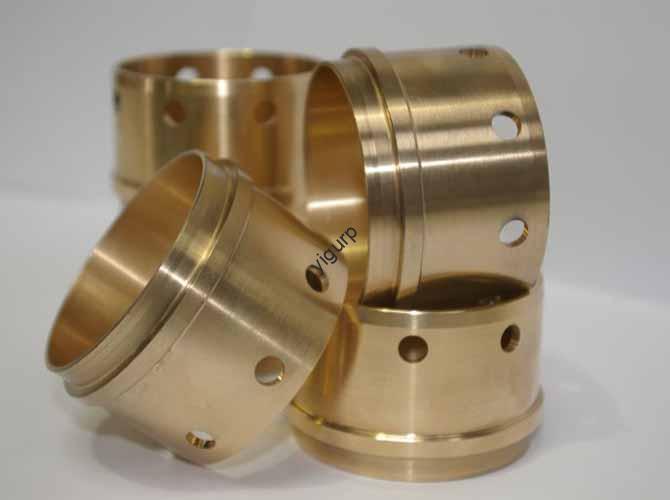
Les broches d'éjection moulées sous pression sont les “héros méconnus” de moules de coulée sous pression : des composants petits mais critiques qui garantissent un démoulage en douceur des pièces moulées formées. Une broche d'éjection mal conçue ou mal entretenue peut provoquer une déformation de la pièce moulée, dommages causés par la moisissure, ou des arrêts de production, ce qui coûte aux fabricants des milliers de dollars en temps d'arrêt et en rebuts. Pour des secteurs comme l'automobile et l'électronique grand public, où un volume élevé, high-quality production is non-negotiable, mastering ejector pin design, selection, and maintenance is essential. This article systematically breaks down their core functions, structural variants, design principles, failure solutions, and practical applications to help you maximize their reliability and efficiency.
1. Core Definition & Essential Functions of Die-Casting Ejector Pins
Before diving into optimization, it’s critical to understand what die-casting ejector pins are and why they matter. This section uses a 总分 structure with key terms highlighted for clarity.
1.1 Fundamental Definition
Die-casting ejector pins are cylindrical or specialized-shaped components installed in the moving half of a die casting mold. After the molten metal solidifies into a casting, these pins apply controlled mechanical force to push the casting away from the mold cavity, enabling separation between the casting and the mold. They act as the final link in the die casting cycle—without reliable ejector pins, even perfectly formed castings cannot be safely removed, halting production.
1.2 Four Non-Negotiable Functions
Ejector pins do more than just “push”—they protect both the casting and the mold while ensuring production continuity:
- Controlled Release Force Transmission: Applies uniform thrust across the casting’s surface to avoid local overstress. Par exemple, a thin-walled aluminum phone frame (1mm épaisseur) requires 50-80N of ejector force—too little causes sticking, too much leads to bending.
- Mold Cavity Protection: Prevents forced dragging of the casting, which would scratch or chip the mold’s precision cavity (costing $10,000+ to repair). By separating the casting gently, ejector pins extend mold life by 20-30%.
- Casting Integrity Preservation: Distributes force via multiple pins to eliminate deformation. A study by the Die Casting Association found that properly spaced ejector pins reduce casting deformation rates from 8% à <1%.
- Automated Production Synchronization: Integrates with the mold’s opening/closing cycle (typiquement 60-120 seconds per cycle) to match automated production lines. Smart ejector pins with sensors can adjust force in real time, reducing cycle time by 5-10%.
2. Typical Structures & Specialized Variants of Ejector Pins
Ejector pins are not “taille unique”—their design varies based on casting complexity, matériel, and demolding challenges. The table below breaks down common structures and their use cases, with specific design details:
| Structure Type | Key Components | Design Features | Applications idéales |
| Standard Cylindrical Pin | – Needle body (main contact part)- Fixed seat (mounts to ejector plate)- Guide bushing (prevents deflection) | – Diamètre: 3-20mm (most common: 5-10mm)- Length-to-diameter ratio: ≤8:1 (avoids bending)- Tip shape: Flat (90% of applications) | Simple castings: zinc alloy toy parts, small aluminum brackets (no complex undercuts) |
| Segmented Ejector Pin | – Main pin body- Telescoping secondary segments (1-3 sections)- Spring-loaded connectors | – Segments extend sequentially (0.5-2s delay between sections)- Total stroke: 20-50mm (adjustable via spring tension) | Deep-cavity castings: EV motor housings (300mm profondeur), magnesium alloy camera shells |
| Flat Section Ejector Pin | – Wide, flat tip (10-30mm largeur)- Reinforced base (prevents tip bending) | – Tip surface: Polished to Ra 0.8 µm (réduit la friction)- Force distribution: 2-3x wider contact area than cylindrical pins | Large flat castings: aluminum laptop palm rests, panneaux de porte automobile (avoids indentations) |
| Air-Blowing Ejector Pin | – Hollow needle body (0.5-1mm air channel)- Built-in check valve (prevents metal backflow)- Compressed air inlet (0.5-0.8Pression MPa) | – Air is released at the moment of ejection (breaks vacuum adsorption)- Tip has 2-4 small air holes (even pressure distribution) | Thin-walled or porous castings: aluminum heat sinks (0.8murs mm), foam aluminum components |
| Inductive Smart Ejector Pin | – Integrated strain gauge (measures real-time force)- Temperature sensor (monitors tip heat)- Wireless data transmitter | – Force monitoring range: 0-500N (accuracy ±2N)- Alerts for abnormal force (>10% deviation from setpoint) | High-value castings: aerospace aluminum brackets, composants de dispositifs médicaux (prevents defects) |
3. Critical Design Elements: Ensuring Reliability & Efficacité
Poorly designed ejector pins are the leading cause of die casting defects. This section covers three non-negotiable design elements—geometric parameters, layout principles, and material selection—with actionable formulas and standards.
3.1 Geometric Parameter Calculations
Every dimension of an ejector pin must be calculated to avoid failure. Key formulas and limits:
- Diameter Selection: Determined by required ejector force, using the formula:
D = √[(F × K) / (σ_allowed)]
Where:
- D = Ejector pin diameter (mm)
- F = Required ejector force (N) → Calculated as F = A × μ × P (A = casting projection area in mm²; μ = friction coefficient: 0.15-0.2 pour l'aluminium; P = mold clamping pressure in MPa)
- K = Safety factor (1.5-2.0, higher for thin-walled parts)
- σ_allowed = Material allowable stress (MPa: H13 steel = 800MPa; tungsten carbide = 1500MPa)
Exemple: For an aluminum casting with A=10,000mm², μ=0.18, P=50MPa:
F = 10,000 × 0.18 × 50 = 90,000N
D = √[(90,000 × 1.8) / 800] ≈ 14.3mm → Select 15mm diameter pin.
- Length-to-Diameter Ratio: Must be ≤8:1 to prevent deflection. For ultra-slender pins (ratio >8:1), add a douille de guidage (inner diameter = pin diameter + 0.02mm) every 50mm of length. Par exemple, a 100mm long, 10mm diameter pin (ratio 10:1) needs one guide bushing at the midpoint.
3.2 Layout Principles for Multi-Pin Systems
For complex castings, multiple ejector pins must be arranged strategically to ensure uniform force:
- Margin Requirement: The edge of each pin must be at least 3mm away from the mold cavity. This prevents cavity chipping and ensures the pin doesn’t interfere with casting features (par ex., trous, côtes).
- Force Uniformity: The force difference between any two pins should be ≤10%. Use CAE simulation (par ex., AnyCasting) to optimize spacing—pins should be closer to thick-walled areas (higher sticking force) and farther from thin walls (risk of deformation).
- Angle Design: Tilt pins 5°-15° relative to the mold parting surface. This dual-purpose design: 1) Improves exhaust (lets air escape during ejection), 2) Reduces sliding friction between the pin and mold (extending pin life by 15%).
3.3 Sélection des matériaux: Matching to Casting Material
The ejector pin material must withstand high temperatures, friction, and corrosion—select based on the casting alloy:
| Casting Alloy | Recommended Ejector Pin Material | Traitement de surface | Service Life | Avantages clés |
| Alliage d'aluminium (ADC12, A380) | H13 hot work mold steel | Trempe + nitruration (50-70couche de µm) | 150,000-200,000 cycles | Balances cost and durability; facile à usiner |
| Magnesium Alloy (AZ91D) | QRO-90SUPREME high-speed steel | CVD coating (titanium aluminum nitride, 3-5µm) | 80,000-120,000 cycles | Resists magnesium oxide corrosion; résistance à haute température |
| High-Silicon Aluminum (AlSi17CuMg) | YG8 tungsten carbide cemented carbide | Diamond polishing (Ra ≤0.05 μm) | 500,000+ cycles | Hardness ≥90 HRA; resists silicon particle wear |
| Zinc Alloy (FARDEAU 5) | SKD61 mold steel | Chromage (10-15µm) | 300,000-400,000 cycles | Faible coût; good wear resistance for low-temperature zinc |
4. Common Failure Modes & Proven Solutions
Even well-designed ejector pins fail over time—early detection and targeted fixes are critical to minimizing downtime. The table below outlines top failures, root causes, and step-by-step solutions:
| Failure Mode | Root Causes | Step-by-Step Solutions |
| Tip Smoothing/Wear | – Sliding friction overheats the pin tip (200-300°C for aluminum casting)- Softening of pin material due to repeated annealing | 1. Replace pin material with powder metallurgy high-speed steel (par ex., ASP-60) – 2x harder than H13.2. Apply laser cladding (tungsten carbide layer, 0.5-1mm d'épaisseur) to the tip.3. Increase lubrication frequency (from weekly to daily) with PAG synthetic oil. |
| Pin Fracture | – Fatigue cracks at the fixed seat transition (sharp corners)- Excessive ejection force (150%+ of design value)- Bent pin causing uneven stress | 1. Increase the fillet radius at the transition from R1 to R3 or larger (reduces stress concentration by 50%).2. Install a force sensor to monitor real-time force – trigger an alarm if >120% of setpoint.3. Replace bent pins immediately; add guide bushings to prevent future bending. |
| Pin Sticking/Jamming | – Aluminum chips accumulate in the pin-mold gap (0.02-0.05mm)- Mold temperature too high (melts aluminum, causing adhesion)- Insufficient lubrication | 1. Redesign the pin with a self-cleaning spiral groove (1mm profondeur, 10pas en mm) to expel chips during movement.2. Lower mold temperature by 20-30°C (par ex., from 250°C to 220°C for aluminum).3. Use a dry lubricant (molybdenum disulfide spray) in addition to oil – reduces adhesion by 70%. |
| Uneven Tip Wear | – Poor guide accuracy (pin tilts during movement)- Mold cavity misalignment (creates unilateral pressure)- Dirty guide bushings (increased friction on one side) | 1. Replace standard bushings with linear bearing guide columns (positioning accuracy ±0.01mm).2. Realign the mold cavity using a laser alignment tool (assurer <0.02mm misalignment).3. Clean guide bushings daily with compressed air; replace bushings every 50,000 cycles. |
5. Practical Application Case: EV Motor Housing Die Casting
To illustrate how ejector pin design solves real-world challenges, here’s a case study of a new energy vehicle (VE) motor housing casting:
5.1 Défi
- Casting Details: Alliage d'aluminium (A356) motor housing, 300mm profondeur, 16 sets of integrated heat dissipation fins (2mm épaisseur, 15mm height).
- Key Issues:
- Deep cavity caused high sticking force – standard pins failed to separate the casting.
- Thin heat dissipation fins were prone to bending during ejection.
- Long demolding time (5+ secondes) slowed production cycles.
5.2 Solution: Three-Stage Linkage Ejector Pin System
- Main Ejector Pins: 8 cylindrical pins (φ8mm, Acier H13, nitrided) installed around the housing’s outer edge – provide initial 80% of ejection force to separate the main body.
- Secondary Fins Pins: 6 ultra-slender pins (φ3mm, carbure de tungstène) embedded in the gaps between heat dissipation fins – apply targeted force to the fins without bending.
- Pneumatic Tapping Assist: Delayed compressed air (0.6MPa) released from 4 air-blowing pins (φ5mm) 0.5s after main ejection – breaks residual vacuum adsorption between the fins and mold.
5.3 Résultats
- Demolding Time: Reduced from 5s to 2.3s – increased production efficiency by 54%.
- Yield Rate: Rose from 92% à 99.6% – eliminated fin bending and housing deformation.
- Pin Life: Secondary tungsten carbide pins lasted 300,000 cycles – 2x longer than standard H13 pins.
6. Entretien & Management Best Practices
Proactive maintenance extends ejector pin life by 40-60% and prevents unexpected failures. Follow these structured steps:
6.1 Daily Maintenance (Per 8-Hour Shift)
- Cleaning: Wipe pin surfaces with a lint-free cloth to remove aluminum chips, oxide scales, and residual lubricant. For hard-to-reach areas (par ex., spiral grooves), use a 0.5mm diameter brush.
- Lubrication: Appliquer 2-3 drops of fully synthetic PAG lubricating oil to each pin’s guide bushing. Avoid over-lubrication – excess oil can mix with molten metal and cause casting defects.
- Inspection visuelle: Check for tip wear, flexion, or corrosion – mark any pins with visible damage for further testing.
6.2 Monthly Maintenance
- Dimensional Monitoring: Use a digital caliper to measure the pin tip diameter. Replace pins if wear exceeds 0.1mm (par ex., a 10mm pin worn to 9.9mm) – this prevents casting indentations.
- Force Testing: Use a dynamometer to verify ejection force – ensure it stays within ±10% of the design value. Adjust spring tension or replace pins if force is too high/low.
- Guide Bushing Check: Inspect bushings for wear – replace if the inner diameter exceeds the pin diameter by >0.05mm (causes pin deflection).
6.3 Spare Parts Strategy
- Stock Ratio: Maintain a 1:2 spare part ratio for critical pins (par ex., 20 spare pins for 10 active pins in a production line).
- Customization Lead Time: Work with suppliers to ensure custom-sized pins (par ex., φ3mm tungsten carbide pins) have a lead time ≤7 days – minimizes downtime during failures.
- Labeling System: Mark spare pins with material, diamètre, and length (par ex., “H13, φ8mm, 100mm”) – ensures quick replacement.
7. Yigu Technology’s Perspective on Die-Casting Ejector Pins
Chez Yigu Technologie, we believe ejector pins are a “precision link” that directly impacts production efficiency and casting quality—yet they are often overlooked in mold design. Many manufacturers focus on mold cavities or injection parameters but use generic ejector pins, leading to avoidable defects like bent castings or pin breakages.
We recommend a digital-driven design approach: Use CAE simulation to model ejection force distribution and pin deflection before mold production—this cuts trial-and-error time by 50%. For high-volume EV component production, we advocate smart ejector pins with integrated sensors—they provide real-time data on force and temperature, allowing predictive maintenance (replacing pins before failure instead of after).
We also emphasize material-matching: For high-silicon aluminum castings (a growing trend in EVs), tungsten carbide pins are a worthwhile investment—their 500,000+ cycle life offsets the higher cost vs. Acier H13. By treating ejector pins as a critical design element (not just a “standard part”), manufacturers can achieve 99.5%+ yield rates and reduce maintenance costs by 30%.